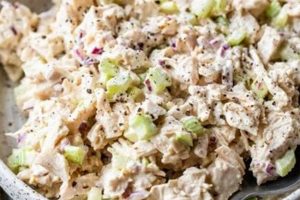
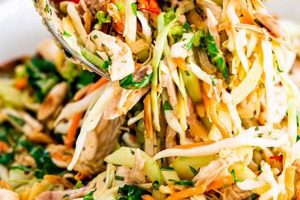
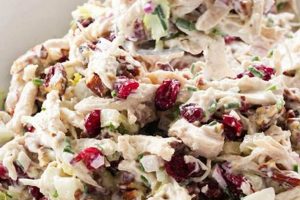
A delicate filling for bite-sized sandwiches served at afternoon tea or other elegant gatherings typically consists of chopped cooked chicken, mayonnaise, and various seasonings and additions. Common supplemental ingredients include celery, onion, grapes, nuts, and herbs. The mixture’s creamy texture and savory flavor profile make it an ideal complement to soft breads like white, wheat, or multigrain.
This preparation offers a versatile and convenient option for entertaining. Its make-ahead nature allows for efficient hosting, freeing up time for other preparations. The adaptability of the basic formula enables customization to suit diverse palates, accommodating dietary restrictions with simple substitutions. Historically, such preparations gained popularity as a luncheon staple in the late 19th and early 20th centuries, reflecting a growing appreciation for lighter, more refined fare. The practice continues to symbolize gracious hospitality and a touch of elegance.
The following sections will delve deeper into ingredient selection, step-by-step preparation instructions, variations on the classic combination, and suggestions for presentation and service.
Tips for Crafting Perfect Tea Sandwiches
Elevating simple chicken salad to an elegant tea sandwich filling requires attention to detail. These tips ensure optimal flavor, texture, and presentation.
Tip 1: Chicken Selection: Opt for high-quality cooked chicken. Rotisserie chicken offers convenience; however, poaching or baking boneless, skinless breasts allows for greater control over seasoning and moisture content.
Tip 2: Mayonnaise Matters: The quality of mayonnaise significantly impacts the final flavor. Consider using a premium brand or making homemade mayonnaise for a richer, more nuanced taste.
Tip 3: Texture Control: Finely dice all ingredients to ensure a smooth, spreadable consistency suitable for delicate tea sandwiches. Avoid large chunks that could cause the bread to tear.
Tip 4: Seasoning Strategies: Fresh herbs, such as chives, dill, or tarragon, add brightness and complexity. Incorporate seasonings judiciously, tasting and adjusting as needed to achieve the desired balance.
Tip 5: Bread Choice: Select thinly sliced, crustless bread with a soft texture. White, wheat, multigrain, or even pumpernickel can provide a complementary base.
Tip 6: Chill Strategically: Chilling the prepared salad before assembling the sandwiches helps the flavors meld and firms the mixture for easier spreading.
Tip 7: Assembly and Presentation: Spread the filling evenly on the bread slices. Cut the sandwiches into small, manageable shapes triangles, rectangles, or circles for elegant presentation.
By following these guidelines, one can ensure tea sandwiches that are not only visually appealing but also offer a delightful culinary experience.
With these tips in mind, the next section will explore variations on the classic recipe, allowing for personalized creations.
1. High-quality Chicken

The foundation of any successful chicken salad for tea sandwiches rests upon the quality of the chicken itself. Ingredient selection significantly impacts the overall flavor, texture, and enjoyment of the final product. Understanding what constitutes high-quality chicken and how it contributes to the dish is crucial.
- Flavor Profile
High-quality chicken possesses a clean, subtly savory taste that allows other ingredients to shine without being overpowered. Chicken lacking freshness can introduce off-putting flavors that detract from the delicate balance of the salad. For example, commercially processed chicken may contain additives that alter the intended flavor profile, while freshly roasted or poached chicken offers a purer taste. This clean flavor canvas is essential for a successful tea sandwich filling.
- Texture and Moisture
Properly cooked, high-quality chicken offers a tender, moist texture that contributes to the overall pleasant mouthfeel of the sandwich. Dry, stringy chicken, often a result of overcooking or using lower-quality cuts, creates an unpleasant, chewy texture. Conversely, chicken that is too soft or watery can lead to a soggy sandwich filling. Examples include using chicken breast meat known for its tenderness, and carefully monitoring cooking time to prevent dryness. The ideal texture enhances the sandwich experience.
- Visual Appeal
While not the primary concern, the visual appeal of the chicken within the salad contributes to the overall presentation. High-quality chicken maintains a pleasing, uniform color and texture, enhancing the aesthetic of the sandwich filling. For instance, using evenly sized pieces of chicken creates a more visually appealing presentation than shredded or unevenly chopped pieces. This visual consistency adds to the overall impression of quality.
- Overall Culinary Experience
Ultimately, the use of high-quality chicken elevates the entire culinary experience. The nuanced flavors, pleasant textures, and attractive presentation combine to create a truly delightful tea sandwich. Choosing thoughtfully sourced chicken ensures that each bite is flavorful and satisfying, reflecting the care taken in preparation. A direct comparison between sandwiches made with premium versus lower-quality chicken demonstrates the noticeable difference in taste and enjoyment.
In conclusion, the choice of chicken directly correlates with the success of the tea sandwich. Prioritizing quality through careful selection and preparation ensures a superior culinary experience, highlighting the importance of this key ingredient.
2. Flavorful Mayonnaise

Mayonnaise serves as the crucial binding agent and flavor enhancer in chicken salad destined for tea sandwiches. Its quality and characteristics significantly influence the final product’s taste, texture, and overall appeal. Careful consideration of mayonnaise selection ensures a harmonious blend of flavors and a luxurious mouthfeel essential for these delicate sandwiches.
- Base Ingredient Quality
Mayonnaise quality hinges on the base ingredients. High-quality oils, like extra virgin olive oil or avocado oil, contribute desirable flavor notes and a smooth texture. Conversely, mayonnaise made with lower-quality oils may impart an undesirable taste or greasy consistency. For instance, using a mayonnaise crafted with expeller-pressed olive oil versus a soybean oil-based product yields a noticeable difference in flavor complexity and overall richness. This choice significantly impacts the final chicken salad profile.
- Acidity and Tang
The balance of acidity plays a vital role in mayonnaise’s flavor profile. Ingredients like lemon juice or vinegar provide necessary tang, cutting through the richness of the mayonnaise and the chicken. The right level of acidity brightens the overall flavor of the salad without overpowering other ingredients. For example, a mayonnaise with a balanced acidity complements the savory notes of the chicken and other additions like celery or grapes, while excessive acidity can make the salad taste overly tart. This balance is essential for a harmonious flavor profile.
- Emulsification and Texture
Proper emulsification creates a stable and creamy mayonnaise, essential for a smooth and spreadable chicken salad filling. A well-emulsified mayonnaise holds its shape and prevents the salad from becoming watery or separating. This stability is crucial for maintaining the structural integrity of the tea sandwiches. Comparing a homemade mayonnaise with a commercially produced version often reveals differences in stability and texture, impacting the ease of spreading and overall sandwich construction.
- Complementary Flavors
Mayonnaise can be infused with additional flavors to complement the chicken salad. Incorporating herbs, spices, or other flavorings, such as roasted garlic or Dijon mustard, adds depth and complexity to the overall profile. For example, a lemon-herb mayonnaise can brighten the flavors of the chicken and vegetables, while a chipotle mayonnaise adds a smoky dimension. This customization potential allows for creative flavor combinations tailored to specific preferences.
The selection of mayonnaise represents a critical step in crafting exceptional chicken salad for tea sandwiches. By considering these factors base ingredient quality, acidity, emulsification, and complementary flavors one can ensure a flavorful, texturally appealing filling that elevates these delicate sandwiches to a new level of culinary refinement.
3. Balanced Seasonings
Seasoning plays a pivotal role in elevating chicken salad from simple to exceptional, particularly when intended for delicate tea sandwiches. A balanced approach to seasoning ensures that the nuanced flavors of the chicken and other ingredients harmonize, creating a complex and delightful flavor profile. Careful consideration of herbs, spices, and other flavoring agents is essential for achieving this balance.
- Salt and Pepper Foundation
Salt and freshly ground black pepper form the foundational seasoning in virtually any savory dish, including chicken salad. Salt enhances the inherent flavors of the chicken and other ingredients, while pepper adds a subtle bite and complexity. However, improper seasoning with excessive salt can overpower the delicate flavors, while too much pepper can create an unpleasant harshness. Achieving the correct balance is paramount; the salt should enhance, not dominate, while the pepper provides a gentle warmth without overwhelming the palate. A side-by-side comparison of adequately seasoned versus over-seasoned chicken salad demonstrates the importance of restraint and precision.
- Herbaceous Accents
Fresh herbs introduce brightness and complexity to chicken salad. Chives, dill, tarragon, and parsley are classic choices, each offering a unique flavor profile. Chives impart a delicate oniony flavor, while dill provides a slightly tangy, grassy note. Tarragon lends a subtle anise-like flavor, and parsley contributes a fresh, clean taste. The selection and quantity of herbs should complement the other ingredients without overpowering the overall flavor profile. For example, a chicken salad featuring grapes and walnuts might benefit from the subtle sweetness of dill, while a more traditional preparation might favor the clean taste of parsley. The careful selection of herbs is key to a well-balanced salad.
- Spice and Depth
While often subtle, a touch of spice can add depth and intrigue to chicken salad. A pinch of paprika or cayenne pepper introduces a hint of warmth, while a dash of onion or garlic powder contributes savory depth. However, excessive spice can easily overpower the delicate flavors of the chicken and other ingredients. The goal is to enhance, not dominate, the overall flavor profile with these nuanced additions. A chicken salad with curry powder can offer an intriguing twist, while a touch of smoked paprika can lend a subtle smoky dimension. The key is to use these spices judiciously, allowing the other flavors to shine through.
- Acidity and Brightness
A touch of acidity is essential for balancing the richness of the mayonnaise and enhancing the overall flavor profile of chicken salad. Lemon juice or a high-quality vinegar, such as apple cider or white wine vinegar, provides the necessary brightness. A squeeze of lemon juice can elevate the flavors of the chicken and herbs, while a splash of vinegar adds a subtle tang. However, excessive acidity can make the salad taste overly tart. Finding the right balance ensures that the acidity complements, rather than overpowers, the other flavors. A comparison between chicken salad with and without a touch of acid demonstrates the crucial role it plays in achieving a well-rounded flavor profile.
The interplay of these seasoning elements salt, pepper, herbs, spices, and acidity creates a symphony of flavors in chicken salad. Achieving the right balance is essential for creating a filling that is both complex and harmonious, perfectly complementing the delicate nature of tea sandwiches and elevating the overall dining experience.
4. Proper Chilling
Proper chilling is a critical step in preparing chicken salad for tea sandwiches, significantly impacting food safety, flavor development, and optimal texture. Chilling allows the flavors to meld and the mixture to firm up, resulting in a more cohesive filling that is easier to spread and handle.
- Food Safety
Chilling inhibits bacterial growth, a critical concern with any dish containing mayonnaise and cooked chicken. Maintaining a temperature below 40F (4C) slows the proliferation of microorganisms that can cause foodborne illness. Prompt refrigeration after preparation is crucial, minimizing the time the salad spends in the temperature danger zone. This practice is particularly important for events where sandwiches may sit at room temperature for extended periods. Comparing the bacterial load in properly chilled versus unchilled chicken salad underscores the importance of this safety measure.
- Flavor Development
Chilling allows the individual flavors of the ingredients chicken, mayonnaise, seasonings, and additions to meld and harmonize. This melding creates a more complex and nuanced flavor profile compared to a freshly made salad. The flavors deepen and integrate during refrigeration, enhancing the overall taste experience. A taste test comparing freshly made versus properly chilled chicken salad demonstrates the noticeable improvement in flavor complexity after chilling.
- Texture Enhancement
Chilling firms the chicken salad mixture, making it easier to spread evenly on bread without tearing or crumbling. This firming also helps the sandwiches hold their shape and prevents them from becoming soggy. The chilled salad provides a more manageable consistency, contributing to a cleaner, more elegant presentation. The difference in texture between chilled and unchilled salad is readily apparent when spreading; chilled salad offers a more controlled and less messy application.
- Enhanced Presentation
The firm texture achieved through proper chilling contributes to the overall presentation of the tea sandwiches. A chilled salad allows for precise spreading, creating a neat and visually appealing sandwich. This firm consistency also helps maintain the sandwich’s shape during handling and serving. The contrast between a neatly assembled sandwich with chilled filling versus one with a loose, unchilled filling highlights the aesthetic benefits of proper chilling.
Proper chilling is integral to crafting exceptional chicken salad tea sandwiches. This step not only ensures food safety but also enhances flavor development and creates an ideal texture for spreading and presentation. Neglecting this crucial step compromises both the safety and the sensory experience of the final product, underscoring its importance in the overall preparation process.
5. Elegant Presentation

Elegant presentation forms an integral component of tea sandwiches featuring chicken salad. These miniature culinary creations, often served at afternoon teas or other refined gatherings, rely on visual appeal as much as flavor. Presentation elevates the perceived quality and enhances the overall dining experience. A thoughtfully presented tea sandwich signals attention to detail and a commitment to providing guests with a truly special culinary experience. Consider, for example, the difference between a simple scoop of chicken salad on a plate versus delicately formed tea sandwiches arranged artfully on a tiered serving stand. The latter immediately conveys a sense of occasion and refinement.
Several factors contribute to elegant presentation. Bread selection plays a crucial role; thinly sliced, crustless bread, whether white, wheat, or a delicate multigrain, provides a refined base. The shape and size of the sandwiches also contribute to the aesthetic. Precisely cut triangles, rectangles, or circles, small enough for a single bite, embody elegance. Garnishes, while often simple, add a finishing touch. A sprig of fresh dill, a sprinkle of paprika, or a strategically placed microgreen elevates the visual appeal. The arrangement of the sandwiches on the serving platter matters as well. A symmetrical arrangement or a cascading presentation on a tiered stand enhances the visual impact. Observe how caterers arrange tea sandwiches for maximum visual effect, often grouping them by flavor or color for added impact.
Understanding the connection between elegant presentation and chicken salad tea sandwiches offers practical significance. It allows hosts to create a memorable and refined dining experience for their guests. This attention to detail transforms a simple sandwich into a culinary work of art. While flavor remains paramount, presentation enhances enjoyment, demonstrating care and consideration for those being served. The ultimate goal is to provide not just sustenance but an experience that engages all the senses, elevating a simple afternoon tea into a truly memorable occasion. The effort invested in elegant presentation reflects a commitment to hospitality and a desire to create a truly special occasion.
Frequently Asked Questions
This section addresses common inquiries regarding the preparation and enjoyment of chicken salad specifically designed for tea sandwiches.
Question 1: What is the ideal type of chicken for tea sandwiches?
While rotisserie chicken offers convenience, using freshly poached or baked boneless, skinless chicken breasts allows for greater control over seasoning and moisture content, resulting in a superior filling.
Question 2: Can the mayonnaise be substituted with a lighter alternative?
Substituting mayonnaise with plain Greek yogurt or a combination of yogurt and mayonnaise reduces fat content while maintaining a creamy texture. However, this substitution may subtly alter the classic flavor profile.
Question 3: How can one prevent soggy tea sandwiches?
Sogginess can be prevented by ensuring the chicken salad filling is not overly wet. Thoroughly draining any excess liquid from ingredients like celery or grapes and using a properly emulsified mayonnaise helps maintain sandwich integrity.
Question 4: How far in advance can tea sandwiches be prepared?
Tea sandwiches can be assembled up to 24 hours in advance, provided they are stored in an airtight container in the refrigerator. However, for optimal freshness and flavor, assembly closer to serving time is recommended.
Question 5: What are suitable bread alternatives for those with gluten sensitivities?
Gluten-free bread options, such as those made with rice flour or almond flour, provide suitable alternatives. Ensure the chosen bread is sturdy enough to hold the filling without crumbling.
Question 6: How can one elevate the presentation of chicken salad tea sandwiches?
Using cookie cutters to create decorative sandwich shapes, incorporating garnishes like fresh herbs or edible flowers, and arranging sandwiches on tiered serving platters elevates the presentation, adding a touch of elegance.
Addressing these common concerns ensures that the preparation and presentation of chicken salad tea sandwiches results in a successful and enjoyable culinary experience.
The following section provides a classic recipe for chicken salad tailored specifically for tea sandwiches.
Chicken Salad Recipe for Tea Sandwiches
Preparation of chicken salad suitable for tea sandwiches involves careful consideration of ingredients, techniques, and presentation. High-quality chicken, flavorful mayonnaise, balanced seasonings, proper chilling, and elegant presentation contribute significantly to the final product. Understanding these elements allows for the creation of a refined and delectable filling, elevating the simple tea sandwich to a culinary art form. From ingredient selection to the final arrangement on the serving platter, each step contributes to the overall dining experience.
Chicken salad, when thoughtfully prepared and presented, transcends its humble ingredients. It embodies a culinary tradition that values both flavor and aesthetics, reflecting a commitment to hospitality and a refined appreciation for the art of dining. Exploration of variations and personal adaptations allows for continuous refinement of this classic recipe, ensuring its enduring presence in culinary traditions.