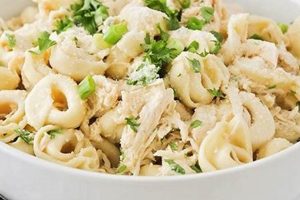
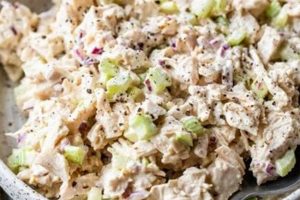
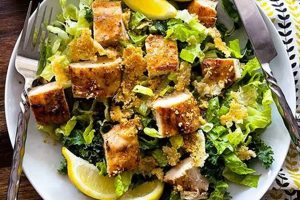
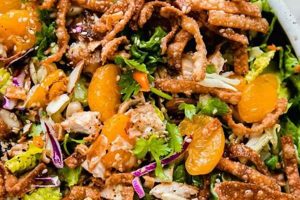
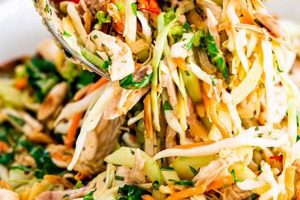
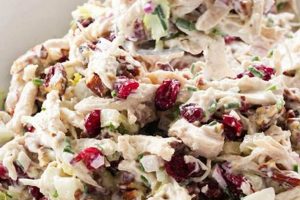
A baked dish featuring chicken salad as the primary component typically involves combining cooked chicken, mayonnaise, and various other ingredients, such as celery, grapes, nuts, or dried fruits. This mixture is then placed in a baking dish and often topped with a crunchy layer of breadcrumbs, crackers, or shredded cheese before being baked until heated through and golden brown. Variations can include the addition of pasta, rice, or vegetables to create a more substantial meal.
Casseroles featuring chicken salad offer a comforting and convenient meal option, particularly for potlucks or family gatherings. The baking process melds the flavors and creates a warm, satisfying dish. Historically, such dishes reflect resourcefulness in using leftover chicken and readily available pantry staples. They provide a flexible canvas for culinary creativity, allowing cooks to adapt ingredients based on personal preferences and seasonal availability. This adaptability contributes to the enduring popularity of these types of dishes.
The following sections will delve into specific variations, offering detailed instructions and exploring the nuances of ingredient selection and preparation techniques. Nutritional information and tips for adapting these dishes to various dietary needs will also be provided.
Tips for a Successful Chicken Salad Bake
Optimizing a baked chicken salad dish involves careful consideration of ingredients and techniques. The following tips offer guidance for achieving desirable results.
Tip 1: Chicken Selection and Preparation: Employing high-quality, properly cooked chicken contributes significantly to the final product. Rotisserie chicken offers convenience; alternatively, poaching or baking boneless, skinless breasts provides a leaner option. Ensure the chicken is cooled and shredded or diced appropriately before incorporating it into the salad mixture.
Tip 2: Balancing Moisture Content: Excess moisture can result in a soggy bake. Thoroughly drain any canned or jarred ingredients, such as water chestnuts or artichoke hearts. Adjust the amount of mayonnaise to achieve a desirable consistency without making the mixture overly wet.
Tip 3: Enhancing Flavor Profiles: Fresh herbs, such as dill, parsley, or chives, elevate the flavor profile. Incorporating a variety of textures, through the inclusion of chopped nuts, dried cranberries, or grapes, adds complexity.
Tip 4: Topping Selection and Application: A crunchy topping provides textural contrast. Consider using buttery crackers, panko breadcrumbs, or shredded cheese. Ensure even distribution of the topping for consistent browning and texture.
Tip 5: Baking Time and Temperature: Adhering to recommended baking times and temperatures prevents overcooking or undercooking. A preheated oven is essential for even heat distribution. Monitor the dish’s internal temperature to ensure it reaches a safe temperature.
Tip 6: Serving Suggestions: Allow the bake to rest briefly before serving. This allows the flavors to meld and the dish to set slightly, facilitating cleaner slicing and serving. Complement the dish with a fresh green salad or steamed vegetables.
Tip 7: Storage and Reheating: Proper storage ensures food safety and maintains quality. Refrigerate leftovers promptly in an airtight container. Reheat gently in the oven or microwave, ensuring the internal temperature reaches a safe level.
By following these tips, one can create a delicious and satisfying chicken salad bake that is both flavorful and visually appealing. Attention to detail in ingredient selection, preparation, and baking techniques contributes significantly to the overall success of the dish.
This foundation of knowledge prepares for the exploration of specific recipes and variations in the following sections.
1. Ingredients

Ingredient selection significantly impacts the final flavor profile and overall quality of a chicken salad bake. Careful consideration of each component contributes to a balanced and satisfying dish.
- Protein: Chicken
Cooked chicken serves as the foundation. Options include roasted, poached, or baked chicken. Rotisserie chicken offers convenience, while preparing chicken from scratch allows for greater control over seasoning and flavor. The chicken should be shredded or diced into bite-sized pieces for optimal integration with other ingredients.
- Binding Agent: Mayonnaise
Mayonnaise binds the ingredients and contributes richness and creaminess. The quantity used influences the moisture content of the bake; therefore, careful measurement is essential. Alternatives such as Greek yogurt or avocado can be substituted for a lighter, healthier option.
- Aromatics and Flavor Enhancers: Vegetables, Herbs, and Spices
Celery, onions, and grapes are common additions, providing textural and flavor complexity. Fresh herbs such as dill, parsley, or chives impart brightness and freshness. Spices like paprika or curry powder can be incorporated to create specific flavor profiles. The choice of these elements offers opportunities for customization and personalization.
- Textural Elements: Nuts and Dried Fruits
Ingredients like chopped walnuts, pecans, or dried cranberries offer textural contrast and contribute nuanced flavors. These elements enhance the overall sensory experience of the dish. The selection of these components should complement the other flavors present in the recipe.
The interplay of these ingredient categories contributes significantly to the final product. A successful chicken salad bake features a harmonious balance of protein, moisture, aromatics, and textural elements. Harmonizing these components creates a dish that is not only flavorful but also visually appealing and texturally satisfying.
2. Preparation Methods

Preparation methods significantly influence the final outcome of a chicken salad bake recipe. Proper techniques ensure even cooking, optimal texture, and maximized flavor development. The following facets highlight essential preparatory steps:
- Combining Ingredients
The process of combining ingredients impacts the overall consistency and flavor distribution within the bake. A gentle folding technique ensures that the ingredients are evenly incorporated without overmixing, which can lead to a dense or tough final product. For example, when adding delicate ingredients like grapes or dried fruits, care should be taken to avoid crushing them. This careful approach preserves the integrity of each component and contributes to a visually appealing and texturally pleasing bake.
- Prepping the Baking Dish
Proper preparation of the baking dish is crucial for preventing sticking and ensuring even cooking. Greasing the dish with butter or cooking spray creates a barrier between the bake and the dish, facilitating easy removal and cleanup. Additionally, using parchment paper allows for effortless lifting of the baked chicken salad from the dish, simplifying serving and presentation. This step is particularly important for dishes with delicate toppings that might otherwise adhere to the baking dish.
- Topping Application
The application of the topping influences both the texture and visual appeal of the finished dish. Even distribution of breadcrumbs, crackers, or shredded cheese ensures consistent browning and a satisfying crunch. This also contributes to the overall aesthetic presentation of the dish. For instance, a light and even layer of breadcrumbs promotes uniform browning and avoids dense, soggy patches.
- Pre-baking Steps (Optional)
Certain recipes may call for pre-baking steps, such as toasting nuts or briefly sauting vegetables. These preliminary steps enhance the flavor and texture of the individual components before they are incorporated into the final bake. Toasting nuts intensifies their flavor, while sauting vegetables can soften their texture and concentrate their flavors. These additional steps, while optional, contribute depth and complexity to the overall dish.
Precise execution of these preparation methods directly correlates with the success of the chicken salad bake recipe. Attention to detail in each stage, from combining ingredients to prepping the baking dish and applying the topping, ensures a final product that is both visually appealing and delicious. These preparatory steps lay the groundwork for a perfectly baked, flavorful, and satisfying dish.
3. Baking Techniques
Baking techniques are crucial for achieving the desired outcome in a chicken salad bake recipe. They directly influence the texture, moisture content, and overall palatability of the dish. Proper execution of these techniques ensures a final product that is evenly cooked, flavorful, and visually appealing.
- Oven Temperature Regulation
Maintaining a consistent oven temperature is paramount for even cooking and preventing over-browning. A preheated oven ensures the bake heats uniformly, promoting optimal doneness and preventing the formation of hot spots. For instance, a chicken salad bake recipe might specify a temperature of 350F (175C). Adhering to this temperature ensures the ingredients cook through without drying out or burning.
- Baking Time
Baking time directly correlates with the size and depth of the dish, as well as the desired level of browning. Overbaking can result in a dry, tough bake, while underbaking may lead to a soggy or unsafe final product. A recipe will typically specify a baking time range, allowing for adjustments based on individual oven characteristics and desired doneness. Observing the bake’s visual cues, such as golden-brown edges and a firm center, helps determine when it’s properly cooked.
- Placement in Oven
Positioning the baking dish correctly within the oven promotes even heat distribution. Placing the dish on the center rack typically yields the best results, allowing for adequate airflow and uniform cooking. Avoid placing the dish too close to the heating elements, which can lead to uneven browning or burning. For example, in a conventional oven, the center rack position is generally recommended for achieving consistent baking results.
- Use of a Water Bath (Optional)
A water bath, or bain-marie, provides gentle, indirect heat, which can be beneficial for certain chicken salad bake variations. This technique helps maintain moisture and prevents overcooking, especially for recipes containing delicate ingredients like eggs or cheese. While not always necessary, a water bath can contribute to a smoother, more evenly cooked final product in some cases.
Mastery of these baking techniques contributes significantly to the successful execution of a chicken salad bake recipe. Precise temperature regulation, appropriate baking time, correct oven placement, and judicious use of a water bath, when necessary, ensure optimal cooking and a delicious final product. These techniques, combined with quality ingredients and proper preparation, result in a chicken salad bake that is both satisfying and visually appealing.
4. Flavor Combinations
Flavor combinations play a pivotal role in the overall success of a chicken salad bake recipe. A well-balanced and harmonious blend of flavors elevates the dish from simple to exceptional. Strategic ingredient pairings create depth and complexity, transforming the bake into a culinary experience. The following explores key flavor combinations and their impact on the final product.
- Classic Creamy and Crunchy
This combination focuses on the interplay of creamy and crunchy textures. The base typically involves mayonnaise, providing richness and binding the ingredients. Incorporating elements like celery and grapes adds a refreshing contrast, while a topping of buttery crackers or toasted nuts delivers the desired crunch. This classic profile offers a familiar and comforting flavor experience.
- Savory and Herbaceous
Fresh herbs contribute significantly to a savory and herbaceous profile. Dill, parsley, chives, and tarragon are popular choices. These herbs complement the chicken and other ingredients, adding brightness and depth. Incorporating ingredients like red onion or water chestnuts further enhances the savory notes, creating a more complex and nuanced flavor dimension. This combination appeals to those who prefer a less sweet, more savory chicken salad bake.
- Sweet and Tangy
Dried cranberries, apricots, or raisins introduce sweetness, while a touch of lemon juice or apple cider vinegar provides tanginess. This balance of sweet and tart flavors adds complexity and prevents the bake from becoming overly sweet. The interplay of these contrasting flavors creates a vibrant and refreshing taste experience. This combination often incorporates pecans or walnuts for added textural contrast.
- Spicy and Zesty
A spicy kick can be achieved through the addition of ingredients like jalapeos, diced green chilies, or a dash of hot sauce. Balancing the spice with zesty elements like lime juice or cilantro creates a dynamic flavor profile. This combination caters to those who prefer a more assertive and vibrant taste experience. A crunchy topping of crushed tortilla chips can further enhance the textural and flavor complexity.
The selection of flavor combinations significantly influences the overall character of a chicken salad bake. By understanding the interplay of different ingredients and flavor profiles, one can create a dish tailored to specific preferences. Whether aiming for a classic, savory, sweet, or spicy profile, the careful selection and combination of ingredients contribute significantly to the creation of a memorable and satisfying culinary experience.
5. Serving Suggestions
Serving suggestions enhance the enjoyment and presentation of a chicken salad bake recipe. Consideration of complementary flavors, textures, and temperatures elevates the dining experience. A well-chosen accompaniment can balance the richness of the bake, introduce contrasting elements, and provide a complete and satisfying meal.
Accompaniments for chicken salad bake fall into several categories. Fresh greens, such as a simple mixed green salad with a light vinaigrette, offer a refreshing counterpoint to the richness of the bake. The acidity in the dressing cuts through the creamy mayonnaise base, while the crisp texture of the lettuce contrasts with the soft texture of the bake. Roasted or steamed vegetables, such as asparagus, broccoli, or green beans, provide additional nutrients and visual appeal. Their earthy flavors and slightly firm textures complement the creamy and often crunchy chicken salad bake. For a heartier meal, crusty bread, such as a baguette or sourdough loaf, provides a vehicle for enjoying the bake and soaking up any excess sauce. The bread’s firm texture offers a textural contrast, while its mild flavor does not overpower the chicken salad. Fruit salads featuring seasonal fruits like berries or melon provide a refreshing and light complement, particularly during warmer months. The sweetness and juiciness of the fruit contrast with the savory nature of the bake.
Appropriate serving suggestions demonstrate an understanding of flavor profiles and enhance the overall culinary experience. The selection of accompaniments should consider the specific ingredients and flavors present in the chicken salad bake itself. For example, a bake with a spicy kick might pair well with a cooling cucumber-yogurt salad. A bake featuring sweet and tangy elements might be complemented by a simple green salad with a citrus vinaigrette. Careful consideration of these factors ensures a harmonious and satisfying meal.
Frequently Asked Questions
This section addresses common inquiries regarding chicken salad bake recipes, providing concise and informative responses to facilitate a deeper understanding and successful preparation.
Question 1: Can frozen chicken be used directly in a chicken salad bake recipe?
Utilizing frozen chicken directly is not recommended. Thawing and properly cooking the chicken beforehand ensures food safety and optimal texture within the final dish. Frozen chicken releases excess moisture during baking, potentially resulting in a soggy bake.
Question 2: What are suitable substitutions for mayonnaise in a chicken salad bake?
Greek yogurt or avocado offer healthier alternatives to mayonnaise, contributing a lighter texture and different flavor profile. Adjusting the quantity of these substitutes may be necessary to achieve desired consistency.
Question 3: How can one prevent a soggy chicken salad bake?
Thoroughly draining ingredients like canned vegetables or fruits helps minimize excess moisture. Additionally, using a preheated oven and adhering to recommended baking times are essential for proper moisture evaporation during cooking.
Question 4: What is the optimal storage method for leftover chicken salad bake?
Refrigerate leftovers promptly in an airtight container. Proper storage prevents bacterial growth and maintains the quality of the dish for up to three days. Avoid storing the bake at room temperature for extended periods.
Question 5: Can other types of meat be used in a “chicken salad bake” recipe?
While the term denotes chicken, other cooked meats like turkey, ham, or tuna can be substituted. Flavor profiles will vary depending on the meat used. Adjusting seasonings and other ingredients may be necessary to achieve desired flavor combinations.
Question 6: How can one adapt a chicken salad bake recipe for gluten-free diets?
Substitute gluten-free breadcrumbs or crushed crackers for the topping. Ensure all other ingredients, including seasonings and sauces, are certified gluten-free. Using a dedicated gluten-free baking dish can further minimize cross-contamination.
Understanding these common points of inquiry aids in successful preparation and adaptation of chicken salad bake recipes. Careful consideration of ingredient selection, preparation techniques, and baking methods ensures a flavorful and satisfying dish.
The next section offers a collection of varied chicken salad bake recipes for further exploration.
Chicken Salad Bake Recipe
Exploration of the chicken salad bake recipe has encompassed ingredient selection, preparation methods, baking techniques, flavor combinations, and serving suggestions. Emphasis has been placed on the importance of quality ingredients, proper preparation techniques, and adherence to recommended baking methods. The versatility of this dish, adaptable to various flavor profiles and dietary needs, has been highlighted through discussions of classic combinations and innovative variations. Key considerations, such as moisture control, texture enhancement, and flavor balancing, have been thoroughly addressed to ensure successful preparation.
The chicken salad bake recipe provides a foundation for culinary creativity and adaptation. Understanding the underlying principles governing its preparation empowers individuals to personalize and refine the dish according to individual preferences and dietary restrictions. Continued exploration of flavor profiles and ingredient combinations promises further evolution and refinement of this classic dish, ensuring its enduring presence in culinary traditions.