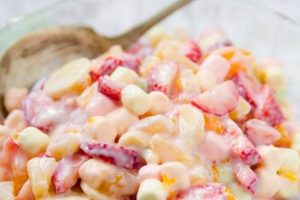
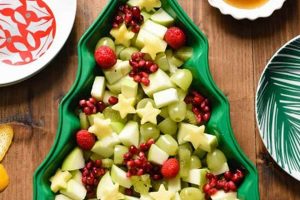
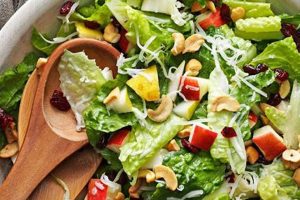
A refreshing dish combining sweet, tart cherries with other complementary fruits, a fruit salad featuring this stone fruit offers a vibrant and flavorful experience. Variations can include a simple mix of cherries, berries, and melon or more complex combinations incorporating nuts, herbs, and a light dressing. For example, a summer salad might pair fresh cherries with watermelon, feta cheese, and mint, while an autumnal version might include dried cherries, apples, pecans, and a maple-vinaigrette.
This type of salad provides a good source of vitamins, minerals, and antioxidants, particularly from the cherries themselves. Historically, cherries have been prized for both their flavor and perceived health benefits. Their inclusion in fruit salads adds not only a burst of color but also a nutritional boost. The versatility of such a salad allows for adaptation to seasonal ingredients and individual preferences, making it a popular choice for picnics, potlucks, and light meals.
The following sections will delve into specific cherry varieties best suited for fruit salads, offer diverse recipe ideas for both sweet and savory applications, and provide tips for proper storage and preparation techniques to maximize flavor and freshness.
Tips for Crafting the Perfect Cherry Fruit Salad
Achieving a balanced and flavorful cherry fruit salad requires attention to detail and an understanding of complementary flavors and textures. The following tips provide guidance for optimal results.
Tip 1: Cherry Selection: Opt for fresh, plump cherries with vibrant color and firm texture. Consider a mix of sweet and tart varieties for a complex flavor profile. Canned cherries can be used, but ensure they are drained and rinsed thoroughly.
Tip 2: Complementary Fruits: Balance the cherry’s sweetness with contrasting flavors and textures. Berries, melons, grapes, and citrus fruits offer excellent pairings. Consider adding crisp elements like apples or pears for textural contrast.
Tip 3: Flavor Enhancement: Herbs like mint, basil, or tarragon can elevate the flavor profile. A squeeze of citrus juice or a light vinaigrette can add brightness and complexity. Nuts or seeds contribute a satisfying crunch.
Tip 4: Proper Preparation: Pit the cherries carefully to avoid bruising. Cut larger fruits into bite-sized pieces for uniform presentation and ease of consumption. Prepare ingredients just before serving to maintain freshness.
Tip 5: Storage: Store prepared fruit salad in an airtight container in the refrigerator for up to two days. To prevent browning, toss the fruit with a small amount of lemon or lime juice.
Tip 6: Presentation: Arrange the fruit salad attractively in a serving bowl. Garnish with fresh herbs, edible flowers, or a sprinkle of nuts for an appealing visual presentation. Consider serving individual portions in glasses or small bowls for a more elegant touch.
Tip 7: Balance of Sweetness and Acidity: If the salad is too sweet, a squeeze of lemon or lime juice can restore balance. Conversely, a drizzle of honey or maple syrup can enhance sweetness if needed.
By following these tips, one can create a delightful cherry fruit salad that showcases the versatility and flavor of this beloved fruit. Attention to detail, from ingredient selection to presentation, ensures a satisfying culinary experience.
The following section provides a selection of curated recipes, offering further inspiration and guidance for creating a memorable cherry fruit salad.
1. Fresh, Ripe Cherries

Fresh, ripe cherries form the cornerstone of a successful cherry fruit salad recipe. Their quality directly impacts the overall flavor, texture, and visual appeal of the dish. Utilizing cherries at peak ripeness ensures optimal sweetness and juiciness, contributing a vibrant burst of flavor that complements other fruit components. Conversely, using underripe or overripe cherries can result in a bland or overly tart salad, diminishing the intended balance of flavors. For example, a salad featuring fresh, sweet cherries alongside tart berries and a citrus vinaigrette provides a harmonious blend of sweet, tart, and tangy notes. Replacing the fresh cherries with canned or frozen varieties, even when properly prepared, inevitably alters the textural and flavor profile.
The choice of cherry variety also plays a crucial role. Sweet cherry varieties like Bing or Rainier offer a robust sweetness balanced by a subtle tartness, ideal for pairing with milder fruits. Tart cherry varieties, such as Montmorency, provide a more pronounced acidity that complements richer, sweeter fruits and creamy cheeses. Understanding the flavor profile of each variety allows for strategic combinations that enhance the overall complexity of the salad. Consider a summer salad pairing fresh Bing cherries with watermelon, feta, and mintthe sweetness of the cherries and melon complements the salty feta and refreshing mint. Alternatively, a fall salad might include dried Montmorency cherries, apples, pecans, and a maple vinaigrette; the tart cherries balance the sweet apples and maple, while the pecans add a welcome crunch.
Selecting and incorporating fresh, ripe cherries is paramount to achieving a balanced and flavorful fruit salad. The variety chosen, its ripeness, and its interaction with other ingredients significantly impact the final product. Prioritizing fresh, high-quality cherries ensures a vibrant, flavorful, and visually appealing dish that exemplifies the best of summer’s bounty.
2. Complementary Fruit Selection

Complementary fruit selection is crucial for a well-balanced cherry fruit salad recipe. Cherries, while delicious, benefit from the addition of other fruits that enhance their flavor profile and add textural variety. The inherent sweetness and slight tartness of cherries create a foundation that can be elevated by incorporating fruits with contrasting characteristics. This interplay of flavors and textures transforms a simple mix of ingredients into a complex and satisfying culinary experience.
For instance, the sweetness of cherries pairs well with the tartness of berries like raspberries or blueberries. This combination creates a dynamic flavor profile that prevents the salad from becoming overly sweet. Adding fruits with a different texture, such as crisp apples or juicy melon, provides textural contrast, making each bite more interesting. The inclusion of citrus fruits, like oranges or grapefruits, introduces a tangy element that brightens the overall flavor and cuts through the richness of the cherries. Consider a salad combining sweet cherries with tart raspberries, crisp green apple slices, and segments of juicy orange the varied sweetness, tartness, and textures create a harmonious balance.
Understanding the interplay of flavors and textures is essential for successful fruit salad construction. The choice of complementary fruits should consider the specific cherry variety used. Sweet cherry varieties, like Bing or Rainier, pair well with milder fruits, while tart cherry varieties, such as Montmorency, complement richer, sweeter options. Thoughtful complementary fruit selection elevates the sensory experience of a cherry fruit salad, transforming it from a simple dish into a carefully crafted culinary creation. This understanding allows for customization and adaptation to seasonal availability and individual preferences.
3. Balanced Sweetness/Tartness
Balanced sweetness and tartness is paramount in a successful cherry fruit salad recipe. Cherries possess an inherent sweetness often accompanied by a subtle tartness, depending on the variety. This inherent flavor profile serves as a foundation upon which a complex and enjoyable flavor experience can be built. Overly sweet salads can become cloying, while excessively tart salads can be unpleasantly sharp. The goal is to achieve a harmonious balance where the sweetness and tartness complement each other, creating a more nuanced and refreshing taste. This balance can be achieved through careful selection of cherry varieties and the incorporation of other fruits that either enhance sweetness or contribute acidity.
For example, incorporating sweet Bing cherries with tart raspberries creates a balanced flavor profile where the sweetness of the cherries is offset by the tartness of the raspberries. Conversely, using tart Montmorency cherries might necessitate the inclusion of sweeter fruits like grapes or melon to temper the acidity. Further refinement can be achieved through the addition of a dressing. A light vinaigrette with a touch of honey or maple syrup can enhance sweetness, while a squeeze of lemon or lime juice can provide a balancing tartness. A salad featuring tart cherries, sweet melon, and a honey-lime vinaigrette exemplifies this balancethe tartness of the cherries and the tang of the lime contrast with the melon’s sweetness and the honey’s subtle sweetness.
Understanding the interplay between sweetness and tartness provides a framework for creating a dynamic and flavorful cherry fruit salad. This understanding allows for adaptability and customization based on ingredient availability and individual preferences. Successfully balancing these contrasting flavors results in a more complex and satisfying culinary experience, demonstrating an understanding of flavor principles and a thoughtful approach to recipe development. The ultimate goal is to create a harmonious flavor profile that appeals to a broad range of palates and elevates the simple fruit salad to a more sophisticated level.
4. Appropriate Dressing/Enhancements
Appropriate dressings and enhancements play a crucial role in elevating a cherry fruit salad recipe from simple to exceptional. While the inherent flavors of fresh cherries and complementary fruits provide a solid foundation, a carefully chosen dressing or enhancement can unify the diverse elements, adding depth, complexity, and a touch of sophistication. These additions should complement, not overpower, the natural flavors of the fruit, enhancing the overall sensory experience. The choice of dressing or enhancement depends on the specific combination of fruits used and the desired flavor profile.
A light vinaigrette, for example, can brighten the flavors of the fruit without masking their natural sweetness. A simple lemon or lime vinaigrette adds a refreshing tang, while a balsamic vinaigrette contributes a deeper, more complex sweetness. Herbs, such as mint, basil, or tarragon, can be incorporated into the vinaigrette or sprinkled directly over the salad to add an aromatic dimension. A sprinkle of toasted nuts or seeds adds textural contrast and a subtle nuttiness. For a richer flavor profile, a drizzle of honey or maple syrup can be used sparingly to enhance sweetness and add a touch of viscosity. Consider a cherry fruit salad with a mix of sweet and tart cherries, blueberries, and sliced almonds. A light lemon vinaigrette enhances the sweetness of the cherries and blueberries while complementing the nutty almonds. Alternatively, a cherry and peach salad might benefit from a balsamic glaze and a sprinkle of fresh basil, creating a more complex and savory flavor profile.
Selecting appropriate dressings and enhancements requires careful consideration of the interplay of flavors and textures within the salad. Overly sweet dressings can overwhelm the natural sweetness of the fruit, while heavy dressings can mask the delicate flavors. The goal is to create a harmonious balance that enhances, not obscures, the inherent qualities of the ingredients. Understanding this principle enables the creation of a cherry fruit salad that is not only visually appealing but also offers a complex and satisfying flavor experience. The appropriate dressing or enhancement acts as a finishing touch, elevating the dish and showcasing a nuanced understanding of flavor pairings and culinary techniques.
5. Proper Preparation Techniques

Proper preparation techniques are essential for maximizing the flavor, texture, and visual appeal of a cherry fruit salad recipe. These techniques ensure that the ingredients are handled in a way that preserves their freshness and optimizes their contribution to the final dish. From selecting ripe fruit to employing specific cutting methods, each step plays a crucial role in creating a successful and enjoyable salad.
- Cherry Pitting:
Removing the pits from cherries is a crucial step that affects both the texture and enjoyment of the salad. While a cherry pitter is the most efficient method, a small paring knife or even a sturdy straw can be used. Care should be taken to minimize bruising and preserve as much of the cherry flesh as possible. Leaving the pits in can create an unpleasant eating experience and potentially pose a choking hazard. Properly pitted cherries contribute to a smoother, more enjoyable texture and enhance the overall aesthetic of the salad.
- Consistent Sizing:
Cutting the fruit into uniform pieces ensures even distribution of flavor and creates a visually appealing presentation. Bite-sized pieces are ideal for ease of consumption and prevent larger pieces from dominating the salad. This consistency enhances the overall aesthetic and allows for a more balanced distribution of flavors in each bite. For example, large chunks of melon alongside small berries can create an uneven flavor experience. Consistent sizing contributes to a more harmonious and visually appealing final product.
- Preventing Browning:
Certain fruits, such as apples and bananas, are prone to browning when exposed to air. To prevent this, these fruits can be tossed with a small amount of lemon or lime juice. The citric acid acts as an antioxidant, slowing down the oxidation process and preserving the fruit’s fresh appearance. This step is particularly important for fruit salads that are prepared in advance. A visually appealing salad enhances the dining experience and signals freshness and attention to detail.
- Timing of Preparation:
To maintain optimal freshness and prevent the fruit from becoming soggy, it’s best to prepare the salad as close to serving time as possible. This prevents the release of excess moisture and maintains the integrity of the individual fruit pieces. If advance preparation is necessary, the fruit can be stored separately and combined just before serving. Proper timing preserves the texture and flavor of each ingredient, ensuring a crisp and refreshing salad rather than a mushy, less appealing mixture.
By adhering to these proper preparation techniques, one ensures that the cherry fruit salad is not only flavorful and visually appealing but also safe and enjoyable to consume. These techniques demonstrate a commitment to quality and attention to detail, elevating the simple act of preparing a fruit salad to a more refined culinary endeavor. The result is a dish that showcases the natural flavors and textures of the ingredients, providing a truly satisfying sensory experience.
6. Attractive Presentation

Attractive presentation significantly enhances the perceived value and enjoyment of a cherry fruit salad recipe. Visual appeal stimulates appetite and creates a more satisfying dining experience. Careful arrangement and attention to detail elevate the dish beyond mere sustenance, transforming it into a visually engaging culinary creation. Consider the difference between a haphazardly tossed salad and one artfully arranged with varying colors, textures, and heights. The latter immediately suggests greater care and attention, promising a more enjoyable experience.
Several factors contribute to attractive presentation. Color contrast plays a key role; the vibrant reds and deep purples of cherries provide a striking base, enhanced by incorporating fruits of contrasting hues, such as bright green kiwi, orange segments, or golden pineapple chunks. Varying textures further enhance visual interest; combining smooth cherries with rough-cut melon, segmented citrus, and whole berries creates a dynamic interplay. Strategic use of garnishes provides a finishing touch; a sprig of fresh mint, a sprinkle of toasted nuts, or a dusting of powdered sugar adds a touch of elegance and elevates the perceived quality. A simple cherry and berry salad gains visual appeal with a few strategically placed mint leaves and a light dusting of powdered sugar, transforming a basic dish into something more visually enticing.
The practical significance of attractive presentation extends beyond mere aesthetics. It influences perceptions of flavor and freshness, increasing enjoyment and perceived value. In a buffet setting, a beautifully presented cherry fruit salad is more likely to attract attention and be selected over a less visually appealing option. This understanding has practical implications for both home cooks and professional chefs. Investing time in thoughtful presentation elevates the dining experience, demonstrating care and attention to detail that enhances enjoyment and satisfaction. Ultimately, attractive presentation transforms a simple cherry fruit salad recipe into a memorable culinary experience.
7. Optimal storage methods
Optimal storage methods are crucial for preserving the quality and extending the lifespan of a cherry fruit salad. Improper storage can lead to undesirable changes in texture, flavor, and appearance, compromising the overall enjoyment of the dish. These changes primarily stem from enzymatic browning, oxidation, and moisture loss, impacting both the visual appeal and the sensory experience. For instance, cut fruit exposed to air browns quickly, becoming less appetizing. Similarly, improper temperature control can lead to bacterial growth, posing health risks. Therefore, understanding and implementing optimal storage techniques is essential for maintaining the quality and safety of a cherry fruit salad.
Several factors influence optimal storage. Temperature plays a critical role; refrigeration at temperatures between 34F and 40F (1C and 4C) slows down enzymatic activity and microbial growth, preserving freshness. Air exposure accelerates oxidation and moisture loss; storing the salad in an airtight container minimizes these effects. Furthermore, the choice of container material can impact quality. Glass or plastic containers with tight-fitting lids are preferred over metal containers, which can react with acidic fruits and impart metallic flavors. For a cherry fruit salad containing apples, storing it in an airtight container in the refrigerator prevents browning and maintains its crisp texture for longer. Conversely, storing the same salad at room temperature in an open container will result in rapid browning, a loss of texture, and potential spoilage.
Effective storage preserves the quality and safety of a cherry fruit salad, maximizing its shelf life while maintaining its sensory appeal. Proper storage minimizes enzymatic browning, oxidation, and moisture loss, preserving the vibrant colors, fresh flavors, and crisp textures. This understanding has practical significance for both home cooks and food service professionals. Implementing these strategies contributes to reducing food waste and ensuring a safe and enjoyable culinary experience. Ultimately, optimal storage is a crucial component of a successful cherry fruit salad recipe, contributing to both its quality and longevity.
Frequently Asked Questions
This section addresses common inquiries regarding cherry fruit salad preparation and storage, offering practical guidance for optimal results.
Question 1: How long can cherry fruit salad be stored in the refrigerator?
Properly stored in an airtight container, cherry fruit salad typically maintains optimal quality for up to two days in the refrigerator. Beyond this timeframe, textural changes and potential spoilage may occur.
Question 2: What are the best cherry varieties for fruit salad?
Both sweet and tart cherry varieties offer distinct advantages. Sweet varieties like Bing and Rainier provide a robust sweetness, while tart varieties like Montmorency offer a refreshing tang. A combination of both can create a complex flavor profile.
Question 3: How can browning be prevented in fruit salad?
Fruits susceptible to browning, such as apples and bananas, benefit from a light coating of lemon or lime juice. The citric acid acts as an antioxidant, inhibiting enzymatic browning and preserving freshness.
Question 4: Can frozen cherries be used in fruit salad?
While fresh cherries are generally preferred for optimal texture and flavor, frozen cherries can be substituted. Thorough thawing and draining are essential to prevent excess moisture from affecting the salad’s consistency.
Question 5: What dressings complement cherry fruit salad?
Light vinaigrettes, such as lemon, lime, or balsamic, enhance the natural sweetness of the fruit without overpowering it. A touch of honey or maple syrup can be added for extra sweetness, while fresh herbs like mint or basil provide aromatic complexity.
Question 6: How can one elevate the presentation of cherry fruit salad?
Consider elements like color contrast, texture variation, and strategic garnishes. Arranging the fruit artfully in a serving bowl and adding elements like fresh mint sprigs or a sprinkle of toasted nuts enhances visual appeal.
Understanding these key aspects ensures successful preparation and storage, contributing to a more enjoyable culinary experience. Attention to detail, from ingredient selection to presentation, elevates this simple dish.
The following section offers a collection of curated cherry fruit salad recipes, providing further inspiration and practical guidance.
Cherry Fruit Salad Recipe
This exploration of cherry fruit salad recipes has highlighted the key elements contributing to a successful and enjoyable dish. From the selection of fresh, ripe cherries and complementary fruits to the importance of balanced sweetness and tartness, each component plays a vital role. Proper preparation techniques, including careful pitting and consistent sizing, ensure optimal texture and presentation. Appropriate dressings and enhancements, such as light vinaigrettes or fresh herbs, elevate the flavor profile, while attractive presentation and optimal storage methods maintain quality and maximize enjoyment. Addressing frequently asked questions provides practical guidance for handling and storing the salad effectively.
The versatility of cherry fruit salad recipes allows for endless creativity and adaptation to individual preferences and seasonal availability. One can explore diverse flavor combinations and presentation styles, transforming a simple dish into a culinary masterpiece. Emphasis on fresh, high-quality ingredients and attention to detail ensures a delightful sensory experience that celebrates the vibrant flavors and textures of this beloved fruit.