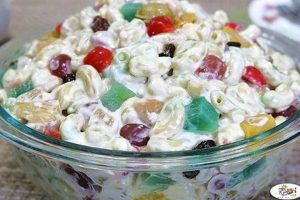
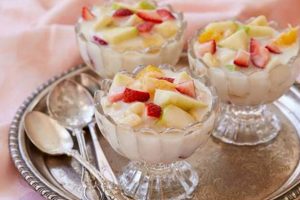
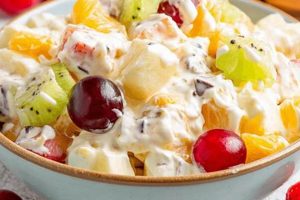
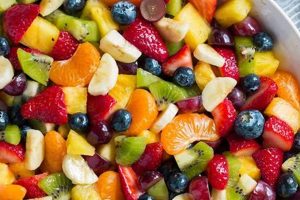
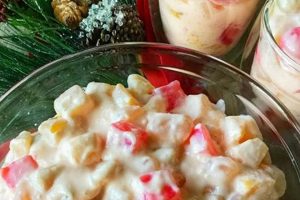
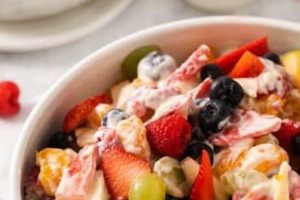
Seasonal fruit salads featuring the bounty of fall harvests offer a delightful combination of flavors and textures. Think crisp apples and pears, juicy pomegranates, and the tart sweetness of cranberries, often complemented by nuts, cheeses, and seasonal spices. A simple example might include diced apples, pears, and grapes tossed with a light vinaigrette and sprinkled with toasted pecans.
Embracing seasonal produce offers several advantages. Fall fruits are at their peak ripeness, resulting in optimal flavor and nutritional value. These recipes also provide an opportunity to explore diverse culinary traditions and celebrate the change of seasons. Historically, preserving the harvest was essential, and fruit salads, while not a preservation method themselves, represent a connection to this heritage by utilizing readily available produce.
This exploration delves further into creating compelling fall fruit salads. Topics covered include selecting the best seasonal ingredients, balancing flavors and textures, creating complementary dressings, and presenting these vibrant dishes for maximum appeal.
Tips for Crafting Delicious Autumn Fruit Salads
Creating a memorable autumn fruit salad involves careful consideration of ingredients, textures, and flavors. These tips offer guidance for composing balanced and visually appealing salads.
Tip 1: Embrace Seasonal Variety: Select fruits at their peak ripeness. Consider apples, pears, grapes, pomegranates, cranberries, and figs. Variety enhances both flavor and visual appeal.
Tip 2: Balance Sweetness and Tartness: Combine sweet fruits like pears and grapes with tart elements such as cranberries or pomegranate seeds. This interplay of flavors prevents monotony.
Tip 3: Consider Texture: Incorporate a range of textures. Combine soft fruits like grapes and berries with crisp apples and pears. Toasted nuts or seeds add a satisfying crunch.
Tip 4: Enhance with Complementary Ingredients: Nuts, cheeses, and dried fruits can elevate a fruit salad. Pecans, walnuts, crumbled goat cheese, or chopped dates offer intriguing flavor combinations.
Tip 5: Dressings Matter: A simple vinaigrette, a light citrus glaze, or a sprinkle of cinnamon can enhance the flavors of the fruit. Avoid heavy dressings that mask the natural sweetness.
Tip 6: Prepare Ingredients Properly: Prevent browning by tossing apples and pears with a little lemon juice. Peel and segment citrus fruits for easier enjoyment.
Tip 7: Presentation Enhances Appeal: Arrange the salad attractively. Consider using a variety of colors and shapes. A sprinkle of fresh herbs can add a final touch of elegance.
By following these tips, one can create autumn fruit salads that are not only delicious but also visually appealing and nutritionally rewarding. These salads offer a delightful way to celebrate the season’s bounty.
From selecting the perfect ingredients to artful presentation, creating exceptional autumn fruit salads is a rewarding culinary endeavor.
1. Seasonal Fruit Selection

Seasonal fruit selection forms the foundation of successful autumn fruit salad recipes. Choosing fruits at their peak ripeness ensures optimal flavor, texture, and nutritional value. This practice connects the salad directly to the essence of autumn, reflecting the season’s unique offerings.
- Peak Season Availability
Autumn offers a distinct array of fruits reaching peak ripeness during this period. Apples, pears, cranberries, and grapes exemplify produce readily available and bursting with flavor in the fall. Utilizing these fruits ensures the salad captures the true essence of the season.
- Flavor Optimization
Fruits harvested in their prime season possess superior flavor profiles compared to those obtained out of season. A perfectly ripe apple offers a crisp, sweet, and slightly tart taste unattainable in other seasons. This heightened flavor complexity translates directly to a more enjoyable and satisfying salad.
- Nutritional Value
Peak-season fruits often boast higher nutrient content. Shorter transport times and optimal growing conditions contribute to increased vitamin and mineral levels. Selecting these fruits allows the salad to become a source of valuable nutrients, enhancing its health benefits.
- Supporting Local Agriculture
Choosing seasonal produce often means supporting local farmers and reducing the environmental impact associated with long-distance transportation. Incorporating locally sourced autumn fruits reinforces a connection to the community and promotes sustainable practices.
By prioritizing seasonal fruit selection, autumn fruit salad recipes transcend mere culinary creations, transforming into vibrant representations of the season’s bounty. This practice elevates the sensory experience while contributing to both individual well-being and sustainable agricultural practices.
2. Flavor Balancing
Flavor balancing represents a crucial aspect of crafting exceptional autumn fruit salads. It involves the thoughtful combination of different taste profiles to create a harmonious and nuanced culinary experience. A well-balanced salad avoids monotony, engaging the palate with a complex interplay of sweet, tart, and other complementary flavors. This section explores the key facets of flavor balancing within the context of autumn fruit salads.
- Interplay of Sweet and Tart
The foundation of flavor balance often lies in the interplay between sweetness and tartness. Autumn offers a diverse range of fruits that embody these contrasting profiles. Sweet elements, such as ripe pears or grapes, provide a foundational sweetness. Tart components, like cranberries or pomegranate seeds, introduce a contrasting sharpness that prevents the salad from becoming overly sweet. This dynamic tension creates a more engaging and satisfying flavor profile.
- Incorporating Earthy and Savory Notes
Beyond the core sweet and tart elements, incorporating earthy or savory notes adds depth and complexity to the salad. Toasted nuts, such as pecans or walnuts, contribute an earthy richness. Crumbled cheeses, like goat cheese or blue cheese, introduce savory nuances. These additions broaden the flavor spectrum, moving beyond a simple sweet-tart dichotomy and creating a more sophisticated palate experience.
- The Role of Spices and Herbs
Spices and herbs offer subtle yet significant contributions to flavor balancing. A sprinkle of cinnamon or nutmeg enhances the warmth of autumnal flavors. Fresh herbs, like mint or rosemary, introduce bright, herbaceous notes that contrast beautifully with the fruit’s sweetness. These additions provide aromatic complexity, elevating the overall sensory experience.
- Acidity as a Balancing Agent
Acidity plays a crucial role in balancing the sweetness of the fruit. A light vinaigrette, often made with lemon juice or apple cider vinegar, provides a refreshing tartness that cuts through the richness of the fruit. This acidic element brightens the overall flavor profile, preventing the salad from becoming cloying and enhancing the perception of sweetness.
Through the careful consideration of these facets, flavor balancing transforms autumn fruit salads into sophisticated culinary creations. The strategic combination of contrasting and complementary tastes results in a harmonious and dynamic flavor profile that celebrates the season’s bounty while providing a truly satisfying sensory experience.
3. Textural Variety

Textural variety elevates autumn fruit salads from simple combinations to engaging culinary experiences. The interplay of different textures adds depth and complexity, stimulating the palate beyond mere taste. A well-composed salad considers the contrast between crisp, soft, and crunchy elements, creating a more satisfying and memorable sensory experience. This exploration delves into the crucial role of textural variety within autumn fruit salad recipes.
- Contrasting Crisp and Soft Elements
The juxtaposition of crisp and soft textures forms a foundational element of textural variety. Crisp components, such as apples, pears, and pomegranate seeds, provide a refreshing bite. Softer elements, like grapes, berries, or ripe figs, offer a contrasting smoothness. This interplay prevents textural monotony, creating a dynamic mouthfeel that enhances enjoyment.
- Incorporating Crunchy Textures
Adding crunchy elements provides another layer of textural complexity. Toasted nuts, such as pecans, walnuts, or almonds, introduce a satisfying crunch. Seeds, like pumpkin or sunflower seeds, offer a similar textural contrast. These additions create points of interest, interrupting the smoothness of the fruit and providing a delightful textural counterpoint.
- The Influence of Preparation Techniques
Preparation techniques significantly influence texture. Dicing apples and pears creates distinct pieces with noticeable crispness. Slicing creates thinner pieces with a softer texture. Leaving some fruits whole, like grapes or berries, introduces variation in size and firmness. These choices allow for manipulation of texture, creating a more nuanced and balanced experience.
- Textural Harmony and Balance
The ultimate goal is to achieve textural harmony. While contrasting textures are desirable, the overall balance must be considered. An excess of any single texture, whether crisp, soft, or crunchy, can detract from the overall experience. Careful selection and preparation techniques ensure a balanced and harmonious textural profile that complements the flavor profile of the salad.
Through the strategic incorporation of contrasting and complementary textures, autumn fruit salads become more than just a collection of ingredients. They transform into dynamic culinary creations that engage multiple senses, resulting in a more satisfying and memorable dining experience. The interplay of textures adds depth and complexity, showcasing the versatility of autumn’s bounty and highlighting the artistry of a well-composed salad.
4. Complementary Additions

Complementary additions represent a crucial element in elevating autumn fruit salads from simple mixtures to sophisticated culinary creations. These additions expand the flavor profile, introduce textural complexity, and enhance visual appeal. Careful selection of complementary ingredients enriches the overall sensory experience, transforming a basic fruit salad into a memorable autumnal dish.
- Nuts and Seeds
Nuts and seeds contribute both textural contrast and flavor depth. Toasted pecans, walnuts, or almonds provide a satisfying crunch and introduce earthy, nutty notes. Pumpkin seeds or sunflower seeds offer a lighter crunch and subtle nuttiness. These additions complement the sweetness and tartness of the fruit, adding a layer of complexity.
- Cheese
Cheese introduces savory and tangy elements that balance the sweetness of the fruit. Crumbled goat cheese offers a tangy, slightly acidic counterpoint. Blue cheese provides a pungent and creamy contrast. Feta cheese contributes a salty and briny note. The choice of cheese depends on the desired flavor profile and the specific fruits used in the salad.
- Dried Fruits
Dried fruits intensify sweetness and introduce chewy textures. Chopped dates, cranberries, or apricots add concentrated sweetness and a pleasant chewiness. These additions provide a textural counterpoint to the fresh fruit while enhancing the overall sweetness profile. They also contribute to a more complex and layered flavor experience.
- Spices and Herbs
Spices and herbs enhance the aromatic complexity of the salad. A sprinkle of cinnamon or nutmeg complements the warm, autumnal flavors of apples and pears. Fresh herbs, such as mint or rosemary, add bright, herbaceous notes that contrast with the fruit’s sweetness. These subtle additions elevate the sensory experience without overpowering the delicate flavors of the fruit.
The strategic incorporation of complementary additions transforms autumn fruit salads into well-rounded culinary experiences. These elements contribute to a more complex flavor profile, introduce textural variety, and enhance the overall presentation. By carefully considering these additions, one can create salads that showcase the bounty of autumn while delivering a truly satisfying sensory experience.
5. Presentation & Serving
Presentation and serving significantly influence the perception and enjoyment of autumn fruit salads. Visual appeal enhances the dining experience, stimulating appetite and creating anticipation. A thoughtfully presented salad elevates the perceived value of the dish, transforming it from a simple mixture of ingredients into a culinary creation. Consider a salad served in a rustic wooden bowl, garnished with a sprig of fresh rosemary. This presentation evokes autumnal themes and enhances the perceived freshness and quality of the ingredients. Conversely, a haphazardly arranged salad in a plain bowl diminishes the overall appeal, regardless of the quality of the ingredients themselves. The interplay of color, texture, and serving vessel contributes to a holistic sensory experience.
Practical applications of presentation principles include the strategic use of color contrasts. A salad featuring vibrant red cranberries against a backdrop of pale green pears and golden apples creates visual interest. Varying the shapes and sizes of fruit pieces adds dimension and prevents visual monotony. The choice of serving vessel further contributes to the overall aesthetic. A clear glass bowl showcases the vibrant colors of the fruit, while a ceramic bowl offers a more rustic presentation. Garnishes, such as toasted nuts, fresh herbs, or a dusting of powdered sugar, provide finishing touches that enhance visual appeal. These details, while seemingly minor, contribute significantly to the overall perception of the dish.
Effective presentation elevates the dining experience, transforming autumn fruit salads into visually appealing and enticing culinary creations. Thoughtful consideration of color, texture, serving vessel, and garnishes enhances the perceived value and enjoyment of the salad. Understanding these principles allows for the creation of dishes that not only taste delicious but also offer a feast for the eyes, contributing to a more complete and satisfying dining experience. This attention to detail reflects a respect for the ingredients and an understanding of the impact visual presentation has on overall enjoyment.
Frequently Asked Questions
This section addresses common inquiries regarding autumn fruit salad recipes, providing concise and informative responses.
Question 1: How can enzymatic browning of fruits like apples and pears be prevented?
A light coating of lemon juice or ascorbic acid (vitamin C) inhibits oxidation, preserving the fruit’s appearance and preventing discoloration.
Question 2: What dressings best complement autumn fruit salads?
Light vinaigrettes with citrus or apple cider vinegar, honey, and subtle spices enhance the natural flavors without overpowering them. Heavy, creamy dressings are generally less suitable.
Question 3: How can textural variety be maximized in these salads?
Incorporating a mix of crisp fruits (apples, pears), soft fruits (grapes, berries), and crunchy elements (nuts, seeds) provides a balanced textural profile.
Question 4: Beyond traditional fruits, what other ingredients can enhance autumn fruit salads?
Complementary additions such as cheeses (goat cheese, feta), dried fruits (cranberries, dates), and spices (cinnamon, nutmeg) add depth and complexity.
Question 5: How long can autumn fruit salads be stored?
Refrigeration in airtight containers preserves freshness for up to three days, although optimal flavor and texture are best enjoyed within 24 hours. Dressings are often added just before serving to prevent fruit from becoming soggy.
Question 6: Are there specific considerations for presenting autumn fruit salads?
Thoughtful presentation elevates the dining experience. Consider using a variety of colors and textures, arranging the salad attractively, and choosing serving vessels that complement the autumnal theme.
Understanding these key aspects contributes to the creation of exceptional autumn fruit salads that highlight the season’s bounty and offer a delightful culinary experience.
For further exploration, consider consulting reputable culinary resources or exploring specific recipe variations online or in cookbooks.
Autumn Fruit Salad Recipes
Exploration of autumn fruit salad recipes reveals the potential for culinary creativity using seasonal ingredients. Emphasis on peak-season produce, flavor balancing, textural variety, and complementary additions elevates these salads beyond simple fruit mixtures. Strategic presentation further enhances the dining experience, transforming these dishes into celebrations of autumn’s bounty.
Culinary innovation with seasonal ingredients offers a pathway to both healthier eating and a deeper appreciation for the cyclical nature of food production. Continued exploration of flavor profiles and presentation techniques promises further evolution of autumn fruit salad recipes, ensuring their enduring appeal and culinary significance.