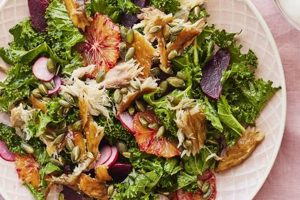
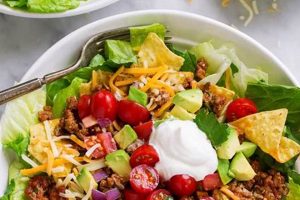
Nutritious and satisfying salads designed to support weight management typically emphasize fresh, whole ingredients. These often include a base of leafy greens, a variety of colorful vegetables for vitamins and minerals, lean protein sources for satiety, and healthy fats for nutrient absorption and flavor. An example might feature grilled chicken breast over spinach with bell peppers, cucumbers, avocado, and a light vinaigrette dressing.
Consuming meals rich in vegetables, lean protein, and healthy fats contributes to satiety, potentially reducing overall caloric intake. This approach can be a crucial component of a balanced dietary strategy for weight loss. Furthermore, the high nutrient density of these salads helps ensure the body receives essential vitamins and minerals, often lacking in restrictive diets. Historically, salads have been recognized for their health benefits, with variations appearing across cultures for centuries.
The following sections will explore specific ingredient recommendations, provide diverse recipe examples, and offer practical tips for incorporating these meals into a weight-conscious lifestyle.
Tips for Creating Effective Weight-Loss Salads
Creating salads that effectively support weight management requires careful consideration of ingredients and portion sizes. The following tips offer guidance for maximizing nutritional value while managing caloric intake.
Tip 1: Prioritize Leafy Greens: Select nutrient-rich greens like spinach, kale, or romaine lettuce as a base. These offer volume and essential vitamins with minimal calories.
Tip 2: Incorporate Variety: Include a diverse range of colorful vegetables. Different vegetables provide different nutrients, promoting a balanced nutritional profile. Examples include bell peppers, carrots, broccoli, and red onion.
Tip 3: Choose Lean Protein: Add a source of lean protein to promote satiety and maintain muscle mass. Grilled chicken breast, fish, beans, lentils, or tofu are excellent choices.
Tip 4: Include Healthy Fats: Incorporate healthy fats in moderation. Avocado, nuts, and seeds offer essential fatty acids and contribute to flavor and satiety. A small portion is sufficient.
Tip 5: Be Mindful of Dressings: Opt for light vinaigrettes or dressings made with healthy oils like olive oil. Avoid creamy dressings, which are often high in calories and unhealthy fats.
Tip 6: Control Portions: While salads are generally healthy, portion control remains important for weight management. Be mindful of serving sizes, particularly with calorie-dense add-ins.
Tip 7: Prepare in Advance: Preparing ingredients or even entire salads ahead of time can facilitate adherence to dietary goals and prevent impulsive unhealthy food choices.
By following these guidelines, individuals can create salads that are both nutritious and supportive of weight loss goals. These tips promote a balanced intake of essential nutrients while managing caloric intake.
In conclusion, a strategic approach to salad preparation can be a valuable tool for achieving and maintaining a healthy weight. The information provided here offers a foundation for incorporating these meals into a balanced and sustainable dietary plan.
1. Nutrient-Dense Ingredients

Nutrient density plays a crucial role in effective weight management. Consuming foods rich in vitamins, minerals, and other essential nutrients while minimizing calories contributes to satiety and overall health. In the context of weight-loss salads, prioritizing nutrient-dense ingredients is paramount for achieving desired outcomes without compromising nutritional well-being.
- Leafy Greens
Leafy greens such as spinach, kale, and romaine lettuce form the foundation of many weight-loss salads. These vegetables offer high nutrient content with minimal calories, providing essential vitamins and minerals like vitamin A, vitamin K, and folate. Their high fiber content contributes to satiety, reducing the likelihood of overeating.
- Cruciferous Vegetables
Cruciferous vegetables like broccoli, cauliflower, and Brussels sprouts offer a wealth of nutrients, including fiber, vitamin C, and various antioxidants. Their inclusion in weight-loss salads contributes to both nutritional intake and increased volume, further promoting satiety.
- Colorful Vegetables
Adding a variety of colorful vegetables, such as bell peppers, carrots, and red onion, enhances the nutritional profile of a salad. Different colors often indicate different nutrient profiles, ensuring a diverse intake of vitamins and minerals. For example, red bell peppers are rich in vitamin C, while carrots provide beta-carotene.
- Lean Protein Sources
Incorporating lean protein sources like grilled chicken breast, fish, beans, lentils, or tofu into salads is essential for maintaining muscle mass during weight loss. Protein also contributes significantly to feelings of fullness, reducing the urge to consume excess calories.
By focusing on these nutrient-dense ingredients, individuals can create salads that support weight loss goals while simultaneously providing the body with essential nutrients for optimal health. This approach ensures a balanced and sustainable dietary strategy, maximizing both short-term and long-term well-being.
2. Controlled Portions

Portion control plays a critical role in the efficacy of salad recipes for weight management. Even with nutrient-rich ingredients, excessive caloric intake can hinder weight loss progress. Managing portion sizes ensures that the overall caloric intake from the salad aligns with weight loss goals. For example, a large salad overflowing with calorie-dense ingredients like nuts, cheese, or dried fruit, even if comprised of healthy components, can contribute to a caloric surplus if consumed in large quantities. The concept of “good” salad recipes for weight loss hinges on the balance between nutrient density and controlled portions.
Practical application of portion control in salad preparation involves mindful assembly. Measuring ingredients, particularly those higher in calories, ensures appropriate serving sizes. Using smaller plates and bowls can also aid in visual portion control, promoting a sense of satisfaction with a smaller quantity. Pre-portioning salads into individual containers for meals throughout the week further facilitates adherence to portion goals. This preemptive strategy reduces the likelihood of overconsumption in the moment and streamlines healthy eating habits.
Understanding the impact of portion sizes on overall caloric intake is fundamental to successful weight management. While nutrient-dense salads contribute significantly to a healthy diet, uncontrolled portions can negate their benefits. Integrating portion control strategies, such as measuring ingredients and using appropriate serving vessels, maximizes the effectiveness of salad recipes for weight loss. This approach ensures that salads contribute to both nutritional well-being and progress toward weight goals.
3. Lean Protein Sources

Lean protein sources are fundamental to constructing salads that effectively support weight loss. Protein’s role in satiety regulation and muscle mass preservation makes it a crucial component of a balanced, weight-conscious diet. Incorporating adequate protein into salads helps individuals feel fuller for longer, potentially reducing overall caloric intake and supporting metabolic function. This section explores the importance of various lean protein options in the context of weight-loss salads.
- Poultry
Skinless poultry, such as chicken or turkey breast, offers a versatile and readily available lean protein source. Grilled, baked, or shredded, poultry contributes significant protein content with minimal added fat. Its neutral flavor profile allows it to complement diverse salad ingredients and dressings. For example, grilled chicken breast pairs well with Mediterranean-inspired salads, while shredded turkey complements Asian-inspired salads with peanut-based dressings.
- Fish
Fish, particularly varieties like tuna, salmon, and cod, provides lean protein and essential omega-3 fatty acids. These fatty acids contribute to overall health and may play a role in supporting weight management. Canned tuna or salmon provides a convenient option, while grilled or baked fish offers a more substantial addition to a salad. Flaked tuna or salmon can be mixed directly into the salad, while grilled fish fillets can be served atop a bed of greens.
- Legumes
Legumes, including beans, lentils, and chickpeas, offer a plant-based source of lean protein and dietary fiber. Their high fiber content contributes to satiety and digestive health. Beans and lentils can be added to salads whole or pureed into dressings. Chickpeas, roasted or canned, provide a satisfying crunch and nutty flavor. A lentil salad with roasted vegetables offers a hearty and nutritious meal option.
- Tofu and Tempeh
Tofu and tempeh, derived from soybeans, represent versatile plant-based protein sources suitable for vegan and vegetarian diets. They absorb flavors well, making them adaptable to various cuisines and dressings. Cubed and pan-fried tofu adds a crispy texture to salads, while crumbled tempeh offers a nutty flavor profile. A tofu and vegetable salad with a sesame ginger dressing provides a flavorful and protein-rich meal.
Strategic incorporation of these lean protein sources enhances the satiety factor of weight-loss salads. This promotes adherence to dietary plans by reducing hunger and cravings. The versatility of these protein options allows for diverse and flavorful salad combinations, catering to individual preferences and dietary needs. Prioritizing lean protein in salad construction contributes significantly to the overall effectiveness of these recipes for weight management.
4. Healthy Fats

The inclusion of healthy fats in weight-loss salads, often perceived as counterintuitive, plays a vital role in their overall effectiveness. Dietary fats, while calorically dense, contribute significantly to satiety, nutrient absorption, and hormonal balance. These factors are crucial for managing hunger, optimizing micronutrient uptake, and supporting metabolic function, all of which contribute to successful weight management. Excluding fats entirely can lead to nutrient deficiencies, increased cravings, and unsustainable dietary restrictions.
Sources of healthy fats suitable for weight-loss salads include avocados, nuts, seeds, and olive oil. Avocados provide monounsaturated fats, fiber, and various vitamins. Nuts and seeds offer a combination of healthy fats, protein, and fiber, contributing to both satiety and nutritional value. Olive oil, rich in monounsaturated fats and antioxidants, serves as a base for healthy salad dressings. For instance, a salad featuring grilled salmon (rich in omega-3 fatty acids), mixed greens, avocado slices, and a lemon-tahini dressing exemplifies the strategic incorporation of healthy fats. The fats in this example enhance the absorption of fat-soluble vitamins from the greens and contribute to the feeling of fullness, reducing the likelihood of overeating.
While incorporating healthy fats is essential, portion control remains crucial. Fats are calorically dense, and excessive consumption can hinder weight loss progress. A mindful approach involves incorporating moderate amounts of these beneficial fats, ensuring they complement the overall nutritional balance of the salad without contributing to a caloric surplus. The strategic inclusion of healthy fats in weight-loss salads, therefore, represents a crucial element in creating satisfying, nutrient-rich meals that support sustainable weight management goals. This approach recognizes the importance of dietary fat not as an impediment, but as a valuable component of a healthy and effective weight-loss strategy.
5. Variety of Vegetables

Vegetable diversity is a cornerstone of effective weight-loss salad recipes. A wide array of vegetables ensures a broad spectrum of nutrients, contributing to satiety and overall health while minimizing caloric intake. Different vegetables offer unique combinations of vitamins, minerals, fiber, and antioxidants, maximizing nutritional benefits within the context of a calorie-controlled diet. This variety also enhances flavor profiles and textural complexity, promoting enjoyment and adherence to dietary plans.
- Nutritional Density
Different vegetables boast different nutrient profiles. Combining a variety, such as leafy greens for vitamin K, bell peppers for vitamin C, and carrots for beta-carotene, maximizes nutrient intake within a calorie-controlled framework. This approach mitigates potential nutrient deficiencies often associated with restrictive diets.
- Enhanced Satiety
Fiber-rich vegetables, like broccoli and Brussels sprouts, contribute significantly to satiety. Their high volume and water content promote fullness, reducing the likelihood of overconsumption. Incorporating a variety of these fibrous vegetables into salads enhances this effect, promoting adherence to dietary goals.
- Flavor and Texture
Including a variety of vegetables introduces diverse flavors and textures, preventing monotony and enhancing palatability. The crispness of cucumbers, the sweetness of bell peppers, and the peppery bite of radishes create a more engaging sensory experience, encouraging consistent consumption of healthy salads.
- Antioxidant Benefits
Many vegetables are rich in antioxidants, compounds that protect cells from damage. Variety ensures a diverse intake of these protective compounds. For example, tomatoes provide lycopene, while spinach offers lutein and zeaxanthin. These antioxidants contribute to overall health and may play a role in reducing inflammation.
Incorporating a diverse range of vegetables into salads optimizes their effectiveness for weight loss. This approach ensures nutrient adequacy, promotes satiety, enhances palatability, and provides antioxidant benefits. A varied and colorful salad not only supports weight management but also contributes to overall health and well-being, making it a sustainable dietary strategy.
6. Light Dressings
The choice of salad dressing significantly impacts the overall effectiveness of salad recipes for weight management. Heavy, creamy dressings often contain high levels of saturated and unsaturated fats, added sugars, and sodium, contributing substantial calories and potentially negating the health benefits of the salad’s other components. Light dressings, conversely, offer a lower-calorie alternative, allowing individuals to enjoy flavorful salads without compromising weight loss goals. The relationship between light dressings and effective weight-loss salads lies in the balance between flavor enhancement and caloric control. A vinaigrette, for example, made with olive oil, vinegar, and herbs, provides flavor complexity with fewer calories and less added fat compared to a creamy ranch or Caesar dressing.
Practical examples illustrate this principle. A salad composed of nutrient-dense vegetables, lean protein, and healthy fats can quickly become calorie-laden with the addition of a creamy dressing. Substituting a light vinaigrette, or even a squeeze of lemon juice and a sprinkle of herbs, maintains the salad’s nutritional integrity while minimizing added calories. Further, the reduced sodium content in light dressings contributes to overall health, particularly for individuals managing blood pressure. Opting for light dressings made with unsaturated fats, like olive oil, also provides potential cardiovascular benefits. These oils contribute to a healthier fat profile compared to saturated fats often found in creamy dressings.
Strategic dressing selection is essential for optimizing the efficacy of weight-loss salads. Prioritizing light dressings, particularly those based on unsaturated fats and minimal added sugars, allows individuals to enjoy flavorful and satisfying salads without compromising weight management objectives. This approach recognizes that the dressing is an integral part of the overall caloric and nutritional profile of the salad, and careful selection contributes significantly to achieving weight goals while maintaining a balanced and enjoyable diet. Avoiding high-calorie dressings becomes a pivotal factor in long-term dietary adherence and the successful integration of healthy salad recipes into a sustainable weight-loss plan.
Frequently Asked Questions
This section addresses common inquiries regarding the role of salads in weight management, providing clear and concise responses based on nutritional principles.
Question 1: Can salads alone lead to significant weight loss?
While salads contribute to a balanced diet supportive of weight loss, they are most effective as part of a comprehensive approach that includes regular physical activity and overall healthy eating habits. Sustainable weight management relies on a combination of factors, not solely on any single food group.
Question 2: Are all salads equally beneficial for weight loss?
Nutritional value varies depending on ingredients. Salads rich in high-calorie toppings, dressings, and processed meats may hinder weight loss efforts. Prioritizing nutrient-dense ingredients like leafy greens, lean proteins, and healthy fats is essential.
Question 3: How can salads be made more filling for weight management?
Incorporating lean protein sources, such as grilled chicken, fish, beans, or tofu, increases satiety. Adding healthy fats, like avocados, nuts, or seeds, in moderation, also promotes fullness and aids nutrient absorption.
Question 4: What are some healthy dressing alternatives to avoid excess calories?
Light vinaigrettes made with olive oil, vinegar, and herbs offer a lower-calorie alternative to creamy dressings. Lemon juice, herbs, and spices can also provide flavor without added calories and unhealthy fats.
Question 5: How often should salads be consumed for weight loss purposes?
Regularly incorporating salads into a balanced diet can contribute to weight management. Frequency depends on individual dietary needs and preferences, but aiming for several servings per week, alongside other nutritious meals, can be beneficial.
Question 6: Can pre-made salads from grocery stores support weight loss?
Pre-made salads can be convenient, but careful evaluation is crucial. Some contain high-calorie dressings or toppings. Opting for salads with lean protein, a variety of vegetables, and light dressings, or customizing pre-made options, supports weight loss goals.
Prioritizing nutrient-dense ingredients, portion control, and healthy dressing choices maximizes the effectiveness of salads for weight management. Integrating these principles into a comprehensive healthy lifestyle promotes sustainable weight loss and overall well-being.
Further exploration of recipe ideas and meal planning strategies can provide additional guidance for incorporating salads into a weight-conscious diet. The following sections offer practical resources for creating flavorful and effective weight-loss salads.
Good Salad Recipes for Weight Loss
Effective weight management often necessitates dietary adjustments, and good salad recipes offer a valuable tool for achieving weight loss goals. This exploration has highlighted the crucial role of nutrient-dense ingredients, portion control, lean protein sources, healthy fats, diverse vegetables, and light dressings in creating salads that support weight reduction efforts. Careful selection of components ensures that salads contribute to both nutritional well-being and calorie management, promoting sustainable and healthy weight loss.
The significance of good salad recipes extends beyond mere weight loss; they represent a pathway toward a healthier and more balanced lifestyle. Embracing a dietary approach rich in whole, unprocessed foods, exemplified by thoughtfully constructed salads, offers substantial long-term health benefits. Continued exploration of diverse ingredients and creative recipe combinations can further enhance the enjoyment and effectiveness of incorporating salads into a weight-conscious and health-focused dietary plan.