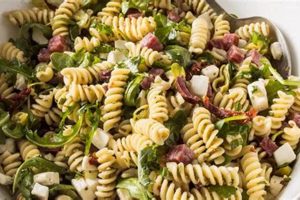
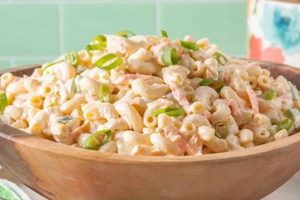
Exceptional pasta salads distinguish themselves through a harmonious blend of high-quality ingredients, balanced flavors, and appealing textures. A truly superior pasta salad might feature perfectly cooked pasta, fresh, seasonal vegetables, a flavorful dressing, and complementary protein or cheese. For instance, a vibrant orzo pasta salad could combine ripe cherry tomatoes, Kalamata olives, crumbled feta cheese, and a lemon-herb vinaigrette.
Achieving excellence in pasta salad preparation offers numerous advantages. A well-crafted pasta salad serves as a versatile dish suitable for picnics, potlucks, barbecues, or light lunches. Its adaptability extends to variations accommodating diverse dietary needs, from vegetarian and vegan to gluten-free options. Furthermore, the ability to prepare components in advance enhances convenience, making pasta salad a practical and time-efficient culinary choice. Historically, cold pasta dishes have roots in various cultures, evolving alongside pasta-making traditions and regional culinary preferences.
This article will explore the fundamental principles of crafting outstanding pasta salads, covering topics such as pasta selection, ingredient preparation, dressing formulation, and creative flavor combinations. Techniques for enhancing visual appeal and ensuring optimal texture will also be addressed.
Tips for Creating Exceptional Pasta Salads
Crafting a truly memorable pasta salad requires attention to detail and a thoughtful approach to ingredient selection and preparation. The following tips offer guidance for elevating pasta salads from ordinary to extraordinary.
Tip 1: Select the Right Pasta. Pasta shape significantly influences the final product. Rotini, farfalle, and fusilli hold dressings well due to their intricate shapes. Shorter pasta, such as ditalini or orzo, works well in salads with smaller ingredients like chopped vegetables or herbs.
Tip 2: Cook Pasta Al Dente. Slightly firm pasta holds its shape better in a salad and prevents a mushy texture. Rinse cooked pasta under cold water to stop the cooking process and cool it down quickly.
Tip 3: Embrace Fresh, Seasonal Ingredients. Peak-season vegetables offer optimal flavor and texture. Consider incorporating ingredients like ripe tomatoes, crisp cucumbers, sweet corn, or vibrant bell peppers.
Tip 4: Balance Flavors and Textures. A successful pasta salad features a harmonious blend of flavors and textures. Incorporate salty elements like olives or feta cheese, acidic components like vinegar or citrus juice, and crunchy elements like nuts or raw vegetables.
Tip 5: Dress Strategically. Add dressing gradually, ensuring the pasta is evenly coated without becoming soggy. A lighter dressing allows individual flavors to shine, while a creamier dressing can add richness and bind ingredients together.
Tip 6: Enhance with Protein and Cheese. Grilled chicken, shrimp, or chickpeas add protein and substance. Crumbled feta, cubed mozzarella, or shaved Parmesan contribute savory notes and textural contrast.
Tip 7: Marinate for Optimal Flavor. Allowing the pasta salad to marinate in the refrigerator for at least 30 minutes allows the flavors to meld and deepen. This step enhances the overall taste experience.
By following these tips, one can create pasta salads that are not only visually appealing but also bursting with flavor and texture. Attention to these details ensures a delightful culinary experience.
This collection of tips provides a solid foundation for crafting exceptional pasta salads. The following section will delve into specific recipe examples, offering practical applications of these guiding principles.
1. High-quality Ingredients

The foundation of exceptional pasta salads lies in the selection of superior ingredients. Utilizing fresh, flavorful components elevates the final dish from ordinary to extraordinary. This principle applies to every element of the salad, from the pasta itself to the vegetables, proteins, cheeses, and dressing.
- Fresh Produce:
Seasonal vegetables at their peak ripeness offer optimal flavor and texture. Locally sourced produce, when available, minimizes transit time and maximizes freshness. Examples include vine-ripened tomatoes, crisp cucumbers, and sweet corn during the summer months. The vibrant flavors of fresh produce contribute significantly to the overall appeal of the pasta salad.
- Premium Pasta:
High-quality pasta made from durum wheat semolina holds its shape well and offers a desirable texture. Bronze-die pasta, with its rough surface, effectively absorbs the dressing, enhancing flavor distribution. Choosing the appropriate pasta shape for the specific salad is crucial, ensuring compatibility with other ingredients.
- Flavorful Cheeses and Proteins:
Artisan cheeses, such as fresh mozzarella or crumbled feta, add depth and complexity. High-quality proteins, like grilled chicken breast or sustainably sourced seafood, contribute substantial nutritional value and textural contrast. Thoughtful selection of these elements enhances the overall balance and satisfaction of the pasta salad.
- Homemade Dressings:
Freshly prepared dressings using extra virgin olive oil, flavorful vinegars, and fresh herbs offer superior taste compared to pre-made alternatives. Customization allows for precise control over flavor profiles, accommodating individual preferences and dietary restrictions. A well-balanced dressing enhances the flavors of the other ingredients without overpowering them.
The synergy of these high-quality ingredients results in a pasta salad that transcends the sum of its parts. Careful consideration of each component ensures a harmonious blend of flavors, textures, and aromas, ultimately delivering a truly exceptional culinary experience.
2. Balanced Flavors
Balanced flavors constitute a cornerstone of exceptional pasta salads. The interplay of sweet, sour, salty, bitter, and umami elements creates a harmonious and satisfying culinary experience. A well-balanced pasta salad avoids dominance by any single flavor, allowing each component to contribute to the overall profile. This balance elevates the dish beyond simple sustenance, transforming it into a more complex and enjoyable culinary creation. For instance, the sweetness of sun-dried tomatoes might be balanced by the saltiness of feta cheese and the acidity of a lemon vinaigrette. The bitterness of olives or arugula can complement the richness of a creamy dressing, while a touch of umami from Parmesan cheese adds depth and complexity.
Achieving flavor balance requires careful consideration of ingredient pairings and proportions. Overly sweet dressings can be tempered with a splash of vinegar, while excessive saltiness can be mitigated by incorporating fresh herbs or a squeeze of lemon juice. The interplay of textures also contributes to perceived flavor balance. A creamy avocado might complement the crunch of toasted nuts, while the chewiness of dried cranberries can contrast with the crispness of bell peppers. These textural variations enhance the overall sensory experience, preventing monotony and stimulating the palate.
Understanding the principles of flavor balance empowers culinary creativity and ensures a more satisfying dining experience. It allows for the development of pasta salad recipes that are not only delicious but also nuanced and complex. Challenges may arise in balancing strong flavors, such as pungent cheeses or spicy peppers. However, strategic incorporation of complementary ingredients and careful adjustment of proportions can mitigate these challenges and achieve a harmonious result. This pursuit of balance distinguishes truly exceptional pasta salads from those that are merely adequate.
3. Complementary Textures
Textural diversity significantly contributes to the overall appeal of exceptional pasta salads. A combination of contrasting textures elevates the sensory experience, creating a more dynamic and enjoyable culinary creation. The interplay of soft, crunchy, chewy, and creamy elements adds complexity and prevents monotony, distinguishing a truly exceptional pasta salad from a mediocre one. For instance, the softness of cooked pasta can be juxtaposed with the crunch of raw vegetables like celery or bell peppers. The addition of toasted nuts or croutons introduces another layer of crispness, while elements like chickpeas or olives provide a pleasant chewiness. Creamy components, such as avocado or cheese, further enhance the textural tapestry.
The strategic incorporation of complementary textures enhances not only the sensory experience but also the perceived flavor profile. A variety of textures stimulates the palate, allowing for a fuller appreciation of the individual ingredients and their combined effect. Furthermore, textural contrast can create a more visually appealing presentation. The interplay of different shapes and sizes adds interest and dimension, making the salad more enticing. Consider a pasta salad with rotini, cherry tomatoes, black olives, and crumbled feta. The spiral shape of the rotini provides a foundation for the round tomatoes and olives, while the crumbled feta offers a contrasting texture and visual appeal.
Achieving optimal textural balance requires careful consideration of ingredient selection and preparation methods. Blanching or roasting vegetables can alter their texture, offering additional variety. Toasted nuts provide a different textural experience compared to raw nuts, while incorporating dried fruits introduces a chewy element. Understanding these nuances enables the creation of pasta salads with a complex and satisfying textural profile, a key characteristic of recipes worthy of the “best ever” designation. Balancing soft pasta with crisp vegetables, creamy cheeses, and crunchy toppings distinguishes exceptional pasta salads, showcasing a mastery of texture that enhances both flavor and visual appeal.
4. Creative Combinations
Culinary innovation distinguishes exceptional pasta salads from the ordinary. Creative combinations of ingredients elevate these dishes, transforming them into memorable culinary experiences. Exploration of unconventional pairings and flavor profiles is essential to achieving recipes worthy of the “best ever” distinction. This section delves into the facets of creative combinations that contribute to pasta salad excellence.
- Unexpected Flavor Pairings
Moving beyond traditional combinations unlocks new dimensions of flavor. Pairing roasted grapes with gorgonzola and walnuts, or incorporating mango with black beans and cilantro, introduces unexpected yet harmonious contrasts. Such innovative pairings stimulate the palate and offer a unique culinary experience, setting these salads apart from predictable recipes.
- Global Influences
Drawing inspiration from diverse culinary traditions expands the possibilities of pasta salad creation. Incorporating elements of Mediterranean, Asian, or South American cuisine introduces novel flavor profiles. A Greek-inspired pasta salad might feature Kalamata olives, feta cheese, and oregano, while an Asian-inspired version could incorporate sesame oil, edamame, and a soy-ginger dressing. These global influences broaden the spectrum of flavors and textures, resulting in more dynamic and interesting salads.
- Seasonal Ingredient Exploration
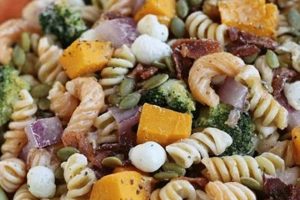
Utilizing seasonal produce at its peak freshness offers optimal flavor and nutritional value. Exploring the unique characteristics of each season’s bounty inspires innovative combinations. A spring pasta salad might showcase asparagus, peas, and lemon, while a fall version could feature butternut squash, cranberries, and pecans. Embracing seasonal ingredients not only enhances flavor but also promotes culinary creativity.
- Textural Variety and Contrast
Combining diverse textures enhances the sensory experience of a pasta salad. Incorporating crunchy nuts, chewy dried fruits, or creamy cheeses alongside the pasta and vegetables adds complexity and interest. A salad featuring farfalle pasta, toasted almonds, dried apricots, and goat cheese offers a delightful interplay of textures, further elevating the overall culinary experience.
These creative combinations are integral to crafting exceptional pasta salads. By exploring unexpected pairings, global influences, and seasonal ingredients, culinary enthusiasts can elevate their pasta salad creations beyond the mundane and achieve truly memorable dishes. These innovative approaches distinguish the “best ever” recipes, demonstrating a commitment to culinary excellence and a passion for flavor exploration.
5. Appropriate Pasta Shape

Pasta shape selection significantly impacts the overall success of a pasta salad. The right shape enhances the dish’s aesthetic appeal, flavor distribution, and structural integrity. Certain shapes cling to dressings more effectively, while others offer superior compatibility with specific ingredients. Understanding these nuances allows for optimization of both flavor and texture, crucial components of exceptional pasta salads.
Consider the difference between rotini and penne. Rotini, with its spirals and crevices, effectively captures dressing and small ingredients, ensuring even flavor distribution throughout the salad. Penne, with its smooth, tubular structure, offers a different textural experience and might be better suited for salads with larger ingredients or chunkier dressings. Orzo, due to its small, rice-like shape, pairs well with finely diced vegetables and lighter vinaigrettes, creating a delicate and harmonious blend. Choosing the appropriate shape enhances the overall balance and enjoyment of the pasta salad, demonstrating an attention to detail characteristic of “best ever” recipes.
Matching pasta shape to the other ingredients is crucial. For salads with robust components like grilled chicken or large vegetables, a sturdy shape like fusilli or farfalle provides structural integrity and prevents the pasta from becoming overwhelmed. Conversely, delicate salads featuring fresh herbs and lighter dressings benefit from smaller shapes like orzo or ditalini. This careful consideration of shape elevates the pasta salad from a simple dish to a carefully constructed culinary creation. Failure to select an appropriate shape can result in a less satisfying experience, with uneven dressing distribution or a disharmonious blend of textures. Therefore, understanding the impact of pasta shape is essential for achieving pasta salad excellence.
6. Flavorful Dressings
Flavorful dressings are integral to achieving “best pasta salad recipes ever” status. Dressings function as the unifying element, binding the individual components and imparting a cohesive flavor profile. A well-crafted dressing elevates the pasta salad beyond a mere assembly of ingredients, transforming it into a harmonious and flavorful dish. The dressing’s role extends beyond simply adding flavor; it also contributes to the overall texture and moisture content of the salad. Consider the impact of a vibrant lemon-herb vinaigrette versus a creamy, basil-infused pesto. Each dressing imparts distinct characteristics that influence the final product’s taste and consistency. A light vinaigrette adds brightness and tang, while a richer, creamier dressing contributes a luscious mouthfeel and more robust flavor.
Real-life examples illustrate the crucial role of flavorful dressings. A classic Italian pasta salad benefits from a tangy balsamic vinaigrette that complements the flavors of fresh mozzarella, tomatoes, and basil. Conversely, a Mediterranean-inspired pasta salad might feature a lemon-oregano dressing that enhances the flavors of Kalamata olives, feta cheese, and cucumbers. These examples demonstrate how a carefully selected dressing can elevate the overall taste experience, transforming ordinary ingredients into a cohesive and satisfying dish. Furthermore, the dressing’s viscosity influences how it coats the pasta and other ingredients. A thinner dressing lightly coats the components, allowing individual flavors to shine, while a thicker dressing clings more readily, creating a more homogenous flavor profile.
Understanding the nuances of dressing selection and preparation is crucial for achieving pasta salad excellence. Factors such as acidity, sweetness, saltiness, and herbaceousness must be carefully balanced to complement the other ingredients. Overly acidic dressings can overwhelm delicate flavors, while insufficient acidity can result in a bland and uninspiring salad. The practical significance of this understanding lies in the ability to create pasta salads that are not only flavorful but also well-balanced and texturally appealing. Mastering the art of dressing preparation distinguishes exceptional pasta salads, showcasing a culinary expertise that elevates the dish to “best ever” status. Challenges may arise in balancing the dressing’s flavor with the other ingredients, but careful consideration and experimentation yield rewarding results, contributing to a truly exceptional pasta salad experience.
7. Fresh, Seasonal Produce
Exceptional pasta salads rely heavily on the incorporation of fresh, seasonal produce. Peak-season ingredients offer optimal flavor and texture, contributing significantly to the overall quality and enjoyment of the dish. This emphasis on seasonality aligns with culinary best practices, maximizing flavor and nutritional value while minimizing environmental impact. Understanding the role of fresh, seasonal produce is crucial for achieving “best pasta salad recipes ever” status.
- Enhanced Flavor Profiles
Produce harvested at its peak ripeness exhibits more intense and nuanced flavors compared to out-of-season alternatives. A summer pasta salad featuring ripe tomatoes, sweet corn, and fresh basil offers a vibrant flavor profile unattainable with winter tomatoes or dried herbs. This emphasis on seasonal ingredients elevates the pasta salad from ordinary to extraordinary, demonstrating a commitment to quality and flavor maximization.
- Optimal Texture and Crispness
Fresh, seasonal produce contributes desirable textural qualities to pasta salads. Crisp cucumbers, crunchy bell peppers, and tender greens add dimension and contrast to the softness of cooked pasta. These textural variations enhance the sensory experience, making the salad more engaging and enjoyable. Using produce at its peak ensures optimal crispness and avoids the undesirable mushiness often associated with out-of-season vegetables.
- Nutritional Value Maximization
Produce harvested in season typically boasts higher nutritional content. Shorter transit times from farm to table minimize nutrient degradation, ensuring maximum benefit. Incorporating a variety of colorful, seasonal vegetables provides a range of vitamins, minerals, and antioxidants, contributing to a healthier and more nutritious meal. This nutritional advantage further distinguishes “best pasta salad recipes ever” from less healthful alternatives.
- Culinary Inspiration and Creativity
The availability of different produce throughout the year encourages culinary exploration and innovation. Adapting pasta salad recipes to feature seasonal ingredients fosters creativity and prevents monotony. Spring salads might showcase asparagus and peas, while summer salads highlight tomatoes and corn. This seasonality promotes variety and allows for continuous culinary experimentation, resulting in a wider range of flavorful and exciting pasta salad creations.
The integration of fresh, seasonal produce is paramount in crafting exceptional pasta salads. By prioritizing peak-season ingredients, culinary enthusiasts enhance flavor, texture, and nutritional value. This commitment to quality distinguishes the “best pasta salad recipes ever,” demonstrating an understanding of culinary principles and a dedication to creating truly outstanding dishes. The use of seasonal produce not only results in superior flavor but also aligns with sustainable practices, reducing reliance on resource-intensive out-of-season produce.
Frequently Asked Questions
This section addresses common inquiries regarding the creation of exceptional pasta salads, providing practical guidance for achieving optimal results.
Question 1: What is the best way to prevent pasta salad from becoming soggy?
Sogginess often results from overcooked pasta or excessive dressing. Cooking pasta al dente and adding dressing gradually helps maintain desirable texture. Furthermore, slightly undercooking the pasta allows it to absorb some of the dressing without becoming overly soft. Refrigerating the pasta salad for a short period allows the flavors to meld without compromising texture.
Question 2: How long can pasta salad be stored safely?
Properly stored pasta salad typically remains safe for consumption for three to five days in the refrigerator. Ensure the salad is stored in an airtight container to maintain freshness and prevent contamination. Discard any salad left at room temperature for more than two hours to minimize food safety risks.
Question 3: Can pasta salad be made ahead of time for large gatherings?
Pasta salad is an ideal dish for large gatherings due to its make-ahead convenience. Most components can be prepared in advance, allowing for efficient assembly closer to serving time. Adding the dressing shortly before serving helps maintain optimal texture and prevents the salad from becoming soggy.
Question 4: What are some suitable vegetarian protein options for pasta salad?
Vegetarian pasta salads can incorporate various protein sources for added nutritional value and textural interest. Chickpeas, black beans, edamame, and lentils provide substantial protein content. Cubed tofu or tempeh, when properly marinated and grilled, offer additional flavor and textural complexity.
Question 5: How can one adapt pasta salad recipes for gluten-free diets?
Gluten-free pasta, readily available in various shapes and sizes, enables adaptation of traditional recipes. Ensure all other ingredients, including dressings and condiments, are also gluten-free. Corn, rice, or quinoa-based pasta offer suitable alternatives to wheat-based pasta.
Question 6: What are some effective strategies for enhancing the visual appeal of pasta salad?
Visually appealing pasta salad enhances the dining experience. Utilizing a variety of colorful ingredients, such as bell peppers, cherry tomatoes, and fresh herbs, creates an attractive presentation. Garnishing with chopped nuts, crumbled cheese, or edible flowers adds a finishing touch. Strategic arrangement of ingredients further contributes to visual appeal.
These frequently asked questions provide practical guidance for crafting exceptional pasta salads. Understanding these aspects allows for greater culinary control and facilitates the creation of dishes worthy of “best ever” acclaim.
This concludes the FAQ section. The following sections will offer specific recipe examples and further explore the nuances of pasta salad preparation.
Achieving Excellence in Pasta Salad Preparation
Exceptional pasta salad recipes prioritize high-quality ingredients, balanced flavors, complementary textures, and creative combinations. Careful consideration of pasta shape, dressing selection, and the incorporation of fresh, seasonal produce contribute significantly to achieving “best ever” status. Understanding these key elements empowers culinary exploration and facilitates the creation of truly memorable dishes.
Culinary innovation within the realm of pasta salads offers boundless potential. Exploration of diverse flavor profiles, global influences, and seasonal ingredients allows for continuous refinement and the development of increasingly exceptional recipes. The pursuit of pasta salad perfection represents an ongoing culinary journey, driven by a passion for flavor and a commitment to achieving the “best ever” designation.