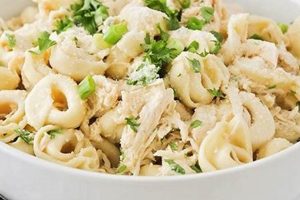
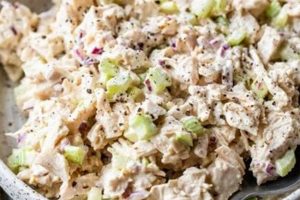
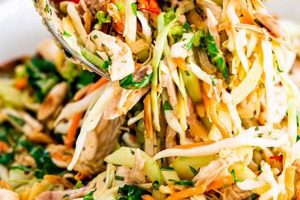
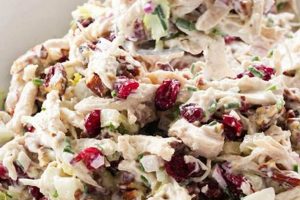
A simple, yet delicious chicken salad is a culinary staple, appreciated for its versatility and ease of preparation. Classic versions typically combine cooked chicken with mayonnaise, celery, and onion, often seasoned with salt, pepper, and sometimes mustard. Variations can include grapes, nuts, dried cranberries, or apples, offering a wide range of flavor profiles. Recipes categorized as “easy” prioritize minimal ingredients and straightforward instructions, making them accessible to cooks of all skill levels.
Quick and adaptable, this type of dish provides a convenient meal option for lunches, picnics, or light dinners. Its popularity stems from its affordability, nutritional value (providing protein and often incorporating healthy additions like fruits and vegetables), and customizable nature. Historically, chicken salad emerged as a way to utilize leftover cooked chicken, reflecting resourcefulness and practicality in the kitchen. Its continued presence in modern cuisine demonstrates its enduring appeal.
The following sections will explore specific ingredient combinations, techniques for achieving optimal texture and flavor, and tips for presenting and serving a truly exceptional chicken salad.
Tips for a Superior Chicken Salad
Achieving a truly exceptional chicken salad involves attention to detail in ingredient selection and preparation methods. These tips offer guidance for creating a dish that is both flavorful and satisfying.
Tip 1: Quality Chicken is Key: Opt for high-quality, cooked chicken. Rotisserie chicken offers convenience and excellent flavor, while poached or baked chicken breasts provide a leaner option. Avoid pre-shredded chicken as it can be dry.
Tip 2: Dice for Texture: Rather than shredding, dicing the chicken into small, uniform pieces creates a more pleasing texture and allows the flavors of other ingredients to meld more effectively.
Tip 3: Freshness Matters: Use crisp, fresh vegetables like celery and onion. Properly chilling these ingredients before combining them with the chicken helps maintain optimal texture and prevents a watery salad.
Tip 4: Mayonnaise Mastery: The quality of mayonnaise significantly impacts the final result. Consider using a full-fat mayonnaise for richer flavor, or explore alternatives like Greek yogurt or avocado mayonnaise for a lighter option.
Tip 5: Seasoning Strategies: Don’t overlook the importance of seasoning. Salt and pepper are essential, but consider adding a touch of Dijon mustard, lemon juice, or herbs like dill or chives for enhanced flavor complexity.
Tip 6: Balancing Flavors: The best chicken salads achieve a balance of savory and sweet, crunchy and creamy. Incorporating elements like grapes, dried cranberries, or chopped apples can add sweetness and textural contrast. Toasted nuts like pecans or walnuts contribute a satisfying crunch and nutty flavor.
Tip 7: Chill Out: Allowing the chicken salad to chill for at least 30 minutes in the refrigerator allows the flavors to meld and the salad to firm up, resulting in a more enjoyable eating experience.
By following these tips, one can elevate a simple chicken salad from ordinary to extraordinary, ensuring a flavorful and satisfying dish.
The following section will offer serving suggestions and ideas for incorporating this versatile dish into various meals.
1. High-quality Chicken

High-quality chicken forms the foundation of a truly exceptional, yet easy, chicken salad. The chicken’s flavor and texture directly influence the overall quality of the final dish. Tender, flavorful chicken elevates the salad, while dry, bland chicken results in a disappointing experience, regardless of other ingredients. This impact underscores the significance of selecting appropriate chicken.
Consider the difference between using a freshly roasted chicken versus pre-cooked, shredded chicken often found in grocery stores. The roasted chicken, with its inherent moisture and depth of flavor, contributes significantly to the salad’s richness and overall appeal. Conversely, pre-shredded chicken, often subjected to processing that compromises its texture and flavor, can result in a dry, less satisfying salad. Similarly, using leftover grilled or poached chicken, properly stored, offers a flavorful and convenient option. Choosing chicken with good flavor and texture simplifies the recipe, as fewer ingredients are needed to compensate for lackluster poultry.
Investing in superior chicken simplifies the creation of a delicious and easy chicken salad. The inherent flavor and moisture of higher-quality chicken require minimal enhancement, aligning perfectly with the “easy” aspect of the recipe. While cost considerations exist, the improvement in flavor and overall enjoyment justifies the selection of better-quality poultry. This careful ingredient selection directly translates to a more satisfying culinary experience.
2. Efficient Preparation
Efficiency in preparation is paramount to a recipe categorized as “easy.” Within the context of a “best chicken salad recipe easy,” streamlined processes are crucial. This involves minimizing steps, utilizing readily available ingredients, and employing techniques that expedite the creation of a delicious dish without compromising quality.
- Ingredient Prepping:
Efficient preparation begins with organized ingredient preparation. Having all ingredients measured, chopped, and ready before starting the assembly process significantly reduces overall preparation time. For example, dicing the celery and onion, and measuring out the mayonnaise before cooking or shredding the chicken streamlines the subsequent steps. This preemptive approach ensures a smooth, uninterrupted flow, reducing the likelihood of errors and contributing to the overall ease of the recipe.
- Utilizing Pre-cooked Chicken:
A significant time-saver in chicken salad preparation involves using pre-cooked chicken. Rotisserie chicken, readily available in most supermarkets, presents a convenient and flavorful option. Alternatively, utilizing leftover baked or poached chicken further enhances efficiency. This eliminates the time required to cook and cool the chicken, significantly expediting the overall process, a key element in an “easy” recipe.
- Simplified Procedures:
Minimizing steps is crucial for an efficient recipe. An “easy” chicken salad recipe will avoid complex procedures or techniques. For example, instead of individually chopping herbs, using pre-mixed dried herbs or a readily available herb blend simplifies the seasoning process. Similarly, choosing readily available ingredients like mayonnaise instead of making a homemade version reduces preparation time and effort, while still yielding a delicious result.
- Smart Tool Selection:
Employing appropriate kitchen tools further contributes to efficient preparation. A sharp knife facilitates quick and even dicing of ingredients. Using a sturdy mixing bowl and appropriate utensils simplifies combining ingredients, reducing preparation time. Selecting tools suited to the task promotes efficiency, a hallmark of an “easy” recipe.
These facets of efficient preparation collectively contribute to the “easy” designation of a chicken salad recipe. By streamlining processes and minimizing complexity, the overall time investment is reduced, making the recipe more accessible and appealing to a wider range of individuals. This emphasis on efficiency ensures that the creation of a delicious chicken salad remains a straightforward and enjoyable culinary experience.
3. Flavorful Ingredients
The designation “best” in “best chicken salad recipe easy” necessitates the strategic use of flavorful ingredients. Flavorful ingredients elevate a simple dish from mundane to exceptional. While “easy” implies simplicity and minimal effort, it does not preclude the incorporation of ingredients that contribute depth and complexity to the final product. The interplay of these ingredients is crucial; they must complement each other, creating a balanced and harmonious flavor profile. A bland chicken salad, regardless of ease of preparation, will not earn the accolade of “best.”
Consider the impact of fresh herbs. Bright, herbaceous notes from dill, chives, or tarragon contrast beautifully with the richness of mayonnaise and the savory chicken, adding a layer of complexity that elevates the overall flavor profile. Similarly, the inclusion of ingredients like toasted nuts or dried cranberries provides textural contrast and introduces complementary flavorsnutty or tartthat enhance the overall gustatory experience. The judicious use of spices, such as a pinch of smoked paprika or a dash of cayenne pepper, can further amplify the flavor profile without complicating the preparation process. These seemingly minor additions contribute significantly to the overall impression of the dish.
The strategic selection of flavorful ingredients directly impacts the perceived quality and enjoyment of an “easy” chicken salad recipe. Balancing simplicity with impactful flavors is key. Freshness is also a crucial consideration. Using fresh herbs, crisp celery, and a good quality mayonnaise contribute significantly more flavor than their wilted or processed counterparts. While an “easy” recipe prioritizes convenience, it should not sacrifice flavor. By incorporating a few key flavorful ingredients, even a simple chicken salad can achieve a depth and complexity that justifies the designation “best.” This careful consideration of flavor ultimately distinguishes a truly exceptional chicken salad from a merely adequate one.
4. Balanced Seasonings

Balanced seasonings are essential for achieving a “best chicken salad recipe easy.” Seasoning is not merely an afterthought; it is a crucial element that elevates a simple combination of ingredients into a harmonious and flavorful dish. The “best” designation implies a depth of flavor that extends beyond the basic ingredients. This depth is achieved through the careful and balanced application of seasonings. The concept of balance is key; over-seasoning can just as easily detract from the overall quality as under-seasoning. The goal is to enhance, not overpower, the natural flavors of the chicken and other components.
Consider the interplay of salt, pepper, and acidity. Salt enhances the inherent flavors of the chicken and vegetables, while pepper adds a subtle bite. A touch of acidity, often in the form of lemon juice or vinegar, brightens the flavor profile and balances the richness of the mayonnaise. The absence of any one of these elements can result in a flat, one-dimensional salad. Furthermore, the type of salt used can impact the final outcome. Fine sea salt blends more readily than coarser kosher salt, allowing for more even distribution of flavor. Similarly, freshly ground black pepper offers a more pronounced aroma and flavor than pre-ground pepper.
Beyond the foundational seasonings, the inclusion of herbs and spices can further elevate the flavor profile. Fresh herbs, such as dill or chives, add brightness and complexity. A pinch of paprika or a dash of cayenne pepper can introduce subtle warmth or heat. However, restraint is crucial. The goal remains balanced flavor, achieved through the judicious use of complementary seasonings. Over-reliance on any single flavor can disrupt the balance and detract from the overall quality of the salad. A “best” recipe understands and utilizes the power of balanced seasonings to create a truly exceptional dish, even within the constraints of simplicity and ease of preparation.
5. Appropriate Texture
Texture plays a crucial role in the overall enjoyment of a chicken salad, directly influencing its perceived quality. Within the context of a “best chicken salad recipe easy,” appropriate texture contributes significantly to the “best” designation. A truly exceptional chicken salad offers a pleasing textural experience, balancing contrasting elements for a satisfying mouthfeel. This balance must be achieved without sacrificing the “easy” aspect of the recipe, meaning complex or time-consuming textural manipulations are undesirable.
- Chicken Consistency:
The chicken’s texture forms the foundation of the salad’s overall textural profile. Overly dry or stringy chicken results in a less enjoyable experience. Conversely, chicken that is too finely chopped can create a paste-like consistency. Diced chicken, offering a balance between substance and ease of incorporation with other ingredients, typically provides the ideal texture. This contributes to the “easy” aspect by simplifying preparation while maintaining a pleasant mouthfeel.
- Vegetable Crispness:
The addition of vegetables like celery and onion introduces a contrasting crispness to the salad. These vegetables should retain a degree of crunch, providing a counterpoint to the softer textures of the chicken and mayonnaise. Limp or soggy vegetables detract from the overall experience. Ensuring crispness often involves simple techniques like chilling the vegetables before incorporating them into the salad, aligning with the “easy” preparation principle.
- Mayonnaise Binding and Moisture:
Mayonnaise acts as a binding agent, holding the ingredients together while contributing to the overall moisture and creaminess of the salad. Too much mayonnaise can create a gloppy texture, while too little results in a dry, crumbly salad. The correct amount of mayonnaise balances moisture with structural integrity, ensuring the salad holds its shape while remaining palatable. This balance is crucial for both flavor and texture, and achieving it is relatively straightforward, contributing to the “easy” aspect of the recipe.
- Additional Textural Elements:
Incorporating additional textural elements can further enhance a chicken salad. Toasted nuts, such as almonds or pecans, introduce a satisfying crunch. Dried cranberries or grapes contribute a chewy element. These additions, while optional, add layers of complexity to the textural experience without significantly increasing preparation complexity, maintaining the recipe’s “easy” classification.
Achieving the appropriate texture in a chicken salad enhances its overall appeal and contributes to its designation as “best.” This balance of textures, combined with the ease of preparation, highlights the interconnectedness of these elements in a truly exceptional, yet simple, chicken salad recipe. A well-executed texture profile elevates the eating experience, making the salad more satisfying and enjoyable, demonstrating that even “easy” recipes can deliver a high level of culinary quality.
6. Simple Instructions
Clarity and simplicity in instructions are fundamental to a recipe designated “best chicken salad recipe easy.” The qualifier “easy” emphasizes accessibility and minimal complexity. Instructions must be straightforward, unambiguous, and easily followed by individuals with varying levels of culinary experience. Complicated techniques or jargon-laden descriptions detract from the “easy” classification, creating a barrier to entry for many potential users. A truly “easy” recipe guides the user through each step with clear, concise language, ensuring a smooth and stress-free cooking experience. This clarity directly contributes to the overall success of the recipe and its potential to achieve “best” status.
Consider the difference between an instruction like “dice the chicken into small pieces” versus “fabricate the poultry into a brunoise.” The former is clear, direct, and immediately understandable. The latter, while technically accurate, introduces culinary jargon that may be unfamiliar to many home cooks. This difference in clarity can significantly impact the user’s confidence and ultimately the success of the recipe. Similarly, instructions should be logically sequenced and avoid unnecessary steps. Each action should contribute directly to the final product. Redundant or unclear steps increase the likelihood of errors and detract from the overall ease of preparation. Real-life examples include clearly stating the size to dice ingredients (e.g., “1/2-inch cubes”) or specifying the type of equipment needed (e.g., “a large mixing bowl”).
The practical significance of simple instructions lies in their ability to empower individuals to confidently create a delicious dish. Simple instructions democratize cooking, making a “best” recipe achievable for a wider audience. This accessibility contributes to the recipe’s popularity and reinforces its “best” designation. Challenges arise when complexity is mistaken for sophistication. A truly “best” easy recipe understands that simplicity in execution does not equate to simplicity in flavor or quality. Rather, simple instructions, carefully crafted and clearly articulated, facilitate the creation of a superior dish with minimal effort, aligning perfectly with the core concept of “best chicken salad recipe easy.” This emphasis on clarity and accessibility underscores the importance of simple instructions as a defining characteristic of a truly exceptional and easy-to-make chicken salad recipe.
7. Versatile Serving
Versatility in serving contributes significantly to the “best” designation within the context of a “best chicken salad recipe easy.” A truly exceptional and easy chicken salad recipe offers flexibility in its presentation and consumption, expanding its utility beyond a single serving method. This adaptability enhances its appeal, making it suitable for various occasions and individual preferences. The ease of adaptation contributes to the “easy” aspect, as it allows for quick modifications without requiring complex preparation techniques or additional ingredients. This versatility strengthens the recipe’s overall value proposition.
Consider the various applications of a simple, yet well-made chicken salad. It functions effectively as a sandwich filling, nestled between slices of bread, croissants, or within a pita pocket. Its adaptability extends to serving as a salad topping, adding protein and flavor to a bed of greens. Furthermore, it can be served as a dip, accompanied by crackers, vegetables, or chips. This versatility allows the same base recipe to fulfill multiple culinary roles, simplifying meal planning and reducing preparation time. Real-life examples include serving the chicken salad in lettuce wraps for a lighter lunch, using it as a filling for deviled eggs for a party appetizer, or incorporating it into a croissant sandwich for a picnic.
The practical significance of versatile serving lies in its contribution to convenience and adaptability. A “best” easy chicken salad recipe recognizes the value of a dish that can seamlessly integrate into various meal formats. This adaptability reduces the need for multiple specialized recipes, streamlining meal preparation and minimizing effort. This aligns perfectly with the “easy” component of the recipe. The versatility also increases the likelihood of the recipe becoming a staple, as it can be readily adapted to suit different tastes and occasions. This flexibility ultimately enhances the recipe’s value and strengthens its claim to the “best” designation. Challenges might arise when dietary restrictions are a consideration, but even then, careful ingredient selection and serving modifications, like using gluten-free bread or serving the salad with vegetables instead of crackers, allow the inherent versatility to remain a key advantage. This adaptability ultimately reinforces the practicality and overall appeal of a “best chicken salad recipe easy.”
Frequently Asked Questions
This section addresses common inquiries regarding the creation of a superior, yet simple chicken salad.
Question 1: What type of chicken is best suited for chicken salad?
While various cooked chicken options work well, rotisserie chicken offers excellent flavor and convenience. Baked or poached chicken breasts provide a leaner alternative. Pre-shredded chicken is generally less desirable due to its tendency towards dryness.
Question 2: How can one prevent a watery chicken salad?
Excess moisture often stems from vegetables with high water content. Thoroughly drying vegetables like celery and onion after chopping, and ensuring the chicken is not overly moist, helps prevent a watery consistency. Proper chilling also contributes to maintaining optimal texture.
Question 3: Can mayonnaise be substituted for a healthier alternative?
Greek yogurt or avocado mayonnaise offer healthier alternatives to traditional mayonnaise, reducing fat and calorie content while maintaining a creamy texture. Adjusting the quantity of these substitutes may be necessary to achieve the desired consistency.
Question 4: How long can chicken salad be stored in the refrigerator?
Properly stored in an airtight container, chicken salad typically lasts for three to five days in the refrigerator. Indicators of spoilage include a sour odor or changes in texture.
Question 5: What are some ways to enhance the flavor of a basic chicken salad recipe?
Fresh herbs like dill or chives, toasted nuts, dried cranberries, or a touch of Dijon mustard introduce complexity and depth of flavor. Experimenting with spices like paprika or curry powder can also elevate the flavor profile.
Question 6: How can one achieve a balance of textures in chicken salad?
Dicing the chicken into uniform pieces provides a pleasing texture. Incorporating crunchy elements like celery, nuts, or seeds adds contrast. Balancing the amount of mayonnaise ensures the salad is neither dry nor overly creamy.
Understanding these key considerations ensures the creation of a truly exceptional chicken salad that balances ease of preparation with optimal flavor and texture.
For further inspiration and specific recipe variations, consult the following resources.
Conclusion
Achieving a “best chicken salad recipe easy” requires a nuanced approach that balances simplicity with quality. Careful selection of ingredients, efficient preparation techniques, balanced seasonings, appropriate texture, clear instructions, and versatile serving options contribute collectively to a superior culinary experience. Prioritizing quality chicken, utilizing fresh ingredients, and understanding the interplay of flavors and textures elevates a basic recipe to something truly exceptional. Streamlined processes and straightforward instructions ensure accessibility for cooks of all skill levels, democratizing the creation of a delicious and satisfying dish.
The enduring appeal of chicken salad lies in its adaptability and potential for customization. Exploration of flavor profiles and serving variations allows for continuous refinement and personalization. The pursuit of a “best” recipe becomes a journey of culinary discovery, driven by the desire to create a dish that not only satisfies but also reflects individual preferences and creative expression. This pursuit underscores the dynamic nature of cooking and the potential for even simple recipes to become culinary masterpieces.