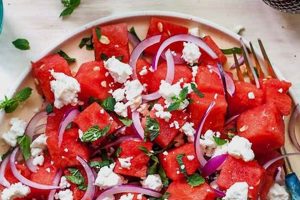
A culinary creation typically featuring cubed or balled watermelon as the central ingredient, complemented by various other components. These additions can include other fruits like berries or citrus segments, vegetables such as cucumber or mint, cheeses like feta or goat cheese, and proteins like grilled shrimp or prosciutto. Dressings range from simple vinaigrettes to more complex flavor profiles incorporating ingredients like lime juice, honey, or chili flakes. An example might include watermelon, feta cheese, mint, and a red onion vinaigrette.
This dish offers a refreshing and hydrating option, particularly suited for warmer weather. Its versatility allows for adaptation to diverse palates and dietary needs, with variations incorporating savory, sweet, or spicy elements. Historically, combining fruits and other ingredients has long been a culinary practice across cultures, evolving from basic sustenance to complex culinary expressions. The contemporary iteration often showcases the fruit’s inherent sweetness and juiciness alongside complementary textures and flavors, demonstrating a sophisticated approach to seasonal cuisine.
This exploration will delve into various aspects of crafting this dish, including ingredient selection, preparation techniques, and suggested variations to inspire culinary creativity. From selecting the ideal melon to balancing flavor profiles, readers will gain the knowledge to create their own personalized versions.
Tips for Watermelon Salad Success
Achieving optimal results requires attention to detail and an understanding of key elements. These tips offer guidance for creating a delightful and refreshing culinary experience.
Tip 1: Selecting the Watermelon: Opt for a ripe, firm watermelon with a deep, even color and a hollow sound when tapped. Avoid melons with bruises, soft spots, or cracks.
Tip 2: Preparation Techniques: Precise cutting techniques enhance presentation and texture. Cubing or balling the watermelon ensures even distribution of flavor and facilitates attractive plating.
Tip 3: Balancing Flavors: Consider the interplay of sweet, salty, acidic, and spicy elements. Combining watermelon’s inherent sweetness with salty cheese, acidic citrus, or a hint of chili can elevate the flavor profile.
Tip 4: Ingredient Combinations: Explore various flavor pairings to create unique and exciting variations. Examples include feta and mint, cucumber and red onion, or jalapeo and lime.
Tip 5: Dressing Selection: Choose a dressing that complements the chosen ingredients. Light vinaigrettes, balsamic glazes, or even a simple drizzle of honey can enhance the overall taste.
Tip 6: Proper Storage: Store prepared salad components separately and combine just before serving to maintain optimal freshness and prevent the watermelon from becoming watery.
Tip 7: Presentation Matters: Thoughtful plating enhances the dining experience. Arrange the salad components attractively on a serving platter or in individual bowls for an appealing visual presentation.
By adhering to these guidelines, one can create a dish that is not only visually appealing but also offers a balanced and refreshing flavor combination. These techniques ensure a consistently successful culinary outcome.
These tips provide a solid foundation for crafting exceptional variations. The following section will offer specific recipe examples to inspire culinary exploration.
1. Ingredients

Ingredient selection significantly impacts the overall flavor profile and textural complexity of a watermelon salad. Careful consideration of each component’s contribution is crucial for a well-balanced and palatable outcome. The following facets illustrate the diverse roles ingredients play in creating a successful dish.
- The Foundation: Watermelon
Watermelon serves as the foundational element, providing inherent sweetness and a refreshing juiciness. The variety chosen influences the flavor profile; some varieties are sweeter, while others offer subtle nuances. Seedless varieties simplify preparation and enhance the eating experience. Selecting a ripe, firm melon is paramount for optimal flavor and texture.
- Balancing Elements: Cheese and Herbs
Cheese introduces a salty and creamy counterpoint to the watermelon’s sweetness. Feta, goat cheese, or ricotta salata are common choices, each offering distinct flavor characteristics. Fresh herbs, such as mint, basil, or cilantro, contribute aromatic complexity and a refreshing herbal note, balancing the sweetness and saltiness.
- Enhancing Flavors: Acidity and Spice
Acidity, often introduced through citrus juice or vinegar, brightens the flavor profile and adds a tangy dimension. Lime juice, lemon juice, or a balsamic glaze are typical examples. A touch of spice, using ingredients like chili flakes or jalapeo, can create an intriguing contrast and add depth to the flavor profile.
- Textural Contrasts: Nuts and Seeds
Toasted nuts or seeds provide textural contrast and add a satisfying crunch. Options include toasted pecans, slivered almonds, or pumpkin seeds. These elements contribute an additional layer of flavor complexity while enhancing the overall sensory experience.
The interplay of these ingredient categories creates a harmonious balance of flavors and textures, contributing to a successful watermelon salad. By carefully considering the role of each component, one can craft a dish that is both refreshing and complex. Ultimately, the selection of ingredients dictates the overall culinary experience, transforming simple watermelon into a sophisticated and satisfying dish.
2. Preparation

Preparation techniques significantly influence the final quality and presentation of a watermelon salad. Proper handling and processing of ingredients contribute to optimal texture, flavor, and overall appeal. This stage lays the groundwork for a successful culinary creation.
- Watermelon Handling
Careful handling ensures the watermelon’s integrity. Rinsing the exterior removes potential contaminants. Cutting techniques, whether cubing, balling, or creating wedges, affect both presentation and the distribution of flavor. Consistent sizing promotes even marinating and enhances visual appeal. Improper handling can result in bruising or damage, compromising the fruit’s quality.
- Ingredient Preparation
Other ingredients require specific preparation techniques. Herbs benefit from gentle washing and careful chopping or tearing to release their aromatic oils without bruising. Cheese may require crumbling or slicing depending on the variety chosen. Nuts and seeds often benefit from toasting to enhance their flavor and texture. Consistent application of these techniques ensures each element contributes optimally to the final product.
- Timing and Order of Operations
Strategic timing preserves ingredient freshness and prevents undesirable outcomes. Delicate ingredients, such as herbs, should be added just before serving to prevent wilting. Combining ingredients too early, particularly those with high water content, can lead to a watery salad. Understanding the order of operations ensures each component maintains its optimal texture and flavor.
- Chilling and Storage
Chilling ingredients enhances the refreshing quality of the salad. Watermelon, in particular, benefits from chilling, which intensifies its sweetness and crispness. Proper storage of prepared components, often separately until just before serving, prevents premature mixing and maintains optimal freshness.
Precise preparation transforms individual ingredients into a cohesive and appealing final product. Each step contributes to the overall sensory experience, from the watermelon’s texture to the balanced distribution of flavors. Careful attention to these details elevates the final dish, ensuring a refreshing and satisfying culinary result.
3. Flavor Balance

Flavor balance is paramount in a successful watermelon salad recipe. It transforms simple ingredients into a harmonious and refreshing culinary experience. This balance hinges on the interplay of contrasting yet complementary taste profiles, elevating the dish beyond its individual components.
- Sweetness and Saltiness
The inherent sweetness of watermelon provides the foundation upon which other flavors are built. Incorporating salty elements, such as feta cheese, olives, or prosciutto, creates a dynamic contrast that enhances the watermelon’s sweetness. This interplay prevents the sweetness from becoming overwhelming and adds depth to the flavor profile. The right balance of these elements is crucial; too much salt can overpower the delicate sweetness, while too little can leave the dish tasting bland.
- Acidity and Freshness
Acidity introduces a brightness that cuts through the richness of the watermelon and other ingredients. Lime juice, lemon juice, or a vinegar-based dressing contribute a tangy counterpoint, enhancing the overall freshness of the salad. This acidity also helps to balance the sweetness and saltiness, creating a more complex and nuanced flavor profile. The level of acidity should be carefully considered to avoid overpowering the other flavors.
- Spice and Heat (Optional)
Adding a touch of spice introduces another layer of complexity and can elevate the salad from refreshing to exciting. A pinch of chili flakes, a few slices of jalapeo, or a drizzle of sriracha adds a warming element that contrasts beautifully with the cool, sweet watermelon. This element is optional and should be used judiciously, catering to individual preferences and ensuring it complements rather than dominates the other flavors.
- Herbaceous and Aromatic Notes
Fresh herbs contribute aromatic complexity and a refreshing herbal counterpoint to the other flavors. Mint, basil, cilantro, or dill can be incorporated to enhance the overall sensory experience. The choice of herbs can significantly influence the final flavor profile, adding layers of complexity and complementing the existing sweet, salty, and acidic notes. The herbs should be fresh and added just before serving to maximize their impact.
The careful orchestration of these flavor components elevates the watermelon salad from a simple dish to a sophisticated culinary creation. Achieving the right balance ensures a harmonious and refreshing experience where each ingredient complements the others, resulting in a truly satisfying and memorable dish. This intricate interplay is what distinguishes a well-balanced watermelon salad from a mere collection of ingredients.
4. Presentation

Presentation plays a crucial role in the overall enjoyment of a watermelon salad. Visual appeal enhances the dining experience, transforming a simple dish into a culinary delight. Thoughtful presentation elevates perceived freshness and flavor, enticing the palate before the first bite. This aspect, often overlooked, significantly contributes to the dish’s success.
- Color and Contrast
The vibrant colors of watermelon provide a natural starting point for an aesthetically pleasing presentation. Incorporating ingredients with contrasting colors creates visual interest and highlights the watermelon’s vibrancy. Examples include the deep green of mint, the stark white of feta cheese, or the bright red of berries. Strategic placement of these contrasting elements amplifies the visual appeal, making the salad more enticing.
- Texture and Height
Varying textures contribute to a more engaging sensory experience. Combining the smooth, juicy watermelon with crunchy nuts, creamy cheese, or leafy greens adds textural complexity. Creating height on the platter or in individual bowls adds dimension and visual interest. This can be achieved by mounding the salad or incorporating ingredients with varying heights, like sprigs of herbs or tall slices of cucumber.
- Plating and Serving Vessels
The choice of serving vessel contributes significantly to the overall presentation. A simple white platter allows the vibrant colors of the salad to stand out, while a rustic wooden bowl adds a touch of casual elegance. Individual portions in small bowls or glasses create a more refined presentation. The serving vessel should complement the salad’s style and the occasion.
- Garnishes and Finishing Touches
A few well-chosen garnishes can elevate the presentation from simple to sophisticated. A sprinkle of fresh herbs, a drizzle of balsamic glaze, or a few strategically placed edible flowers add a touch of elegance and enhance the visual appeal. These finishing touches demonstrate attention to detail and complete the presentation, transforming the salad into a true culinary creation.
Careful attention to presentation enhances the overall enjoyment of a watermelon salad. By considering color, texture, plating, and garnishes, one transforms simple ingredients into a visually appealing and enticing dish. This attention to detail elevates the dining experience, demonstrating care and consideration for both the culinary and aesthetic aspects of the dish.
5. Seasonality

Seasonality plays a crucial role in the quality and enjoyment of watermelon salad. Watermelon reaches peak flavor and sweetness during its natural growing season, typically summer. Utilizing in-season watermelon guarantees optimal ripeness, resulting in a more flavorful and refreshing salad. Conversely, out-of-season watermelon may lack sweetness, exhibit a watery texture, and offer diminished nutritional value. This direct correlation between seasonality and quality underscores the importance of considering the time of year when preparing this dish. For example, a watermelon salad prepared with peak-season fruit from a local farmers market will offer a superior taste experience compared to one made with imported watermelon during the winter months.
The practical significance of understanding seasonality extends beyond flavor. Choosing locally sourced, in-season watermelon supports sustainable agricultural practices and reduces the environmental impact associated with long-distance transportation. Furthermore, seasonal eating often aligns with greater nutritional value, as fruits and vegetables consumed at their peak ripeness generally contain higher concentrations of vitamins and antioxidants. In the context of watermelon salad, this translates to a dish that is not only delicious but also nutritionally beneficial. Incorporating other seasonal ingredients, such as fresh mint or locally grown cucumbers, further enhances the connection to seasonality and maximizes flavor.
In summary, seasonality significantly impacts the flavor, quality, and nutritional value of watermelon salad. Prioritizing in-season watermelon ensures optimal sweetness and supports sustainable practices. This understanding empowers consumers to make informed choices that maximize both taste and nutritional benefits while contributing to a more environmentally conscious approach to food consumption. The inherent connection between seasonality and watermelon salad highlights the importance of aligning culinary practices with nature’s rhythms for a superior and more sustainable dining experience.
Frequently Asked Questions
This section addresses common inquiries regarding watermelon salad preparation, offering practical guidance for optimal results. Clarity on these points ensures a successful and enjoyable culinary experience.
Question 1: How does one select a ripe watermelon for salad?
A ripe watermelon exhibits a deep, consistent color, a hollow sound when tapped, and a slightly yielding but firm rind. Avoid melons with soft spots, bruises, or cracks.
Question 2: What are the best methods for storing cut watermelon?
Cut watermelon should be stored in an airtight container in the refrigerator. For optimal freshness, consume within three to five days.
Question 3: Can savory ingredients be incorporated into a watermelon salad?
Savory ingredients, such as feta cheese, olives, prosciutto, or red onion, complement watermelon’s sweetness, adding complexity and balance to the flavor profile.
Question 4: What dressings best complement watermelon salad?
Light vinaigrettes, balsamic glazes, or a simple drizzle of olive oil and lime juice enhance watermelon’s natural sweetness without overpowering it. Avoid heavy, creamy dressings that mask the delicate flavor.
Question 5: How can one prevent watermelon salad from becoming watery?
To prevent a watery salad, store prepared ingredients separately and combine just before serving. Avoid overdressing or adding ingredients with high water content too far in advance.
Question 6: What are some suitable alternatives to feta cheese in watermelon salad?
Goat cheese, ricotta salata, or crumbled queso fresco offer comparable salty and creamy textures while providing slightly different flavor profiles.
Understanding these key aspects contributes to a successful outcome when preparing watermelon salad. Careful consideration of ingredient selection, storage practices, and flavor combinations ensures a refreshing and flavorful culinary experience.
The subsequent sections delve into specific recipe variations, providing practical examples and further inspiration for culinary exploration.
Watermelon Salad Recipe
Exploration of watermelon salad recipes reveals a dish defined by versatility and refreshing simplicity. From ingredient selection to preparation techniques and presentation, each element contributes to the final culinary outcome. Balancing sweetness with complementary flavors, such as salty cheeses, acidic citrus, and aromatic herbs, creates a dynamic and harmonious flavor profile. Understanding seasonality maximizes flavor and nutritional value, while proper storage and handling maintain optimal freshness. The adaptability of this dish allows for endless variations, catering to diverse palates and culinary preferences.
Watermelon salad recipes offer a canvas for culinary creativity, inviting experimentation with flavors and textures. Continued exploration of ingredient combinations and presentation styles promises further evolution and refinement of this classic dish, ensuring its enduring appeal in the culinary landscape.