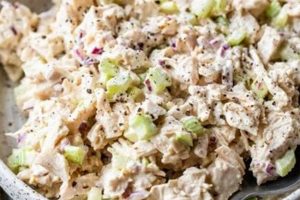
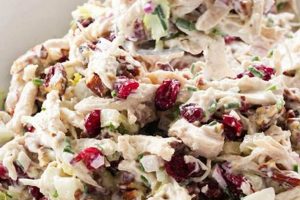
A specific preparation of chicken salad often associated with the caf chain Zos Kitchen, this dish typically features shredded or diced chicken, dried cranberries, pecans, celery, and a mayonnaise-based dressing. Variations may include grapes, apples, or different seasonings. Often served on bread, croissants, or crackers, it can also be enjoyed as a salad topping or filling for lettuce wraps.
The appeal of this type of chicken salad lies in its balanced flavor profile the sweetness of the fruit complements the savory chicken and nuts, while the celery adds a refreshing crunch. The creamy dressing binds the ingredients together, creating a satisfying texture. Its popularity has led to numerous copycat recipes and adaptations, demonstrating consumer demand for accessible, flavorful, and convenient meal options. Such recipes provide a foundation for culinary exploration, allowing home cooks to adjust ingredients and tailor the dish to individual preferences.
This exploration will delve further into the specifics of creating this dish, including ingredient selection, preparation techniques, and serving suggestions. Discussions of variations and nutritional information will also be provided.
Tips for Preparing Chicken Salad
Achieving optimal flavor and texture requires attention to detail throughout the preparation process. The following tips offer guidance for creating a superior chicken salad experience.
Tip 1: Chicken Selection and Preparation: Rotisserie chicken offers a convenient shortcut, providing flavorful, pre-cooked meat. Alternatively, poaching or grilling boneless, skinless chicken breasts yields excellent results. Ensure the chicken is thoroughly cooked but not dry.
Tip 2: Ingredient Quality: Fresh, high-quality ingredients elevate the final product. Opt for crisp celery, plump dried cranberries, and fresh pecans or walnuts.
Tip 3: Chopping Consistency: Uniformly chopping ingredients ensures even distribution of flavors and textures. Dice the chicken and other components into similar-sized pieces.
Tip 4: Dressing Considerations: Mayonnaise serves as the base for the dressing. Consider incorporating Greek yogurt for a lighter, tangier option. Seasoning with salt, pepper, and a touch of Dijon mustard enhances the flavor profile.
Tip 5: Chill Time: Allowing the chicken salad to chill in the refrigerator for at least 30 minutes allows the flavors to meld and the salad to firm up, improving both taste and texture.
Tip 6: Serving Suggestions: Serve the chicken salad on croissants, crackers, or bread. Lettuce cups provide a low-carbohydrate alternative. Consider garnishing with fresh herbs or a sprinkle of paprika.
Tip 7: Storage: Store leftover chicken salad in an airtight container in the refrigerator for up to three days.
Adherence to these guidelines ensures a delicious and satisfying culinary experience, enhancing the enjoyment of this versatile dish. From ingredient selection to presentation, attention to detail makes a notable difference.
By understanding these fundamental principles, one can confidently prepare a chicken salad that rivals those found in popular cafes. The following section will conclude this exploration with final thoughts and recommendations.
1. Chicken (cooked, shredded)

Cooked, shredded chicken forms the foundation of this dish, contributing protein and texture. The preparation method and quality of the chicken significantly influence the overall flavor and experience.
- Cooking Methods:
Several methods yield suitable results, each imparting subtle nuances. Rotisserie chicken offers convenience and pre-developed flavor. Poaching or grilling boneless, skinless breasts allows for greater control over seasoning and moisture retention. Boiling, while effective, can result in a less flavorful outcome. The chosen cooking method should align with desired flavor profiles and available resources.
- Shredding Techniques:
Shredding the chicken into appropriately sized pieces ensures optimal texture and even distribution within the salad. Two forks or fingers can be used for shredding, achieving a desired consistency. Overly large or small pieces can negatively impact the eating experience.
- Flavor Considerations:
The chicken’s flavor profile interacts with other ingredients. Seasoning the chicken during cooking enhances its inherent taste. Pre-seasoned rotisserie chicken often carries smoky or herbaceous notes, influencing the final dish. Matching the chicken’s flavor to the overall desired profile is crucial.
- Quality and Freshness:
Using high-quality, fresh chicken ensures optimal flavor and food safety. Freshly cooked chicken offers the best flavor and texture. Proper storage and handling of cooked chicken are essential for preventing spoilage and maintaining quality. Using leftover chicken requires careful assessment of freshness.
Careful consideration of chicken selection, cooking, and shredding methods contributes significantly to the success. The interplay of these factors determines the chicken’s contribution to the overall flavor, texture, and quality of the final product. Understanding these elements allows for a more informed approach to preparation and customization.
2. Dried Cranberries
Dried cranberries play a crucial role in this recipe, contributing a sweet-tart flavor and chewy texture that complements the other ingredients. Their presence adds depth and complexity, balancing the savory elements and contributing to the dish’s overall appeal. Understanding their function within the recipe enhances appreciation for their contribution.
- Flavor Profile:
The tartness of dried cranberries provides a counterpoint to the richness of the mayonnaise and the savory chicken. This balance prevents the salad from becoming overly rich or bland, adding a refreshing dimension. The intensity of the cranberry flavor can vary based on the specific variety and sugar content.
- Textural Contribution:
Dried cranberries offer a pleasant chewiness, contrasting with the softer textures of the chicken and the creamy dressing. This textural variety adds interest and prevents the salad from becoming monotonous. The level of chewiness can be influenced by the drying process and moisture content of the cranberries.
- Visual Appeal:
The deep red color of dried cranberries provides visual contrast against the lighter tones of the chicken and celery, enhancing the salad’s presentation. This visual element contributes to a more appetizing appearance, making the dish more appealing.
- Nutritional Value:
Dried cranberries offer nutritional benefits, including antioxidants and fiber. While their sugar content should be considered, they contribute to the overall nutritional profile of the dish. The specific nutritional content can vary depending on processing methods and added sugars.
The integration of dried cranberries into the recipe demonstrates a careful consideration of flavor, texture, visual appeal, and nutritional value. Their strategic inclusion elevates the dish beyond a simple combination of ingredients, transforming it into a balanced and satisfying culinary experience. The specific characteristics of the dried cranberries contribute significantly to the overall success and enjoyment of this dish.
3. Pecans (chopped)

Chopped pecans contribute a crucial textural and flavor dimension to this dish. Their presence introduces a buttery richness and satisfying crunch, elevating the salad beyond a simple combination of ingredients. The size and quality of the pecan pieces significantly influence the overall sensory experience.
The interplay between the pecans’ inherent fattiness and the other ingredients creates a balanced flavor profile. The richness of the pecans complements the sweetness of the dried cranberries and the savory notes of the chicken. This interplay prevents any single flavor from dominating, resulting in a harmonious blend. Furthermore, the pecan’s crunchy texture contrasts with the softer textures of the chicken and the creamy dressing, creating a more dynamic and enjoyable mouthfeel. Recipes omitting pecans often lack this textural complexity, resulting in a less satisfying experience. For instance, substituting walnuts, while providing a similar nutritional profile, yields a noticeably different flavor and texture due to the walnut’s inherent bitterness and denser texture.
The size of the pecan pieces influences both texture and flavor release. Larger pieces provide a more pronounced crunch, while smaller pieces offer a subtler textural contrast and distribute flavor more evenly throughout the salad. Overly large pieces can disrupt the balance of the salad, while finely ground pecans might lose their distinct textural contribution. The optimal size balances textural presence with flavor integration. Understanding the role of pecans in the recipe highlights their importance in achieving the desired balance of flavors and textures. This awareness empowers informed ingredient selection and preparation, ultimately contributing to a more successful and satisfying culinary outcome.
4. Celery (diced)
Diced celery provides a crucial textural and flavor counterpoint within the framework of this dish. Its crispness and subtle vegetal notes balance the richness of other ingredients, contributing to the salad’s refreshing quality. An understanding of celery’s role extends beyond mere inclusion; it involves recognizing its impact on the overall sensory experience.
- Textural Contrast:
Celery’s fibrous structure introduces a satisfying crunch, contrasting with the softer textures of the chicken, dried cranberries, and creamy dressing. This contrast prevents the salad from feeling overly homogenous, providing textural interest. The crispness of the celery also offers a refreshing counterpoint to the richness of the other ingredients.
- Flavor Dimension:
Celery’s subtly herbaceous and slightly bitter flavor profile balances the sweetness of the dried cranberries and the richness of the pecans and mayonnaise. This balance prevents the salad from becoming overly sweet or rich, adding a refreshing vegetal note. The intensity of celery’s flavor can vary based on freshness and variety.
- Visual Appeal:
The pale green color of diced celery provides visual contrast against the other ingredients, enhancing the salad’s overall presentation. Its inclusion contributes to a more vibrant and appetizing appearance, increasing the dish’s visual appeal. Consistent dicing ensures uniform distribution of color and texture.
- Moisture Content:
Celery’s inherent moisture content contributes to the salad’s overall hydration, preventing it from becoming dry. This moisture also helps to bind the ingredients together. However, excessive moisture can dilute the dressing, highlighting the importance of proper dicing and draining any excess water after washing.
The integration of diced celery demonstrates a thoughtful approach to balancing flavor, texture, and visual appeal. Its inclusion elevates the dish from a simple combination of ingredients to a carefully constructed culinary experience. Each facet of celerys contribution plays a distinct role in shaping the overall sensory experience, highlighting the importance of understanding its function within the context of the recipe. Omitting or substituting celery would noticeably alter the salad’s balance, demonstrating its integral role in achieving the desired result.
5. Mayonnaise (base)

Mayonnaise serves as the foundational binding agent, influencing the overall texture, flavor, and perceived richness. Its quality, quantity, and interaction with other ingredients significantly impact the final product. Understanding mayonnaise’s role is crucial for replicating and adapting this specific style of chicken salad.
- Emulsification and Texture:
Mayonnaise’s emulsified nature creates a creamy, cohesive texture that binds the disparate ingredients. This emulsification, a blend of oil and egg yolks, provides a smooth mouthfeel and prevents the salad from becoming dry or crumbly. The stability of the emulsion influences the salad’s shelf life and resistance to separation.
- Flavor Balance:
Mayonnaise contributes a subtle tanginess and richness that complements the other flavors. Its neutral base allows the sweetness of the fruit and the savory notes of the chicken and nuts to shine through, while adding a layer of complexity. Different types of mayonnaise, such as those made with olive oil or flavored with herbs, can subtly alter the overall flavor profile.
- Quantity and Consistency:
The amount of mayonnaise used directly impacts the salad’s consistency and perceived richness. Too little mayonnaise results in a dry, crumbly salad, while too much creates an overly rich, heavy texture. The ideal quantity balances moisture, flavor, and mouthfeel. The desired consistency influences the amount of mayonnaise required; a creamier salad requires more mayonnaise.
- Ingredient Interaction:
Mayonnaise interacts with other ingredients, influencing their perceived flavors and textures. It coats the chicken and other components, creating a cohesive blend and enhancing flavor delivery. The acidity of the mayonnaise can also interact with the other ingredients, particularly the fruit, subtly influencing their sweetness and tartness. Mayonnaise with added flavors can further influence the interaction with other components, contributing additional complexity.
Mayonnaise functions as more than a simple ingredient; it acts as a unifying element that binds the components and influences the overall sensory experience. Careful consideration of its properties and interactions within the recipe is essential for achieving the desired flavor, texture, and consistency characteristic. Variations in mayonnaise type and quantity provide opportunities for customization, allowing for adjustments to richness, flavor profile, and overall quality. Recognizing the multifaceted role of mayonnaise provides a deeper understanding of its contribution to this dish.
6. Seasoning (salt, pepper)

Seasoning, primarily with salt and pepper, plays a critical role in the overall flavor profile. While seemingly simple, the application of these seasonings significantly impacts the final dish. Salt enhances the inherent flavors of the other ingredients, while pepper adds a subtle layer of complexity. The balance between these two seasonings is crucial; too much salt can overpower the other flavors, while too little can leave the salad tasting bland. Pepper, while typically used in smaller quantities, contributes a subtle heat and depth of flavor. Freshly ground pepper offers a more pronounced aroma and flavor compared to pre-ground pepper. The timing of seasoning also influences the final outcome. Seasoning the chicken during cooking ensures deeper flavor penetration, while adding salt and pepper to the final mixture enhances the overall taste.
Consider a scenario where salt is omitted from the recipe. The sweetness of the cranberries and the richness of the mayonnaise might dominate, masking the subtler flavors of the chicken and celery. Conversely, excessive salt could overpower all other ingredients, rendering the salad unpleasantly salty. Similarly, the absence of pepper might result in a one-dimensional flavor profile, lacking depth and complexity. A touch of black pepper enhances the savory notes, creating a more balanced and nuanced taste experience. Practical application demonstrates that even small adjustments in seasoning can significantly alter the perceived flavor profile. A pinch of cayenne pepper, for example, can add a subtle heat, while a dash of garlic powder can enhance the savory notes. These variations underscore the importance of thoughtful seasoning in achieving the desired flavor outcome.
Precise seasoning elevates this dish from a simple combination of ingredients to a carefully balanced culinary creation. Understanding the interplay of salt and pepper, and their impact on other ingredients, allows for precise flavor control. This awareness empowers informed decision-making, enabling adjustments to suit individual preferences and achieve the desired taste profile. The seemingly minor act of seasoning, therefore, carries significant weight in the overall success of the recipe.
7. Optional additions (grapes, apples)
Incorporating grapes or apples introduces nuanced dimensions to the established flavor and texture profile often associated with this style of chicken salad. These additions, while optional, offer opportunities for customization and can significantly influence the overall sensory experience. Grapes, with their juicy sweetness and delicate skin, contribute a burst of freshness and a subtle tartness that complements the creamy dressing and savory chicken. Apples, depending on the variety, offer varying degrees of sweetness and tartness, along with a crisp texture that contrasts with the softer elements of the salad. The choice between grapes and apples, or the inclusion of both, allows for tailoring the salad to individual preferences.
The impact of these additions extends beyond mere flavor and texture. Consider the effect of adding crisp green grapes. Their sweetness enhances the existing sweet-savory balance, while their juiciness contributes to a lighter, more refreshing mouthfeel. Conversely, the inclusion of a tart apple, such as a Granny Smith, introduces a contrasting sharpness that cuts through the richness of the mayonnaise, creating a more complex flavor profile. Furthermore, these additions introduce visual appeal, with the vibrant colors of grapes or the contrasting white or red of apple pieces enhancing the salad’s presentation. These seemingly minor additions can significantly impact the overall perception and enjoyment of the dish. For example, incorporating grapes into a chicken salad served on croissants creates a more elegant and refreshing experience, suitable for a light lunch or picnic. Alternatively, adding diced apples to a chicken salad served in lettuce cups provides a satisfying crunch and a lighter, more health-conscious option.
Understanding the impact of optional additions like grapes and apples allows for informed customization and a more nuanced appreciation of this versatile dish. These additions are not merely afterthoughts; they represent opportunities to elevate the flavor, texture, and visual appeal of the salad. Careful consideration of these optional components empowers individuals to tailor the recipe to specific preferences and occasions, enhancing the overall culinary experience. Recognizing the potential impact of these additions underscores the adaptability and enduring appeal of this classic dish.
Frequently Asked Questions
This section addresses common inquiries regarding the preparation and variations of this specific style of chicken salad.
Question 1: What type of chicken is best suited for this recipe?
Rotisserie chicken offers convenience and pre-developed flavor. Poaching or grilling boneless, skinless chicken breasts allows for greater control over seasoning and moisture content. While boiling is an option, it can result in less flavorful chicken.
Question 2: Can other nuts be substituted for pecans?
While other nuts like walnuts or almonds can be substituted, they offer different flavor and texture profiles. Pecans provide a specific buttery richness and crunch that contributes significantly to the classic flavor profile.
Question 3: How long can the chicken salad be stored in the refrigerator?
Properly stored in an airtight container, it can be refrigerated for up to three days. Beyond this timeframe, quality and safety may be compromised.
Question 4: Can the dressing be made lighter?
Incorporating Greek yogurt into the mayonnaise base creates a lighter, tangier dressing while reducing overall fat content. Adjusting the ratio of mayonnaise to yogurt allows for customization based on individual preferences.
Question 5: Are there gluten-free serving options?
Serving the chicken salad in lettuce cups or on gluten-free crackers or bread provides alternatives for those with gluten sensitivities. Ensuring all other ingredients are also gluten-free is crucial.
Question 6: Can this recipe be adapted for larger gatherings?
The recipe can be easily scaled to accommodate larger quantities. Maintaining the proportions of ingredients ensures consistent flavor and texture regardless of serving size.
Understanding these common points of inquiry allows for informed recipe adaptation and preparation. Addressing potential concerns proactively enhances the likelihood of a successful and enjoyable culinary experience.
The following section offers concluding remarks and further resources for exploration.
Conclusion
This exploration has provided a comprehensive overview of the components, preparation, and variations associated with this specific style of chicken salad. From the careful selection of ingredients to the nuanced interplay of flavors and textures, each aspect contributes to the dish’s overall appeal. The importance of quality ingredients, proper cooking techniques, and balanced seasoning has been emphasized. Furthermore, the potential for customization through optional additions and variations in dressing has been highlighted. Understanding these elements allows for informed replication and adaptation of the recipe to suit individual preferences.
The enduring popularity of this dish speaks to its versatility and adaptability. Continued exploration of variations and flavor profiles promises further culinary discoveries. Careful attention to detail and a thorough understanding of the underlying principles ensure a consistently satisfying and enjoyable dining experience. This exploration serves as a foundation for further experimentation and appreciation of this classic dish.