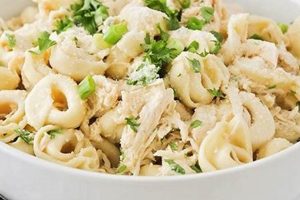
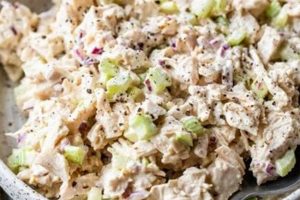
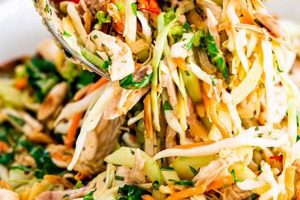
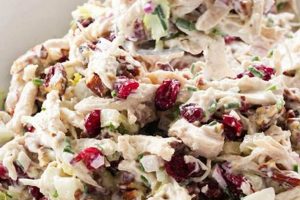
A simple preparation of this dish typically involves cooked chicken, mayonnaise, and seasonings. Common additions include celery, onion, grapes, or nuts. Variations can range from classic presentations to those incorporating unique ingredients like dried cranberries or curry powder. An example might consist of shredded poached chicken combined with mayonnaise, diced celery, chopped red onion, and a touch of Dijon mustard.
Quick and adaptable, this type of dish offers a convenient meal option. It can be served as a sandwich filling, a light lunch, or part of a larger spread. Its versatility extends to dietary accommodations, with adjustments easily made for gluten-free or lower-fat versions. Historically, chicken salad gained popularity in the mid-19th century, evolving from more elaborate molded salads and becoming a staple in American cuisine.
This exploration will delve further into variations on the basic formula, offering specific ingredient lists, preparation instructions, and serving suggestions. It will also address nutritional aspects and tips for storage and safe handling.
Tips for a Successful Chicken Salad
Achieving optimal flavor and texture requires attention to detail. The following tips offer guidance for creating a superior chicken salad.
Tip 1: Chicken Selection: Opt for high-quality, cooked chicken. Rotisserie chicken offers convenience, while poaching or baking boneless, skinless breasts allows for greater control over seasoning.
Tip 2: Mayonnaise Matters: The quality of mayonnaise significantly impacts the final product. Consider using full-fat mayonnaise for richer flavor, or opt for lighter versions to reduce overall fat content. Greek yogurt can also be incorporated to add tang and creaminess while decreasing calories.
Tip 3: Texture Control: Dice ingredients uniformly for a pleasing consistency. Over-processing the chicken can result in a mushy texture. A coarser chop creates a more substantial salad.
Tip 4: Flavor Enhancement: Fresh herbs, such as dill, parsley, or chives, add brightness and depth. Spices like paprika, curry powder, or a pinch of cayenne pepper can elevate the flavor profile.
Tip 5: Balancing Acidity: A squeeze of lemon juice or a splash of apple cider vinegar balances the richness of the mayonnaise and brightens the overall flavor.
Tip 6: Chill Out: Chilling the salad for at least 30 minutes allows the flavors to meld and enhances the final taste. This also firms the texture, making it ideal for sandwich fillings.
Tip 7: Creative Additions: Incorporate ingredients like dried cranberries, grapes, chopped apples, or toasted nuts for added texture and flavor complexity.
By following these guidelines, one can elevate a simple chicken salad into a flavorful and satisfying dish. Attention to these details ensures a consistently delicious and enjoyable result.
These tips offer a starting point for culinary exploration. Experimentation with various ingredients and flavor combinations allows for personalization and discovery of preferred variations.
1. Simple Ingredients

Simplicity lies at the heart of an easily prepared chicken salad. The reliance on readily available, common ingredients streamlines the cooking process, minimizing preparation time and effort. This accessibility allows for spontaneous meal creation without extensive planning or specialized grocery shopping. For instance, cooked chicken (rotisserie, canned, or leftover), mayonnaise, and celery represent a foundational trio. This base readily accepts additions like onion, grapes, or nuts, depending on preference and availability, further emphasizing the ease and adaptability inherent in simple recipes.
The focus on a limited number of components not only simplifies the process but also offers opportunities for creative flavor exploration. A straightforward recipe becomes a blank canvas, allowing cooks to experiment with different types of mayonnaise (e.g., olive oil-based, flavored), various mustards, or unique herbs and spices. This adaptability ensures that a simple chicken salad can cater to diverse tastes without sacrificing ease of preparation. Furthermore, using fewer ingredients often translates to reduced costs, making this dish an economical choice for budget-conscious individuals or families. A simple recipe using pantry staples can offer a satisfying and affordable meal option.
Minimizing the number of ingredients while maximizing flavor potential characterizes the essence of an easy chicken salad recipe. This approach democratizes cooking, making it accessible to individuals of all skill levels. From a quick lunch to a potluck contribution, simple ingredients provide a foundation for a versatile and delicious dish, proving that culinary complexity is not a prerequisite for a satisfying meal. Embracing simplicity, however, does not preclude attention to quality. Selecting fresh, high-quality ingredients, even within a limited selection, elevates the final product, demonstrating that simple can indeed be synonymous with delicious.
2. Quick Preparation

Quick preparation represents a defining characteristic of a truly easy chicken salad recipe. The ability to assemble a satisfying meal within a short timeframe significantly contributes to its appeal, particularly for busy individuals or those seeking convenient meal options. This speed relies on several factors, including pre-cooked chicken and minimal processing of other ingredients. Using rotisserie chicken, canned chicken, or leftover cooked chicken eliminates the time-consuming process of cooking and shredding the meat. Similarly, ingredients like celery and onion require only chopping, while grapes or nuts may be added whole or halved, further streamlining the preparation process. A simple dressing, often based on mayonnaise, whisks together in moments, completing the assembly swiftly.
The practical significance of rapid preparation extends beyond mere convenience. It offers a viable solution for weeknight meals, quick lunches, or impromptu gatherings. Consider the scenario of a last-minute picnic or potluck invitation: a quickly prepared chicken salad provides a readily transportable and universally appealing dish. Alternatively, imagine a busy workday lunch break: a pre-made chicken salad requires only assembly between slices of bread or atop a bed of lettuce. These examples illustrate the practical application of speed in facilitating meal preparation across various contexts. Furthermore, quick preparation minimizes cleanup, another attractive feature for those seeking efficient meal solutions.
The emphasis on speed, however, does not necessitate sacrificing flavor or nutritional value. Strategic ingredient choices, such as incorporating fresh herbs, a variety of vegetables, or flavorful nuts, can elevate a quickly prepared chicken salad into a culinary delight. Using Greek yogurt in place of some mayonnaise, or opting for whole-wheat bread, allows for healthier modifications without significantly impacting preparation time. Therefore, quick preparation, as a component of an easy chicken salad recipe, offers a practical and versatile approach to meal preparation, demonstrating that speed and quality can coexist harmoniously in the culinary realm.
3. Versatile Serving

Serving versatility significantly contributes to the appeal of an easy chicken salad recipe. Its adaptability to various presentations expands its utility beyond a single meal format, making it a suitable option for diverse dining occasions and individual preferences. This flexibility simplifies meal planning and reduces the need for multiple recipes to cater to different situations.
- Sandwiches and Wraps:
Chicken salad readily fills sandwiches and wraps, providing a quick and portable meal. Whether nestled between slices of crusty bread, tucked into a whole-wheat tortilla, or layered within a croissant, the adaptable nature of chicken salad allows for customization based on available ingredients and personal preference. A simple sandwich can be elevated with the addition of lettuce, tomato, or other preferred toppings. Wraps offer a lighter alternative, and the use of flavored tortillas, such as spinach or sundried tomato, further enhances the culinary experience.
- Salads and Lettuce Cups:
Chicken salad transforms easily into a lighter meal when served atop a bed of greens. A simple green salad with chicken salad provides a balanced and refreshing meal. Utilizing lettuce cups offers a low-carbohydrate option and adds a crisp textural contrast to the creamy salad. The inclusion of other vegetables, such as cucumbers, bell peppers, or shredded carrots, enhances both the nutritional value and the flavor profile of the dish.
- Appetizers and Snacks:
Chicken salad’s versatility extends to appetizers and snacks. Served with crackers, crudits, or toasted baguette slices, it becomes a readily shareable and satisfying option for casual gatherings. Small scoops of chicken salad can be presented on endive leaves or cucumber rounds for a more elegant presentation. These versatile applications make chicken salad a convenient choice for potlucks, picnics, or other social events.
- Stuffed Vegetables and Fruits:
Chicken salad offers a flavorful filling for a variety of vegetables and fruits. Hollowed-out tomatoes, avocados, or bell peppers provide edible vessels for a visually appealing and flavorful presentation. For a sweeter variation, chicken salad can be served inside apple halves or scooped onto pineapple slices, offering a contrasting sweet and savory combination.
The inherent versatility of chicken salad reinforces its position as a convenient and adaptable meal option. From simple sandwiches to elegant appetizers, the ability to transform easily across different serving styles highlights its practicality and appeal. This adaptability contributes significantly to the popularity of easy chicken salad recipes, offering a single solution for diverse culinary needs and occasions. The ease with which it transitions from a quick lunch to a party snack underscores the efficiency and value of this versatile dish.
4. Customizable Flavors
Customization represents a significant advantage of chicken salad’s simple nature. The basic formula, consisting primarily of chicken and mayonnaise, provides a neutral foundation that readily accepts a wide range of flavor profiles. This adaptability allows individuals to tailor the dish to specific preferences, dietary restrictions, or available ingredients, ensuring a consistently satisfying and personalized culinary experience.
- Herbs and Spices:
Fresh herbs, such as dill, parsley, chives, or tarragon, introduce bright, herbaceous notes. Dried spices, including paprika, curry powder, cumin, or cayenne pepper, contribute deeper, more complex flavors. The measured use of herbs and spices allows for subtle nuances or bold pronouncements, depending on individual preference. For example, a classic combination might incorporate fresh dill and a pinch of paprika, while a more adventurous palate might explore the combination of curry powder and chopped cilantro.
- Fruits and Nuts:
The incorporation of fruits, such as grapes, dried cranberries, chopped apples, or mandarin oranges, introduces sweetness and textural contrast. Nuts, like walnuts, pecans, or almonds, contribute crunch and richness. The interplay of sweet and savory elements creates a balanced flavor profile. Grapes and walnuts offer a classic pairing, while dried cranberries and pecans provide a festive twist. The quantity and variety of these additions allow for further customization based on seasonal availability and personal preference.
- Savory Additions:
Ingredients like chopped celery, red onion, or water chestnuts introduce textural complexity and subtle savory notes. These additions contribute to the overall balance of the salad, preventing the richness of the mayonnaise from becoming overwhelming. The crispness of celery complements the creaminess of the chicken and mayonnaise, while the sharpness of red onion adds a piquant counterpoint. These savory elements provide structural integrity and enhance the overall sensory experience.
- Dressing Variations:
While mayonnaise typically forms the base of the dressing, variations can include the addition of Dijon mustard, plain yogurt, or sour cream. These additions introduce tanginess, creaminess, and complexity to the flavor profile. Dijon mustard provides a sharp counterpoint to the richness of the mayonnaise, while plain yogurt adds a lighter, tangier element. These variations allow for adjustments in both flavor and texture, catering to individual preferences and dietary considerations.
The ability to customize flavors transforms a simple chicken salad recipe into a versatile platform for culinary expression. From classic combinations to innovative flavor profiles, the adaptability of this dish ensures its continued relevance and appeal across a broad spectrum of tastes and occasions. The ease with which flavors can be adjusted highlights the inherent simplicity and practicality of chicken salad as a meal option.
5. Budget-Friendly Option
Affordability often drives meal choices, and chicken salad aligns well with budget-conscious cooking. Several factors contribute to its economical nature. Chicken, a readily available and relatively inexpensive protein source, forms the foundation of the dish. Utilizing less expensive cuts of chicken, such as boneless, skinless thighs, or opting for canned chicken, further reduces costs. The other primary ingredient, mayonnaise, is also a pantry staple, typically purchased in larger, more economical quantities. Supplemental ingredients, like celery, onion, and seasonings, tend to be inexpensive and readily available. This combination of affordable core ingredients makes chicken salad a fiscally responsible meal choice, particularly beneficial for larger families or individuals seeking to maximize their food budget.
The potential for cost savings extends beyond the initial ingredient purchase. Chicken salad utilizes leftover cooked chicken effectively, minimizing food waste. Roasted chicken carcasses can be simmered to create a flavorful broth, further stretching the value of the initial purchase. Additionally, the adaptability of chicken salad allows for the incorporation of seasonal vegetables or pantry staples, reducing reliance on expensive, out-of-season produce. For example, substituting chopped carrots or a handful of frozen peas for more expensive ingredients like grapes or nuts maintains flavor and texture while minimizing costs. This flexibility ensures that chicken salad remains an economical choice regardless of seasonal availability or budget constraints.
Understanding the budget-friendly nature of chicken salad allows for strategic meal planning and resource allocation. Preparing chicken salad in larger batches provides multiple meals, reducing overall cooking time and maximizing value. It can be incorporated into various meal formats, from sandwiches and wraps to salads and snacks, further enhancing its utility within a budget-conscious approach to cooking. The combination of affordable ingredients, adaptability to pantry staples, and potential for utilizing leftovers solidifies chicken salad as a valuable asset for those seeking economical and delicious meal options.
6. Healthy Variations Possible

The inherent adaptability of chicken salad recipes readily accommodates modifications that prioritize nutritional value without sacrificing flavor or ease of preparation. This capacity for healthy variations expands the dish’s appeal to health-conscious individuals and those with specific dietary requirements, demonstrating that convenience and nutritional balance can coexist harmoniously. Adjusting the core ingredients and incorporating nutrient-rich additions allows for significant improvements in the nutritional profile of the salad.
Reducing the amount of mayonnaise, a primary source of fat and calories, represents a fundamental step towards a healthier chicken salad. Substituting a portion of the mayonnaise with plain Greek yogurt or low-fat cottage cheese maintains the creamy texture while significantly reducing fat and increasing protein content. Alternatively, using a lighter mayonnaise, such as one made with olive oil or avocado oil, offers a healthier fat profile. Boosting the vegetable content further enhances nutritional value. Adding finely diced celery, carrots, bell peppers, or shredded spinach increases fiber and micronutrient intake without dramatically altering the flavor profile. Incorporating lean protein sources, like grilled chicken breast in place of rotisserie chicken or canned chicken, contributes to satiety and reduces overall fat content. Choosing whole-wheat bread or lettuce wraps over refined grains for serving provides additional fiber and nutrients.
Consider a scenario where an individual seeks a lower-calorie lunch option. Preparing a chicken salad with Greek yogurt instead of mayonnaise, incorporating a generous amount of chopped celery and bell peppers, and serving it in lettuce cups creates a satisfying and nutrient-rich meal with significantly fewer calories and fat compared to a traditional version. Another example involves adapting the recipe for an individual with gluten sensitivity. Using gluten-free bread or crackers, ensuring all other ingredients are gluten-free, and confirming the absence of gluten in the chosen mayonnaise allows for full enjoyment of the dish without triggering dietary restrictions. These examples illustrate the practical application of creating healthy variations to cater to individual needs and preferences. The ease with which modifications can be incorporated into a basic chicken salad recipe underscores its versatility as a component of a health-conscious diet.
Frequently Asked Questions
This section addresses common inquiries regarding the preparation and enjoyment of easy chicken salad recipes. Clarity on these points ensures optimal results and promotes safe handling practices.
Question 1: What is the best way to prevent chicken salad from becoming watery?
Excess moisture can stem from watery vegetables or over-mixing. Thoroughly drain any canned or cooked chicken before incorporating it into the salad. Vegetables with high water content, such as cucumbers, should be seeded and diced finely. Adding the dressing gradually and mixing gently prevents over-saturation and helps maintain the desired texture.
Question 2: How long can chicken salad be stored safely in the refrigerator?
Properly stored in an airtight container, chicken salad typically remains safe to consume for three to five days in the refrigerator. Ensure the refrigerator temperature remains at or below 40F (4C). Monitor for any signs of spoilage, such as off-odors or discoloration, before consumption.
Question 3: Can chicken salad be frozen?
While freezing is possible, the mayonnaise-based dressing may separate upon thawing, affecting the texture and overall quality of the salad. Freezing is generally not recommended for optimal results. It’s advisable to prepare and consume the salad within the recommended refrigeration timeframe.
Question 4: What are some healthy alternatives to mayonnaise in chicken salad?
Plain Greek yogurt, low-fat cottage cheese, or mashed avocado offer healthier alternatives to traditional mayonnaise. These substitutions reduce overall fat and calorie content while contributing creaminess and flavor. These alternatives also introduce beneficial nutrients, such as protein and healthy fats.
Question 5: How can one adjust the flavor of chicken salad beyond the basic recipe?
Customization options include incorporating various herbs and spices, such as dill, curry powder, or paprika. Adding fruits like grapes or dried cranberries introduces sweetness, while nuts provide crunch and richness. Savory additions, such as chopped celery, red onion, or water chestnuts, introduce texture and depth of flavor.
Question 6: What are the best types of bread for chicken salad sandwiches?
A variety of breads complement chicken salad, including classic white bread, whole-wheat bread, croissants, or multigrain rolls. The choice depends on individual preference and dietary considerations. Whole-wheat options offer increased fiber content, while croissants provide a richer, flakier texture.
Understanding these commonly addressed points facilitates successful preparation and enjoyment of easy chicken salad recipes. Attention to these details ensures both a delicious and safe culinary experience.
This FAQ section has provided answers to common queries, empowering readers with the knowledge to confidently create and enjoy their own chicken salad variations. The following section will offer a collection of easy chicken salad recipes, catering to a range of tastes and dietary preferences.
Conclusion
Exploration of streamlined chicken salad preparation reveals a dish offering both simplicity and adaptability. Factors contributing to ease of creation include readily available ingredients, minimal processing requirements, and rapid assembly. Versatility extends from classic presentations, such as sandwiches and salads, to more creative applications incorporating diverse flavor profiles and serving methods. Affordability further enhances its appeal, presenting an economical meal solution without compromising flavor or nutritional value. Opportunities for customization, including healthier modifications, cater to individual dietary needs and preferences.
The enduring popularity of chicken salad stems from its ability to balance convenience with culinary potential. Its adaptability ensures relevance across diverse cultural contexts and evolving dietary trends. Continued exploration of flavor combinations and innovative presentations promises to further solidify its position as a culinary staple. This examination underscores the significance of simple recipes in providing accessible, nutritious, and enjoyable meal options.