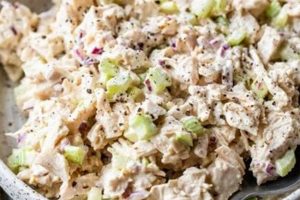
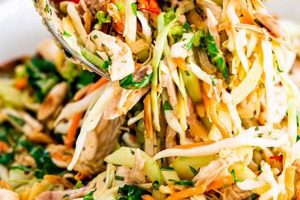
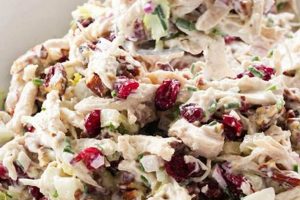
A blend of cooked chicken, apples, and complementary ingredients like celery, grapes, nuts, and mayonnaise creates a refreshing and versatile dish. Variations may include curry powder, cranberries, or different types of apples for unique flavor profiles. This dish can be served as a sandwich filling, on lettuce cups, or enjoyed as a standalone salad.
This type of salad offers a balanced nutritional profile with protein from the chicken, fiber from the apples and celery, and healthy fats from nuts and mayonnaise (when used in moderation). Its adaptability makes it suitable for picnics, quick lunches, or light dinners. Historically, chicken salad became popular in the mid-19th century, with fruit additions like apples gaining traction later as palates evolved and access to diverse ingredients increased. The combination of savory chicken and sweet, crisp apple provides a satisfying contrast in textures and flavors.
Further exploration of this culinary creation can involve examining different ingredient combinations, regional variations, nutritional information, and preparation methods. Detailed recipes, serving suggestions, and tips for optimal flavor balance will be provided.
Tips for a Superior Chicken Salad with Apples
Achieving optimal flavor and texture in a chicken salad enhanced with apples requires attention to several key elements. The following tips provide guidance for creating a truly exceptional dish.
Tip 1: Chicken Selection and Preparation: Poaching or roasting chicken breasts yields optimal flavor and moisture. Avoid using pre-cooked or rotisserie chicken, as these can be dry and lack distinct flavor. Allow the chicken to cool completely before dicing to prevent the mayonnaise from melting.
Tip 2: Apple Choice and Handling: Crisp, tart apples like Granny Smith or Honeycrisp provide the best flavor and textural contrast. Peel and dice the apples just before adding them to the salad to prevent browning. A light coating of lemon juice can further inhibit oxidation.
Tip 3: Mayonnaise Management: Use high-quality mayonnaise and add it gradually, tasting as you go to achieve the desired creaminess. Overuse of mayonnaise can mask the delicate flavors of the other ingredients.
Tip 4: Balancing Sweetness and Acidity: A touch of sweetness can enhance the apple’s flavor. A small amount of honey or maple syrup can be incorporated. Balance the sweetness with a squeeze of lemon juice or a splash of apple cider vinegar for a brighter flavor profile.
Tip 5: Incorporating Textural Variety: Toasted nuts like walnuts or pecans add a satisfying crunch. Consider adding finely diced celery or red onion for a contrasting texture and subtle sharpness.
Tip 6: Seasoning Strategically: Salt and freshly ground black pepper are essential. A pinch of celery seed or a dash of paprika can add depth of flavor. Taste and adjust seasonings as needed.
Tip 7: Chilling for Optimal Flavor: Allowing the salad to chill for at least 30 minutes before serving allows the flavors to meld and enhances the overall experience.
By following these guidelines, one can create a chicken salad with apples that is not only delicious but also visually appealing and texturally satisfying. These considerations elevate the dish from simple to exceptional.
The following section provides various serving suggestions and accompaniments to further enhance enjoyment of this versatile salad.
1. Ingredients

Ingredient selection significantly impacts the final quality, flavor profile, and nutritional value of an apple chicken salad. The interplay between core componentschicken, apples, and the binding agentestablishes the foundation. Cooked chicken, preferably poached or roasted for optimal moisture and flavor, provides the primary protein source. Apples, ideally crisp-tart varieties like Granny Smith or Honeycrisp, contribute sweetness, texture, and fiber. Mayonnaise, Greek yogurt, or a combination thereof, act as the binding agent, adding creaminess and richness. These core ingredients form the base upon which further complexity is built.
Beyond the core components, supplemental ingredients introduce nuanced flavors and textures. Celery adds a refreshing crunch and subtle vegetal note. Red onion provides a mild sharpness, while grapes offer bursts of sweetness and juiciness. Nuts, such as walnuts or pecans, contribute healthy fats and textural contrast. Dried cranberries or raisins introduce chewiness and concentrated sweetness. Herbs and spices, like dill, tarragon, or curry powder, further elevate the flavor profile. The careful selection and balance of these supplemental ingredients distinguish a basic chicken salad from a more complex and flavorful rendition. For instance, using Greek yogurt instead of mayonnaise reduces fat content while adding tanginess, illustrating how ingredient choices directly influence the nutritional profile.
Understanding the role and interplay of each ingredient is crucial for crafting a successful apple chicken salad. The quality and freshness of ingredients directly correlate with the final result. Balancing flavors and textures through thoughtful ingredient selection ensures a harmonious and satisfying culinary experience. This knowledge empowers informed choices, allowing for customization to suit individual preferences and dietary needs. Ultimately, the careful consideration of ingredients elevates the dish from a simple combination of components to a well-balanced and flavorful creation.
2. Preparation Methods
Preparation methods significantly influence the final quality, texture, and flavor profile of apple chicken salad. These methods encompass a series of crucial steps, from initial ingredient preparation to the final mixing and chilling stages. Each step contributes to the overall success of the dish. For instance, properly cooking the chicken, whether by poaching, roasting, or grilling, directly impacts its moisture and tenderness. Overcooked chicken results in a dry, less flavorful salad, whereas perfectly cooked chicken provides a succulent and satisfying base.
Dicing the chicken and apples into uniform pieces ensures even distribution of flavors and a pleasant textural consistency. Unevenly sized pieces can lead to an unbalanced salad, with some bites overly dominated by one ingredient. Similarly, the timing of apple preparation matters. Dicing apples too far in advance can lead to enzymatic browning, affecting both the visual appeal and the fresh flavor. To mitigate this, a light coating of lemon juice can be applied to the cut apples, delaying oxidation and preserving their crispness. The choice of binding agent and its incorporation method also contribute to the final texture. Adding mayonnaise or yogurt gradually, while mixing gently, prevents over-mixing, which can result in a mushy salad. The manner in which additional ingredients, like nuts or dried fruits, are incorporated also affects the final product. Toasted nuts, for example, offer a more pronounced flavor and satisfying crunch compared to raw nuts.
Careful execution of each preparation step contributes to the creation of a superior apple chicken salad. Attention to detail, from ingredient selection to final assembly, ensures a balanced flavor profile, desirable texture, and visually appealing presentation. Understanding the cause-and-effect relationship between preparation methods and the final outcome empowers informed decision-making and allows for adjustments to suit individual preferences. This meticulous approach ultimately elevates the dish from a simple combination of ingredients to a carefully crafted culinary creation.
3. Flavor Balance

Flavor balance is paramount in an apple chicken salad recipe, determining its overall palatability. Achieving harmony among diverse ingredientssavory chicken, sweet apple, creamy mayonnaiserequires careful consideration of contrasting yet complementary flavors. A well-balanced salad avoids extremes, preventing any single element from overpowering the others. This balance is achieved through strategic ingredient selection, precise proportions, and thoughtful additions that enhance the overall flavor profile.
- Sweetness and Tartness
The interplay between sweetness and tartness defines this salad’s character. Apples, while naturally sweet, possess varying levels of tartness depending on the variety. Granny Smith apples offer a pronounced tartness that balances the richness of the chicken and mayonnaise. Conversely, sweeter varieties like Fuji apples might require a touch of acidity, perhaps from lemon juice or vinegar, to prevent an overly sweet profile. This balance ensures a refreshing and nuanced flavor experience.
- Creaminess and Crunch
Textural contrast enhances enjoyment. The creamy base provided by mayonnaise or yogurt is juxtaposed with the crispness of apples and the potential addition of celery or nuts. This interplay of textures adds complexity and prevents a monotonous mouthfeel. The creamy element binds the ingredients while the crunchy elements provide textural interest.
- Savory and Aromatic Notes
The savory foundation of chicken benefits from aromatic additions. Fresh herbs, such as dill or tarragon, introduce subtle herbal notes that complement the apple’s sweetness. Spices like curry powder or paprika add depth and complexity, enhancing the overall savory profile. These additions prevent the salad from tasting bland, creating a more dynamic and flavorful experience.
- Acidity as a Flavor Enhancer
A touch of acidity brightens the entire flavor profile. Lemon juice or apple cider vinegar cut through the richness of the mayonnaise and enhance the sweetness of the apples. This acidic element elevates the other flavors, preventing the salad from feeling heavy or overly rich. The judicious use of acid adds a refreshing lift and balances the overall composition.
The successful execution of an apple chicken salad recipe relies heavily on a well-considered flavor balance. Understanding the interplay of these flavor components enables the creation of a harmonious and delicious salad. Each element plays a crucial role, contributing to the overall sensory experience. By carefully balancing these elements, one can elevate the dish from simple to exceptional, ensuring a satisfying and memorable culinary experience.
4. Serving Suggestions
Serving suggestions enhance the versatility of apple chicken salad, transforming it from a simple mixture into a multifaceted culinary creation. Presentation impacts perceived value and enjoyment, elevating the dining experience. Consideration of various serving methods expands the dish’s suitability for different occasions, from casual lunches to more formal gatherings. Exploring these options allows for creative expression and customization, catering to individual preferences and dietary needs.
- Bread as a Foundation
Classic presentation involves serving apple chicken salad on bread. Options range from simple sliced white bread to croissants, whole-wheat rolls, or baguettes. Toasted bread adds textural contrast, while the bread itself provides a neutral backdrop that complements the salad’s flavors. Sandwiches, wraps, or open-faced tartines offer diverse formats. This adaptable approach suits casual meals and picnics, offering portability and convenience.
- Green Vessels: Lettuce Cups and Wraps
Health-conscious individuals may prefer using lettuce cups or large lettuce leaves as vessels. This option reduces carbohydrate intake while adding a refreshing crunch. Butter lettuce, romaine hearts, or endive leaves provide structural integrity and visual appeal. These lighter presentations suit summer meals or those seeking a lower-calorie option. They also offer an elegant alternative for more formal occasions.
- Beyond Bread: Crackers and Crostini
Crackers and crostini offer a crispy base for smaller portions, ideal for appetizers or snacks. Variety in cracker choices, from plain saltines to multi-grain or seeded options, adds textural and flavor complexity. Crostini, toasted slices of baguette, provide a more substantial and elegant base, suitable for entertaining. These options offer a textural counterpoint to the creamy salad and cater to smaller gatherings.
- Standalone Salad Presentation
Apple chicken salad can stand alone as a light meal or side dish. Serving it atop a bed of mixed greens adds nutritional value and visual appeal. Garnishes such as apple slices, toasted nuts, or fresh herbs enhance presentation. This approach emphasizes the salad’s fresh ingredients and suits those seeking a lighter, less carbohydrate-heavy meal option.
The versatility of apple chicken salad allows it to seamlessly transition from everyday meals to special occasions through considered serving suggestions. These diverse options cater to various preferences and dietary considerations, maximizing the dish’s adaptability. By exploring these presentations, individuals can elevate their dining experience and appreciate the multifaceted nature of this classic dish. The choice of serving style ultimately complements and enhances the flavors and textures of the apple chicken salad itself, transforming it from a simple recipe into a personalized culinary expression.
5. Nutritional Value
Nutritional value represents a significant aspect of an apple chicken salad recipe, impacting its suitability for various dietary needs and health goals. This value derives from the inherent nutritional composition of its core ingredientschicken, apples, and the chosen binding agentas well as supplemental additions. Chicken contributes lean protein, essential for muscle building and satiety. Apples provide dietary fiber, promoting digestive health and regulating blood sugar levels. The type of binding agent influences fat and calorie content; using Greek yogurt instead of mayonnaise, for instance, reduces fat while increasing protein. Supplemental ingredients like nuts and seeds further enhance nutritional value by offering healthy fats, vitamins, and minerals. Understanding the nutritional contribution of each component allows for informed choices that align with individual dietary requirements. For example, substituting walnuts for pecans increases omega-3 fatty acid content, benefiting cardiovascular health.
The nutritional profile of apple chicken salad can be further modulated through ingredient selection and portion control. Opting for skinless chicken breast reduces fat content, while incorporating a variety of colorful vegetables increases vitamin and antioxidant intake. Portion size directly impacts calorie and macronutrient consumption; a smaller serving provides a controlled intake of protein and fiber without excessive calories. Consideration of these factors allows for customization to meet specific dietary goals, whether weight management, muscle gain, or improved overall health. The ability to tailor the recipe’s nutritional composition enhances its suitability for a wider range of individuals. For example, reducing the amount of mayonnaise and increasing the proportion of vegetables creates a lower-calorie, nutrient-dense version suitable for weight-conscious individuals.
Awareness of the nutritional implications of ingredient choices and preparation methods empowers informed consumption of apple chicken salad. This understanding allows individuals to maximize health benefits while enjoying a flavorful and versatile dish. Recognizing the nutritional contribution of each component facilitates customization to address specific dietary needs and preferences. This awareness promotes healthier eating habits and allows apple chicken salad to serve as a nutritious component of a balanced diet. Ultimately, the nutritional value of this dish, combined with its adaptability, contributes to its appeal as a healthful and satisfying meal option.
Frequently Asked Questions
This section addresses common inquiries regarding the preparation and enjoyment of apple chicken salad, providing clear and concise information to ensure optimal results.
Question 1: What type of apple is best suited for this salad?
Crisp, tart apples like Granny Smith or Honeycrisp provide the best flavor and textural contrast. Their tartness balances the richness of the chicken and mayonnaise, while their firmness prevents them from becoming mushy in the salad.
Question 2: Can the mayonnaise be substituted with a healthier alternative?
Plain Greek yogurt offers a lower-fat, higher-protein alternative to mayonnaise. It adds a tangy flavor that complements the apples and chicken. Alternatively, a combination of mayonnaise and Greek yogurt can be used to achieve a balance of flavor and texture.
Question 3: How long can apple chicken salad be stored in the refrigerator?
Properly stored in an airtight container, apple chicken salad can be refrigerated for up to three days. However, it is best consumed within 24 hours for optimal flavor and freshness. Always check for spoilage before consuming.
Question 4: How can browning of the apples be prevented?
Tossing diced apples with a small amount of lemon juice helps prevent enzymatic browning. This acidic treatment slows down the oxidation process, preserving the apples’ appearance and flavor. Adding the apples to the salad immediately after dicing also minimizes exposure to air.
Question 5: What can be added to enhance the flavor profile?
Fresh herbs, such as dill, tarragon, or chives, add a bright, herbaceous note. A dash of curry powder or smoked paprika introduces warmth and complexity. Toasted nuts, such as walnuts or pecans, provide a satisfying crunch and enhance the overall flavor profile. These additions should be used judiciously to avoid overpowering the core flavors.
Question 6: Can this salad be frozen?
Freezing is not recommended. The mayonnaise-based dressing can separate upon thawing, resulting in an undesirable texture. Apples also tend to become mushy after freezing and thawing, compromising the salad’s overall quality.
Careful attention to ingredient selection, preparation methods, and storage guidelines ensures optimal flavor and texture. These considerations contribute to a successful and enjoyable culinary experience.
The following section provides a complete recipe for apple chicken salad, incorporating the insights and tips discussed throughout this article. This recipe offers a practical guide for creating a delicious and satisfying dish.
Apple Chicken Salad Recipe
Exploration of the apple chicken salad recipe reveals a dish characterized by nuanced flavor profiles and adaptable preparation methods. Careful ingredient selection, including crisp apples and properly cooked chicken, forms the foundation for a successful outcome. Balancing sweetness, acidity, creaminess, and crunch elevates the dish beyond basic categorization. Serving options range from classic bread presentations to lighter lettuce wraps, showcasing adaptability. Nutritional value, influenced by ingredient choices, further enhances the recipe’s appeal. Understanding these elements allows for informed customization to suit individual preferences and dietary needs.
The apple chicken salad recipe exemplifies how culinary creativity can transform simple ingredients into a satisfying and versatile dish. Continued exploration of flavor combinations and presentation styles promises further evolution of this classic recipe. Ultimately, appreciation for the delicate balance of flavors and textures inherent in this dish fosters a deeper understanding of culinary artistry and its potential to enrich everyday dining experiences.