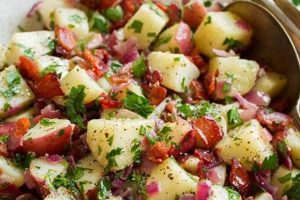
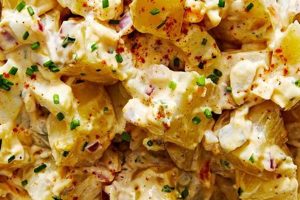
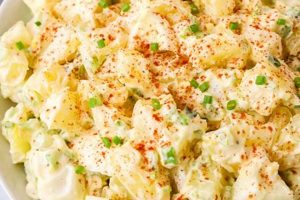
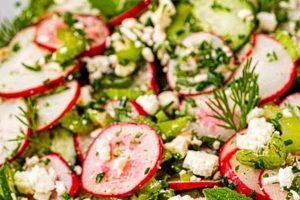
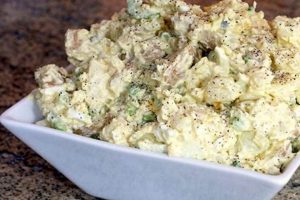
This dish typically combines cooked green beans and potatoes, often with other vegetables, herbs, and a flavorful dressing. Variations can include additions such as hard-boiled eggs, onions, celery, or bacon. The dressing might be a vinaigrette, a creamy mayonnaise-based sauce, or a simple mixture of oil and vinegar with seasonings.
A combination of fresh, seasonal produce and flavorful additions, this type of salad offers a balanced and nutritious meal option. It can be served warm, at room temperature, or chilled, making it versatile for various occasions, from picnics to potlucks. Its adaptability allows for customization based on dietary preferences and available ingredients, contributing to its sustained popularity. Historically, similar combinations of vegetables and dressings have been part of culinary traditions for generations, evolving alongside available ingredients and regional preferences.
The following sections will explore specific variations of this versatile dish, offering detailed instructions and tips for preparation. Discussions of ingredient selection, dressing options, and serving suggestions will provide a comprehensive understanding of the culinary possibilities.
Tips for a Perfect Green Bean and Potato Salad
Achieving optimal flavor and texture requires attention to detail throughout the preparation process. The following tips offer guidance for creating a successful dish.
Tip 1: Blanch Green Beans for Vibrant Color and Crisp Texture. Briefly submerging green beans in boiling water, followed by an immediate ice bath, helps maintain their vibrant green color and prevents overcooking. This technique ensures a pleasant, crisp-tender texture.
Tip 2: Cook Potatoes Until Tender but Not Mushy. Potatoes should be cooked until easily pierced with a fork, but still hold their shape. Overcooked potatoes can result in a mushy salad.
Tip 3: Choose Complementary Flavor Combinations. Consider the overall flavor profile when selecting additional ingredients and dressings. Fresh herbs, such as dill or parsley, can enhance the flavors of green beans and potatoes.
Tip 4: Season Appropriately Throughout the Process. Seasoning the potatoes and green beans separately during cooking ensures that flavor is infused throughout. Additional seasoning can be added to the combined salad and dressing.
Tip 5: Dress the Salad While the Potatoes Are Still Slightly Warm. This allows the potatoes to absorb the flavors of the dressing more effectively.
Tip 6: Allow Sufficient Time for Flavors to Meld. Chilling the salad for at least 30 minutes before serving allows the flavors to blend and develop.
Tip 7: Consider Textural Variety. Incorporating ingredients like chopped celery, red onion, or toasted nuts can add a pleasing textural contrast.
By following these tips, one can ensure a delicious and well-balanced salad with vibrant colors, satisfying textures, and harmonious flavors.
These techniques contribute to a consistently enjoyable culinary experience.
1. Ingredient Selection

Ingredient selection significantly impacts the final quality and flavor profile of a green bean and potato salad. Fresh, seasonal produce offers the best flavor and texture. Selecting firm, unblemished green beans and potatoes with intact skins contributes to a visually appealing and flavorful outcome. The choice of additional ingredients should complement the core components. For example, red onion adds sharpness, while celery contributes a crisp texture. Herbs, such as dill, parsley, or chives, introduce aromatic complexity. Other additions might include hard-boiled eggs for protein, crumbled bacon for a smoky flavor, or olives for a briny accent. Careful consideration of these elements elevates the dish beyond a simple combination of vegetables.
Using high-quality ingredients enhances not only the taste but also the nutritional value of the salad. Fresh vegetables offer vitamins, minerals, and dietary fiber. Selecting lean protein sources, such as grilled chicken or fish, further boosts the nutritional content. Moreover, sourcing ingredients locally and seasonally often results in superior flavor and supports sustainable agricultural practices. Choosing the appropriate type of potato also influences the final texture. Waxy potatoes hold their shape better during cooking, while starchy potatoes tend to become softer, which can be desirable for certain variations of the salad.
Successful ingredient selection requires a balance of flavor, texture, and nutritional considerations. Understanding the characteristics of different ingredients and how they interact contributes to a well-rounded and enjoyable culinary experience. This foundational step sets the stage for a successful dish, highlighting the importance of quality ingredients in achieving a harmonious balance of flavors and textures.
2. Cooking Techniques

Cooking techniques significantly influence the final texture, flavor, and overall quality of a green bean and potato salad. Proper execution of these techniques ensures a harmonious blend of flavors and textures, resulting in a more satisfying culinary experience. The manner in which green beans and potatoes are cooked directly impacts their individual characteristics and how they interact within the salad.
For green beans, blanching is a preferred method. This technique involves briefly submerging the beans in boiling water, followed by an immediate ice bath. Blanching preserves the vibrant green color, maintains a crisp-tender texture, and helps to retain essential nutrients. Steaming offers a gentler alternative, ensuring the beans retain their shape and nutrients. Overcooking, on the other hand, results in mushy green beans that lack visual appeal and textural contrast within the salad. Potatoes require a different approach. Boiling or steaming until tender but not mushy is crucial. Overcooked potatoes disintegrate easily, leading to a less appealing texture. Alternatively, roasting potatoes before adding them to the salad offers a distinct flavor profile and a firmer texture, providing a textural counterpoint to the other components.
Mastering these fundamental cooking techniques elevates the overall quality of the final dish. Precisely cooked vegetables contribute to a more appealing presentation, enhance the individual flavors of the components, and create a balanced textural experience. A thorough understanding of these techniques ensures a successful outcome and a more enjoyable culinary experience. Failure to execute these techniques correctly can negatively impact the salad, leading to a less visually appealing and less palatable dish.
3. Dressing Choices
Dressing choices significantly influence the overall flavor profile and character of a green bean and potato salad. The dressing acts as a unifying element, binding the individual components and creating a cohesive culinary experience. A well-chosen dressing complements the vegetables and any additional ingredients, enhancing their inherent flavors without overpowering them. Careful consideration of dressing options allows for customization based on personal preferences and desired taste outcomes.
- Vinaigrettes
Vinaigrettes offer a light and tangy counterpoint to the earthy flavors of green beans and potatoes. A classic vinaigrette typically consists of oil, vinegar, and seasonings. Variations can include Dijon mustard, herbs, or shallots. A lemon-herb vinaigrette provides a bright, citrusy accent, while a balsamic vinaigrette adds a deeper, more complex sweetness. The acidity of a vinaigrette cuts through the richness of other ingredients, such as bacon or hard-boiled eggs, creating a balanced flavor profile.
- Creamy Dressings
Creamy dressings, often mayonnaise-based, lend a richer, more decadent character to the salad. These dressings can incorporate ingredients such as sour cream, buttermilk, or yogurt for added tang and complexity. Incorporating herbs, spices, or roasted garlic enhances the flavor profile. A creamy dill dressing complements the flavors of green beans and potatoes, while a ranch-style dressing adds a buttermilk tang. Creamy dressings tend to coat the ingredients more thoroughly, creating a cohesive and satisfying texture.
- Simple Oil and Vinegar
A simple mixture of oil and vinegar provides a clean, unfussy dressing that allows the flavors of the vegetables to shine through. This minimalist approach highlights the inherent qualities of the green beans and potatoes. The choice of oil and vinegar influences the final taste; for example, extra virgin olive oil offers a robust flavor, while a lighter oil, such as grapeseed, provides a more neutral backdrop. A splash of red wine vinegar adds a subtle fruity note, while apple cider vinegar contributes a slightly sweet and tangy element.
- Flavor-Infused Oils
Flavor-infused oils offer a unique way to enhance the complexity of the salad’s dressing. Infusing oils with herbs, spices, or garlic imparts subtle yet distinct flavors. For example, rosemary-infused olive oil complements the earthy flavors of potatoes, while chili-infused oil adds a touch of heat. These infused oils can be used as the base for a vinaigrette or simply drizzled over the salad before serving. They offer a sophisticated and customizable way to elevate the overall flavor profile.
The choice of dressing ultimately depends on personal preference and the desired balance of flavors. Whether one prefers a light and tangy vinaigrette, a rich and creamy dressing, or a simple oil and vinegar combination, the dressing plays a crucial role in the overall enjoyment of the green bean and potato salad. Selecting a dressing that complements the other ingredients and enhances their inherent flavors creates a cohesive and satisfying culinary experience. Experimentation with different dressings allows for exploration of various flavor profiles and customization based on individual tastes and dietary preferences.
4. Flavor Balancing
Flavor balancing is essential for creating a harmonious and palatable green bean and potato salad. It involves a thoughtful combination of ingredients and seasonings to achieve a well-rounded flavor profile. A balanced salad avoids extremes in any single tastebe it sweetness, sourness, saltiness, bitterness, or umamiand instead offers a complex interplay of flavors that complement and enhance each other. This balance ensures the salad is not overly sweet, sour, bland, or dominated by any single ingredient. Achieving this balance elevates the dish from a simple combination of ingredients to a more nuanced and enjoyable culinary experience.
- Acidity
Acidity plays a vital role in balancing the other flavors. It cuts through richness and adds brightness. Vinegar, lemon juice, or other acidic ingredients provide a tartness that contrasts with the starchy potatoes and earthy green beans. For instance, a Dijon vinaigrette with its tangy mustard and vinegar balances the creamy richness of mayonnaise and hard-boiled eggs. Without sufficient acidity, the salad can taste flat and heavy. The right level of acidity enlivens the flavors and adds a refreshing element.
- Saltiness
Salt enhances the natural flavors of the ingredients and provides a foundational savory element. Proper salting seasons the vegetables and other components, preventing blandness. Salting the potatoes while they boil ensures they are seasoned throughout, not just on the surface. However, excessive salt can overpower the other flavors, making the salad unpalatable. Finding the right balance is crucial; it brings out the best in the other ingredients without dominating the flavor profile. The interplay of salt with acidity and other seasonings creates a more complex and satisfying taste.
- Sweetness
A touch of sweetness can add depth and complexity to a green bean and potato salad. Ingredients like chopped red onion or a drizzle of honey introduce subtle sweetness that balances the savory and acidic elements. This sweetness should be nuanced, not overpowering. A small amount of sweetness can round out the flavor profile and create a more harmonious balance. This counterpoint to the savory and acidic notes prevents the salad from tasting too sharp or one-dimensional. The judicious use of sweetness contributes to a more layered and nuanced flavor profile.
- Texture
While not strictly a flavor, texture plays a critical role in the overall sensory experience of the salad. The crispness of blanched green beans contrasts with the tender potatoes, creating a more dynamic and enjoyable mouthfeel. Incorporating other textural elements, such as crunchy celery, toasted nuts, or crispy bacon, further enhances this contrast. Attention to texture ensures the salad isn’t monotonous and contributes to its overall appeal. This interplay of textures adds another layer of complexity and elevates the dining experience.
Careful consideration of these elements ensures a well-balanced and flavorful green bean and potato salad. Achieving this balance results in a dish that is not only delicious but also offers a more complex and satisfying culinary experience. Each element plays a crucial role, and their interaction contributes to the overall harmony of flavors and textures. A well-balanced salad is more than the sum of its parts; its a testament to the thoughtful combination of ingredients and seasonings. By understanding these principles, one can create a truly exceptional dish.
5. Serving Suggestions
Serving suggestions enhance the enjoyment and versatility of a green bean and potato salad recipe. Consideration of serving temperature, accompanying dishes, and presentation elevates the dining experience. Temperature influences the perceived flavors and textures; a chilled salad offers a refreshing contrast on a warm day, while a room-temperature or slightly warm salad provides a comforting option during cooler months. The choice of accompanying dishes should complement the salad’s flavor profile. Grilled meats, fish, or roasted vegetables create a balanced and satisfying meal. For a lighter option, the salad can be served alongside crusty bread or a simple green salad. Presentation also plays a role; garnishing the salad with fresh herbs, a sprinkle of paprika, or a drizzle of olive oil enhances its visual appeal and adds a finishing touch.
Practical applications of serving suggestions demonstrate their importance. For a picnic or outdoor gathering, packing the salad in individual containers or a large, transportable bowl ensures easy serving and maintains food safety. For a buffet-style meal, presenting the salad in a decorative bowl with serving utensils allows guests to easily access and enjoy the dish. Offering a variety of dressings or toppings, such as crumbled bacon, chopped nuts, or fresh herbs, allows individuals to customize their portions according to their preferences. These practical considerations demonstrate how thoughtful serving suggestions contribute to a positive dining experience, adapting the dish to different occasions and individual needs.
Understanding the interplay between recipe and serving suggestions allows for a more complete culinary experience. A well-crafted recipe provides the foundation, while thoughtful serving suggestions enhance the dish’s enjoyment and versatility. Adapting serving suggestions to specific contexts ensures the salad remains appealing and appropriate for various occasions. This understanding allows individuals to maximize the potential of the green bean and potato salad recipe, transforming it from a simple side dish to a star component of a memorable meal.
Frequently Asked Questions
This section addresses common inquiries regarding the preparation and enjoyment of green bean and potato salad.
Question 1: Can this salad be prepared in advance?
Yes, preparation in advance is possible. Ideally, the salad should be dressed and chilled for at least 30 minutes prior to serving to allow the flavors to meld. Storing the salad in an airtight container in the refrigerator for up to three days is recommended.
Question 2: What type of potato is best suited for this salad?
Waxy potatoes, such as red or new potatoes, are generally preferred as they hold their shape well during cooking. Starchy potatoes can be used, but they tend to become softer, which may not be desirable in all cases. The choice ultimately depends on individual preference and the desired texture.
Question 3: How can one prevent the potatoes from becoming mushy?
Avoiding overcooking is key to preventing mushy potatoes. Potatoes should be cooked until tender but still firm. Testing with a fork ensures they are cooked through without being overdone. Immediately draining and cooling the potatoes prevents further cooking from residual heat.
Question 4: What are suitable substitutions for green beans?
While green beans are the traditional choice, other vegetables, such as asparagus, snap peas, or broccoli florets, can be substituted. These alternatives offer similar textures and flavors while providing some variety.
Question 5: Can the dressing be customized?
Customization of the dressing is encouraged. Variations in oil, vinegar, herbs, and spices allow for a wide range of flavor profiles. Experimentation with different ingredients allows for personalization based on individual preferences.
Question 6: How can food safety be ensured during preparation and storage?
Proper handling and storage practices are crucial for food safety. Washing all produce thoroughly, using clean utensils and cutting boards, and refrigerating the salad promptly after preparation minimizes the risk of bacterial contamination. Maintaining appropriate refrigeration temperatures and avoiding cross-contamination with raw meats or other potentially hazardous foods are also important.
Addressing these frequently asked questions provides a comprehensive understanding of key considerations related to green bean and potato salad preparation and enjoyment. Attention to these details ensures a successful outcome and a satisfying culinary experience.
This concludes the frequently asked questions section. The subsequent sections will delve into specific recipe variations and offer detailed instructions for creating diverse and flavorful renditions of this classic dish.
Green Bean and Potato Salad Recipe
This exploration of green bean and potato salad recipes has provided a comprehensive overview of this versatile dish. Key aspects, including ingredient selection, cooking techniques, dressing choices, flavor balancing, and serving suggestions, contribute significantly to the successful preparation and enjoyment of this culinary staple. Understanding the interplay of these elements allows for customization and adaptation to individual preferences and various occasions. From the selection of fresh, high-quality produce to the careful balancing of flavors and textures, each step plays a crucial role in the final outcome.
The adaptability of this dish allows for continuous exploration and innovation. Culinary creativity can be expressed through the incorporation of diverse ingredients, experimentation with unique dressings, and adaptation to various cultural influences. Green bean and potato salad recipes offer a platform for culinary expression, highlighting the potential of simple ingredients to create a satisfying and memorable dining experience. Further exploration of regional variations and innovative flavor combinations promises continued enjoyment and appreciation of this classic dish.