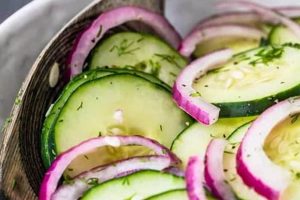
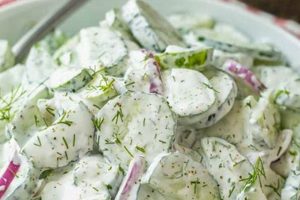
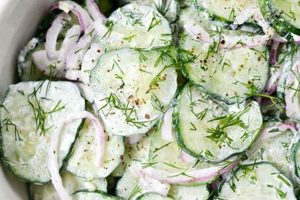
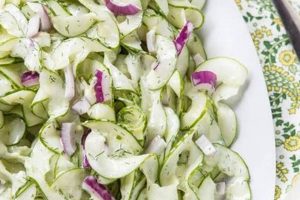
A guide for preparing a chilled side dish typically composed of sliced cucumbers, mayonnaise, and optional ingredients such as vinegar, dill, onion, or garlic provides a refreshing and tangy complement to heavier meals. Variations exist, ranging from simple preparations with minimal ingredients to more complex versions incorporating sour cream, yogurt, or diverse seasonings.
This cool and creamy accompaniment offers a refreshing contrast to rich or spicy dishes. Its simplicity makes it a popular choice for picnics, barbecues, and everyday meals. Historically, cucumbers have been cultivated for thousands of years, and combining them with creamy dressings likely evolved as refrigeration became more accessible, allowing for safe consumption of mayonnaise-based salads. The adaptability of the dish makes it suitable for various culinary traditions and dietary preferences, with modifications easily implemented to reduce fat or incorporate additional flavors.
The following sections will explore various methods and ingredient combinations for creating this versatile dish, addressing different taste preferences and dietary needs. Topics covered will include classic preparations, variations incorporating international flavors, and tips for achieving optimal texture and flavor balance.
Tips for Cucumber Salad Success
Achieving optimal flavor and texture in cucumber salad requires attention to detail. These tips provide guidance for creating a refreshing and satisfying dish.
Tip 1: Salt and Drain Cucumbers: Excess moisture in cucumbers can dilute the dressing. Salting sliced cucumbers and allowing them to drain for 15-20 minutes before combining with other ingredients helps maintain a crisp texture and prevents a watery salad.
Tip 2: Thinly Slice Cucumbers: Uniformly thin slices ensure even coating with the dressing and contribute to a pleasant mouthfeel. A mandoline slicer or sharp knife can be used to achieve consistent thickness.
Tip 3: Choose Fresh Dill: Fresh dill provides a brighter, more pronounced flavor compared to dried dill. If using dried dill, reduce the quantity as it tends to be more potent.
Tip 4: Balance Sweetness and Acidity: A touch of sugar or sweetener balances the acidity of the vinegar and complements the creamy mayonnaise. Adjust the amounts according to personal preference.
Tip 5: Chill Before Serving: Chilling the salad for at least 30 minutes allows the flavors to meld and enhances the refreshing quality of the dish.
Tip 6: Experiment with Variations: Incorporating ingredients like red onion, minced garlic, or different types of vinegar, such as apple cider or rice vinegar, can add complexity and depth of flavor.
Tip 7: Consider Texture: Thinly sliced red onion adds a crisp bite, while chopped fresh chives contribute a subtle onion flavor. Experimenting with different textures adds interest to the salad.
By following these guidelines, one can consistently produce a flavorful and well-balanced cucumber salad that complements a variety of meals. Attention to these details elevates a simple dish to a culinary highlight.
The insights provided offer a foundation for creating a delicious cucumber salad experience, adapting techniques and ingredients to suit individual preferences and culinary creativity.
1. Ingredients

Ingredient selection directly impacts the final quality and character of cucumber salad with mayonnaise. The interplay of individual components contributes to the overall sensory experience, affecting flavor, texture, and visual appeal. Cucumbers, the foundational element, require careful consideration. European cucumbers, with their thinner skin and fewer seeds, offer a delicate flavor and pleasant texture. Alternatively, English cucumbers, known for their length and seedless nature, provide a crisp and refreshing bite. The mayonnaise acts as a binding agent and contributes a creamy richness. Full-fat mayonnaise delivers a classic flavor, while lighter versions offer a lower-calorie option, potentially compromising richness. Vinegar, often apple cider or white wine vinegar, introduces acidity, balancing the richness of the mayonnaise. Fresh herbs, such as dill or parsley, impart brightness and aromatic complexity.
Beyond the core components, optional ingredients offer opportunities for customization. Thinly sliced red onion introduces a pungent bite and vibrant color. Minced garlic adds a savory depth. A touch of sugar or sweetener balances the acidity and enhances the overall flavor profile. The interplay of these ingredients dictates the final taste and texture of the salad. For example, using Persian cucumbers, known for their thin skin and delicate flavor, paired with rice wine vinegar and fresh mint, yields a distinctly different result than using standard cucumbers with apple cider vinegar and dill. Understanding these nuances allows for tailored flavor profiles.
Careful ingredient selection is paramount for a successful cucumber salad outcome. The quality and freshness of each component directly correlate to the overall culinary experience. Balancing flavors and textures through considered choices elevates the dish beyond a simple side to a nuanced and refreshing culinary creation. Appreciating the role and impact of each ingredient allows for informed decisions and consistent results, adapting the recipe to personal preferences and desired flavor profiles. This understanding facilitates culinary creativity and ensures a consistently satisfying result.
2. Preparation
Preparation significantly influences the final outcome of a cucumber salad with mayonnaise. Methodical procedures ensure optimal texture and flavor development. Initially, cucumbers require thorough washing and potential peeling, depending on variety and personal preference. Thin and uniform slicing, achievable with a sharp knife or mandoline, promotes even dressing distribution and enhances the salad’s aesthetics. Salting the sliced cucumbers draws out excess moisture, preventing a watery consistency. This step, crucial for maintaining textural integrity, involves lightly salting the cucumbers and allowing them to rest in a colander for approximately 15-20 minutes. Subsequently, the cucumbers require thorough rinsing and patting dry to remove excess salt and moisture. This meticulous approach ensures the final product maintains its crispness and allows the flavors of the dressing to permeate the cucumber slices effectively.
The preparation of other ingredients also contributes to the overall quality of the dish. Fresh herbs, if utilized, benefit from fine chopping to release their aromatic oils and distribute flavor evenly throughout the salad. Red onion, if included, should be thinly sliced to mitigate its pungency and integrate seamlessly with the other components. Combining the prepared cucumbers with the remaining ingredients requires a gentle approach to avoid bruising the delicate cucumber slices. Thorough but gentle tossing ensures even distribution of the mayonnaise-based dressing. The choice of mixing vessel, ideally a non-reactive bowl, prevents potential flavor alteration. Attention to these details demonstrates a commitment to culinary excellence and elevates the final dish beyond a simple side to a carefully crafted component of a meal. Consider, for instance, the noticeable difference between a hastily prepared salad with unevenly sliced cucumbers and a meticulously crafted version with uniformly thin slices and properly drained moisture.
In conclusion, the preparation stage represents a critical juncture in crafting a successful cucumber salad with mayonnaise. Proper technique ensures optimal texture, flavor, and visual appeal. Understanding the importance of each step, from cucumber preparation to ingredient integration, allows for a consistently positive culinary experience. Challenges such as watery consistency or uneven flavor distribution can be readily addressed through adherence to established best practices. The meticulous approach to preparation underscores the significance of this often-overlooked aspect of culinary execution, elevating the simple cucumber salad to a testament to thoughtful preparation and attention to detail.
3. Mayonnaise base
Mayonnaise constitutes the foundational element in cucumber salad, contributing creamy texture, richness, and acting as the binding agent that unites other ingredients. Its quality and type significantly influence the overall sensory experience. Full-fat mayonnaise provides a classic, luxurious mouthfeel, while lower-fat versions offer a lighter alternative, potentially compromising richness and flavor intensity. The mayonnaise base also serves as a blank canvas for flavor development. Its neutral flavor profile allows for incorporation of diverse ingredients, ranging from tangy vinegars and pungent herbs to sweet or savory additions. The interplay between the mayonnaise and other components creates a balanced flavor profile, where the richness of the mayonnaise complements and supports the other flavors without overpowering them.
Consider the difference between a cucumber salad using a standard commercial mayonnaise versus one using a homemade mayonnaise with a hint of lemon zest and Dijon mustard. The latter introduces nuanced flavors and complexity, showcasing the transformative potential of the mayonnaise base. Or, observe the contrast between using a thick, store-bought mayonnaise and a thinner, homemade version. The consistency of the mayonnaise base dictates the final texture and cling, impacting how the dressing coats the cucumbers and other ingredients. Understanding this dynamic allows for tailored adjustments to achieve specific textural goals, whether a creamy, coating dressing or a lighter, more delicate one. Practical application of this knowledge enables customization based on dietary preferences and desired flavor outcomes.
The mayonnaise base, far from a mere ingredient, acts as the defining characteristic of cucumber salad. It provides not only the characteristic creamy texture but also serves as a vehicle for flavor exploration and customization. Recognizing its pivotal role facilitates informed decision-making regarding ingredient selection and preparation techniques. Addressing challenges like balancing richness with acidity or achieving desired consistency hinges on understanding the function and impact of the mayonnaise base. This understanding allows for manipulation of the recipe to create a dish that satisfies specific culinary objectives, from a simple side dish to a carefully composed culinary creation.
4. Cucumber Slicing
Cucumber slicing constitutes a critical stage in preparing cucumber salad with mayonnaise, significantly impacting final texture, flavor absorption, and overall aesthetic appeal. Slice thickness directly influences the sensory experience. Thinly sliced cucumbers offer a delicate texture, readily absorbing the mayonnaise-based dressing, resulting in a harmonious blend of flavors. Conversely, thickly sliced cucumbers retain a more substantial crunch, potentially limiting dressing penetration and creating an uneven flavor distribution. The choice between thin and thick slices depends on individual preferences and desired outcomes. For instance, thinly sliced cucumbers, approximately inch thick, create a delicate, almost translucent appearance and readily absorb the dressing, while thicker slices, around inch thick, provide a more substantial bite. This distinction allows for tailored textural experiences within the same basic recipe.
Uniformity of slices also plays a crucial role. Consistent thickness ensures even marinating and contributes to a visually appealing presentation. Uneven slices result in some pieces becoming overly saturated with dressing while others remain underdressed, creating a disparate flavor experience. Consider the difference between a salad composed of uniformly thin cucumber slices and one with a mixture of thick and thin slices. The former presents a harmonious blend of flavors and textures, while the latter offers a less balanced, potentially less satisfying result. Achieving consistent slicing can be facilitated by utilizing a mandoline slicer or employing careful knife skills. This precision elevates the dish beyond a simple side to a carefully constructed culinary creation.
In summary, cucumber slicing represents a seemingly minor yet crucial element in preparing cucumber salad with mayonnaise. Slice thickness and uniformity directly influence texture, flavor absorption, and visual appeal. Understanding this seemingly simple steps impact allows for informed choices that align with individual preferences and desired outcomes. Addressing potential challenges, such as uneven flavor distribution or undesirable textural variations, hinges on appreciating the significance of precise and consistent cucumber slicing. Mastering this fundamental technique enhances the overall culinary experience, transforming a basic side dish into a carefully considered and executed culinary creation.
5. Flavor Balancing

Flavor balancing represents a crucial aspect of a successful cucumber salad with mayonnaise. The inherent richness of mayonnaise necessitates a counterpoint, typically achieved through acidity. Vinegar, a common addition, provides this necessary balance. The type of vinegar influences the final flavor profile. Apple cider vinegar contributes a subtle sweetness and fruity note, while white wine vinegar offers a sharper, cleaner acidity. Lemon juice provides a citrusy brightness. This interplay of richness and acidity forms the foundational flavor balance. Further complexity can be achieved through the introduction of other elements. Sugar or a sweetener tempers the acidity, creating a more rounded flavor profile. Salt enhances the overall taste and draws out moisture from the cucumbers. Fresh herbs, such as dill or parsley, contribute brightness and aromatic complexity, contrasting with the creamy mayonnaise. A carefully balanced cucumber salad avoids extremes, ensuring no single flavor dominates the overall sensory experience. Consider a salad where the mayonnaise overwhelms other flavors due to insufficient acidity, or conversely, one where excessive vinegar creates an overly sharp taste. These examples illustrate the importance of careful flavor balancing.
The practical significance of flavor balancing becomes evident when considering the interplay of ingredients. For instance, a cucumber salad with a higher proportion of red onion, which possesses inherent pungency, might require a corresponding increase in acidity or sweetness to maintain balance. Similarly, the use of a richer, homemade mayonnaise might necessitate more vinegar than a store-bought variety. Understanding these nuances allows for adjustments tailored to specific ingredient combinations. Recipes often provide guidance on ingredient ratios, but individual palates and ingredient variations might necessitate further adjustments. Tasting and adjusting seasonings throughout the preparation process ensures a well-balanced final product. This iterative process, guided by an understanding of flavor interactions, distinguishes a thoughtfully crafted salad from a merely adequate one. Consider the difference between a salad prepared by rotely following a recipe versus one where the preparer actively tastes and adjusts seasonings to achieve optimal flavor balance.
In summary, flavor balancing constitutes a defining characteristic of a well-executed cucumber salad with mayonnaise. It requires not only an understanding of individual ingredient characteristics but also a grasp of their interplay and combined impact on the final sensory experience. Addressing potential imbalances, such as excessive richness or acidity, hinges on this understanding. Mastering flavor balancing elevates the dish from a simple side to a nuanced culinary creation, reflecting a conscious and deliberate approach to flavor development. This attention to detail underscores the difference between simply combining ingredients and crafting a dish that exemplifies balance and culinary finesse.
6. Chilling Time
Chilling time represents a crucial, yet often overlooked, element within the preparation of cucumber salad with mayonnaise. Its impact extends beyond mere temperature reduction, significantly influencing flavor development, textural integrity, and overall sensory experience. Adequate chilling allows for a harmonious integration of flavors, transforming individual components into a cohesive and refreshing dish.
- Flavor Melding
Chilling allows the diverse flavors within the saladthe richness of mayonnaise, the acidity of vinegar, the pungency of onion, and the herbaceous notes of dill or other herbsto meld and harmonize. This integration creates a more complex and balanced flavor profile compared to a freshly prepared salad. The chemical interactions between ingredients intensify during chilling, enhancing the overall taste experience. Consider the difference between immediately consuming a freshly mixed salad and allowing it to chill for an hour. The chilled salad offers a more unified and nuanced flavor profile.
- Texture Enhancement
Chilling firms the cucumber slices, enhancing their crispness and providing a more satisfying textural contrast against the creamy mayonnaise. This chilling period also allows the cucumbers to absorb the flavors of the dressing more thoroughly, creating a more homogenous flavor distribution throughout the salad. The temperature reduction further solidifies the mayonnaise base, preventing excessive thinning and maintaining the desired consistency.
- Optimal Serving Temperature
Cucumber salad with mayonnaise is best served chilled. The cool temperature enhances the refreshing qualities of the dish, providing a welcome contrast to richer or spicier foods often served alongside it. A chilled salad offers a more palatable and enjoyable dining experience, particularly in warmer weather. The cool temperature also dulls excessive sharpness from vinegar or onion, creating a more balanced flavor profile.
- Recommended Chilling Duration
While the specific chilling time can be adjusted based on personal preference, a minimum of 30 minutes is generally recommended to allow for adequate flavor melding and texture enhancement. Extending the chilling time up to several hours further intensifies these effects, although prolonged chilling might eventually compromise the cucumbers’ crispness. Practical considerations, such as meal planning and preparation timelines, influence the feasible chilling duration.
In conclusion, chilling time constitutes an integral component of a successful cucumber salad with mayonnaise recipe. Its impact on flavor development, texture, and serving temperature elevates the dish beyond a simple combination of ingredients. Understanding the role and importance of chilling allows for informed decisions regarding preparation and serving, ensuring a consistently satisfying and refreshing culinary experience. Neglecting this crucial step compromises the overall quality and enjoyment of the dish.
7. Serving Suggestions
Serving suggestions provide crucial context for a cucumber salad with mayonnaise recipe, elevating it from a mere set of instructions to a holistic culinary experience. These suggestions bridge the gap between preparation and consumption, informing how the salad best complements other dishes and contributes to a balanced meal. Serving suggestions consider flavor profiles, textures, and cultural contexts, transforming a simple side dish into a versatile culinary component. For example, a classic pairing involves serving cucumber salad alongside grilled meats, where the cool, creamy salad provides a refreshing counterpoint to the richness and char of the meat. Conversely, the salad can accompany lighter fare, such as sandwiches or salads, adding a creamy element and contrasting texture. The versatility of this dish extends to various cuisines; for instance, it can complement heavier, traditional German cuisine or provide a refreshing counterpoint to spicy Asian dishes.
Effective serving suggestions consider both complementary and contrasting elements. The salad’s creamy texture and mild flavor profile make it an ideal companion for spicy or richly flavored dishes. Serving it alongside grilled fish, for instance, provides a refreshing contrast while complementing the fish’s delicate flavor. Similarly, it can balance the heat of spicy barbecue or the richness of a creamy pasta dish. Understanding these pairings allows for a more nuanced and satisfying dining experience. Further, serving suggestions might include specific plating recommendations. Presenting the salad in a chilled bowl garnished with fresh herbs enhances its visual appeal and reinforces the refreshing qualities of the dish. Practical considerations, such as serving size and appropriate accompaniments, contribute to the overall dining experience.
Ultimately, serving suggestions represent an integral aspect of a comprehensive cucumber salad with mayonnaise recipe. They provide essential guidance for incorporating the dish into a variety of culinary contexts, enhancing both the individual dish and the overall meal. Failure to consider these suggestions limits the dish’s potential and may result in a less satisfying dining experience. Recognizing the importance of serving suggestions underscores the value of a holistic approach to recipe development, acknowledging the integral relationship between preparation, presentation, and consumption.
Frequently Asked Questions
This section addresses common inquiries regarding cucumber salad preparation with mayonnaise, providing concise and informative responses to facilitate a successful culinary outcome.
Question 1: How can excess moisture in cucumber salad be prevented?
Salting sliced cucumbers and allowing them to drain for 15-20 minutes prior to combining with other ingredients draws out excess water, preventing a watery salad.
Question 2: What type of cucumber is best suited for this salad?
English or European cucumbers are generally preferred due to their thin skin and minimal seeds. However, other varieties can be used based on availability and personal preference.
Question 3: Can alternative dressings be substituted for mayonnaise?
While mayonnaise provides the classic creamy texture, substitutions like Greek yogurt or sour cream can be employed for a lighter or tangier variation. These alternatives may impact the overall flavor profile.
Question 4: How long can cucumber salad with mayonnaise be stored?
Refrigeration in an airtight container for up to three days is recommended. Beyond this timeframe, quality and safety may be compromised.
Question 5: What herbs complement cucumber and mayonnaise well?
Fresh dill is a classic pairing, while parsley, mint, or chives offer alternative flavor profiles. Dried herbs can be substituted, but their flavor is more concentrated, necessitating adjustments to quantity.
Question 6: How can the flavor profile of cucumber salad be enhanced?
Incorporating ingredients like red onion, minced garlic, or various vinegar types, such as apple cider or rice vinegar, introduces complexity. Adjustments to sweetness and acidity levels further personalize the flavor.
Addressing these common inquiries provides a foundational understanding for successful cucumber salad preparation with mayonnaise. Careful consideration of these points ensures a consistently delicious and satisfying culinary experience.
The following section provides a sample recipe incorporating these principles.
Conclusion
Exploration of the methods and nuances associated with a cucumber salad with mayonnaise recipe reveals a seemingly simple dish possessing surprising complexity. From ingredient selection and preparation techniques to flavor balancing and serving suggestions, each element contributes to the final culinary outcome. The importance of cucumber quality, slicing techniques, mayonnaise selection, and complementary ingredient incorporation should not be underestimated. Proper chilling time allows for optimal flavor melding and texture development, significantly impacting overall enjoyment.
A well-executed cucumber salad with mayonnaise transcends its basic components, becoming a testament to thoughtful preparation and an understanding of flavor dynamics. This exploration provides a foundation for culinary experimentation and adaptation, encouraging informed choices and individualized approaches. The potential for customization, ranging from ingredient variations to flavor balancing adjustments, positions this classic dish as a versatile and enduring culinary staple. Continued exploration of variations and personal adaptations promises ongoing culinary discovery within this seemingly simple yet remarkably adaptable recipe.