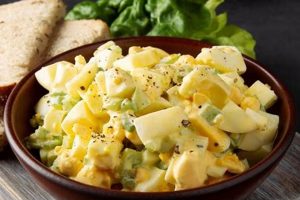
Small, delicate sandwiches filled with a mixture of chopped hard-boiled eggs, mayonnaise, and often other seasonings, such as mustard, celery, onion, or relish, characterize this classic culinary creation. These sandwiches are typically served cold, cut into small rectangles or triangles, making them ideal for picnics, parties, or light lunches. A variety of breads, from white and whole wheat to rye and sourdough, can be used to create these versatile treats.
The enduring popularity of this simple dish stems from its affordability, ease of preparation, and customizable nature. It offers a good source of protein and can be adapted to various dietary preferences and taste profiles by incorporating different ingredients or adjusting seasoning. Historically, such preparations represent a resourceful way to utilize readily available ingredients, transforming basic components into a satisfying and flavorful meal. Their convenient size and portability further contributed to their widespread adoption as a popular snack or light meal.
The following sections will delve into the specifics of crafting these delectable sandwiches, covering everything from ingredient selection and preparation techniques to presentation and serving suggestions. Variations and creative adaptations will also be explored, offering a comprehensive guide to enjoying and elevating this timeless classic.
Tips for Perfect Finger Sandwiches
Achieving optimal results when preparing these delicate sandwiches relies on attention to detail and a few key techniques. The following tips offer guidance for crafting exceptional sandwiches that are both flavorful and visually appealing.
Tip 1: Egg Cooking Technique: Properly cooked eggs are essential. Overcooked yolks result in a dry, crumbly texture. Aim for a firm yet moist yolk by simmering eggs for 8-10 minutes, then immediately transferring them to an ice bath to stop the cooking process.
Tip 2: Ingredient Ratio: Balance is key. Too much mayonnaise creates a sloppy sandwich, while too little leads to dryness. Start with a modest amount of mayonnaise and add gradually until the desired consistency is reached.
Tip 3: Freshness of Ingredients: Utilize the freshest ingredients possible for optimal flavor. Freshly baked bread and high-quality mayonnaise contribute significantly to the overall taste experience.
Tip 4: Seasoning: Don’t underestimate the power of seasoning. A pinch of salt and freshly ground black pepper can enhance the flavors of the other ingredients. Experiment with additions like Dijon mustard, paprika, or a dash of hot sauce.
Tip 5: Bread Selection: Choose a bread that complements the filling. Soft, white bread is a classic choice, but whole wheat, rye, or sourdough offer interesting variations. Crustless bread is often preferred for a more refined presentation.
Tip 6: Chilling Time: Allowing the prepared filling to chill for at least 30 minutes before assembling the sandwiches enhances the flavors and allows them to meld. This also firms the filling, making it easier to spread.
Tip 7: Cutting Technique: Precise cutting elevates the presentation. Use a sharp knife and a gentle sawing motion to create clean, even cuts. Trim the crusts for a more formal look.
By following these tips, one can create visually appealing and flavorful sandwiches suitable for any occasion. Attention to detail in each step, from ingredient selection to final presentation, guarantees a satisfying culinary experience.
This comprehensive guide provides a solid foundation for preparing exceptional sandwiches. Experimentation and adaptation to individual preferences are encouraged to further personalize this classic dish.
1. High-quality Ingredients

Ingredient quality significantly impacts the overall flavor and texture of egg salad finger sandwiches. Utilizing superior components elevates this seemingly simple dish from ordinary to exceptional. The following facets explore the crucial role of high-quality ingredients in crafting outstanding sandwiches.
- Fresh Eggs:
Farm-fresh eggs, ideally sourced locally, possess richer yolks and firmer whites, contributing a superior taste and texture to the egg salad. Their vibrant color enhances the visual appeal of the filling. The difference between farm-fresh and commercially produced eggs is noticeable in both flavor and texture. The richer, creamier consistency of farm-fresh yolks translates to a more luxurious egg salad.
- Mayonnaise Selection:
Mayonnaise serves as the binder and flavor enhancer in egg salad. Opting for a high-quality mayonnaise, preferably one made with real eggs and minimal additives, significantly impacts the overall taste. Comparing various brands reveals noticeable differences in flavor profiles, ranging from tangy to creamy. This seemingly minor choice can drastically alter the final product.
- Fresh Bread:
The bread acts as the foundation of the sandwich. Freshly baked bread, whether from a local bakery or homemade, offers a superior texture and flavor compared to pre-packaged options. The type of bread also plays a role; a sturdy yet soft loaf is ideal for holding the filling without becoming soggy. Consider sourdough, whole wheat, or a classic white loaf.
- Aromatic Enhancements:
Fresh herbs, such as chives or dill, and finely diced vegetables, like celery or red onion, elevate the flavor profile. These additions contribute not only flavor but also textural complexity. Sourcing these ingredients from local farmers’ markets ensures optimal freshness and flavor intensity, further enhancing the final product.
Careful selection of each ingredient, from the eggs to the seasonings, contributes to a superior egg salad finger sandwich experience. Prioritizing quality over convenience elevates this classic dish, transforming it into a truly memorable culinary delight.
2. Precise Egg Cooking

Precise egg cooking is paramount to a successful egg salad finger sandwich recipe. The final texture and flavor of the egg salad depend heavily on how the eggs are cooked. Overcooked eggs yield a dry, crumbly texture, resulting in a less palatable filling. Conversely, undercooked eggs create a watery, unappetizing mixture. The ideal consistency lies in a firm yet moist yolk, achieved through precise timing and temperature control. This optimal cooking ensures the egg salad binds well with other ingredients, contributing to a smooth, creamy texture.
Consider the impact of different cooking methods. Boiling eggs for an excessive duration results in a chalky, dry yolk with a greenish tinge around the edges. This dryness translates to a less flavorful and aesthetically unappealing egg salad. Steaming eggs, while gentler, can still lead to overcooking if not carefully monitored. The target is a fully cooked white and a yolk that is set but still retains a degree of moisture. This delicate balance contributes significantly to the overall quality of the egg salad. For instance, a slightly undercooked yolk, while undesirable on its own, can add a touch of creaminess to the final mixture when combined with other ingredients.
Mastering the technique of precise egg cooking offers significant practical benefits. It allows for greater control over the final product, ensuring a consistently desirable texture and flavor. This precision also reduces food waste by minimizing the likelihood of ruining the eggs through over or undercooking. Ultimately, understanding the nuances of egg cooking elevates the egg salad finger sandwich from a simple dish to a culinary creation showcasing attention to detail and expertise.
3. Balanced Flavor Profile
A balanced flavor profile is crucial for a successful egg salad finger sandwich recipe. The delicate nature of the dish requires careful consideration of each ingredient’s contribution to the overall taste experience. A harmonious blend of flavors elevates the sandwich beyond a simple combination of ingredients, creating a complex and satisfying culinary creation. The following facets explore the key components of achieving this balance.
- Creaminess vs. Tanginess
The interplay between creamy and tangy elements forms the foundation of a well-balanced egg salad. Mayonnaise contributes the creamy richness, while ingredients like mustard or pickles provide the necessary tang. The ratio of these components determines the overall flavor profile. For example, a higher proportion of mayonnaise creates a richer, milder flavor, while an increased presence of tangy ingredients adds sharpness and cuts through the richness of the eggs and mayonnaise.
- Salt and Savory Notes
Salt enhances the inherent flavors of the eggs and other ingredients. However, excessive salt can overpower the delicate balance. Incorporating savory elements, such as finely diced onion or chives, adds depth and complexity. The interaction of salt with these savory notes creates a layered flavor profile, preventing the egg salad from tasting bland or one-dimensional. A touch of smoked paprika or a dash of Worcestershire sauce can also contribute to a more nuanced savory dimension.
- Textural Contrast
While not strictly a flavor element, textural contrast plays a significant role in the overall sensory experience. The creamy egg salad benefits from the addition of ingredients that provide a contrasting texture. Finely diced celery or red onion adds a subtle crunch, while chopped fresh herbs offer a softer textural variation. This interplay of textures prevents the egg salad from becoming monotonous and adds an element of surprise with each bite.
- Aromatic Complexity
Fresh herbs and spices introduce aromatic complexity. Dill, chives, or parsley contribute fresh, herbaceous notes, while a pinch of black pepper adds a subtle warmth. These aromatic elements engage the sense of smell, enhancing the overall enjoyment of the sandwich. The careful selection and balance of these aromatics prevent any single flavor from dominating, ensuring a harmonious blend that complements the other ingredients.
Achieving a balanced flavor profile in an egg salad finger sandwich relies on the careful orchestration of these elements. The interplay of creaminess and tanginess, saltiness and savory notes, textural contrasts, and aromatic complexity elevates this simple dish to a sophisticated culinary experience. A well-balanced egg salad is not merely a combination of ingredients but a symphony of flavors that harmonize to create a truly delightful culinary creation.
4. Proper Bread Selection
Bread selection significantly impacts the overall enjoyment of an egg salad finger sandwich. The bread acts as both a vessel for the filling and a contributing component to the overall flavor and textural experience. Careful consideration of bread type, texture, and flavor ensures a harmonious balance between the bread and the egg salad filling. Choosing an inappropriate bread can detract from the delicate flavors of the egg salad or result in structural issues, such as a soggy or crumbly sandwich.
The ideal bread for egg salad finger sandwiches offers a balance of tenderness and structural integrity. Soft, finely textured breads, such as white bread, brioche, or challah, provide a delicate backdrop for the creamy filling. Their subtle sweetness complements the savory egg salad without overpowering it. Conversely, denser breads, like whole wheat or rye, offer a more robust flavor and texture. These options can stand up well to the moisture in the egg salad, preventing sogginess. However, their stronger flavors may compete with the delicate nuances of the egg salad. For example, a strongly flavored rye bread might overpower a subtly seasoned egg salad, while a flimsy white bread might become soggy under the weight of the filling. Selecting a bread with a medium texture, such as a classic Pullman loaf, often provides an optimal balance, offering enough structure to hold the filling without competing with its flavor.
Practical considerations also influence bread selection. The size and shape of the loaf should facilitate easy slicing and portioning into finger sandwich-sized pieces. Pre-sliced bread offers convenience but may lack the desired freshness. Crustless bread, readily available commercially or easily prepared by removing the crusts from a standard loaf, provides a refined presentation suitable for formal occasions. Ultimately, proper bread selection elevates the egg salad finger sandwich from a simple snack to a carefully constructed culinary creation where each element contributes to a harmonious and satisfying experience. This careful attention to detail showcases a respect for both the ingredients and the culinary tradition.
5. Meticulous Assembly
Meticulous assembly is a crucial element in crafting aesthetically pleasing and structurally sound egg salad finger sandwiches. While seemingly a minor detail, the assembly process significantly impacts the final product’s presentation and enjoyment. A carefully assembled sandwich showcases attention to detail and elevates the dish from a simple snack to a carefully constructed culinary creation. Conversely, haphazard assembly can result in a messy, unappetizing sandwich, detracting from the overall dining experience. Consider the difference between a neatly trimmed, evenly filled sandwich and one with uneven edges and overflowing filling; the former conveys elegance and care, while the latter suggests a lack of attention.
Several factors contribute to meticulous assembly. Evenly spreading the egg salad filling across the bread ensures a consistent flavor in each bite and prevents structural imbalances. Precise cutting techniques, using a sharp knife and a gentle sawing motion, create clean, uniform edges, enhancing the sandwich’s visual appeal. Attention to detail extends to trimming the crusts, a practice often employed for formal occasions or to create a more refined presentation. For example, trimming the crusts and cutting the sandwiches into precise triangles elevates the presentation, making them suitable for afternoon tea or a sophisticated luncheon. Conversely, unevenly cut sandwiches with ragged edges detract from the overall visual appeal, regardless of the filling’s quality.
The practical significance of meticulous assembly lies in its contribution to both aesthetics and functionality. A well-assembled sandwich is not only visually appealing but also easier to handle and consume. Evenly distributed filling prevents spillage and ensures a pleasant eating experience. Precise cutting creates manageable portions, ideal for finger foods. Ultimately, meticulous assembly reflects a respect for the ingredients and the culinary craft, transforming a simple egg salad sandwich into a demonstration of care and precision. This attention to detail elevates the dining experience, demonstrating that even seemingly simple dishes benefit from careful execution.
Frequently Asked Questions
This section addresses common inquiries regarding the preparation and enjoyment of egg salad finger sandwiches. Clarity on these points ensures optimal results and addresses potential concerns.
Question 1: How can one prevent egg salad from becoming watery?
Excess moisture in egg salad often stems from overcooked yolks or insufficiently drained ingredients, such as celery or onions. Precisely cooked yolks and thorough draining mitigate this issue.
Question 2: What are suitable bread alternatives for those with gluten sensitivities?
Gluten-free bread options, such as those made with rice flour or almond flour, provide suitable alternatives. Lettuce wraps or cucumber slices can also serve as substitutes for bread.
Question 3: How long can egg salad be safely stored?
Properly stored in an airtight container in the refrigerator, egg salad typically remains safe for consumption for up to three to five days. Beyond this timeframe, quality and safety may deteriorate.
Question 4: How can one achieve a smoother, more uniform egg salad texture?
A fine mesh sieve or a ricer can be employed to achieve a smoother, more uniform egg salad texture. These tools help to create a consistent consistency, free from large chunks of egg white.
Question 5: Can egg salad finger sandwiches be prepared in advance for an event?
While the egg salad filling can be prepared a day or two in advance, assembling the sandwiches shortly before serving is recommended to prevent the bread from becoming soggy.
Question 6: Beyond traditional seasonings, what other flavor combinations complement egg salad?
Incorporating ingredients like curry powder, smoked paprika, or everything bagel seasoning offers unique flavor profiles beyond traditional seasonings. Experimentation with various herbs and spices can yield delightful results.
Addressing these common inquiries provides a comprehensive understanding of egg salad finger sandwich preparation. Attention to these details ensures both a successful outcome and an enjoyable culinary experience.
The following section provides a sample recipe incorporating the principles and techniques discussed throughout this guide.
Egg Salad Finger Sandwich Recipe
This exploration of the egg salad finger sandwich recipe has delved into the nuances of this seemingly simple dish. From the importance of high-quality ingredients and precise egg cooking techniques to the careful balancing of flavors and the meticulous assembly process, each step contributes significantly to the final product. Proper bread selection, enhancing both flavor and texture, has been highlighted, as has the potential for creative variations to personalize the classic recipe. Addressing frequently asked questions further clarifies essential aspects of preparation and storage.
The egg salad finger sandwich recipe, though classic and straightforward, offers a canvas for culinary expression. Attention to detail elevates this humble dish, demonstrating that even simplicity benefits from careful execution. Further exploration and adaptation of this recipe promise a continued appreciation for its versatility and enduring appeal.