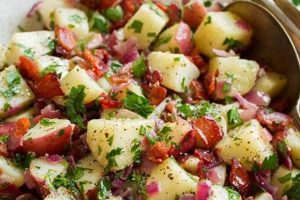
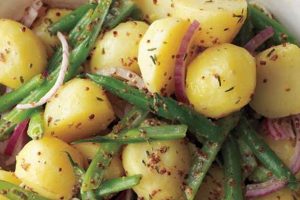
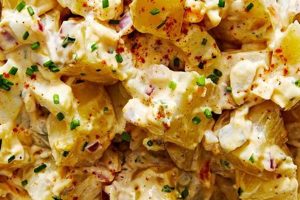
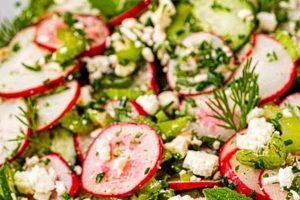
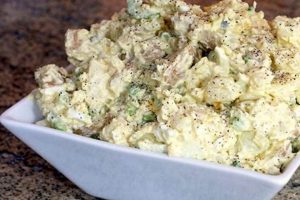
A highly regarded preparation method for this classic picnic dish generally involves perfectly cooked potatoes, a flavorful dressing, and carefully selected additions. For instance, a top-tier approach might combine Yukon Gold potatoes, a tangy mayonnaise-based dressing with mustard and celery, and perhaps hard-boiled eggs and red onion. Variations abound, from simple recipes emphasizing fresh herbs to those incorporating bacon or other bolder ingredients.
Achieving a superior potato salad offers culinary satisfaction and enhances social gatherings and celebrations. Its presence on picnic tables and at potlucks signifies comfort and tradition. The dish enjoys a rich history, with variations appearing across cultures for centuries, adapting to local ingredients and preferences. Mastering the art of this seemingly simple dish often signifies a cook’s prowess in balancing flavors and textures.
The following sections will explore various elements contributing to exceptional potato salad, from potato selection and cooking techniques to dressing variations and complementary ingredients, ultimately guiding readers toward creating their own perfect version.
Tips for Exceptional Potato Salad
Creating truly exceptional potato salad requires attention to detail at every stage, from ingredient selection to final presentation. These tips offer guidance toward achieving superior results.
Tip 1: Choose the Right Potato. Waxy potatoes, such as Yukon Gold or red-skinned varieties, hold their shape well after cooking and offer a creamy texture, ideal for potato salad. Russet potatoes, while popular for baking, tend to become crumbly when boiled.
Tip 2: Cook Potatoes Evenly. Ensure even cooking by starting potatoes in cold, salted water. This promotes uniform heat penetration and prevents the exterior from overcooking before the interior is tender.
Tip 3: Dress Potatoes While Warm. Warm potatoes absorb dressings more effectively. Adding the dressing while the potatoes are still slightly warm allows the flavors to meld beautifully.
Tip 4: Balance Flavors Carefully. The dressing should complement, not overwhelm, the potatoes. A balanced combination of tangy, savory, and creamy elements creates a harmonious flavor profile. Consider incorporating Dijon mustard, apple cider vinegar, and fresh herbs.
Tip 5: Add Texture and Interest. Incorporate ingredients that provide textural contrast and visual appeal. Chopped celery, red onion, hard-boiled eggs, and fresh parsley are classic additions.
Tip 6: Season Thoughtfully. Salt and freshly ground black pepper are essential, but consider other seasonings as well. A pinch of paprika or a dash of cayenne pepper can add depth and complexity.
Tip 7: Chill Thoroughly. Allowing the potato salad to chill for at least two hours before serving allows the flavors to meld and the salad to reach the ideal serving temperature.
By following these tips, one can elevate potato salad from a simple side dish to a star attraction. The combination of properly cooked potatoes, a well-balanced dressing, and thoughtful additions creates a culinary experience that is both satisfying and memorable.
With these foundational principles established, the subsequent sections will delve into specific recipe variations, offering a range of options to suit diverse tastes and preferences.
1. Potato Variety

Potato selection significantly impacts the final quality of potato salad. Different varieties offer distinct textures and flavor profiles, influencing the dish’s overall success. Choosing the appropriate potato is crucial for achieving desired results.
- Waxy Potatoes
Waxy potatoes, such as Yukon Gold, Red Bliss, and fingerling potatoes, are characterized by their low starch content and firm texture. They hold their shape well during cooking, resisting crumbling, which makes them ideal for potato salad. Their creamy texture and subtle sweetness complement a variety of dressings and additions.
- Starchy Potatoes
Russet potatoes, a common starchy variety, possess a high starch content, resulting in a fluffy texture when cooked. While excellent for baking or mashing, their tendency to fall apart during boiling makes them less suitable for potato salad. Their absorbent nature, however, can be advantageous in certain preparations.
- All-Purpose Potatoes
Varieties like white potatoes fall into the all-purpose category, offering a balance between waxy and starchy characteristics. While they may not excel in either category, their versatility allows for acceptable results in potato salad, particularly when specific textures are not paramount.
- New Potatoes
Small, immature potatoes harvested early in the season, often referred to as new potatoes, offer a delicate flavor and thin skin. Their creamy texture makes them a suitable choice for potato salad, although their higher price point may influence selection.
Understanding the characteristics of different potato varieties empowers informed decision-making in crafting potato salad. Selecting the correct potato, primarily waxy varieties, contributes significantly to achieving the desired texture, flavor, and overall appeal of the final dish. While other types offer potential depending on specific recipe requirements, prioritizing waxy potatoes generally ensures a successful and satisfying outcome.
2. Dressing Consistency
Dressing consistency represents a critical factor in determining the overall quality and appeal of potato salad. The interplay between dressing viscosity and potato texture contributes significantly to the final sensory experience. Careful consideration of dressing consistency is essential for achieving a harmonious balance of flavors and textures.
- Classic Creamy Dressing
Traditional potato salad often features a mayonnaise-based dressing, offering a rich, creamy texture that coats the potatoes evenly. This classic approach provides a familiar comfort and enhances the overall richness of the dish. Emulsified dressings, incorporating ingredients like mustard and vinegar, contribute to a smooth, cohesive texture that clings to the potatoes, ensuring flavor distribution throughout.
- Tangy Vinaigrette Dressing
A lighter, more vibrant alternative involves a vinaigrette-based dressing. This approach emphasizes the natural flavors of the potatoes and other ingredients while offering a refreshing contrast to the richness of mayonnaise-based dressings. Vinaigrettes, typically composed of oil, vinegar, and herbs, provide a tangy, acidic counterpoint to the starchy potatoes, creating a brighter, more dynamic flavor profile.
- Variations and Combinations
Beyond the traditional creamy and tangy options, variations and combinations offer further exploration of dressing consistency. Incorporating sour cream or yogurt into a mayonnaise base can add tang and adjust texture. Experimenting with different oils and vinegars in vinaigrettes expands the flavor possibilities. These nuanced adjustments allow for customization and adaptation to individual preferences.
- Impact on Texture and Flavor
Dressing consistency directly impacts both the textural and flavor experience of potato salad. A thick, creamy dressing clings heavily to the potatoes, creating a cohesive, rich mouthfeel. A thinner, more fluid dressing allows the individual components to stand out, offering a lighter, more distinct textural contrast. The consistency also influences how the flavors meld and interact, impacting the overall balance and complexity of the dish.
The choice of dressing consistency ultimately shapes the character of the potato salad. Whether opting for the classic comfort of a creamy dressing or the bright vibrancy of a vinaigrette, careful consideration of this element ensures a balanced and satisfying culinary experience. Understanding the interplay between dressing consistency, potato texture, and flavor profile allows for informed decision-making in crafting the perfect potato salad.
3. Ingredient Balance
Ingredient balance constitutes a critical factor in achieving a superlative potato salad. A harmonious interplay of flavors and textures distinguishes a truly exceptional rendition from a mediocre one. Careful consideration of ingredient proportions and their respective contributions to the overall composition is essential. An overabundance of any single element can detract from the desired complexity and balance, while insufficient incorporation of complementary ingredients may result in a bland or one-dimensional experience. For instance, an excess of onion can overpower the subtle flavors of the potatoes and other components, while a lack of acidity may render the dish unpleasantly sweet or heavy.
Consider a classic potato salad composition. The foundational element, potatoes, provides a starchy, subtly sweet base. The dressing, often mayonnaise-based, contributes richness and creaminess. Additions such as celery and onion introduce textural complexity and contrasting flavors celery offers a crisp, vegetal note, while onion provides a pungent bite. Hard-boiled eggs contribute a creamy texture and subtle sulfurous notes. Relish, whether sweet pickle or dill, introduces a tangy, acidic counterpoint. The success of the final dish hinges on the careful calibration of these elements. Too much mayonnaise can overwhelm the other flavors, while insufficient relish may leave the salad lacking the necessary acidity to balance the richness of the potatoes and dressing.
Achieving optimal ingredient balance requires both a deep understanding of individual ingredient characteristics and a nuanced appreciation for their interaction within the overall composition. A successful potato salad recipe will carefully consider the ratios of potatoes to dressing to additions, ensuring that no single element dominates the others. Furthermore, attention must be paid to the interplay of flavors sweet, sour, salty, and savory and textures creamy, crunchy, and firm. This meticulous approach to ingredient balance allows for the creation of a complex, nuanced dish that offers a harmonious and satisfying sensory experience. Careful ingredient balance not only enhances the immediate enjoyment of the dish but also contributes to its overall digestibility and perceived freshness. A well-balanced potato salad avoids the heavy, cloying sensation that can result from an overabundance of rich ingredients, promoting a lighter, more refreshing culinary experience. The interplay of flavors and textures, when carefully orchestrated, keeps the palate engaged and prevents sensory fatigue.
4. Seasoning Precision

Seasoning precision plays a pivotal role in elevating potato salad from satisfactory to exceptional. The nuanced application of salt, pepper, and other seasonings significantly impacts the final flavor profile. Proper seasoning enhances the inherent flavors of the potatoes and other ingredients, creating a balanced and harmonious dish. Over-seasoning can easily mask delicate flavors, while under-seasoning results in a bland, uninspired outcome. Achieving seasoning precision requires careful attention to detail and an understanding of how different seasonings interact with the other components of the salad.
- Salt Calibration
Salt acts as a flavor enhancer, accentuating the natural sweetness of the potatoes and other ingredients. It also plays a crucial role in balancing the richness of the dressing and the acidity of any added vinegar or relish. However, excessive salt can easily overpower the other flavors, rendering the salad unpalatable. Careful calibration, often involving incremental additions and frequent tasting, is essential for achieving the desired savory balance. The type of salt used can also influence the final flavor profile. Kosher salt, with its larger crystals, provides a clean, consistent salinity, while sea salt can impart subtle mineral notes.
- Pepper Enhancement
Freshly ground black pepper adds a layer of complexity and subtle heat to potato salad. Its pungent aroma and slightly bitter notes contrast beautifully with the creamy dressing and starchy potatoes. The amount of pepper used should complement, not overwhelm, the other flavors. A coarser grind offers a more pronounced peppery bite, while a finer grind provides a gentler warmth. White pepper can be substituted for black pepper in recipes where a lighter visual appearance is desired.
- Herbaceous Infusion
Fresh herbs introduce vibrant, aromatic notes to potato salad. Dill, parsley, chives, and tarragon are popular choices, each contributing a unique flavor profile. Dill offers a slightly tangy, anise-like flavor, while parsley provides a clean, vegetal note. Chives impart a mild onion flavor, and tarragon adds a subtle licorice nuance. Fresh herbs should be added towards the end of the preparation process to preserve their delicate flavors and vibrant green color.
- Acidic Balance
Acidity plays a crucial role in balancing the richness of the potatoes and dressing. Vinegar, lemon juice, or pickle relish introduce a tartness that brightens the overall flavor profile. The type of acid used can significantly influence the final taste. Apple cider vinegar offers a mild, fruity acidity, while white vinegar provides a sharper, more pungent note. Lemon juice contributes a citrusy brightness. The amount of acid used should be carefully calibrated to complement the other flavors without making the salad overly tart.
The interplay of these seasoning elements contributes significantly to the final quality and enjoyment of potato salad. Precise seasoning elevates the inherent flavors of the ingredients, creating a harmonious and well-balanced dish. Careful attention to salt calibration, pepper enhancement, herbaceous infusion, and acidic balance ensures a flavorful and satisfying culinary experience. Achieving this precision distinguishes a truly exceptional potato salad from a merely adequate one.
5. Chilling Duration
Chilling duration significantly influences the final quality of potato salad. Flavor development and textural stability benefit from adequate refrigeration. Allowing the salad to chill for an appropriate period, typically a minimum of two hours, allows the flavors of the various componentspotatoes, dressing, and additionsto meld and harmonize. This melding creates a more cohesive and complex flavor profile compared to a freshly made, unchilled salad. Chilling also firms the potatoes, enhancing their textural integrity and preventing them from becoming mushy. A salad served immediately after preparation, while palatable, lacks the nuanced flavor development and desirable textural firmness achieved through proper chilling.
Consider a potato salad composed of waxy potatoes, a mayonnaise-based dressing, celery, onion, and hard-boiled eggs. If consumed immediately, the individual flavors of each component remain distinct and somewhat disjointed. The potatoes may exhibit a slightly mealy texture, and the dressing might not have fully absorbed into the potatoes. However, after a sufficient chilling period, the flavors meld, resulting in a more unified and harmonious taste. The potatoes firm up, offering a more pleasing texture, and the dressing evenly coats the other ingredients, creating a cohesive culinary experience. This enhanced flavor integration and textural stability demonstrate the practical significance of chilling duration.
Optimal chilling duration depends on several factors, including ambient temperature and desired serving temperature. In warmer climates or during summer months, longer chilling periods may be necessary to ensure food safety and maintain the desired cool serving temperature. Conversely, shorter chilling times may suffice in cooler environments. While a minimum of two hours is generally recommended, extending the chilling period up to 24 hours can further enhance flavor development, particularly in salads with complex flavor profiles. However, excessively long chilling periods, beyond 24 hours, can negatively impact the texture of the potatoes, potentially leading to excessive firmness or dryness. Therefore, careful consideration of ambient conditions and desired outcomes informs the ideal chilling duration for any given potato salad preparation.
Frequently Asked Questions
This section addresses common inquiries regarding optimal potato salad preparation, offering concise and informative responses to clarify potential uncertainties and enhance overall understanding.
Question 1: What type of potato is best suited for potato salad?
Waxy potatoes, such as Yukon Gold or Red Bliss, are generally preferred for potato salad due to their ability to hold their shape after cooking. Starchy potatoes, like Russets, tend to crumble, resulting in a less desirable texture.
Question 2: How can one prevent potatoes from becoming overly mushy?
Starting potatoes in cold, salted water and avoiding overcooking are crucial for preventing mushiness. Testing for doneness with a fork ensures the potatoes are tender but not overly soft.
Question 3: When should the dressing be added to the potatoes?
Dressing is ideally added while the potatoes are still warm, as this allows for better absorption and flavor infusion. Adding dressing to cold potatoes can result in a less cohesive final product.
Question 4: What are some common additions that enhance potato salad?
Classic additions include chopped celery, red onion, hard-boiled eggs, and fresh herbs such as parsley or dill. Other options include bacon, pickles, or mustard.
Question 5: How long should potato salad be chilled before serving?
Chilling for at least two hours allows the flavors to meld and the salad to reach an optimal serving temperature. However, chilling for too long can negatively impact the texture.
Question 6: Can potato salad be made ahead of time?
Potato salad can be made a day in advance. However, it’s advisable to add easily bruised ingredients, like fresh herbs, just before serving to maintain their optimal quality.
Careful consideration of these frequently asked questions equips individuals with the knowledge necessary to create exceptional potato salad. Understanding potato selection, cooking techniques, dressing incorporation, and chilling duration contributes significantly to achieving optimal flavor and texture.
The following section will provide a curated selection of exemplary potato salad recipes, offering practical applications of these principles and inspiring culinary creativity.
Best Recipe for Potato Salad
Achieving a truly exceptional potato salad hinges on a multitude of factors, each contributing to the final harmony of flavors and textures. From the careful selection of potato varietyprioritizing waxy types like Yukon Gold for their ability to hold their shapeto the nuanced balance of ingredients in the dressing and additions, precision is key. Proper cooking techniques, ensuring even doneness without over-softening, lay the foundation. The timing of dressing incorporation, ideally while the potatoes are still warm to maximize absorption, is crucial. Seasoning precision, with careful calibration of salt, pepper, and other spices, elevates the inherent flavors of each component. Finally, adequate chilling allows these flavors to meld, creating a cohesive and complex flavor profile, while also enhancing the textural stability of the dish. These meticulously executed steps distinguish a truly remarkable potato salad from a merely satisfactory one.
The pursuit of the “best recipe for potato salad” is an ongoing culinary exploration, reflecting evolving tastes and ingredient availability. Ultimately, the ideal recipe is subjective, tailored to individual preferences and culinary traditions. However, the principles outlined herein provide a foundational framework for consistent success. Mastery of these elements empowers culinary enthusiasts to elevate this classic dish, transforming it from a simple side offering into a memorable culinary centerpiece.