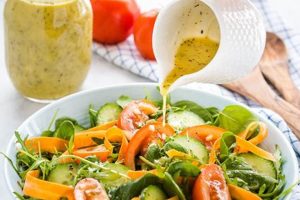
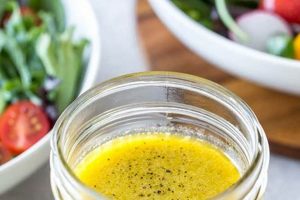
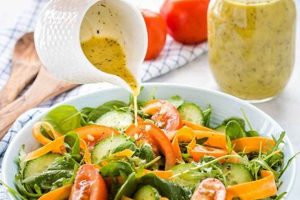
A delicate yet vibrant vinaigrette featuring champagne vinegar as its acidic component forms the base of a versatile culinary enhancement for salads and various dishes. This type of dressing typically incorporates oil, often a neutral one like grapeseed or a lighter olive oil, along with seasonings ranging from simple salt and pepper to Dijon mustard, herbs, and shallots. A classic example blends a ratio of three parts oil to one part champagne vinegar, whisked together with a pinch of salt and freshly ground black pepper.
The subtle fruitiness and mild acidity of champagne vinegar elevate a dressing beyond simple tartness, lending complexity and brightness to the overall flavor profile. Unlike harsher vinegars, it complements delicate greens and vegetables without overpowering their inherent flavors. Its unique character also makes it a suitable accompaniment for richer dishes, offering a refreshing counterpoint. Historically, vinegar-based dressings have been a staple across cultures for centuries, adding zest and preserving food. The use of a more refined vinegar like champagne vinegar speaks to a focus on nuanced flavor combinations and culinary artistry.
The versatility of this foundational dressing encourages exploration. From variations incorporating honey or maple syrup for sweetness to additions of minced garlic or fresh herbs for depth, the possibilities extend far beyond the basic recipe. Understanding the core balance of acid, fat, and seasoning allows for creative adaptation to suit individual preferences and specific culinary applications.
Tips for Crafting Exceptional Vinaigrettes with Champagne Vinegar
Achieving a well-balanced and flavorful vinaigrette hinges on understanding the interplay of key ingredients and techniques.
Tip 1: Quality Ingredients Matter: Opt for high-quality champagne vinegar. Its subtle nuances are crucial to the final result. Likewise, fresh, high-quality oil contributes significantly to the dressing’s flavor and texture.
Tip 2: Emulsification is Key: A stable emulsion prevents the dressing from separating. Whisk the vinegar and oil vigorously or use a blender for a smoother, more emulsified result.
Tip 3: Balance is Paramount: The classic 3:1 ratio of oil to vinegar offers a good starting point. Adjust according to personal preference and the specific ingredients in the salad.
Tip 4: Seasoning Enhances Flavor: Salt and freshly ground black pepper are essential. A pinch of sugar or a touch of Dijon mustard can further enhance the complexity of the dressing.
Tip 5: Fresh Herbs Elevate the Profile: Incorporating finely chopped fresh herbs such as chives, tarragon, or parsley adds a vibrant, aromatic dimension.
Tip 6: Experiment with Flavor Combinations: Consider additions like minced shallots, garlic, honey, or maple syrup to create unique flavor profiles.
Tip 7: Taste and Adjust: Before dressing the salad, taste the vinaigrette and adjust the seasoning or balance of vinegar and oil as needed. This final step ensures optimal flavor.
By focusing on these core principles, one can consistently create dressings that elevate salads and other dishes with the bright, nuanced flavor of champagne vinegar.
Mastering the art of creating a perfect champagne vinegar vinaigrette opens up a world of culinary possibilities.
1. High-quality Ingredients

The success of a champagne vinegar salad dressing hinges directly on the quality of its components. Ingredient selection elevates this seemingly simple dressing from ordinary to extraordinary. Subtle nuances in flavor and texture, often imperceptible in isolation, become pronounced when combined, impacting the overall sensory experience.
- Champagne Vinegar
The foundation of this dressing lies in the champagne vinegar itself. Opting for a high-quality vinegar derived from authentic champagne production yields a delicate, complex flavor profile absent in generic white wine vinegars. The subtle fruit notes and gentle acidity contribute significantly to the final character of the dressing. Substituting lower-quality vinegar compromises the balance and diminishes the intended elegance.
- Oil
Oil forms the body of the vinaigrette. Extra virgin olive oil, with its robust flavor and rich texture, offers a classic pairing. However, lighter oils like grapeseed or avocado oil provide a neutral backdrop that allows the champagne vinegar’s nuances to shine. The oil’s quality significantly impacts the dressing’s mouthfeel and overall flavor harmony. Rancid or low-quality oils introduce off-flavors that detract from the intended delicacy.
- Seasonings
Freshly ground pepper, high-quality sea salt, and Dijon mustard constitute the essential seasonings. Freshly ground pepper provides a more vibrant aroma and flavor than pre-ground alternatives. Sea salt, with its mineral complexity, adds depth compared to standard table salt. Dijon mustard, with its tangy notes, complements the champagne vinegar and acts as an emulsifier, contributing to the dressing’s texture and stability. Using inferior seasonings diminishes the overall complexity.
- Optional Additions
Fresh herbs, such as chives, tarragon, or chervil, introduce a layer of aromatic complexity. Shallots, finely minced, add a pungent sweetness. High-quality honey or maple syrup can contribute a touch of nuanced sweetness to balance the acidity. The freshness and quality of these additions are crucial; wilted herbs or inferior sweeteners can detract from the final product.
By prioritizing high-quality ingredients, the inherent complexity and balance of a champagne vinegar salad dressing are fully realized. The interplay of these carefully selected components elevates the final result, offering a nuanced and refined culinary experience that extends beyond a simple condiment.
2. Proper Emulsification

Emulsification, the process of combining two immiscible liquids like oil and vinegar into a stable mixture, plays a critical role in the creation of a successful champagne vinegar salad dressing. A properly emulsified dressing exhibits a smooth, cohesive texture and prevents the oil and vinegar from separating, ensuring a consistent flavor experience in each bite.
- Temporary vs. Permanent Emulsions
Salad dressings typically exemplify temporary emulsions, where the combined liquids eventually separate. While a permanent emulsion, like mayonnaise, utilizes ingredients to create a lasting bond, a temporary emulsion relies on techniques like whisking or blending to disperse tiny droplets of one liquid within the other, increasing surface area and delaying separation. In a champagne vinegar dressing, this temporary emulsion is desirable, offering a light, pourable consistency while maintaining a harmonious blend of flavors for a reasonable duration.
- The Role of Emulsifiers
While not creating a permanent emulsion, certain ingredients can aid in stabilizing the mixture and delaying separation. Dijon mustard, often included in champagne vinegar dressings, contains lecithin, a natural emulsifier. Lecithin molecules possess both hydrophilic (water-loving) and lipophilic (oil-loving) properties, allowing them to bind to both the vinegar and oil, reducing surface tension and promoting a more stable, homogenous mixture.
- Techniques for Emulsification
The most common method involves slowly drizzling the oil into the vinegar while whisking constantly. This gradual incorporation allows the oil to disperse evenly into smaller droplets, creating a more stable emulsion. Alternatively, a blender can create a finer, more homogenous emulsion, particularly beneficial when incorporating additional ingredients like herbs or shallots. The chosen method influences both the texture and stability of the resulting dressing.
- Impact on Sensory Experience
Proper emulsification directly impacts the sensory experience of the champagne vinegar dressing. A well-emulsified dressing coats salad ingredients evenly, ensuring a balanced flavor distribution in each bite. Conversely, a poorly emulsified dressing, with separated oil and vinegar, delivers an inconsistent taste experience, alternating between overly acidic and oily mouthfuls. The emulsification process contributes significantly to the overall enjoyment and perceived quality of the dressing.
In conclusion, proper emulsification is paramount in achieving a desirable texture and flavor in a champagne vinegar salad dressing. It ensures the even distribution of ingredients, contributing to both the aesthetic appeal and the balanced, harmonious flavor profile that defines a successful vinaigrette. The stability achieved, albeit temporary, provides a window of optimal enjoyment before the eventual separation of oil and vinegar occurs.
3. Balanced Flavor Profile

A balanced flavor profile constitutes the cornerstone of a successful champagne vinegar salad dressing. Balance refers to the harmonious interplay of acidity, sweetness, saltiness, and other flavor components within the dressing. The delicate acidity of champagne vinegar provides a foundation upon which other flavors can build. Without balance, the dressing risks becoming overly tart, masking the subtle flavors of the salad ingredients. Conversely, insufficient acidity results in a bland, uninspiring dressing that fails to enhance the overall dish. For example, a dressing relying solely on champagne vinegar and oil may lack depth. Adding a touch of honey or maple syrup introduces sweetness to counterbalance the acidity, while a pinch of Dijon mustard adds complexity and a subtle tang. The interplay of these flavors creates a more nuanced and enjoyable experience.
Achieving balance requires careful consideration of the inherent flavors of the salad ingredients. Delicate greens, such as butter lettuce or spinach, benefit from a lighter, less acidic dressing, while more robust greens, like kale or arugula, can handle a bolder flavor profile. Consider, for instance, a salad featuring roasted vegetables and goat cheese. The sweetness of the roasted vegetables and the tanginess of the goat cheese require a dressing that complements these flavors without overpowering them. A champagne vinegar dressing with a touch of honey and a hint of thyme could provide the necessary balance. This adaptability highlights the importance of flavor balance in creating a harmonious and complementary dressing tailored to the specific salad composition.
Understanding the principles of flavor balance enables informed decisions regarding ingredient proportions and additions. It empowers experimentation and adaptation of recipes to suit individual preferences and specific culinary applications. The objective remains the creation of a cohesive flavor profile where no single element dominates, resulting in a dressing that enhances, rather than overwhelms, the flavors of the accompanying ingredients. This focus on balance elevates the champagne vinegar salad dressing from a simple condiment to an integral component of a well-composed and satisfying dish.
4. Complementary Seasonings
Complementary seasonings represent a crucial element in elevating a champagne vinegar salad dressing recipe from simple to sophisticated. These additions, carefully chosen and balanced, interact with the inherent acidity of the champagne vinegar to create a nuanced and harmonious flavor profile. The role of seasonings extends beyond mere flavor enhancement; they contribute to complexity, depth, and textural interest. For example, the pungent bite of Dijon mustard not only adds a layer of flavor but also acts as an emulsifier, aiding in the creation of a stable and homogenous dressing. The interplay between the mustard’s sharpness and the vinegar’s delicate acidity exemplifies the synergistic potential of complementary seasonings.
Consider the impact of freshly cracked black pepper. Its subtle heat and complex aroma contrast beautifully with the bright, fruity notes of the champagne vinegar. A pinch of sea salt, with its mineral complexity, enhances the overall flavor perception and balances the acidity. The inclusion of finely minced shallots introduces a subtle sweetness and a delicate allium note, further enriching the flavor profile. Fresh herbs, such as chives, tarragon, or parsley, contribute vibrant aromatic dimensions and a fresh element that complements the other components. Even a small amount of honey or maple syrup can transform the dressing, adding a touch of sweetness and rounding out the acidity.
The practical significance of understanding the role of complementary seasonings lies in the ability to tailor the dressing to specific culinary contexts. A salad featuring robust ingredients like grilled vegetables or aged cheese may benefit from a dressing with bolder seasonings, such as minced garlic or a hint of smoked paprika. Conversely, a salad composed of delicate greens and fresh berries might require a lighter touch, emphasizing fresh herbs and a minimal amount of salt and pepper. Challenges arise when seasonings are used indiscriminately. Over-seasoning can mask the subtle flavors of the champagne vinegar and the other salad ingredients, while under-seasoning results in a bland and uninspired dressing. Achieving a harmonious balance of complementary flavors is essential to create a truly exceptional champagne vinegar salad dressing.
5. Fresh, Vibrant Herbs

Fresh, vibrant herbs constitute an essential element in elevating a champagne vinegar salad dressing beyond the ordinary. Their inclusion introduces a layer of aromatic complexity and a refreshing burst of flavor that complements the delicate acidity of the vinegar. The selection and application of these herbs significantly impact the final character of the dressing, transforming it from a simple condiment into a nuanced culinary creation. Their inherent vibrancy enhances the overall sensory experience, contributing to both the aroma and the flavor profile of the finished dish.
- Aromatic Enhancement
The aromatic oils present in fresh herbs contribute significantly to the overall sensory experience of the dressing. Herbs like chives, with their delicate onion-like fragrance, or tarragon, with its subtle anise notes, infuse the dressing with a captivating aroma that complements the champagne vinegar’s subtle fruitiness. This aromatic enhancement elevates the dining experience, engaging the senses beyond taste alone. The volatile compounds released by the herbs create a more immersive and enjoyable culinary experience.
- Flavor Complexity
Beyond aroma, fresh herbs introduce a layer of flavor complexity that enriches the dressing’s profile. Parsley, with its slightly peppery and herbaceous notes, provides a refreshing counterpoint to the vinegar’s acidity. Mint, with its cooling essence, adds a unique dimension, particularly suitable for salads featuring summer fruits or vegetables. The interplay of these diverse flavors creates a more nuanced and balanced dressing, preventing any single element from dominating.
- Visual Appeal
The vibrant green hues of fresh herbs contribute to the visual appeal of the dressing and the salad as a whole. The inclusion of finely chopped chives, parsley, or dill adds a pop of color that enhances the presentation. This visual element plays a significant role in the overall dining experience, stimulating appetite and adding a touch of elegance to the dish. The careful selection and placement of herbs can transform a simple salad into a visually captivating culinary creation.
- Textural Interest
In addition to their aromatic and flavor contributions, fresh herbs introduce a subtle textural element to the dressing. The delicate leaves of herbs like chervil or dill provide a gentle textural contrast to the smoothness of the emulsified oil and vinegar. This subtle textural variation adds another layer of sensory interest, enhancing the overall enjoyment of the salad. The choice of herb influences the specific textural contribution, allowing for customization based on the desired outcome.
The judicious use of fresh, vibrant herbs represents a crucial step in crafting a truly exceptional champagne vinegar salad dressing. Their contribution extends beyond mere flavor enhancement, encompassing aromatic complexity, visual appeal, and textural interest. The careful selection and integration of these herbs elevate the dressing from a simple condiment to a key component of a well-composed and satisfying culinary experience, demonstrating the transformative power of fresh ingredients in even the simplest of preparations.
Frequently Asked Questions
This section addresses common inquiries regarding the preparation and utilization of champagne vinegar-based salad dressings.
Question 1: What distinguishes champagne vinegar from other vinegars in salad dressings?
Champagne vinegar, derived from champagne, possesses a uniquely delicate acidity and subtle fruitiness compared to harsher white wine or distilled vinegars. This nuanced flavor profile complements delicate ingredients without overpowering them.
Question 2: Can alternative oils be substituted for olive oil in these dressings?
Neutral oils like grapeseed or avocado oil offer a milder flavor backdrop, allowing the champagne vinegar’s nuances to shine. While olive oil provides a robust flavor, these alternatives offer a different dimension.
Question 3: How can separation in the dressing be prevented or addressed?
Vigorous whisking or blending creates a temporary emulsion that delays separation. If separation occurs, re-whisking or shaking before serving restores the emulsion.
Question 4: What role does Dijon mustard play in a champagne vinegar dressing?
Dijon mustard contributes a subtle tang and acts as an emulsifier, aiding in binding the oil and vinegar for a more stable and homogenous mixture.
Question 5: How can the sweetness of the dressing be adjusted?
Small amounts of honey, maple syrup, or even a pinch of sugar can be incorporated to balance the acidity and achieve the desired level of sweetness.
Question 6: How should fresh herbs be incorporated into the dressing?
Finely chopping fresh herbs like chives, tarragon, or parsley maximizes their flavor and aroma dispersion throughout the dressing.
Understanding these nuances enables the creation of refined and balanced champagne vinegar dressings tailored to specific culinary preferences and ingredient pairings. Experimentation with various flavor combinations further enhances culinary creativity.
By addressing these frequently asked questions, one gains a deeper understanding of the versatility and potential of champagne vinegar salad dressings, allowing for informed choices and creative culinary exploration.
Champagne Vinegar Salad Dressing Recipe
Exploration of champagne vinegar salad dressing recipes reveals a nuanced interplay of ingredients and techniques. High-quality champagne vinegar, coupled with carefully selected oils, forms the foundation. Proper emulsification techniques ensure a harmonious blend, while complementary seasonings and fresh herbs contribute depth and complexity. Balance among acidity, sweetness, and other flavor components remains paramount, impacting the overall sensory experience. Adaptability to diverse culinary contexts, from delicate greens to robust vegetables, underscores the dressing’s versatility.
Mastery of champagne vinegar salad dressing recipes offers a pathway to culinary refinement. Careful consideration of ingredient quality, emulsification methods, and flavor balancing empowers creation of dressings tailored to specific dishes and palates. This exploration encourages informed experimentation, transforming simple salads into sophisticated culinary expressions.