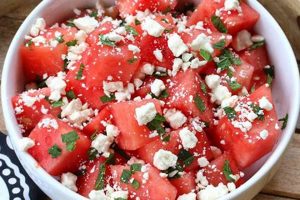
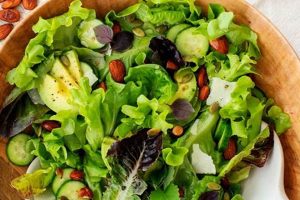
This refreshing dish combines the salty, tangy flavor of feta cheese with the sweet, juicy taste of watermelon. Often enhanced with fresh mint, red onion, and a simple vinaigrette, the contrasting flavors and textures create a harmonious balance. Variations can include additions like cucumbers, olives, or different types of herbs.
The juxtaposition of sweet and salty elements makes this a popular summertime dish. Its simplicity allows for quick preparation, making it ideal for picnics, barbecues, or light lunches. The ingredients also offer nutritional benefits, with watermelon being a good source of hydration and vitamins, and feta providing protein and calcium. The combination likely originated in Mediterranean cuisine, where both watermelon and feta are staples.
Further exploration will cover variations on the basic recipe, including specific ingredient recommendations, preparation techniques, and serving suggestions.
Tips for a Perfect Watermelon and Feta Salad
Achieving optimal flavor and texture requires attention to detail. These tips ensure a delightful culinary experience.
Tip 1: Select a ripe watermelon. A deep, hollow sound when thumped and a creamy yellow spot on the underside indicate ripeness. This guarantees optimal sweetness.
Tip 2: Use high-quality feta. Authentic feta, made from sheep’s milk or a mixture of sheep and goat’s milk, offers the best flavor and texture. Crumbled feta is preferred for even distribution.
Tip 3: Balance sweetness and saltiness. Adjust the amount of feta and dressing to achieve a harmonious blend. Consider the sweetness of the watermelon when balancing flavors.
Tip 4: Enhance with fresh herbs. Mint is a classic pairing, but other herbs like basil or oregano can add complexity. Freshly chopped herbs provide the most vibrant flavor.
Tip 5: Consider textural contrast. Toasted nuts, such as pine nuts or slivered almonds, provide a satisfying crunch. Seeds, like toasted pepitas, offer another textural element.
Tip 6: Chill ingredients thoroughly. Serving the salad cold enhances the refreshing qualities of the watermelon and feta. Chill the watermelon, feta, and other ingredients before combining.
Tip 7: Dress lightly. A simple vinaigrette of olive oil, lemon juice, and a touch of honey or balsamic glaze complements the other flavors without overpowering them.
By following these guidelines, one can create a delicious and refreshing salad that highlights the complementary flavors and textures of watermelon and feta.
These tips provide a foundation for creating a successful dish. Experimentation with different ingredients and variations allows for personalized culinary expression.
1. Ingredients

Ingredient selection is paramount to a successful feta and watermelon salad. The quality and freshness of each component directly impact the final dish’s flavor profile, texture, and overall appeal. Careful consideration of each ingredient ensures a harmonious balance of sweet, salty, and herbaceous notes.
- Watermelon:
Ripe, sweet watermelon provides the foundation of the salad. Look for a firm melon with a deep, hollow sound when thumped. Seedless varieties offer convenience. The watermelon’s sweetness balances the salty feta and provides refreshing hydration.
- Feta Cheese:
Authentic feta, made from sheep’s milk or a mixture of sheep and goat’s milk, offers a distinct tangy and salty flavor. Crumbled feta ensures even distribution throughout the salad. The quality of the feta significantly influences the overall taste.
- Fresh Herbs:
Fresh mint is a classic complement to watermelon and feta, providing a bright, herbaceous counterpoint. Other herbs like basil or dill can also be used, offering nuanced flavor variations. Freshly chopped herbs provide the most vibrant aroma and taste.
- Optional Additions:
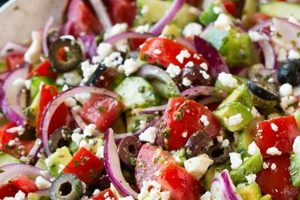
Ingredients such as red onion, cucumber, Kalamata olives, or toasted nuts can enhance the salad’s complexity. Red onion adds a pungent bite, while cucumber contributes a cooling crunch. Olives provide a briny, salty element, and toasted nuts offer textural contrast.
The careful selection and combination of these ingredients create a vibrant and refreshing salad. The interplay of sweet, salty, tangy, and herbaceous flavors, coupled with varied textures, elevates this simple dish to a sophisticated culinary experience. High-quality ingredients are essential for maximizing the salad’s flavor potential.
2. Preparation

Proper preparation is crucial for maximizing the flavor and presentation of a watermelon and feta salad. Careful handling and timing optimize the balance of textures and prevent the dish from becoming watery or soggy. The preparation process directly influences the final product’s quality and overall enjoyment. A systematic approach ensures consistent results.
The first step involves selecting a ripe watermelon and cutting it into bite-sized cubes or wedges. Removing the rind and any seeds is essential. Next, high-quality feta cheese should be crumbled into smaller pieces, allowing for even distribution throughout the salad. Fresh herbs, such as mint, should be gently washed and finely chopped. Any additional ingredients, like red onion or cucumber, should be thinly sliced. Combining the watermelon, feta, and other chosen ingredients in a large bowl allows for efficient mixing. The dressing should be added just before serving to prevent the watermelon from releasing excess moisture. Gentle tossing ensures that all ingredients are evenly coated with the dressing.
Timing is also a critical aspect of preparation. Because watermelon releases water after being cut, it’s best to combine the salad ingredients shortly before serving. Prematurely mixing the salad can lead to a diluted flavor and a less appealing texture. Chilling the watermelon, feta, and other ingredients before combining can also enhance the salad’s refreshing qualities. Proper preparation, therefore, hinges on a combination of technique and timing, both of which contribute significantly to the final products success. Overlooking these details can compromise the dish’s intended flavor profile and overall appeal.
3. Flavor Balance

Flavor balance is paramount in a successful feta cheese and watermelon salad. The dish relies on the interplay of contrasting yet complementary tastes to create a harmonious and refreshing experience. A well-balanced salad highlights the individual ingredients while ensuring no single flavor dominates.
- Sweetness of Watermelon:
The inherent sweetness of ripe watermelon provides the foundational flavor profile. This sweetness acts as a counterpoint to the other ingredients, particularly the salty feta. Selecting a perfectly ripe watermelon is crucial for achieving the desired level of sweetness. Underripe watermelon can result in a bland salad, while overripe watermelon can be excessively sweet and lack the necessary freshness.
- Saltiness of Feta:
Feta cheese contributes a distinct salty and tangy flavor. The saltiness cuts through the sweetness of the watermelon, creating a balanced palate sensation. The quantity of feta used influences the overall saltiness of the salad, highlighting the importance of precise measurements. Different types of feta can also vary in saltiness, requiring adjustments based on the specific cheese used.
- Acidity of Dressing:
A simple vinaigrette typically accompanies this salad, providing acidity that further enhances the flavor profile. Common acidic components include lemon juice, lime juice, or vinegar. The acidity balances the sweetness and saltiness while adding a bright, refreshing note. The type and quantity of acid used can be adjusted to achieve the desired level of tartness.
- Herbaceous Notes:
Fresh herbs, most commonly mint, contribute an herbaceous element that complements the other flavors. Mint provides a cooling and refreshing sensation that enhances the overall sensory experience. Other herbs, such as basil or dill, can be used to create subtle flavor variations. The freshness of the herbs is crucial for maximizing their aromatic contribution.
The careful balancing of these elementssweetness, saltiness, acidity, and herbaceous notesis essential for creating a truly exceptional feta cheese and watermelon salad. The interplay of these flavors elevates the dish beyond a simple combination of ingredients, transforming it into a complex and satisfying culinary experience. Achieving optimal flavor balance requires attention to detail and a nuanced understanding of how each ingredient contributes to the overall taste profile.
4. Textural Contrast

Textural contrast significantly enhances the sensory experience of consuming a feta cheese and watermelon salad. The interplay of different textures adds complexity and interest, elevating the dish beyond a simple combination of flavors. This contrast stimulates multiple sensory receptors in the mouth, resulting in a more engaging and satisfying culinary experience. The inherent textures of the core ingredients provide a foundation for this contrast.
Watermelon, with its high water content, offers a juicy and refreshing burst. Feta cheese, depending on its age and origin, can range from creamy and crumbly to slightly firm. This inherent difference in texture between the watermelon and feta already establishes a basic level of contrast. However, the addition of other ingredients can amplify this effect further. Toasted nuts, such as pine nuts or slivered almonds, introduce a satisfying crunch. Seeds, like toasted pepitas, provide a similar textural element but with a slightly different mouthfeel. Crispy fried onions or shallots offer a delicate crispness. Incorporating elements like cucumbers or red onion, while not dramatically different in texture from watermelon, still adds subtle variations.
The practical significance of understanding textural contrast in this recipe lies in the ability to create a more dynamic and enjoyable eating experience. A salad consisting solely of smooth and yielding textures can become monotonous. Introducing contrasting elements, such as crunchy nuts or crispy onions, prevents this monotony and adds another dimension to the dish. Thoughtful consideration of textural contrast transforms a simple salad into a multi-sensory culinary delight. Chefs and home cooks alike can utilize this understanding to elevate their creations, demonstrating an awareness of how texture contributes to the overall enjoyment of a meal.
5. Presentation

Presentation plays a vital role in the overall enjoyment of a feta cheese and watermelon salad. Visual appeal enhances the dining experience, making the salad more enticing and appetizing. Thoughtful presentation elevates the dish from a simple combination of ingredients to a visually captivating culinary creation. This aspect is particularly relevant for special occasions, entertaining guests, or simply adding a touch of elegance to an everyday meal.
- Color and Contrast:
The vibrant colors of watermelon and feta provide a natural foundation for an attractive presentation. The deep red or pink of the watermelon contrasts beautifully with the bright white of the feta, creating a visually striking effect. Further color contrast can be achieved through the addition of other ingredients. Green herbs like mint or basil, deep purple red onion, or black olives can amplify the visual appeal. This interplay of colors stimulates the appetite and adds to the overall enjoyment.
- Plating Techniques:
Careful plating elevates the presentation. Rather than simply tossing the ingredients together, consider arranging them thoughtfully on the plate. The watermelon can be cubed, balled, or sliced into wedges. Feta can be crumbled or presented in larger blocks. Strategic placement of herbs and other garnishes adds visual interest. Techniques like layering or creating height on the plate add a touch of sophistication.
- Serving Dishes:
The choice of serving dish also contributes to the overall presentation. A clear glass bowl showcases the vibrant colors of the salad, while a rustic wooden platter adds a touch of natural elegance. Individual portions can be served in small bowls or on plates. The serving dish should complement the salad’s aesthetic and enhance its visual appeal.
- Garnishes:
A simple garnish can elevate the presentation further. A sprinkle of fresh herbs, a drizzle of olive oil, a few toasted nuts, or a grind of black pepper adds a finishing touch. Garnishes should complement the flavors of the salad and enhance its visual appeal without overpowering the other elements.
Careful attention to presentation enhances the sensory experience of enjoying a feta cheese and watermelon salad. Visual appeal complements the refreshing flavors and textures, creating a more complete and satisfying culinary experience. From the selection of ingredients and plating techniques to the choice of serving dish and garnishes, each aspect contributes to the overall presentation and enhances the enjoyment of this simple yet elegant dish. By considering these elements, one can transform a basic salad into a visually stunning and appetizing culinary creation.
6. Nutritional Value
Nutritional value represents a significant aspect of a feta cheese and watermelon salad recipe. This dish offers a combination of vitamins, minerals, and antioxidants, contributing to a healthy and balanced diet. Understanding the nutritional composition allows for informed dietary choices and highlights the potential health benefits of incorporating this salad into regular meal plans. The nutritional profile stems primarily from the inherent properties of its core ingredients.
Watermelon, a key component, boasts high water content, contributing to hydration. It serves as a source of vitamins A and C, both crucial for immune function and overall health. Lycopene, an antioxidant prevalent in watermelon, possesses potential health-protective properties. Feta cheese provides protein and calcium, essential for bone health and muscle function. It also offers a source of healthy fats. Additional ingredients, such as fresh mint, contribute vitamins and minerals while adding flavor complexity. The combined nutritional profile of these components creates a dish rich in essential nutrients. For instance, a serving of this salad can contribute significantly to the recommended daily intake of vitamins A and C. The presence of antioxidants like lycopene offers potential long-term health benefits.
Practical application of this nutritional understanding allows individuals to appreciate the health benefits inherent in this seemingly simple salad. Choosing high-quality ingredients maximizes nutritional density. Portion control remains important, as with any food. Incorporating this salad into a balanced diet can contribute to overall health and well-being. Nutritional awareness elevates appreciation for this dish beyond its refreshing flavor profile, demonstrating its potential role in a healthy lifestyle.
7. Seasonal Relevance

Seasonal relevance significantly impacts the preparation and enjoyment of feta cheese and watermelon salad. Peak season for key ingredients directly influences the dish’s flavor profile and overall quality. Understanding this connection allows for optimal ingredient selection and heightened appreciation of the salad’s refreshing characteristics.
- Watermelon Availability:
Watermelon’s peak season typically falls during the summer months. During this period, melons reach optimal ripeness, exhibiting peak sweetness and juiciness. Availability and affordability also tend to be higher during the summer. Attempting to prepare the salad outside of watermelon season often results in less flavorful, potentially higher-priced produce.
- Alignment with Seasonal Flavors:
The refreshing nature of feta cheese and watermelon salad aligns perfectly with the culinary preferences of warmer months. The light, hydrating qualities of the dish make it an ideal choice during hot weather. Heavier, richer salads may feel less appealing during summer’s peak temperatures. This inherent seasonality contributes to the salad’s popularity.
- Impact on Recipe Variations:
Seasonal availability influences ingredient choices in recipe variations. Summertime abundance allows for the incorporation of other seasonal produce, such as fresh herbs, cucumbers, and berries. These additions complement the watermelon and feta while enhancing the salad’s nutritional value and flavor complexity.
- Cultural and Social Contexts:
The association of watermelon with summer picnics, barbecues, and outdoor gatherings reinforces the salad’s seasonal relevance. This cultural connection enhances the dining experience, adding a layer of social significance to the dish. Serving this salad during the summer months often evokes a sense of celebration and seasonal enjoyment.
Seasonal relevance, therefore, influences not only the flavor and quality of feta cheese and watermelon salad but also its cultural significance. Recognizing the impact of seasonality allows for optimized preparation and a deeper appreciation of this refreshing summer dish. Choosing peak-season watermelon ensures optimal sweetness and contributes to the overall culinary experience.
Frequently Asked Questions
This section addresses common inquiries regarding the preparation and enjoyment of watermelon and feta salad. Clarity on these points aims to facilitate successful culinary experiences and address potential concerns.
Question 1: Can other cheeses be substituted for feta?
While feta’s distinct salty and tangy flavor profile contributes significantly to the salad’s character, substitutions are possible. Goat cheese offers a similar tang, while halloumi provides a firmer texture suitable for grilling. Ricotta salata presents a milder, less salty alternative.
Question 2: How long can the salad be stored?
Due to watermelon’s high water content, immediate consumption is recommended for optimal texture and flavor. Storage beyond two hours may result in excessive moisture release and a less appealing presentation.
Question 3: What dressings complement this salad best?
Light vinaigrettes, typically based on olive oil and lemon or lime juice, enhance the salad’s fresh flavors without overpowering them. A touch of honey or balsamic glaze can add subtle sweetness. Heavy, creamy dressings are generally less suitable.
Question 4: How can one prevent the salad from becoming watery?
Dressing the salad immediately before serving minimizes watermelon’s moisture release. Thoroughly drying the watermelon cubes after cutting also helps. Adding a small amount of crumbled feta initially absorbs some moisture and enhances flavor distribution.
Question 5: Can this salad be served as a main course?
While often served as a side dish or appetizer, additions like grilled chicken, shrimp, or chickpeas can transform the salad into a more substantial main course. Adjusting portion sizes accordingly ensures adequate satiety.
Question 6: Are there variations suitable for specific dietary restrictions?
Adapting the recipe for specific dietary needs is straightforward. Vegan feta alternatives are available. Honey can be omitted or substituted with maple syrup for vegan variations. Gluten-free preparation necessitates careful selection of dressing ingredients.
Understanding these common inquiries contributes to successful recipe execution and enjoyment. Adaptability and thoughtful ingredient selection allow for personalized variations.
The subsequent sections will provide a complete recipe and step-by-step instructions for preparing a delicious watermelon and feta salad.
Conclusion
This exploration has detailed the multifaceted nature of the feta cheese and watermelon salad recipe. From ingredient selection and preparation techniques to flavor balance, textural contrast, presentation, nutritional value, and seasonal relevance, each aspect contributes to the dish’s unique character. Emphasis on fresh, high-quality ingredients, proper handling, and an understanding of flavor interactions are crucial for successful execution. The recipe’s adaptability allows for personalized variations while retaining its core essence.
Culinary exploration extends beyond mere sustenance; it represents a journey of sensory discovery. This seemingly simple salad exemplifies the potential for culinary creativity and the transformative power of fresh, seasonal ingredients. Continued experimentation with flavor combinations and presentation styles promises further evolution and enjoyment of this refreshing and nutritious dish. The potential for culinary innovation remains boundless.