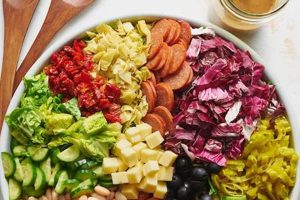
This vibrant salad typically combines peppery arugula, earthy beets, often roasted or pickled, and creamy goat cheese. Candied pecans or walnuts provide sweetness and crunch, while a citrus vinaigrette adds a bright, acidic counterpoint. Variations may include other ingredients such as red onion, orange segments, or dried cranberries.
The combination of flavors and textures in this type of salad offers a complex and satisfying culinary experience. The nutritional benefits are also significant, with beets providing antioxidants and nitrates, arugula offering vitamins and minerals, and nuts contributing healthy fats. Replicating restaurant-quality salads at home empowers individuals to control ingredients and portion sizes, promoting healthier eating habits. The increasing popularity of this specific salad reflects a broader culinary trend toward fresh, flavorful, and health-conscious dining.
The following sections will explore the preparation of this salad, including ingredient selection, techniques for roasting and pickling beets, vinaigrette preparation, and tips for achieving optimal flavor balance and presentation.
Tips for a Superior Salad
Achieving restaurant-quality results at home requires attention to detail and an understanding of key techniques. These tips offer guidance for preparing an exceptional salad.
Tip 1: Beet Preparation: Roasting beets intensifies their sweetness and concentrates their flavor. Wrap beets individually in foil with a drizzle of olive oil and roast until tender. Alternatively, pre-cooked and vacuum-packed beets offer convenience.
Tip 2: Arugula Handling: Arugula is delicate and should be handled gently. Wash and dry it thoroughly, storing it in a refrigerator crisper drawer lined with paper towels to maintain freshness.
Tip 3: Goat Cheese Selection: High-quality goat cheese is essential. Consider varieties like chvre for a creamy texture and tangy flavor. Crumble the cheese just before serving to prevent it from drying out.
Tip 4: Nut Preparation: Toasting nuts enhances their flavor and adds a satisfying crunch. Spread them on a baking sheet and toast briefly in a preheated oven, watching carefully to prevent burning.
Tip 5: Vinaigrette Emulsification: A stable vinaigrette is crucial for even coating and flavor distribution. Whisk the ingredients vigorously or use a blender to create a smooth emulsion.
Tip 6: Balanced Flavors: The balance of sweet, savory, tangy, and bitter elements is essential. Adjust the vinaigrette’s acidity and sweetness to complement the other ingredients.
Tip 7: Ingredient Quality: The quality of ingredients directly impacts the final result. Use the freshest produce and premium cheeses and nuts for optimal flavor.
By following these guidelines, one can elevate a simple salad to a culinary masterpiece, showcasing the vibrant flavors and textures of each component.
The subsequent section will provide a complete recipe incorporating these tips and offering further guidance for plating and presentation.
1. Fresh Arugula
Fresh arugula serves as the foundational green in this popular salad, providing a peppery bite that balances the sweetness of the beets and candied nuts. Its distinctive flavor profile and delicate texture are essential to the overall composition of the dish. Understanding the characteristics of fresh arugula is crucial for replicating the salad successfully.
- Flavor Profile:
Arugula possesses a unique peppery, slightly bitter flavor that contrasts with the other ingredients. This distinct taste adds complexity and depth to the salad, preventing it from being overly sweet. The intensity of the peppery flavor can vary depending on the arugula’s maturity and growing conditions.
- Textural Contribution:
The tender, slightly jagged leaves of arugula offer a delicate texture that contrasts with the crunch of the nuts and the smoothness of the goat cheese. This textural interplay enhances the overall sensory experience of the salad. Wilted or bruised arugula would detract from this desired contrast.
- Nutritional Value:
Arugula is a nutrient-dense green, rich in vitamins A, C, and K, as well as minerals like calcium and potassium. Its inclusion contributes to the salad’s overall nutritional value, aligning with current trends towards health-conscious dining.
- Sourcing and Storage:
Selecting fresh, vibrant arugula is essential. Look for crisp, deep green leaves without signs of wilting or yellowing. Proper storage, such as refrigeration in a container lined with paper towels, helps maintain its freshness and prevents premature spoilage.
The quality and freshness of the arugula directly impact the overall flavor and textural balance of the salad. By understanding its distinct characteristics and handling it with care, one can ensure a successful recreation of this popular dish. Careful selection and proper storage are essential for maximizing the arugula’s contribution to the overall sensory experience.
2. Roasted Beets

Roasted beets play a pivotal role in the Cheesecake Factory arugula beet salad, contributing not only vibrant color but also a nuanced sweetness and depth of flavor. Roasting, as opposed to other cooking methods like boiling, caramelizes the natural sugars within the beet, intensifying its sweetness and creating a subtle, earthy complexity. This process also concentrates the beet’s flavor, making it a more impactful component within the salad. The textural transformation achieved through roastinga tender interior and slightly firm exteriorfurther enhances the overall sensory experience. One can observe this impact in the contrast between the soft, roasted beet and the crisp, peppery arugula.
The roasting process also affects the beet’s nutritional profile. While some nutrients may be slightly reduced during cooking, roasting helps retain important antioxidants and minerals. Furthermore, the enhanced flavor achieved through roasting may encourage greater consumption of this nutritious root vegetable. Practical applications of this understanding include adjusting roasting times and temperatures to achieve desired levels of sweetness and texture. For example, a shorter roasting time at a higher temperature might yield a firmer beet, while a longer roasting time at a lower temperature might result in a more tender, caramelized product.
In summary, the roasting of beets is a crucial step in creating this specific salad. It maximizes the vegetable’s flavor contribution, enhances its textural appeal, and preserves important nutrients. Understanding the impact of roasting allows for greater control over the final product, enabling culinary enthusiasts to replicate and customize the dish to their preferences. This knowledge also highlights the broader importance of considering cooking methods and their effects on ingredient characteristics in culinary endeavors.
3. Tangy Goat Cheese
Tangy goat cheese contributes a crucial creamy, acidic element to the Cheesecake Factory arugula beet salad, balancing the sweetness of the beets and candied nuts while complementing the peppery arugula. Its distinct flavor profile and textural properties elevate the salad beyond a simple combination of ingredients, creating a more complex and satisfying culinary experience. Understanding the role of goat cheese in this specific salad provides insight into achieving a well-balanced and flavorful dish.
- Flavor Profile:
The tangy, slightly acidic flavor of goat cheese provides a necessary counterpoint to the sweetness of the other components. The specific tanginess varies depending on the age and type of goat cheese, with younger cheeses offering a milder flavor and aged cheeses possessing a more pronounced tang. This acidity cuts through the richness of the other ingredients, preventing the salad from becoming cloying.
- Textural Contrast:
Goat cheese, particularly when crumbled, offers a creamy, smooth texture that contrasts with the crispness of the arugula and the crunch of the candied nuts. This textural variation enhances the overall sensory experience, adding another layer of complexity to the salad. The creamy texture also coats the palate, delivering the flavor more effectively.
- Complementary Interactions:
The flavor of goat cheese complements both the peppery arugula and the earthy sweetness of the beets. The tanginess enhances the peppery notes of the arugula while simultaneously balancing the sweetness of the beets. This interplay of flavors is a defining characteristic of the salad’s success.
- Nutritional Contribution:
Goat cheese is a good source of protein, calcium, and healthy fats. Its inclusion in the salad contributes to its overall nutritional value, aligning with the trend towards incorporating nutrient-rich ingredients into salads and other dishes. This further reinforces the salad’s appeal as a balanced and healthful meal option.
The careful selection and incorporation of tangy goat cheese are essential for replicating the balance of flavors and textures characteristic of this salad. The interplay between the goat cheese, beets, arugula, and nuts demonstrates the importance of considering the individual contributions of each ingredient in creating a harmonious and satisfying culinary composition. Appreciating these nuances allows for a deeper understanding of the principles behind successful salad construction and flavor pairing.
4. Candied Pecans
Candied pecans represent a crucial element within the framework of the Cheesecake Factory arugula beet salad recipe, providing a textural and flavor counterpoint that elevates the dish beyond a simple combination of ingredients. The candied pecans introduce a complex interplay of sweet and savory notes, coupled with a satisfying crunch, that complements the other components and contributes significantly to the overall sensory experience.
The candying process transforms the pecans, intensifying their inherent nutty flavor while adding a layer of caramelized sweetness. This sweetness contrasts with the peppery arugula and tangy goat cheese, creating a balanced flavor profile. The crunchy texture of the candied pecans also contrasts with the softness of the beets and goat cheese, adding another dimension to the salad’s appeal. Consider the textural contrast between a bite of soft, roasted beet followed by a crunchy pecanthis interplay is central to the salad’s appeal. The specific type of pecan used, whether halves or pieces, and the degree of candying can be adjusted to modify the salad’s overall sweetness and texture, offering opportunities for customization.
In conclusion, the inclusion of candied pecans is not merely an arbitrary addition but a deliberate culinary choice that significantly impacts the overall composition and enjoyment of the Cheesecake Factory arugula beet salad. Their contribution extends beyond mere sweetness and crunch; they play a critical role in balancing flavors and textures, resulting in a more complex and satisfying culinary experience. Recognizing the importance of this ingredient emphasizes the careful consideration of flavor and texture profiles necessary for crafting well-balanced and memorable dishes. Omitting or substituting this component would fundamentally alter the salad’s character, underscoring the integral role candied pecans play in its success.
5. Citrus Vinaigrette

Citrus vinaigrette plays a crucial role in the Cheesecake Factory arugula beet salad, acting as a unifying element that harmonizes the diverse flavors and textures. Its bright acidity cuts through the richness of the goat cheese and the sweetness of the candied pecans and beets, while its citrus notes complement the peppery arugula. The vinaigrette’s emulsified structure also contributes to the salad’s overall texture, coating the ingredients and ensuring even distribution of flavor. One can observe this effect by comparing a salad dressed with a properly emulsified vinaigrette to one with a separated, watery dressing; the former exhibits a more balanced and cohesive flavor profile.
The specific type of citrus used in the vinaigrette can significantly influence the salad’s overall character. For instance, a lemon vinaigrette imparts a sharper, more assertive acidity, while an orange vinaigrette offers a sweeter, more rounded flavor. The balance of acidity and sweetness within the vinaigrette should be carefully calibrated to complement the other ingredients. A vinaigrette that is overly acidic can overpower the delicate flavors of the beets and arugula, while one that is too sweet can make the salad cloying. Culinary professionals often employ techniques like small-batch testing and careful ingredient measurement to achieve the desired balance.
In summary, the citrus vinaigrette is not merely a dressing but an integral component of the Cheesecake Factory arugula beet salad, contributing significantly to its flavor profile, textural complexity, and overall balance. A thorough understanding of the vinaigrette’s function and the impact of citrus variety selection allows for both accurate replication and creative adaptation of the recipe. This understanding underscores the importance of considering the interconnectedness of ingredients and the impact of seemingly minor adjustments on a dish’s final outcome.
Frequently Asked Questions
This section addresses common inquiries regarding the preparation and enjoyment of this salad, offering practical guidance and clarifying potential points of confusion.
Question 1: What is the best method for roasting beets for this salad?
Roasting beets in foil at 400F (200C) for approximately 45-60 minutes, or until tender, intensifies their sweetness. Pre-cooked, vacuum-packed beets offer a convenient alternative.
Question 2: Can other nuts be substituted for candied pecans?
While pecans are traditional, walnuts or candied almonds offer viable alternatives, each contributing a unique flavor profile. Adjust candying levels according to the nut’s natural sweetness.
Question 3: What type of goat cheese is recommended?
Chvre, a soft, spreadable goat cheese, is typically preferred for its creamy texture and tangy flavor. Consider aged varieties for a more pronounced tang.
Question 4: How can one prevent the arugula from wilting?
Storing arugula in a refrigerator crisper drawer lined with paper towels helps maintain its freshness. Washing and drying it just before use also prevents premature wilting.
Question 5: Can the vinaigrette be made in advance?
While preparing the vinaigrette in advance is possible, whisking or blending again before serving ensures proper emulsification and prevents separation.
Question 6: How can one achieve the optimal balance of flavors in the salad?
Careful attention to ingredient proportions and adjusting the vinaigrette’s acidity and sweetness are crucial. Taste testing throughout the preparation process allows for adjustments and ensures a harmonious balance.
Understanding these key aspects contributes to successful preparation and enjoyment of the salad. Attention to detail in each step, from ingredient selection to final assembly, ensures optimal results.
The following section will offer variations and adaptations of the classic recipe, catering to diverse dietary preferences and culinary explorations.
Conclusion
Exploration of this popular salad reveals a carefully constructed balance of flavors and textures. Roasted beets provide earthy sweetness, countered by peppery arugula and tangy goat cheese. Candied pecans contribute sweetness and crunch, while a citrus vinaigrette harmonizes these diverse elements. Proper ingredient selection, preparation techniques, and attention to flavor balance are essential for successful replication.
Culinary exploration extends beyond mere replication. Adapting and innovating upon classic recipes fosters creativity and personal expression. Understanding the interplay of flavors and textures empowers individuals to create unique culinary experiences. This exploration serves as a foundation for further experimentation and a deeper appreciation of culinary artistry.