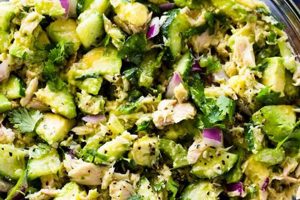
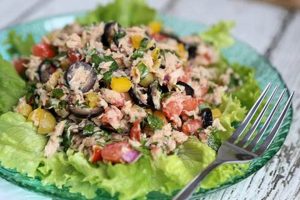
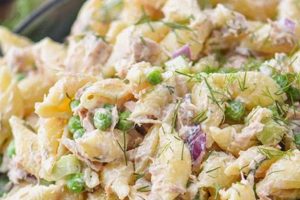
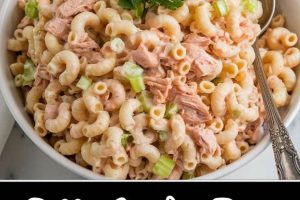
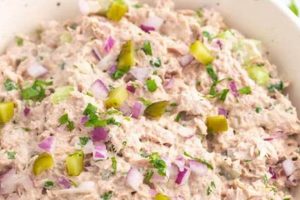
A dish featuring canned tuna combined with mayonnaise and diced jalapeo peppers creates a flavorful, spicy salad. Variations often include other ingredients such as celery, onion, cilantro, lime juice, or spices like cumin and chili powder. This mixture can be enjoyed as a sandwich filling, served on crackers or lettuce wraps, or incorporated into other dishes.
This type of salad offers a convenient and protein-rich meal option. The inclusion of jalapeos introduces a vibrant heat, enhancing the flavor profile beyond traditional tuna salad. This spicy element can contribute to a more satisfying and engaging culinary experience. Moreover, the adaptability of this salad to diverse serving styles makes it a versatile choice for various occasions, from casual lunches to potlucks.
The following sections will explore various aspects of preparing this dish, including selecting ingredients, achieving optimal flavor balances, and exploring different serving suggestions. Specific recipes will be presented, ranging from classic preparations to innovative variations incorporating diverse flavor profiles and textures.
Tips for Crafting Exceptional Tuna Salad with Jalapeos
Optimizing flavor and texture requires attention to detail. The following tips offer guidance for creating a superior culinary experience.
Tip 1: Jalapeo Preparation: Seed and membrane removal dictates the level of heat. For milder flavor, remove both completely. Leaving some or all of the membrane intact increases spiciness. Finely dicing ensures even distribution of heat throughout the salad.
Tip 2: Tuna Selection: High-quality canned tuna packed in water or oil contributes significantly to overall flavor. Draining excess liquid prevents a watery consistency.
Tip 3: Mayonnaise Selection: Mayonnaise serves as the foundation of the salad’s texture and flavor. Experimenting with different types, such as flavored or low-fat versions, allows for customization.
Tip 4: Complementary Ingredients: Red onion adds a sharp bite, while celery offers a refreshing crunch. Cilantro or parsley provides herbaceous notes. Consider incorporating ingredients like chopped bell peppers, black olives, or hard-boiled eggs.
Tip 5: Balancing Flavors: Lime or lemon juice provides acidity that cuts through the richness of the mayonnaise and complements the jalapeo. Ground cumin or chili powder enhances the overall flavor profile.
Tip 6: Chilling and Serving: Chilling the prepared salad for at least 30 minutes allows the flavors to meld. Serving options include bread, crackers, lettuce cups, or as a topping for salads.
Tip 7: Portion Control: Start with a smaller quantity of jalapeo and gradually increase to achieve the desired level of heat. Tasting throughout the preparation process allows for adjustments and prevents overpowering spice.
By following these tips, one can achieve a balanced and flavorful outcome, maximizing enjoyment of this versatile dish. Consideration of these elements elevates the final product from simple to exceptional.
The subsequent section offers a collection of specific recipes, incorporating these principles to achieve a variety of delicious and satisfying results.
1. High-quality Tuna

High-quality tuna plays a crucial role in a jalapeno tuna salad recipe. It forms the foundation of the dish, impacting overall flavor, texture, and nutritional value. Choosing premium tuna packed in water or oil, rather than lower-grade options, contributes significantly to the final result. Superior tuna typically exhibits a firmer texture, a cleaner flavor profile, and a higher concentration of beneficial omega-3 fatty acids. This allows the nuances of other ingredients, such as the jalapeo’s heat and any added herbs or spices, to shine through without being masked by a fishy or metallic taste often associated with lower-quality canned tuna.
Consider the difference between a salad made with chunk light tuna in oil versus a salad made with solid white albacore tuna in water. The albacore typically possesses a firmer, meatier texture and a cleaner taste, providing a more substantial base for the salad. Chunk light tuna, while more economical, may have a softer, more fragmented texture and a stronger fish flavor that can overpower the other ingredients. The type of packing liquid also influences the final product. Oil-packed tuna adds richness, while water-packed offers a leaner option. Draining the tuna thoroughly, regardless of the packing liquid, is essential to prevent a watery salad.
Investing in high-quality tuna elevates the overall culinary experience. It contributes to a more satisfying texture, a cleaner flavor profile, and allows the other ingredients, including the jalapeo’s heat and any complementary flavors, to be fully appreciated. Understanding the impact of tuna quality allows for informed decisions when preparing this dish, ultimately leading to a more enjoyable and flavorful outcome. The difference is noticeable and contributes significantly to the overall success of the recipe.
2. Fresh Jalapeos
Fresh jalapeos contribute significantly to the vibrancy and flavor complexity of a jalapeo tuna salad recipe. Their use offers a distinct advantage over pre-pickled or dried alternatives, providing a brighter, crisper texture and a more nuanced heat. Fresh jalapeos contain a higher concentration of volatile aromatic compounds, contributing a “green,” vegetal flavor that complements the richness of the tuna and mayonnaise. Pre-pickled or dried jalapeos often lack this freshness and can introduce an overly acidic or vinegary note that detracts from the overall balance.
The level of heat in fresh jalapeos can vary depending on factors such as ripeness and growing conditions. This allows for control over the final spice level of the salad. Removing the seeds and membranes reduces heat, while leaving some or all intact intensifies it. This flexibility permits customization according to individual preferences. A salad intended for a wider audience might benefit from milder jalapeos or careful seed removal, whereas a spicier version could incorporate a variety known for its heat, such as a habanero. Using fresh jalapeos offers control over this critical flavor component.
Sourcing fresh jalapeos allows for careful selection based on visual and tactile cues. Firm, unblemished peppers with vibrant color typically indicate optimal freshness and flavor. Avoiding peppers with soft spots or discoloration ensures the best quality. This hands-on selection process, unavailable when using pre-processed peppers, contributes significantly to the final quality of the dish. The ability to choose the freshest, most flavorful ingredients elevates the overall culinary experience and distinguishes a thoughtfully prepared salad from a more generic version.
3. Balanced Flavor Profile

A balanced flavor profile is essential for a successful jalapeo tuna salad recipe. The inherent richness of mayonnaise and tuna requires careful balancing with other ingredients to prevent a bland or overly heavy result. The jalapeo’s heat, while desirable, should complement rather than overwhelm the other flavors. Acidity, sweetness, and herbaceous notes play crucial roles in achieving this balance. For example, the brightness of lime juice or red onion cuts through the richness of the mayonnaise, while a touch of sweetness from finely diced red bell pepper can temper the jalapeo’s heat. Fresh cilantro or parsley contribute herbaceous complexity, preventing the salad from tasting one-dimensional.
Consider the interplay of these elements: the creamy richness of the mayonnaise, the savory depth of the tuna, the vibrant heat of the jalapeo, the acidic brightness of lime juice, and the subtle sweetness of red bell pepper. Each component contributes to a complex and harmonious flavor profile. Without careful balancing, one element could dominate, resulting in a less satisfying outcome. Too much mayonnaise creates a heavy, bland salad, while an overabundance of jalapeo overwhelms the other flavors. The goal is to create a symphony of flavors where each ingredient plays its part without overpowering the others. A well-balanced jalapeo tuna salad offers a complex interplay of textures and tastes, stimulating the palate and offering a more complete sensory experience.
Achieving a balanced flavor profile requires thoughtful ingredient selection and careful portion control. Tasting and adjusting throughout the preparation process is crucial. Start with smaller quantities of potent ingredients like jalapeo and lime juice, gradually increasing until the desired balance is achieved. This iterative process allows for fine-tuning and ensures that the final product offers a harmonious blend of flavors, textures, and aromas. A well-balanced jalapeo tuna salad is not merely the sum of its parts; it’s a carefully orchestrated composition where each element contributes to a greater whole, transforming a simple dish into a truly satisfying culinary experience.
4. Proper Ingredient Preparation
Proper ingredient preparation is fundamental to a successful jalapeo tuna salad recipe. It directly impacts the final dish’s texture, flavor, and overall enjoyment. Consider the jalapeo itself: finely dicing ensures even heat distribution, preventing pockets of intense spice. Seeding and deveining offer control over heat levels, accommodating varying palates. Similarly, tuna requires careful draining to avoid a watery consistency. Overly large tuna chunks create an uneven texture, while excessively small pieces lack presence. Other ingredients, such as celery and red onion, benefit from consistent sizing, contributing to both aesthetic appeal and balanced flavor distribution throughout the salad.
Specific examples illustrate the importance of proper preparation. Imagine biting into a jalapeo tuna salad sandwich and encountering a large, undiced piece of jalapeo. The burst of concentrated heat overwhelms the other flavors, disrupting the intended balance. Conversely, insufficiently drained tuna results in a soggy salad, diluting the flavors and compromising the textural integrity. Chopping celery into large, uneven pieces creates a jarring textural contrast and uneven flavor distribution. These scenarios highlight the importance of proper ingredient preparation in achieving the desired outcome. Each element, from the jalapeo’s heat level to the tuna’s moisture content, contributes to the final product’s overall quality and enjoyment.
Understanding the impact of proper ingredient preparation enables informed decision-making and elevates the final product. It transforms a simple combination of ingredients into a well-executed dish showcasing balanced flavors and pleasing textures. Attention to detail in this stage ensures that each component contributes positively to the overall culinary experience. This foundational step sets the stage for a successful and satisfying jalapeo tuna salad.
5. Appropriate Serving Method
The serving method for jalapeo tuna salad significantly influences the overall dining experience. It affects not only presentation but also how the flavors and textures interact with complementary elements. Consider the difference between serving the salad on crisp lettuce cups, nestled within a flaky croissant, or scooped onto hearty multigrain crackers. Each method offers a distinct textural counterpoint to the creamy salad, influencing the perception of spice and richness. Lettuce cups provide a refreshing, light contrast, while a buttery croissant adds a layer of richness. Crackers offer a satisfying crunch, enhancing the textural interplay.
Practical considerations also inform serving method choices. For a casual lunch, a simple sandwich or cracker presentation suffices. A more formal setting might call for elegantly arranged lettuce cups or a composed salad featuring the jalapeo tuna salad as a central element. Portability also plays a role. Sandwiches travel well, making them ideal for picnics or packed lunches. For larger gatherings, serving the salad in a bowl with an assortment of crackers, bread, or vegetables allows for individual customization and portion control. The occasion and context should dictate the chosen serving method.
Ultimately, a thoughtfully chosen serving method elevates the jalapeo tuna salad from a simple dish to a more considered culinary experience. It demonstrates attention to detail and an understanding of how different elements interact to create a harmonious whole. The interplay of textures, flavors, and presentation contributes to a more satisfying and memorable meal. Selecting an appropriate serving method maximizes the enjoyment of this versatile dish, showcasing its potential beyond a basic preparation.
6. Creative Variations

Creative variations within a jalapeo tuna salad recipe offer opportunities to personalize the dish, accommodating diverse palates and dietary needs. These variations extend beyond simple ingredient substitutions and delve into flavor profile adjustments, texture enhancements, and presentation innovations. Introducing ingredients like chopped apples or grapes adds sweetness and textural complexity, while incorporating different herbs and spices, such as dill or smoked paprika, expands the flavor profile beyond the traditional. Such variations can also address dietary restrictions; using avocado instead of mayonnaise creates a vegan-friendly version, while substituting Greek yogurt for mayonnaise offers a lower-fat alternative. The adaptability of the basic recipe allows for a wide range of customizations, transforming a standard dish into a personalized culinary creation.
Specific examples illustrate the practical application of creative variations. A Mediterranean-inspired version might incorporate Kalamata olives, feta cheese, and oregano, offering a briny, savory twist. An Asian-inspired variation could include shredded carrots, chopped peanuts, and a drizzle of sesame oil, introducing a nuanced umami element. These variations not only cater to different taste preferences but also demonstrate the versatility of the core recipe. They transform a simple tuna salad into a platform for culinary exploration, allowing individuals to experiment with diverse flavor combinations and textures while retaining the fundamental elements of the dish.
Understanding the potential for creative variations within a jalapeo tuna salad recipe empowers culinary exploration. It allows for personalized adaptations that cater to individual preferences, dietary needs, and available ingredients. This flexibility ensures the recipe’s continued relevance and enjoyment, transforming a staple dish into a dynamic culinary canvas. By embracing creative variations, one can move beyond the traditional and discover new flavor combinations, textures, and presentations, ultimately enhancing the culinary experience and maximizing the enjoyment of this versatile dish.
Frequently Asked Questions
This section addresses common inquiries regarding the preparation and enjoyment of jalapeo tuna salad.
Question 1: How can spice levels be controlled?
Spice level management hinges primarily on jalapeo preparation. Removing seeds and membranes significantly reduces heat. Retaining some or all of the membrane increases spiciness. Starting with a smaller quantity and gradually adding more allows for precise control during preparation.
Question 2: What type of tuna is recommended?
High-quality canned tuna packed in either water or oil is recommended. Solid white albacore tuna generally offers a firmer texture and cleaner flavor profile compared to chunk light tuna. Draining the tuna thoroughly, regardless of packing liquid, prevents excess moisture in the final salad.
Question 3: Can other peppers be substituted for jalapeos?
Other peppers may be substituted, but flavor profiles will differ. Serrano peppers provide a more intense heat, while poblano peppers offer a milder flavor. Consider the desired heat level when selecting alternatives. Adjust quantities accordingly to achieve the desired spice intensity.
Question 4: How long can the prepared salad be stored?
Properly stored in an airtight container in the refrigerator, jalapeo tuna salad typically remains safe to consume for up to three days. However, optimal flavor and texture are best enjoyed within the first 24 hours. Always check for signs of spoilage before consumption.
Question 5: What are suitable accompaniments?
Jalapeo tuna salad complements a range of accompaniments, including crackers, bread, lettuce cups, and fresh vegetables. Consider serving it as a sandwich filling, a topping for salads, or as part of a larger appetizer platter. The choice of accompaniment influences the overall dining experience.
Question 6: How can the recipe be adapted for dietary restrictions?
Adapting the recipe for various dietary needs involves ingredient substitutions. Mashed avocado or Greek yogurt can replace mayonnaise for vegan or lower-fat options, respectively. Gluten-free bread or crackers accommodate gluten sensitivities. Ingredient selection should reflect specific dietary requirements.
Careful consideration of these points ensures successful preparation and enjoyment of jalapeo tuna salad. Understanding the interplay of ingredients and techniques leads to a more satisfying culinary experience.
The following section provides a collection of curated recipes demonstrating various flavor profiles and presentation styles.
Conclusion
This exploration of jalapeo tuna salad recipes has highlighted the critical components contributing to a successful dish. From the selection of high-quality tuna and fresh jalapeos to the importance of balanced flavor profiles and appropriate serving methods, each element plays a crucial role in the final outcome. Proper ingredient preparation, including dicing jalapeos for even heat distribution and thoroughly draining tuna, ensures optimal texture and prevents a watery consistency. Furthermore, the potential for creative variations allows for personalized adaptations catering to individual preferences and dietary needs, demonstrating the recipe’s adaptability and enduring appeal.
Ultimately, crafting a truly exceptional jalapeo tuna salad involves a nuanced understanding of these interconnected elements. Thoughtful consideration of ingredient quality, preparation techniques, and complementary flavors elevates this dish beyond a simple combination of components, transforming it into a flavorful and satisfying culinary experience. Exploration of the presented concepts and techniques empowers culinary experimentation and personalized adaptations, ensuring continued enjoyment and appreciation of this versatile dish.