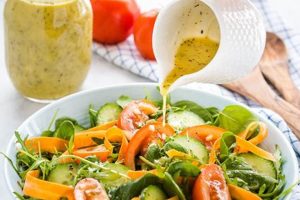
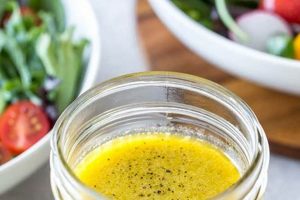
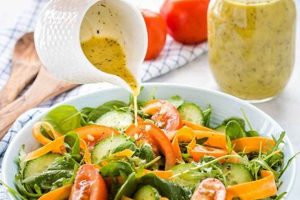
A formula for creating a flavorful condiment for salads, without the inclusion of any fats, offers a healthful way to enhance vegetables and other salad ingredients. For example, a simple blend of herbs, spices, and an acidic base like vinegar or citrus juice can create a vibrant and satisfying dressing.
Health-conscious individuals seeking to reduce dietary fat often find such preparations valuable. They provide flavor and moisture without contributing unwanted calories or saturated fat. This approach to salad preparation allows for greater control over nutritional intake and can be an important component of weight management or heart-healthy diets. Historically, the rise in popularity of these dressings coincides with increased awareness of the health risks associated with high-fat diets.
This exploration will delve into various approaches to crafting these healthful dressings, examining ingredient combinations, preparation techniques, and potential health implications in more detail.
Tips for Creating Fat-Free Salad Dressings
The following tips offer guidance on formulating flavorful and healthful fat-free salad dressings.
Tip 1: Embrace the Power of Acids. Vinegars, particularly those with robust flavors like balsamic, red wine, or apple cider, provide the foundation for many successful fat-free dressings. Citrus juices, such as lemon or lime, offer a brighter, more tart alternative.
Tip 2: Explore Flavorful Herbs and Spices. Fresh or dried herbs and spices significantly enhance the complexity and depth of fat-free dressings. Experiment with combinations like dill and garlic, oregano and basil, or cumin and chili powder.
Tip 3: Consider the Sweetness Factor. A touch of sweetness can balance the acidity and enhance the overall flavor profile. A small amount of honey, maple syrup, or a sugar substitute can be incorporated, but moderation is key.
Tip 4: Utilize Flavorful Liquids. Vegetable broth, tomato juice, or even fruit purees can add body and depth to fat-free dressings, contributing to a more satisfying texture.
Tip 5: Thicken as Needed. If a thicker consistency is desired, a small amount of cornstarch or arrowroot powder can be whisked in and gently heated until thickened.
Tip 6: Experiment with Mustard. Mustard, particularly Dijon or stone-ground varieties, adds a tangy kick and emulsifies the dressing, helping ingredients bind together.
Tip 7: Freshly Prepare for Optimal Flavor. While some dressings can be stored for a short period, fat-free dressings often taste best when prepared fresh, just before serving.
By following these tips, flavorful and healthful fat-free salad dressings can be readily created, adding enjoyment and nutritional value to any salad.
These guidelines provide a starting point for exploration. Individual preferences and dietary needs can be accommodated through adjustments to ingredients and techniques. The subsequent sections will delve further into specific recipes and variations.
1. Flavorful Acid Base

The flavorful acid base forms the foundation of a successful fat-free salad dressing, providing the essential tartness and contributing significantly to the overall flavor profile. Without the richness of fats, the acid component becomes even more critical in delivering a satisfying sensory experience.
- Types of Acidic Ingredients
Various acidic ingredients can be utilized. Vinegars, including balsamic, red wine, apple cider, and rice vinegar, offer a range of flavor profiles, from robust and complex to light and delicate. Citrus juices, such as lemon, lime, and orange, provide a brighter, more citrusy tang. The choice of acid depends on the desired flavor outcome and the other ingredients in the dressing.
- Balancing Acidity and Sweetness
The perceived acidity can be modulated by incorporating a sweet element. A small amount of honey, maple syrup, or a sugar substitute can balance the tartness and create a more rounded flavor. Achieving the right balance is crucial; excessive sweetness can mask the other flavors, while insufficient sweetness can result in a dressing that is too sharp.
- Enhancing Flavor Complexity
The acid base interacts with other ingredients in the dressing, influencing the overall flavor profile. For example, a balsamic vinegar base will complement the earthiness of mushrooms and the sweetness of roasted vegetables, while a lemon juice base might enhance the brightness of fresh herbs and the saltiness of feta cheese.
- Impact on Texture and Emulsification
The acidity of the base can also affect the texture of the dressing. It can help to tenderize certain ingredients in the salad, such as leafy greens. Additionally, the acid can play a role in emulsification, helping to combine the water-based ingredients and any added thickeners, creating a more stable and cohesive dressing.
A carefully chosen and balanced acid base is thus essential in creating a fat-free salad dressing that is not only healthful but also delivers a satisfying and complex flavor experience. The interplay between the acidic component, the other ingredients, and the desired flavor profile allows for a wide range of culinary possibilities within the realm of fat-free salad dressings.
2. Fresh Herbs and Spices

Fresh herbs and spices play a crucial role in elevating fat-free salad dressings from simple to sophisticated. Without the presence of fats to carry flavor, these aromatic ingredients become essential for creating depth and complexity. Their careful selection and application significantly impact the overall sensory experience of a salad.
- Aromatic Enhancement
Herbs and spices contribute a wide range of aromatic notes to fat-free dressings. From the bright, peppery notes of fresh basil to the warm, earthy tones of dried oregano, these ingredients provide the foundation for a complex flavor profile. The absence of fat allows these aromatic nuances to shine through, becoming even more prominent in the overall taste experience. For example, a simple lemon vinaigrette gains significant complexity with the addition of fresh thyme or chopped chives. The interplay of these aromatic compounds creates a more engaging and satisfying sensory experience.
- Balancing Flavor Profiles
The inherent flavors of herbs and spices can be used strategically to balance other components within the dressing. The sharpness of vinegar or citrus juice can be tempered by the addition of milder herbs like dill or parsley. Conversely, robust spices like cumin or chili powder can add a welcome kick to otherwise bland ingredients. The strategic use of herbs and spices allows for a balanced and harmonious flavor profile, compensating for the lack of fat.
- Fresh vs. Dried
The choice between fresh and dried herbs and spices influences both the flavor and intensity of the dressing. Fresh herbs offer a brighter, more delicate flavor, while dried herbs provide a more concentrated, intense taste. This distinction allows for flexibility in recipe development. For instance, fresh dill might be preferred in a light and summery dressing, while dried oregano might be more suitable for a robust vinaigrette intended for heartier vegetables. Understanding these nuances is key to achieving the desired flavor outcome.
- Regional and Cultural Influences
The selection of herbs and spices can also reflect regional and cultural culinary traditions. Mediterranean-inspired dressings might feature oregano, basil, and thyme, while Asian-inspired dressings might incorporate ginger, cilantro, and sesame seeds. This allows for a wide range of flavor profiles to be explored within the context of fat-free dressings, expanding the culinary possibilities and offering opportunities for creativity and customization.
The judicious use of fresh herbs and spices is essential for creating flavorful and complex fat-free salad dressings. These ingredients provide the aromatic depth and flavor nuances that might otherwise be missing in the absence of fats. Understanding their individual characteristics and how they interact with other components of the dressing allows for the creation of dressings that are not only healthful but also genuinely satisfying and enjoyable.
3. Sweetener (optional)

Sweeteners, while optional, play a significant role in balancing the flavor profile of fat-free salad dressings. The absence of fat often accentuates the acidity of vinegar or citrus juice, sometimes creating a dressing that tastes overly sharp. A small amount of sweetener mitigates this sharpness, rounding out the flavor and enhancing the overall palatability. This balance is crucial for creating dressings that are not only healthful but also enjoyable. For instance, a raspberry vinaigrette made with red wine vinegar can benefit from a touch of honey or maple syrup to temper the vinegar’s tartness and complement the raspberry’s natural sweetness. Similarly, a dressing featuring lime juice and cilantro can be balanced with a small amount of agave nectar, creating a more harmonious flavor profile.
The choice of sweetener influences the final flavor profile. Honey imparts a subtle floral sweetness, while maple syrup offers a richer, more caramel-like flavor. Agave nectar provides a neutral sweetness, allowing other flavors to shine through. Sugar substitutes can also be employed for those seeking to minimize sugar intake. The quantity of sweetener used requires careful consideration. Too much can mask other flavors, while too little can fail to achieve the desired balance. The goal is to enhance, not overpower, the other ingredients. Practical application involves starting with a small amount and adjusting to taste, considering the inherent sweetness of other ingredients, like fruits or vegetables, in the salad itself.
Understanding the role of sweeteners in fat-free salad dressings allows for greater control over flavor development. Sweeteners provide a crucial tool for balancing acidity and creating a more harmonious and palatable dressing. The careful selection and application of sweeteners, combined with a thoughtful consideration of other ingredients, can elevate a simple fat-free dressing to a culinary creation that is both healthful and satisfying.
4. Flavorful Liquids

Flavorful liquids contribute significantly to the complexity and satisfaction derived from fat-free salad dressings. In the absence of fat, which typically adds body and richness, these liquids provide depth of flavor, enhance texture, and often act as a binding agent, bringing together the various components of the dressing. Their strategic inclusion elevates a basic vinaigrette to a more nuanced and enjoyable culinary experience.
- Flavor Enhancement and Depth
Flavorful liquids, such as vegetable broth, tomato juice, or unsweetened fruit juices, introduce layers of flavor beyond the acidic base and herbs. A mushroom broth, for example, adds an umami richness to a dressing intended for roasted vegetables. Cranberry juice can complement the tartness of a vinaigrette destined for a winter salad. These additions create a more complex flavor profile, compensating for the lack of fat.
- Texture and Body
The viscosity of flavorful liquids contributes to the overall texture of the dressing. Thicker liquids, like pureed fruits or vegetable concentrates, create a more substantial mouthfeel, while thinner liquids, like broths or infused waters, offer a lighter, more delicate texture. The choice depends on the desired outcome and the other ingredients in the salad. A thicker dressing might be preferred for a robust salad with substantial ingredients, while a thinner dressing might be better suited for delicate greens.
- Balancing Acidity and Sweetness
Certain flavorful liquids possess inherent sweetness or acidity, playing a role in balancing the overall flavor profile of the dressing. For instance, the natural sweetness of apple juice can temper the sharpness of vinegar, while the slight acidity of tomato juice can enhance the brightness of a citrus-based vinaigrette. This interplay of flavors contributes to a more harmonious and balanced final product.
- Binding and Emulsification
Some flavorful liquids contribute to the emulsification process, helping to bind the water-based ingredients and prevent separation. This is particularly relevant in fat-free dressings where the absence of oil, a natural emulsifier, can lead to instability. Liquids with higher pectin content, such as fruit juices, can help create a more stable and cohesive dressing, ensuring a consistent texture and preventing the ingredients from separating over time.
By understanding the multifaceted role of flavorful liquids, one can create fat-free salad dressings that are far more than simple mixtures of acid and herbs. These liquids contribute depth, texture, balance, and stability, elevating the culinary experience and demonstrating that healthy eating need not compromise flavor or satisfaction.
5. Thickening Agents

Thickening agents play a crucial role in fat-free salad dressings, providing body and texture that might otherwise be lacking due to the absence of fat. They contribute to a more satisfying mouthfeel and help create a more visually appealing and stable emulsion, preventing the dressing from separating. Understanding the properties and applications of various thickening agents allows for greater control over the final consistency and overall sensory experience of the dressing.
- Starches
Starches, such as cornstarch, arrowroot powder, and potato starch, are common thickening agents derived from plants. These starches gelatinize when heated in a liquid, creating a thicker consistency. The degree of thickening can be controlled by the amount of starch used and the temperature and duration of heating. Cornstarch, for example, is a readily available and effective thickener for dressings, providing a neutral flavor and a smooth texture. Overheating, however, can lead to a slimy texture, requiring careful temperature control during preparation.
- Gums
Gums, including xanthan gum and guar gum, are derived from plant fibers and offer powerful thickening properties. A small amount of gum can significantly increase the viscosity of a liquid without requiring heat. Xanthan gum, for instance, is often used in commercial salad dressings due to its ability to create a stable emulsion and prevent separation. However, excessive use can result in a gummy or slimy texture, requiring careful measurement and incorporation.
- Pureed Fruits and Vegetables
Pureed fruits and vegetables, such as blended berries or cooked and pureed carrots, can act as natural thickening agents while also contributing flavor and nutritional value. The natural pectin in fruits, for instance, can thicken a dressing while adding a subtle sweetness and vibrant color. This approach offers a healthful and flavorful way to achieve desired consistency while avoiding artificial thickeners.
- Protein-Based Thickeners
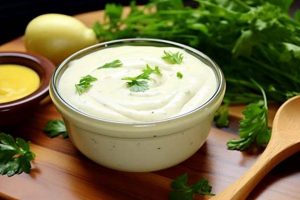
Certain protein-based ingredients, such as silken tofu or Greek yogurt, can be incorporated into fat-free dressings to add both thickness and creaminess. Silken tofu, when blended, provides a smooth, neutral base that thickens the dressing without imparting a strong flavor. Greek yogurt, while adding a slight tang, contributes a creamy texture reminiscent of traditional dressings while maintaining a lower fat content.
The choice of thickening agent depends on the desired texture, flavor profile, and dietary considerations. Starches offer versatility and control over consistency. Gums provide powerful thickening with minimal amounts. Pureed fruits and vegetables offer a natural and flavorful approach. Protein-based thickeners contribute creaminess and nutritional value. By understanding these options, one can formulate fat-free salad dressings that are not only healthful but also deliver a satisfying texture and a balanced, enjoyable culinary experience.
6. Emulsifiers

Emulsifiers play a vital role in fat-free salad dressings, addressing the challenge of combining disparate ingredientsnamely, the aqueous (water-based) components and the flavoring agents, which often include herbs, spices, and acids. Without fat, which naturally acts as an emulsifier, these dressings tend to separate, resulting in an unappetizing and uneven distribution of flavors. Emulsifiers bridge this gap, creating a stable and homogenous mixture, crucial for both visual appeal and consistent flavor delivery.
- Mustard
Mustard, particularly Dijon or stone-ground varieties, functions as an effective emulsifier due to the presence of mucilage, a natural gum-like substance. Mucilage binds to both water and oil-like substances, creating a stable emulsion. In fat-free dressings, mustard helps disperse flavoring agents throughout the water-based components, preventing separation and ensuring a consistent taste experience. The sharp flavor of mustard also complements many dressings, adding depth and complexity.
- Egg Yolks (Limited Use)
While traditional emulsifiers in full-fat dressings, egg yolks have limited applicability in strictly fat-free preparations due to their inherent fat content. However, in dressings where a minimal amount of fat is permissible, a small quantity of egg yolk can contribute significantly to emulsification and provide a rich, creamy texture. Pasteurized egg yolks should be used to mitigate food safety risks associated with raw eggs.
- Lecithin (Soy-Derived or Sunflower-Derived)
Lecithin, a natural emulsifier derived from sources like soybeans or sunflowers, offers an effective fat-free emulsification option. Available in liquid or powder form, lecithin effectively binds water-based and oil-based ingredients, creating a stable and homogenous dressing. Soy-derived lecithin is more commonly used, but sunflower lecithin provides an alternative for those with soy allergies or sensitivities. It is important to note that while lecithin itself is fat-free, commercial lecithin products may contain small amounts of oil.
- Hydrocolloids (Xanthan Gum, Guar Gum)
Hydrocolloids like xanthan gum and guar gum, while primarily used as thickening agents, also contribute to emulsion stability. Their ability to increase viscosity helps prevent the separation of ingredients in fat-free dressings. These gums create a more homogenous mixture, ensuring even flavor distribution and a pleasing texture. However, careful measurement is crucial as excessive use can lead to a gummy or slimy consistency.
The careful selection and application of emulsifiers are essential for creating successful fat-free salad dressings. These ingredients address the inherent challenge of combining water-based and flavoring components in the absence of fat, ensuring a stable, flavorful, and visually appealing dressing. The specific emulsifier chosen depends on the desired flavor profile, dietary restrictions, and the overall composition of the dressing, with options available to suit various needs and preferences. Effective emulsification contributes significantly to the overall enjoyment and satisfaction derived from a fat-free salad.
Frequently Asked Questions
This section addresses common inquiries regarding the creation and use of fat-free salad dressings.
Question 1: Are fat-free salad dressings truly devoid of all fat?
While marketed as “fat-free,” regulations permit trace amounts of fat. These minimal amounts are generally negligible from a nutritional standpoint.
Question 2: How can one achieve a creamy texture without fat?
Creaminess can be simulated through the use of pureed fruits, vegetables, or silken tofu. These ingredients add body and a smooth texture without contributing significant fat.
Question 3: Do fat-free dressings compromise flavor?
Not necessarily. Flavorful herbs, spices, acids, and flavorful liquids compensate for the absence of fat, creating complex and satisfying flavor profiles.
Question 4: How long can fat-free dressings be stored?
Storage times vary based on ingredients. Dressings made with fresh ingredients are best consumed within a few days. Those without perishable components may last longer when refrigerated.
Question 5: Can fat-free dressings be used with all types of salads?
Generally, yes. However, the flavor profile of the dressing should complement the salad ingredients. A light vinaigrette might suit delicate greens, while a robust dressing complements heartier vegetables.
Question 6: Are there potential drawbacks to consuming exclusively fat-free dressings?
While fat-free dressings offer health benefits, some fats are essential for nutrient absorption. A balanced approach to dietary fat is recommended.
Understanding these frequently asked questions provides a more comprehensive understanding of fat-free salad dressings and their role in a healthful diet. Addressing these common concerns empowers informed decision-making regarding ingredient selection and preparation techniques.
The following section will offer specific recipes for creating a variety of delicious and healthful fat-free salad dressings.
Conclusion
Exploration of formulations for fat-free salad dressings reveals the potential for creating flavorful and healthful condiments without reliance on traditional fat sources. Careful consideration of acidic components, aromatic herbs and spices, flavorful liquids, and textural elements allows for the development of dressings that enhance, rather than detract from, the overall sensory experience of a salad. Techniques for balancing flavors, achieving desired consistencies, and ensuring emulsion stability are key to successful outcomes.
The increasing awareness of dietary fat and its potential health implications underscores the importance of exploring alternatives. Culinary innovation in the realm of fat-free salad dressings provides opportunities for individuals to enjoy flavorful meals while adhering to health-conscious dietary guidelines. Continued experimentation and refinement of these formulations promise further advancements in the pursuit of healthful and satisfying culinary experiences.