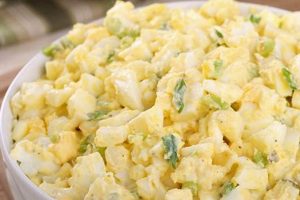
A healthier version of a classic dish features eggs as the primary ingredient combined with other components to create a flavorful, yet lighter, spread or filling. This typically involves substituting or reducing higher calorie ingredients like mayonnaise with alternatives such as Greek yogurt, avocado, or a smaller quantity of light mayonnaise. Additions of fresh herbs, spices, and vegetables further enhance the flavor profile while contributing minimal calories. An example might include chopped hard-boiled eggs blended with nonfat Greek yogurt, Dijon mustard, chopped celery, red onion, and fresh dill.
Managing calorie intake is crucial for weight management and overall health. Dishes that offer satisfying flavor without excessive calories contribute significantly to a balanced diet. Traditional egg salad, while delicious, can be calorie-dense due to its mayonnaise base. The development of lower calorie variations addresses this concern, offering a nutritious and flavorful option for those seeking healthier choices. This allows individuals to enjoy a beloved food while adhering to dietary goals. The evolution of these recipes reflects a growing societal awareness of nutrition and the importance of incorporating healthy eating habits into everyday life.
The following sections will delve into specific ingredient choices, preparation methods, and nutritional information for creating a delicious and satisfying reduced-calorie egg salad. Variations and serving suggestions will also be explored to demonstrate the versatility of this dish.
Tips for Creating a Low-Calorie Egg Salad
Achieving a flavorful yet low-calorie egg salad requires careful consideration of ingredients and preparation methods. The following tips offer guidance for creating a satisfying and healthy dish.
Tip 1: Choose lean protein sources. Opting for egg whites only or using a combination of whole eggs and egg whites reduces overall fat and calorie content while maintaining protein levels.
Tip 2: Minimize mayonnaise. Instead of relying solely on mayonnaise, consider alternatives such as plain nonfat Greek yogurt, mashed avocado, or a small amount of light mayonnaise. These options offer creaminess with fewer calories and added nutritional benefits.
Tip 3: Incorporate flavorful additions. Fresh herbs like dill, chives, or parsley, along with spices such as mustard powder, paprika, or black pepper, enhance the flavor profile without adding significant calories.
Tip 4: Add texture and volume with vegetables. Chopped celery, red onion, bell peppers, or water chestnuts provide satisfying crunch and volume while keeping calories low.
Tip 5: Control portion sizes. Be mindful of serving sizes to manage calorie intake effectively. Using measuring spoons or a food scale can aid in portion control.
Tip 6: Enhance flavor with acidic elements. A splash of lemon juice or apple cider vinegar brightens the flavor profile and adds a tangy dimension without extra calories.
Tip 7: Consider alternative binders. Pureed cottage cheese, blended chickpeas, or even finely diced avocado can act as binders in place of higher calorie options, adding unique flavors and textures.
By following these tips, one can create a delicious and satisfying egg salad that aligns with health-conscious dietary goals. Reducing calories does not necessitate sacrificing flavor or satisfaction.
In conclusion, crafting a low-calorie egg salad offers a nutritious and flavorful alternative to traditional recipes. Experimentation with ingredients and techniques allows for personalized variations to suit individual preferences.
1. Ingredient Selection

Ingredient selection is paramount in creating a successful low-calorie egg salad. The choices made directly impact the nutritional profile, flavor, and overall satisfaction derived from the dish. Strategic selection of components allows for a balance of taste and health, demonstrating that reduced-calorie options need not compromise enjoyment.
- Lean Protein Sources
Eggs, the foundational ingredient, offer variations in protein content and fat. Choosing egg whites solely, or incorporating a mixture of whole eggs and whites, strategically reduces fat and calorie content while preserving essential protein. This substitution significantly impacts the overall nutritional value.
- Low-Fat Binding Agents
Traditional mayonnaise contributes significantly to the calorie density of egg salad. Substituting lower-fat alternatives, such as plain nonfat Greek yogurt, mashed avocado, or a minimal amount of light mayonnaise, drastically reduces caloric impact while maintaining the desired creamy texture. Greek yogurt, for instance, adds protein and probiotics, enhancing nutritional value.
- Flavorful, Low-Calorie Additions
Fresh herbs (dill, chives, parsley), spices (mustard powder, paprika, black pepper), and acidic elements (lemon juice, apple cider vinegar) contribute significantly to flavor complexity without adding substantial calories. These ingredients elevate the taste profile, compensating for the reduction in fat and ensuring a satisfying culinary experience.
- Texture and Volume Enhancers
Incorporating vegetables like chopped celery, red onion, bell peppers, or water chestnuts introduces textural variety and increases volume, promoting satiety without increasing calorie density. These additions create a more complex and satisfying sensory experience.
By strategically selecting ingredients across these four categories, a delicious and nutritious low-calorie egg salad can be created. This approach prioritizes both health and flavor, proving that dietary modifications can be both enjoyable and effective in achieving health goals.
2. Portion Control

Portion control plays a crucial role in managing calorie intake, particularly when aiming for a low-calorie version of a traditionally calorie-dense dish like egg salad. Even with healthy ingredient substitutions, consuming large portions can negate the benefits of reduced-calorie ingredients. Understanding and implementing effective portion control strategies is therefore essential for maximizing the health benefits of a low-calorie egg salad recipe.
- Pre-planning and Measurement
Planning portion sizes in advance and using measuring tools (measuring cups, spoons, or a food scale) ensures accurate calorie estimation and prevents overconsumption. For example, pre-portioning egg salad into individual containers helps manage intake. This method eliminates guesswork and promotes adherence to dietary goals.
- Mindful Consumption
Paying attention to hunger and fullness cues while eating allows individuals to consume appropriate amounts. Avoiding distractions like screens during meals can increase awareness of satiety signals. This mindful approach prevents overeating and fosters a healthier relationship with food.
- Serving Size Awareness
Understanding standard serving sizes for egg salad and other foods provides a benchmark for portioning. Comparing a prepared portion to recommended serving sizes helps individuals gauge the appropriateness of their intake. This awareness promotes realistic portioning and prevents excessive calorie consumption.
- Balancing with Other Meal Components
Considering the overall meal composition when determining egg salad portion size ensures a balanced nutrient intake. Pairing egg salad with fiber-rich vegetables or a lean protein source enhances satiety and provides a more comprehensive nutritional profile. This approach promotes balanced meals and minimizes the likelihood of overconsumption.
Implementing these portion control strategies in conjunction with a low-calorie egg salad recipe maximizes health benefits. Controlling portions ensures that even with healthy modifications, calorie intake remains manageable, contributing to weight management goals and overall dietary health. These strategies, combined with mindful eating practices, establish a sustainable approach to healthy eating patterns.
3. Flavor Enhancement
Flavor enhancement is crucial in low-calorie egg salad recipes. Reducing calorie density often necessitates limiting richer ingredients like mayonnaise. Therefore, enhancing flavor through other means becomes essential for creating a satisfying and palatable dish. Strategic use of herbs, spices, and acidic components compensates for the reduction in fat and ensures a flavorful, enjoyable meal.
- Fresh Herbs
Fresh herbs provide vibrant, aromatic notes that elevate the overall flavor profile. Dill, chives, parsley, tarragon, and mint are excellent choices. Dill, for instance, offers a bright, slightly tangy flavor that complements the eggs, while chives contribute a mild oniony nuance. Incorporating a variety of fresh herbs creates a complex and refreshing taste experience.
- Spices
Spices add depth and complexity without contributing significant calories. Mustard powder, paprika, black pepper, cayenne pepper, and curry powder offer diverse flavor profiles. A dash of smoked paprika introduces a smoky depth, while black pepper adds a subtle heat. The judicious use of spices enhances the overall taste and creates a more nuanced flavor profile.
- Acidic Components
Acidic ingredients, such as lemon juice, lime juice, apple cider vinegar, or white wine vinegar, brighten the flavor profile and balance the richness of the eggs. Lemon juice provides a classic citrusy tang, while apple cider vinegar offers a slightly sweeter, more complex acidity. These additions enhance the overall taste and prevent the egg salad from tasting bland.
- Aromatic Vegetables
Finely diced red onion, shallots, or garlic contribute pungent, savory notes that complement the other flavors. Red onion adds a sharp, slightly sweet flavor, while garlic provides a more robust savory element. These additions create a more complex and layered flavor profile.
By strategically combining these flavor-enhancing elements, a low-calorie egg salad can achieve a depth and complexity of flavor that rivals its full-fat counterpart. This approach demonstrates that reducing calories does not necessitate sacrificing taste. A well-balanced combination of fresh herbs, spices, and acidic components results in a delicious and satisfying dish that aligns with health-conscious dietary goals.
4. Texture Optimization

Texture optimization plays a significant role in the palatability and overall satisfaction derived from a low-calorie egg salad recipe. A monotonous, mushy texture can detract from the eating experience, even if the flavor profile is well-developed. Conversely, a variety of textures creates a more engaging and enjoyable meal. This is particularly important in low-calorie versions where richer, fat-based ingredients contributing to creamy textures are often reduced or eliminated.
Several strategies contribute to texture optimization in low-calorie egg salad. Incorporating finely diced vegetables like celery, red onion, bell peppers, or water chestnuts provides a crisp, contrasting element to the softness of the eggs. Chopped nuts or seeds, such as walnuts, pecans, or sunflower seeds, introduce a satisfying crunch and contribute healthy fats. Leaving some of the egg whites coarsely chopped instead of fully mashing them creates textural variation within the salad itself. The strategic combination of these elements prevents a uniformly smooth, potentially unappealing texture, enhancing enjoyment and promoting satiety.
Consider the difference between a low-calorie egg salad made solely with finely mashed eggs and Greek yogurt versus one that includes chopped celery, red onion, and a sprinkle of chopped walnuts. The latter offers a more complex and satisfying textural experience, enhancing enjoyment and perceived value. This textural diversity contributes to a more positive perception of the dish, making it more likely to be incorporated into a healthy, long-term dietary plan. Texture optimization, therefore, is not merely an aesthetic consideration but a crucial element contributing to the success and sustainability of a low-calorie egg salad recipe.
5. Healthy Substitutions

Healthy substitutions are central to achieving a truly low-calorie egg salad recipe. Traditional recipes often rely on ingredients that contribute significantly to calorie density. By strategically replacing these ingredients with lower-calorie alternatives, one can dramatically reduce the overall caloric impact without sacrificing flavor or satisfaction. This approach allows individuals to enjoy a classic dish while adhering to dietary goals.
- Reduced-Fat Mayonnaise Alternatives
Mayonnaise is a primary source of calories in traditional egg salad. Substituting plain nonfat Greek yogurt, mashed avocado, or a significantly reduced quantity of light mayonnaise drastically lowers calorie content while maintaining a creamy texture. Greek yogurt also adds protein and probiotics, further enhancing the nutritional profile. Avocado contributes healthy fats and a rich, creamy consistency. These substitutions directly address the primary source of excess calories in traditional recipes.
- Egg White Incorporation
While whole eggs offer valuable nutrients, egg yolks contain a higher concentration of fat and cholesterol. Incorporating egg whites, either exclusively or in combination with a reduced number of whole yolks, lowers the overall fat and calorie content without significantly compromising protein levels. This allows for a more balanced nutritional profile and a lighter overall dish.
- Bread Replacements
Traditional egg salad sandwiches often utilize refined white bread, which contributes calories without substantial nutritional value. Substituting whole-wheat bread, lettuce wraps, or bell pepper halves provides a more nutritious and lower-calorie base for the egg salad. Whole-wheat bread offers increased fiber, while lettuce wraps and bell peppers contribute vitamins and minerals with minimal calories. These alternatives support dietary goals without sacrificing enjoyment.
- Flavor Boosters with Minimal Caloric Impact
Enhancing flavor without adding calories is crucial in low-calorie cooking. Instead of relying on calorie-dense dressings or flavorings, fresh herbs (dill, chives, parsley), spices (mustard powder, paprika), and acidic components (lemon juice, vinegar) provide robust flavor with negligible caloric impact. These additions compensate for the reduction in richer ingredients, ensuring a satisfying and flavorful experience.
These strategic substitutions collectively contribute to a significant reduction in the overall calorie count of the egg salad while maintaining, and often enhancing, its nutritional value. The resulting dish offers a guilt-free way to enjoy a classic favorite, supporting health-conscious dietary choices without compromising flavor or satisfaction. This demonstrates that healthy eating does not necessitate sacrificing enjoyment, but rather involves making informed choices about ingredients and preparation methods.
Frequently Asked Questions
This section addresses common inquiries regarding low-calorie egg salad recipes, providing clear and concise information to facilitate informed dietary choices.
Question 1: How much calorie reduction can be expected by using a low-calorie egg salad recipe compared to a traditional recipe?
Calorie reduction varies based on specific ingredient choices and substitutions. However, reductions of 50-70% are achievable. Replacing mayonnaise with Greek yogurt and incorporating more egg whites significantly impacts calorie content.
Question 2: What is the best way to ensure food safety when preparing egg salad?
Thorough handwashing and using properly refrigerated, fresh eggs are crucial. Eggs should be cooked until yolks are firm. Prepared egg salad should be refrigerated promptly and consumed within a few days to minimize bacterial growth.
Question 3: Can low-calorie egg salad be frozen?
Freezing egg salad is generally not recommended. Freezing negatively impacts texture and consistency, resulting in a watery, less palatable product upon thawing. It’s best to prepare and consume egg salad fresh.
Question 4: Beyond sandwiches, what are other ways to serve low-calorie egg salad?
Low-calorie egg salad offers versatility beyond sandwiches. It can be served as a filling for lettuce wraps, bell peppers, or tomatoes. It can also be used as a dip for whole-grain crackers or vegetables. It pairs well with salads, providing a protein-rich topping.
Question 5: How can one increase the protein content of low-calorie egg salad?
Incorporating additional egg whites or adding a scoop of protein powder (whey or casein) to the mixture increases protein content. Greek yogurt also adds protein while contributing to a creamy texture.
Question 6: Are there specific dietary considerations regarding egg consumption and cholesterol levels?
While dietary cholesterol has less impact on blood cholesterol than previously thought, individuals with specific health concerns should consult a healthcare professional or registered dietitian for personalized dietary advice regarding egg consumption.
Implementing these guidelines ensures a flavorful and nutritious outcome when preparing low-calorie egg salad. Careful ingredient selection and proper food safety practices are essential for maximizing both taste and health benefits.
Additional resources and recipe variations can be found in the following sections.
Low-Calorie Egg Salad Recipe
Exploration of low-calorie egg salad recipes reveals the potential for healthful eating without sacrificing flavor or satisfaction. Strategic ingredient selection, mindful portion control, innovative flavor enhancement, and texture optimization are crucial for achieving a successful outcome. Substituting traditional high-calorie components like mayonnaise with healthier alternatives, such as Greek yogurt or avocado, significantly reduces caloric impact while maintaining desirable creaminess and boosting nutritional value. Emphasis on fresh herbs, spices, and acidic elements enhances the flavor profile, compensating for the reduction in fat. Careful consideration of texture, incorporating elements like chopped vegetables or nuts, ensures a satisfying and enjoyable culinary experience.
Low-calorie egg salad recipes represent a significant step towards healthier dietary choices. These recipes demonstrate that dietary restrictions need not limit culinary enjoyment. Continued exploration and experimentation with ingredients and preparation methods will further expand the possibilities for creating nutritious and delicious variations of this classic dish. This approach empowers individuals to make informed food choices that support both health and enjoyment. The potential for innovation within this culinary space remains vast, promising further development of appealing and healthful options.