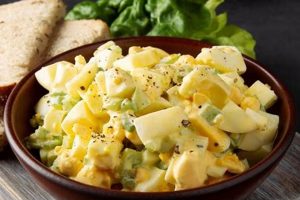
A mixture of chopped, cooked eggs, mayonnaise, and seasonings constitutes a classic, simple dish. Variations can include mustard, vinegar, relish, onions, celery, or other herbs and spices, offering a wide range of flavor profiles. This dish can be served as a sandwich filling, a salad topping, or enjoyed on its own with crackers or bread.
This easily prepared food provides a good source of protein and essential nutrients. Its adaptability makes it suitable for picnics, quick lunches, or potlucks. Historically, egg salads gained popularity as a relatively affordable and accessible protein source, appearing in cookbooks and household manuals from the late 19th and early 20th centuries. The convenience and versatility of the dish contributed to its enduring appeal.
The following sections will delve into various aspects of creating this dish, covering topics like optimal egg cooking techniques, selecting complementary ingredients, and exploring creative variations to customize the flavor profile.
Tips for Creating a Superior Egg Salad
Achieving optimal flavor and texture requires attention to detail in every step of the preparation process. The following tips offer guidance for elevating this simple dish.
Tip 1: Perfect Hard-Boiled Eggs: Avoid overcooking, which leads to a rubbery texture and a greenish ring around the yolk. A gentle simmer followed by an ice bath ensures optimal consistency.
Tip 2: Chopping Consistency: Uniformly chopped eggs create a pleasant texture. A coarse chop offers a more rustic feel, while a finer chop results in a smoother consistency. Consider the desired texture when chopping.
Tip 3: Mayonnaise Matters: The quality and quantity of mayonnaise significantly impact the final product. Start with a small amount and add more as needed, avoiding an overly creamy or bland result. Experiment with different types of mayonnaise for varied flavor profiles.
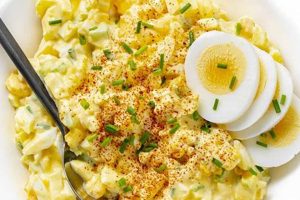
Tip 4: Seasoning Strategically: Salt and pepper are essential, but other seasonings can enhance the flavor profile. Mustard, paprika, dill, chives, or a dash of hot sauce can add complexity and depth.
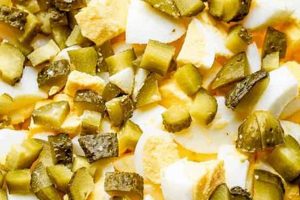
Tip 5: Textural Variety: Incorporating finely diced celery or red onion offers a satisfying crunch and contrasts the creamy egg mixture. Consider adding chopped pickles or relish for a tangy twist.
Tip 6: Freshness is Key: For optimal flavor, prepare the salad close to serving time. Refrigerate any leftovers promptly and consume within a few days.
Tip 7: Bread and Accompaniment Choices: The chosen bread or accompaniments can complement or contrast the salad’s richness. Consider crusty bread, crackers, lettuce cups, or avocado halves for serving.
By following these tips, one can create a delicious and satisfying egg salad. Attention to detail in each step, from egg cooking to seasoning, ensures a superior culinary experience.
The concluding section offers variations and serving suggestions to further inspire culinary creativity.
1. Egg Cooking Technique

The foundation of a successful egg salad rests upon the proper execution of the egg cooking technique. Overcooked or undercooked eggs compromise texture and flavor, diminishing the overall quality of the final dish. A precise cooking method ensures optimal consistency and taste.
- Timing and Temperature Control
Precise timing and temperature management are crucial for achieving the desired yolk and white consistency. Overcooking results in a dry, crumbly yolk with an unpleasant sulfurous odor, while undercooking yields a runny, unappetizing texture. Maintaining a gentle simmer and utilizing an ice bath post-cooking prevents these undesirable outcomes.
- Freshness of Eggs
Fresh eggs are essential for optimal flavor and ease of peeling. Older eggs are more challenging to peel, leading to a ragged appearance and loss of egg white. Fresh eggs contribute to a clean, appealing presentation and enhance the overall taste experience.
- Water Alkalinity and Salt Addition
Adding salt or a small amount of baking soda to the boiling water can aid in the peeling process by slightly increasing the alkalinity of the water. This weakens the bond between the egg white and the membrane, facilitating smoother shell removal.
- Cooling and Peeling Method
Immediately transferring cooked eggs to an ice bath halts the cooking process and promotes easier peeling. Gentle tapping and rolling of the eggs on a hard surface create cracks, simplifying shell removal and minimizing damage to the egg white.
Mastery of these facets of egg cooking technique directly impacts the quality and enjoyment of the final egg salad. A properly cooked egg provides the ideal texture and flavor foundation, allowing the other ingredients to shine and contribute to a harmonious and delicious culinary creation.
2. Ingredient Selection
Ingredient selection significantly impacts the overall quality, flavor profile, and textural complexity of egg salad. Careful consideration of each component, from the mayonnaise to the seasonings, elevates this seemingly simple dish from mundane to exceptional. The interplay of flavors and textures creates a balanced and satisfying culinary experience.
Mayonnaise: Mayonnaise serves as the base, binding the ingredients and providing a creamy texture. The choice of mayonnaise influences the richness and tanginess of the salad. Full-fat mayonnaise contributes a classic richness, while lower-fat options offer a lighter alternative. Flavored mayonnaises, such as those infused with herbs or spices, can introduce additional complexity. For example, aioli, with its garlicky undertones, provides a distinct Mediterranean flair. The quantity of mayonnaise also plays a crucial role; too much can lead to an overly rich and heavy salad, while too little results in a dry, crumbly mixture.
Mustard: Mustard adds a sharp, pungent counterpoint to the richness of the mayonnaise and eggs. Different types of mustard, such as Dijon, yellow, or stone-ground, offer varying levels of intensity and flavor nuances. Dijon, with its pronounced tang, provides a robust contrast, while yellow mustard offers a milder, more traditional flavor. Stone-ground mustard, with its coarse texture and complex flavor profile, adds depth and visual interest.
Seasonings and Aromatics: Seasonings and aromatics enhance the overall flavor profile of the egg salad. Freshly ground black pepper provides a subtle heat, while paprika adds a smoky depth. Fresh herbs, such as dill, chives, or parsley, contribute a bright, herbaceous note. Incorporating finely diced red onion or shallots introduces a pungent bite, while sweet pickle relish provides a tangy sweetness. The careful balance of these elements creates a layered and nuanced flavor experience.
Textural Elements: Incorporating ingredients that provide textural contrast enhances the enjoyment of egg salad. Finely diced celery adds a crisp, refreshing crunch, while chopped water chestnuts offer a delicate snap. Crumbled bacon introduces a smoky, savory element and textural variation. These additions prevent the salad from becoming monotonous and provide a more engaging sensory experience.
Judicious ingredient selection transforms a basic egg salad into a culinary delight. Understanding the interplay of flavors and textures allows for customization and creativity, ensuring a satisfying and memorable dining experience.
3. Flavor Balancing

Flavor balancing is paramount in a successful hard-boiled egg salad recipe. It transforms a simple combination of ingredients into a harmonious and palatable dish. A well-balanced egg salad avoids extremes, ensuring no single flavor dominates the overall profile. This involves a careful interplay of richness, acidity, saltiness, and aromatics, resulting in a more complex and satisfying culinary experience.
- Richness from Fats and Eggs
The inherent richness of hard-boiled eggs and mayonnaise forms the foundation of the flavor profile. This richness requires careful management to prevent the salad from becoming overly heavy or cloying. Balancing this richness with contrasting flavors is crucial. For example, full-fat mayonnaise provides a luxurious texture but can overwhelm the palate if used excessively. Selecting a lower-fat mayonnaise or incorporating Greek yogurt can temper the richness while maintaining creaminess.
- Acidity as a Counterpoint
Acidity plays a vital role in cutting through the richness of the eggs and mayonnaise. Ingredients such as vinegar, lemon juice, or mustard provide a sharp counterpoint, brightening the flavor profile and preventing it from becoming bland. For instance, a dash of white wine vinegar or a squeeze of lemon juice adds a refreshing tang, balancing the richness and enhancing the overall flavor complexity. The type of mustard also contributes to the acidity; Dijon mustard offers a more pronounced acidity compared to yellow mustard.
- Saltiness and Seasoning
Salt enhances the flavors of the other ingredients, acting as a critical component in achieving a balanced profile. However, excessive salt can mask the subtle nuances of the other components. Proper seasoning requires careful attention, starting with a small amount and adjusting according to taste. Beyond salt, other seasonings, such as black pepper, paprika, or cayenne pepper, add depth and complexity. Herbs like dill or chives introduce a fresh, aromatic dimension.
- Aromatic Complexity
Aromatic ingredients contribute layers of flavor beyond the basic components. Fresh herbs, such as dill, parsley, or chives, add a bright, herbaceous note, while spices like paprika or cayenne pepper introduce warmth and complexity. Incorporating finely diced onion or shallots provides a pungent bite, further enhancing the overall flavor profile. These aromatics elevate the salad beyond a simple combination of ingredients, creating a more nuanced and satisfying culinary experience.
The interplay of these elementsrichness, acidity, saltiness, and aromaticsdefines the final flavor profile of the hard-boiled egg salad. Achieving a harmonious balance among these components ensures a delightful culinary experience, transforming a basic recipe into a flavorful and satisfying dish.
4. Texture Considerations

Texture plays a crucial role in the overall enjoyment of hard-boiled egg salad. The interplay of textures creates a more engaging and satisfying sensory experience. Careful consideration of the various textural elements contributes to a well-balanced and appealing final product. Understanding the impact of different ingredients and preparation techniques allows for greater control over the final texture, enhancing the overall culinary experience.
- Egg Yolk and White Consistency
The consistency of the egg yolks and whites significantly influences the overall texture. Overcooked yolks become dry and crumbly, while undercooked yolks are overly moist and sticky. Properly cooked yolks should be firm yet creamy. Similarly, overcooked egg whites become rubbery, while undercooked whites are watery. The ideal texture is tender and slightly firm. Achieving the perfect consistency for both yolks and whites ensures a pleasant mouthfeel and contributes to the overall success of the egg salad.
- Chopping Technique and Size
The method and degree of chopping directly impact the texture of the egg salad. A coarse chop results in larger pieces of egg, creating a more rustic and substantial texture. A finer chop yields a smoother, more uniform texture. The chosen chopping technique influences the perceived mouthfeel and can be adjusted according to personal preference or the desired outcome. For example, a coarser chop might be preferred for a sandwich filling, while a finer chop might be more suitable for a salad topping or deviled eggs.
- Inclusion of Textural Contrasts
Adding ingredients that offer textural contrast enhances the complexity and enjoyment of egg salad. Crisp elements, such as finely diced celery, red onion, or bell peppers, provide a refreshing crunch against the creamy base. Chopped pickles or relish offer a tangy, slightly chewy texture. Incorporating nuts or seeds introduces a satisfying crunch and nutty flavor. These textural contrasts prevent the salad from becoming monotonous and create a more dynamic sensory experience.
- Mayonnaise and Binder Proportion
The ratio of mayonnaise or other binders to the chopped eggs directly affects the final texture. Too much mayonnaise results in an overly creamy and heavy salad, while too little leads to a dry, crumbly mixture. Finding the right balance is crucial for achieving the desired consistency. The type of binder also plays a role; Greek yogurt, for example, offers a lighter and tangier alternative to mayonnaise, impacting the overall texture and flavor profile.
By carefully considering these textural elements, one can create an egg salad with a balanced and appealing mouthfeel. The interplay of creamy, crunchy, and tender textures elevates the dish beyond a simple combination of ingredients, transforming it into a more satisfying and enjoyable culinary experience. Attention to texture enhances the overall appeal and contributes to the success of the hard-boiled egg salad recipe.
5. Serving Options
Serving options significantly influence the perceived versatility and enjoyment of hard-boiled egg salad. The chosen presentation affects not only the aesthetic appeal but also the overall dining experience. Consideration of various serving methods allows for adaptation to different occasions and culinary preferences, maximizing the potential of this simple yet versatile dish. A basic hard-boiled egg salad recipe can be elevated through creative and thoughtful presentation.
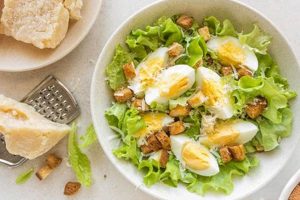
Classic applications include sandwiches, where the egg salad acts as a filling between slices of bread. The choice of bread significantly impacts the overall flavor and texture; crusty bread offers a robust counterpoint to the creamy filling, while softer breads provide a gentler complement. Beyond sandwiches, egg salad can be served as a standalone salad, accompanied by a bed of lettuce or mixed greens. This presentation highlights the salad’s refreshing qualities and allows for the incorporation of additional elements like cherry tomatoes, cucumbers, or croutons, further enhancing the nutritional value and textural complexity.
For more elegant presentations, hard-boiled egg salad can be served in scooped-out avocado halves or atop endive leaves, creating visually appealing and flavorful appetizers. These options cater to more formal occasions or those seeking lighter, low-carbohydrate alternatives. Incorporating the egg salad into deviled eggs offers another classic and aesthetically pleasing presentation, ideal for parties or gatherings. For a more casual setting, crackers or pita bread provide convenient and versatile serving platforms, allowing for easy customization and portion control.
The versatility of hard-boiled egg salad extends beyond these traditional applications. It can be incorporated into wraps, used as a topping for baked potatoes, or even stuffed into tomatoes or bell peppers for a visually striking and flavorful presentation. The adaptability of this dish makes it suitable for a wide range of occasions and dietary preferences. Careful consideration of serving options elevates the dining experience, transforming a simple hard-boiled egg salad recipe into a culinary creation that is both delicious and visually appealing. Selecting the appropriate serving method enhances the enjoyment and perceived value of this versatile dish, adapting it to a variety of contexts and culinary preferences.
6. Storage Practices
Proper storage practices are crucial for maintaining the safety and quality of hard-boiled egg salad. Improper storage can lead to bacterial growth and spoilage, posing health risks and compromising flavor. Implementing appropriate storage techniques preserves the freshness, texture, and overall palatability of the egg salad, extending its shelf life and ensuring a safe and enjoyable culinary experience.
- Temperature Control
Maintaining a consistently low temperature is paramount for inhibiting bacterial growth. Egg salad should be refrigerated at or below 40F (4C) as soon as possible after preparation. Exposure to higher temperatures, especially within the “danger zone” between 40F and 140F (4C and 60C), promotes rapid bacterial proliferation, increasing the risk of foodborne illness. Consistent refrigeration significantly slows bacterial growth, preserving the safety and quality of the egg salad.
- Airtight Containers
Storing egg salad in airtight containers is essential for preventing contamination and maintaining freshness. Airtight containers limit exposure to oxygen, which can accelerate spoilage and contribute to off-flavors. They also create a barrier against airborne bacteria and other contaminants. Properly sealed containers help preserve the texture and flavor of the egg salad, extending its shelf life and ensuring optimal quality.
- Shelf Life and Consumption Timeframe
Hard-boiled egg salad, even when properly stored, has a limited shelf life. Generally, it is recommended to consume egg salad within three to five days of preparation. Beyond this timeframe, the risk of bacterial growth and spoilage increases significantly, even under refrigeration. Adhering to recommended consumption timeframes minimizes the potential for foodborne illness and ensures optimal flavor and quality.
- Freezing Considerations
Freezing hard-boiled egg salad is generally not recommended. The mayonnaise-based dressing separates upon thawing, resulting in an undesirable texture and compromised flavor. The egg whites also tend to become tough and rubbery after freezing. While freezing might extend the storage duration, it significantly detracts from the palatability and overall quality of the egg salad. Therefore, it is advisable to prepare and consume egg salad within the recommended refrigeration timeframe for optimal enjoyment.
Adherence to these storage practices is fundamental for maintaining the safety and quality of hard-boiled egg salad. Proper temperature control, airtight containers, and awareness of shelf life contribute to a safe and enjoyable culinary experience. By implementing these guidelines, consumers can confidently prepare and consume hard-boiled egg salad, maximizing its flavor and minimizing the risk of foodborne illness. These practices are integral to responsible food handling and contribute to a positive and healthy dining experience.
Frequently Asked Questions
This section addresses common inquiries regarding the preparation and consumption of this dish. Clarity on these points contributes to a safer and more enjoyable culinary experience.
Question 1: How can one prevent the yolks from becoming greenish-gray during the cooking process?
The greenish-gray discoloration occurs when eggs are overcooked. A precise cooking time, typically 7-9 minutes for large eggs at a rolling boil, followed by immediate immersion in an ice bath, prevents this reaction. The ice bath rapidly cools the eggs, halting the cooking process and preventing the discoloration.
Question 2: What is the optimal method for peeling hard-boiled eggs efficiently?
Starting with fresh eggs simplifies peeling. Gently tapping the cooked egg on a hard surface creates cracks in the shell, facilitating removal. Peeling under cold running water can further aid the process. Adding salt or baking soda to the boiling water can also make peeling easier.
Question 3: How can one achieve a creamy, rather than dry, egg salad?
The proportion of mayonnaise to eggs significantly influences the final consistency. Start with a modest amount of mayonnaise and gradually incorporate more until the desired creaminess is achieved. Over-mixing can also lead to a denser texture, so gentle folding is recommended. The quality of the mayonnaise also plays a role; a richer, full-fat mayonnaise will typically yield a creamier result.
Question 4: Beyond salt and pepper, what other seasonings enhance this dish?
A variety of seasonings can complement egg salad. Mustard, paprika, dill, chives, and onion powder are popular choices. A dash of hot sauce or a pinch of cayenne pepper can add a spicy kick. Experimentation with different flavor combinations allows for customization and personalization.
Question 5: What are safe storage practices to prevent spoilage?
Refrigeration in an airtight container at or below 40F (4C) is crucial. Consume within three to five days to minimize the risk of bacterial growth. Freezing is not recommended due to the adverse effects on texture and consistency.
Question 6: How can one adapt an egg salad recipe for those with dietary restrictions?
Substitutions can accommodate various dietary needs. Greek yogurt or avocado can replace mayonnaise for a lighter, healthier option. Gluten-free bread or crackers can be used for those with gluten sensitivities. Omitting mustard or other potential allergens caters to specific dietary restrictions. Careful ingredient selection ensures inclusivity and expands culinary possibilities.
Understanding these aspects ensures both safe handling and optimal enjoyment. These guidelines provide a foundation for a successful and satisfying culinary experience.
The subsequent section offers recipe variations and creative serving suggestions.
Hard-Boiled Egg Salad Recipe
This exploration of hard-boiled egg salad recipes has provided a comprehensive overview of this versatile dish. Key aspects, including egg cooking techniques, ingredient selection, flavor balancing, texture considerations, serving options, and storage practices, have been thoroughly examined. Proper egg cooking ensures optimal consistency and flavor, preventing common issues like rubbery whites and discolored yolks. Ingredient selection significantly impacts the overall flavor profile, with careful consideration given to the balance of richness, acidity, and aromatics. Texture considerations, influenced by chopping techniques and the incorporation of contrasting elements, contribute to a more satisfying sensory experience. Serving options range from classic sandwiches to more creative presentations, highlighting the dish’s adaptability. Finally, proper storage practices are essential for maintaining safety and quality.
Mastery of these elements allows for the creation of a hard-boiled egg salad that transcends mere sustenance, becoming a culinary expression of personal preference and creativity. Further exploration and experimentation with various ingredients and techniques offer boundless opportunities for customization and refinement. The evolution of this seemingly simple dish continues, driven by culinary innovation and the enduring pursuit of gastronomic excellence.