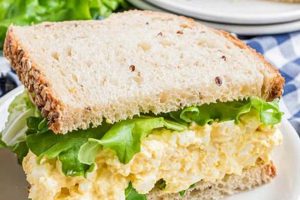
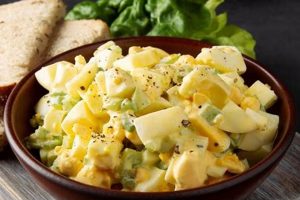
A dish combining cooked eggs, mashed avocado, and various seasonings creates a creamy, nutritious spread. Typical additions include mayonnaise, mustard, onion, and spices like paprika or dill. This blend can be enjoyed as a sandwich filling, a topping for crackers or toast, or as a component in other dishes.
This combination offers a healthy twist on traditional egg salad. The avocado contributes healthy fats, fiber, and vitamins, enhancing the nutritional profile while adding creaminess and a subtle, buttery flavor. This makes it a satisfying and wholesome option for a light meal or snack. Furthermore, its versatile nature allows for variations incorporating different herbs, spices, and other ingredients, appealing to diverse palates. Historically, egg salad has been a popular and economical dish, and the addition of avocado elevates it with both flavor and nutritional value.
This exploration will delve into variations of this dish, covering ingredient selection, preparation techniques, and serving suggestions. Additionally, nutritional information and potential health benefits will be discussed.
Tips for Creating a Delicious and Nutritious Avocado Egg Salad
Achieving optimal flavor and texture requires attention to detail throughout the preparation process. The following tips offer guidance for creating a superior culinary experience.
Tip 1: Ripe Avocados are Key: Selecting perfectly ripe avocados is crucial. They should yield to gentle pressure but not feel mushy. Underripe avocados will result in a bland, less creamy salad, while overripe ones can have an undesirable texture.
Tip 2: Proper Egg Cooking: Overcooked eggs can become rubbery and dry. Aim for a firm yet moist yolk by cooking for 8-10 minutes in boiling water, followed by an immediate ice bath to stop the cooking process.
Tip 3: Dicing Consistency: Uniformly dicing the eggs and avocado creates a pleasant texture and ensures even distribution of flavors. A medium dice is generally recommended.
Tip 4: Seasoning Strategically: Enhance the flavor profile with carefully selected seasonings. Fresh herbs like dill or chives, along with spices like paprika or red pepper flakes, can add depth and complexity.
Tip 5: Mayonnaise Moderation: While mayonnaise adds creaminess, excessive use can mask the delicate flavors of the avocado and egg. Start with a small amount and add more as needed, prioritizing the natural creaminess of the avocado.
Tip 6: Acidic Enhancement: A touch of acidity brightens the flavors. A squeeze of lemon or lime juice, or a splash of apple cider vinegar, can elevate the overall taste.
Tip 7: Chilling for Flavor Development: Allowing the salad to chill for at least 30 minutes in the refrigerator allows the flavors to meld and intensify.
By following these tips, one can create a flavorful and nutritious dish that is both satisfying and visually appealing. The combination of fresh ingredients and mindful preparation yields a truly exceptional culinary result.
These practical suggestions provide a foundation for creating a truly exceptional avocado egg salad. The following section will offer concluding thoughts and serving recommendations.
1. Ripe Avocados

Ripe avocados play a crucial role in the success of an avocado egg salad recipe. The ripeness of the avocado directly impacts the flavor, texture, and overall quality of the final dish. A perfectly ripe avocado offers a smooth, creamy texture that blends seamlessly with the other ingredients, creating a cohesive and palatable salad. Conversely, an underripe avocado results in a stiff, unyielding texture and a bland flavor that detracts from the overall experience. An overripe avocado, while creamy, can have an undesirable mushiness and a slightly bitter taste. The ripeness of the avocado, therefore, acts as a foundational element upon which the success of the recipe rests.
This principle can be illustrated through a simple comparison. Imagine two identical avocado egg salad recipes, differing only in the ripeness of the avocados used. The salad made with ripe avocados will present a vibrant green hue, a smooth and creamy consistency, and a rich, buttery flavor that complements the eggs and other seasonings. In contrast, the salad prepared with underripe avocados will appear pale, have a chunky, uneven texture, and lack the characteristic avocado flavor. This comparison highlights the significant impact of avocado ripeness on the sensory qualities of the final product.
Understanding the importance of ripe avocados empowers one to make informed choices during ingredient selection and preparation. Assessing avocado ripeness involves a gentle touch; a ripe avocado will yield slightly to pressure without feeling mushy. This knowledge translates into a more satisfying culinary experience. Failure to select appropriately ripe avocados can lead to a disappointing outcome, underscoring the practical significance of this understanding within the context of avocado egg salad preparation.
2. Properly Cooked Eggs
Properly cooked eggs are essential for a successful avocado egg salad recipe. The texture of the eggs significantly influences the final product’s overall palatability. Overcooked eggs become rubbery and dry, detracting from the creamy texture imparted by the avocado. Undercooked eggs, conversely, can result in a watery consistency that compromises the salad’s structural integrity. Achieving the correct egg texture is crucial for a balanced and enjoyable culinary experience.
- Cooking Time and Method
Precise cooking time and method are critical for achieving optimal egg texture. Boiling eggs for 8-10 minutes typically yields a firm yet moist yolk, ideal for egg salad. Alternative methods, such as steaming or baking, can also produce desirable results, but require careful monitoring to avoid overcooking. An ice bath immediately after cooking halts the cooking process and helps prevent the formation of a greenish ring around the yolk.
- Visual Cues for Doneness
Visual cues offer valuable insights into egg doneness. A fully cooked yolk will appear firm and opaque, while a slightly runny yolk will have a more translucent center. The white should be completely set and opaque. These visual indicators help ensure the eggs are cooked to the desired consistency for optimal integration into the avocado egg salad.
- Impact on Texture and Flavor
The egg’s texture directly impacts the avocado egg salad’s overall texture and flavor. Properly cooked eggs contribute a pleasant, slightly firm bite that contrasts with the creamy avocado. Overcooked eggs, however, introduce a dry, rubbery texture that clashes with the avocado’s smoothness. The egg’s cooking also subtly influences its flavor; overcooking can result in a slightly sulfurous taste.
- Integration with other Ingredients
Properly cooked eggs integrate seamlessly with the other ingredients in the avocado egg salad. Their texture allows them to bind with the avocado and seasonings, creating a cohesive mixture. Overcooked or undercooked eggs disrupt this harmony, leading to a less satisfying and potentially unappetizing final product.
The interplay between properly cooked eggs and the other components of avocado egg salad is essential for achieving the desired flavor and texture. Attention to detail during the egg cooking process ensures a harmonious blend of ingredients, elevating the dish from simple to exceptional. Neglecting this crucial step can compromise the entire salad, highlighting the importance of mastering this fundamental culinary skill.
3. Seasoning Balance
Seasoning balance is paramount in an avocado egg salad recipe. It directly impacts the final product’s palatability, transforming a bland mixture into a flavorful culinary experience. A thoughtful approach to seasoning elevates the inherent flavors of the core ingredients avocado and egg without overpowering their delicate profiles. This involves a careful consideration of complementary flavors and the judicious use of salt, acid, and spices.
- Salt’s Foundational Role
Salt acts as a foundational seasoning element. It enhances the natural flavors of both avocado and egg, bringing their subtle nuances to the forefront. However, excessive salt can easily overpower these delicate flavors, resulting in a harsh, unpleasant taste. The goal is to achieve a balanced salinity that amplifies, rather than masks, the inherent flavors. Kosher salt, with its larger crystals, offers greater control over salting and is often preferred by chefs.
- Acidity as a Brightening Agent
Acidity plays a crucial role in brightening the overall flavor profile. A squeeze of lemon or lime juice, or a splash of apple cider vinegar, introduces a refreshing tang that cuts through the richness of the avocado and egg. This acidic element adds complexity and prevents the salad from tasting flat or heavy. The judicious use of acid is essential for achieving a balanced and vibrant flavor profile.
- Spice and Herb Integration
Spices and herbs contribute depth and complexity to avocado egg salad. Fresh herbs like dill, chives, or parsley add a refreshing, herbaceous note. Spices such as paprika, cayenne pepper, or black pepper introduce warmth and subtle heat. The selection and quantity of spices and herbs should complement the other ingredients, creating a harmonious blend of flavors. Over-seasoning can overwhelm the delicate flavors of the avocado and egg, so restraint is key.
- Balancing Flavors for Harmony
Achieving seasoning balance involves a delicate interplay between salt, acid, and spices. No single element should dominate; the goal is to create a harmonious blend where each ingredient complements the others. This requires careful tasting and adjustment throughout the preparation process. The ultimate objective is to create a flavor profile that is both complex and balanced, where the individual components contribute to a unified and delicious whole.
The careful orchestration of these seasoning elements transforms a simple avocado egg salad into a culinary delight. A balanced seasoning profile elevates the inherent flavors of the ingredients, creating a symphony of taste that is both satisfying and memorable. This underscores the critical role of seasoning balance in achieving culinary excellence in even the simplest of dishes.
4. Mayonnaise (optional)

Mayonnaise plays a nuanced role in avocado egg salad, acting as a potential enhancer of texture and flavor, yet remaining entirely optional due to the avocado’s inherent creaminess. Its inclusion introduces a traditional richness and binding quality, while its omission allows the natural flavors of the avocado and egg to take center stage. This section explores the multifaceted implications of mayonnaise in this recipe.
- Texture and Creaminess
Mayonnaise contributes a significant textural element to avocado egg salad. It provides a smooth, creamy consistency that complements the avocado, creating a cohesive and rich mouthfeel. This effect is particularly noticeable when using avocados that are slightly less ripe than ideal. The emulsification of oil and egg yolk in mayonnaise creates a luxurious texture that enhances the overall sensory experience. However, excessive mayonnaise can lead to an overly rich and heavy salad.
- Flavor Enhancement and Balance
Mayonnaise, with its tangy flavor derived from vinegar or lemon juice, can enhance the overall flavor profile of the salad. It adds a subtle tanginess that balances the richness of the avocado and egg. However, the flavor of mayonnaise can also mask the delicate flavors of the primary ingredients if used in excess. The key is to use just enough mayonnaise to enhance the flavor without overpowering it. Different types of mayonnaise, such as those flavored with herbs or spices, can also introduce additional flavor dimensions.
- Binding Agent and Structural Integrity
Mayonnaise acts as a binding agent, helping to hold the ingredients together. This creates a more cohesive salad that is easier to spread on bread or crackers. The emulsification in mayonnaise provides a stable structure that prevents the salad from becoming watery or separating. This binding quality is especially beneficial when preparing larger batches of salad or when the salad needs to hold its shape for longer periods.
- Health and Nutritional Considerations
Mayonnaise adds calories and fat to the salad. While these can contribute to satiety, they should be considered when evaluating the nutritional profile of the dish. Individuals seeking a lower-fat or lower-calorie option might choose to omit mayonnaise or use a reduced-fat variety. The avocado itself provides healthy fats, and additional fat from mayonnaise might not be necessary for achieving the desired creaminess. This allows for flexibility in tailoring the recipe to individual dietary needs and preferences.
The decision of whether to include mayonnaise in avocado egg salad depends on individual preferences and dietary considerations. While mayonnaise offers textural and flavor enhancements, it is not essential for a successful recipe. The avocado’s natural creaminess can suffice, especially for those prioritizing a lighter, healthier option. Ultimately, the choice rests on balancing flavor, texture, and nutritional goals, showcasing the adaptable nature of this simple dish.
5. Textural Contrast
Textural contrast significantly contributes to the sensory experience of consuming avocado egg salad. A harmonious blend of textures elevates this simple dish, creating a more dynamic and enjoyable culinary experience. The creamy, smooth base provided by the avocado benefits from the incorporation of ingredients offering contrasting textures. This interplay prevents a monotonous mouthfeel, stimulating the palate and adding complexity to each bite.
Consider the addition of finely diced celery or red onion. These ingredients introduce a crisp, slightly sharp counterpoint to the avocado’s smoothness and the egg’s softness. Similarly, chopped walnuts or pecans offer a satisfying crunch, further diversifying the textural profile. Even toasted bread crumbs or crumbled bacon can contribute a delightful textural variation. The absence of such contrasting elements can result in a dense, homogenous texture that, while palatable, lacks the dynamism offered by a more varied textural landscape. This principle extends beyond mere ingredient selection; the size of the dice or chop influences the perceived texture. A coarser chop of the eggs, for example, creates more substantial pieces that contrast more distinctly with the creamy avocado, compared to a finer mince.
Achieving optimal textural contrast requires careful consideration of ingredient selection and preparation techniques. The goal is not simply to introduce contrasting textures, but to integrate them seamlessly into the overall composition of the salad. A thoughtful approach to textural contrast elevates the avocado egg salad from a simple combination of ingredients to a more complex and satisfying culinary creation. This understanding empowers culinary exploration and facilitates the creation of a dish that is not only nutritious but also texturally engaging.
6. Fresh Ingredients
Ingredient freshness significantly impacts the overall quality of avocado egg salad. Fresh ingredients contribute vibrant flavors, desirable textures, and optimal nutritional value. The delicate flavors of avocado and egg are best showcased when paired with other fresh components. Conversely, using subpar ingredients compromises the dish, resulting in muted flavors, undesirable textures, and potentially diminished nutritional benefits. Cause and effect are directly observable: fresh ingredients yield a superior product; stale or wilted ingredients produce a less satisfying result.
Consider the practical implications. Freshly squeezed lemon juice offers a bright, zesty acidity that complements the richness of the avocado. Wilted herbs, on the other hand, impart a dull, almost bitter flavor that detracts from the overall experience. Similarly, using ripe, firm avocados contributes a creamy texture and clean flavor, while overripe or underripe avocados negatively impact both taste and consistency. Real-life examples abound: a salad made with a freshly cracked hard-boiled egg versus one using pre-packaged, pre-cooked eggs demonstrates a noticeable difference in flavor and texture. The former offers a clean, delicate flavor, while the latter often presents a slightly sulfurous taste and a less desirable, rubbery texture.
Optimal ingredient selection directly correlates with the final product’s quality. Choosing fresh, high-quality ingredients ensures the avocado egg salad reaches its full potential, offering a vibrant and flavorful culinary experience. Conversely, neglecting ingredient quality compromises the dish, resulting in a less satisfying outcome. This understanding underscores the practical significance of prioritizing fresh ingredients in culinary endeavors. Challenges may arise in sourcing consistently fresh ingredients, particularly seasonal produce. However, diligent sourcing and proper storage techniques mitigate these challenges, contributing to a consistently superior final product.
7. Serving Suggestions

Serving suggestions transform avocado egg salad from a simple mixture into a versatile culinary component. The method of presentation significantly impacts the overall dining experience, influencing perceived flavors and creating diverse culinary applications. Exploring various serving suggestions expands the dish’s potential beyond a basic preparation, showcasing its adaptability and enhancing its appeal.
- Classic Sandwiches and Wraps
The classic application of avocado egg salad finds its home in sandwiches and wraps. Whether served on toasted whole-wheat bread, a flaky croissant, or nestled within a whole-grain tortilla, this filling provides a satisfying and portable meal. The choice of bread or wrap influences the overall flavor profile and textural experience. A crusty baguette offers a textural counterpoint to the creamy filling, while a soft tortilla complements the salad’s smoothness. Real-life examples include adding crisp lettuce or juicy tomato slices to enhance the sandwich’s freshness and textural complexity.
- Elevated Toast and Crostini
Avocado egg salad elevates simple toast or crostini into a sophisticated appetizer or light meal. Spreading the salad on toasted multigrain bread or grilled baguette slices provides a substantial base for the creamy filling. Garnishing with a sprinkle of paprika, a drizzle of olive oil, or a scattering of microgreens enhances visual appeal and adds subtle flavor nuances. This serving style offers a refined presentation suitable for brunches or casual gatherings. Practical examples include using different types of bread, such as sourdough or rye, to create flavor variations.
- Versatile Salad Topper
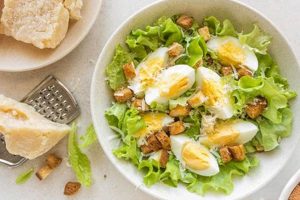
Avocado egg salad serves as a versatile salad topper, adding a protein-rich and flavorful element to mixed greens. Its creamy texture complements the crispness of lettuce and other vegetables. This application offers a lighter alternative to traditional sandwich fillings while providing a substantial and satisfying meal. Examples include incorporating the salad into a Cobb salad or a simple garden salad, enhancing both nutritional value and flavor complexity. This approach demonstrates the salad’s adaptability and its potential to enrich existing dishes.
- Stuffed Vegetables and Deviled Eggs
Expanding beyond traditional applications, avocado egg salad can be used as a filling for hollowed-out vegetables like tomatoes or bell peppers. This creates visually appealing and flavorful appetizers or side dishes. Similarly, incorporating the avocado mixture into deviled eggs adds a creamy richness and a healthy twist to a classic recipe. These variations highlight the versatility of the salad and its potential for creative culinary adaptations. Practical examples include using different colored bell peppers for visual appeal or adding a sprinkle of smoked paprika to deviled eggs for a smoky flavor dimension.
These diverse serving suggestions demonstrate the adaptability of avocado egg salad, transforming it from a basic recipe into a versatile culinary building block. The choice of serving style influences not only the presentation but also the overall flavor profile and dining experience. This understanding empowers individuals to explore creative culinary applications, tailoring the dish to specific occasions and preferences. Ultimately, the versatility of avocado egg salad allows for a personalized and enjoyable culinary experience.
Frequently Asked Questions
This section addresses common inquiries regarding the preparation and enjoyment of avocado egg salad.
Question 1: How long can avocado egg salad be stored in the refrigerator?
Properly stored in an airtight container, it typically remains fresh for up to three days. However, discoloration may occur due to avocado oxidation. Adding a thin layer of lemon or lime juice to the surface can help minimize browning.
Question 2: Can other ingredients be added to avocado egg salad?
The recipe welcomes customization. Common additions include chopped red onion, celery, crumbled bacon, or various herbs and spices. Incorporating ingredients like chopped jalapeos or a dash of hot sauce introduces an element of heat.
Question 3: What type of bread is best suited for avocado egg salad sandwiches?
A variety of breads complement this salad. Whole wheat, sourdough, rye, and multigrain breads provide a hearty base. Croissants or wraps offer a lighter alternative. Ultimately, bread selection depends on individual preference.
Question 4: Is avocado egg salad healthy?
The dish offers nutritional benefits. Avocados provide healthy fats, fiber, and vitamins. Eggs are a source of protein and essential nutrients. However, added ingredients like mayonnaise can impact overall nutritional content. Using Greek yogurt as a substitute for mayonnaise reduces fat and calories.
Question 5: Can this recipe be made vegan?
While the traditional recipe contains eggs, vegan adaptations exist. Mashed chickpeas or tofu can substitute for eggs, retaining a similar texture and providing plant-based protein. Nutritional yeast adds a cheesy flavor profile reminiscent of traditional egg salad.
Question 6: How can browning of the avocado be prevented after preparation?
Limiting exposure to air minimizes browning. Storing the salad in an airtight container with a layer of plastic wrap pressed directly onto the surface helps prevent oxidation. Adding a squeeze of lemon or lime juice also acts as a preservative.
Careful preparation and proper storage techniques maximize the enjoyment and longevity of this versatile dish.
The following section offers a collection of recipe variations for further exploration.
Avocado Egg Salad Recipe
Exploration of this recipe reveals a dish offering both nutritional value and culinary versatility. Careful ingredient selection, precise preparation techniques, and balanced seasoning are crucial for maximizing flavor and texture. From ripe avocados and properly cooked eggs to the nuanced use of mayonnaise and the incorporation of textural contrasts, each component contributes to the final product’s overall quality. Serving options range from classic sandwiches to innovative salad toppers and stuffed vegetables, showcasing the recipe’s adaptability.
Avocado egg salad represents more than a simple combination of ingredients; it embodies a culinary synergy where individual components harmonize to create a greater whole. This understanding empowers culinary exploration and encourages informed decision-making throughout the preparation process. The potential for customization allows for personalized variations catering to individual preferences and dietary needs. This dish offers a canvas for culinary creativity, inviting further experimentation and a deeper appreciation for the interplay of flavors and textures.