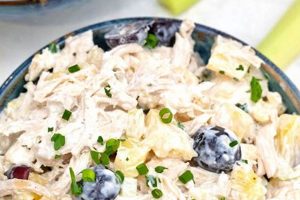
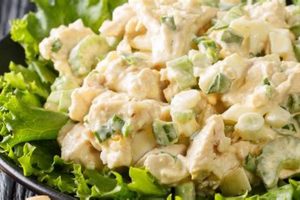
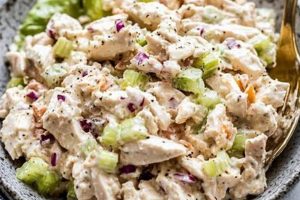
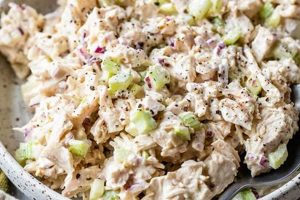
A chicken salad featuring the classic Waldorf elementstypically apples, celery, grapes, and walnutsdistinguishes this dish. Variations may include dried cranberries or other fruits, and the dressing often incorporates mayonnaise, sometimes with yogurt or sour cream for a lighter texture. Emphasis is placed on the freshness of ingredients, suggesting a preparation style that prioritizes high-quality, seasonal produce. An example would be a salad using crisp, locally-sourced apples, freshly chopped celery, and ripe, juicy grapes, bound with a homemade mayonnaise dressing.
This style of salad offers a balance of sweet, savory, and crunchy textures, creating a complex and satisfying meal. Its versatility makes it suitable for various occasions, from a light lunch to a picnic or potluck contribution. Historically, the Waldorf salad originated in the late 19th century at the Waldorf-Astoria Hotel in New York City. The chicken variation builds upon this classic foundation, adding a protein element to create a more substantial dish. The emphasis on market-fresh ingredients elevates the experience, highlighting the natural flavors of the components.
Further exploration could delve into specific ingredient choices and their impact on flavor profiles, various dressing options, and techniques for achieving optimal texture and presentation. Nutritional information, variations suitable for dietary restrictions, and suggested pairings with other dishes or beverages are additional avenues for a more comprehensive understanding.
Tips for a Superior Waldorf Chicken Salad
Optimizing the preparation of this classic dish involves careful consideration of ingredients and technique. The following tips offer guidance for achieving a salad with balanced flavors, pleasing textures, and an appealing presentation.
Tip 1: Ingredient Selection is Paramount: Opt for crisp, in-season apples like Fuji, Honeycrisp, or Pink Lady. Select celery stalks that are firm and free of blemishes. Ensure grapes are plump and flavorful. Using fresh, high-quality ingredients elevates the final product.
Tip 2: Roasting the Chicken Enhances Flavor: Roasting chicken specifically for the salad, rather than using pre-cooked or deli chicken, imparts deeper flavor. Season the chicken simply with salt, pepper, and herbs before roasting.
Tip 3: Dice Ingredients Uniformly: Consistent sizing of the chicken, apples, celery, and grapes ensures even distribution of flavors and textures throughout the salad. Aim for pieces roughly to inch in size.
Tip 4: Toast the Walnuts: Briefly toasting the walnuts intensifies their nutty flavor and adds a pleasant crunch. Toast them in a dry pan over medium heat until fragrant.
Tip 5: Dressing Considerations: While mayonnaise is traditional, consider incorporating Greek yogurt or sour cream for a lighter, tangier dressing. A touch of lemon juice or apple cider vinegar can brighten the flavors.
Tip 6: Avoid Overmixing: Gently combine the ingredients to prevent the apples from becoming mushy and the grapes from bursting. A light hand ensures a pleasant textural contrast.
Tip 7: Chill Before Serving: Chilling the salad allows the flavors to meld and enhances the refreshing qualities of the dish. Allow at least 30 minutes of chilling time before serving.
By following these tips, one can create a Waldorf chicken salad that showcases the fresh, vibrant flavors of its components. Attention to detail, from ingredient selection to chilling time, contributes to a truly exceptional culinary experience.
These practical suggestions pave the way for a successful preparation, leading to a dish that is both visually appealing and delectable. The following section will provide a sample recipe incorporating these tips.
1. Fresh, Seasonal Ingredients

The emphasis on “fresh market” within the Waldorf chicken salad recipe underscores the importance of ingredient seasonality and quality. Utilizing produce at its peak ripeness significantly impacts the overall flavor, texture, and nutritional value of the final dish. Sourcing ingredients from local markets or farmers’ markets, when possible, further enhances this connection to freshness.
- Apples:
Apples provide sweetness and a satisfying crunch. Varieties like Honeycrisp, Pink Lady, or Fuji, when in season, offer optimal flavor and texture. Choosing locally grown apples ensures peak freshness and supports regional agriculture. Using out-of-season apples can result in a less flavorful and potentially mealy texture, detracting from the salad’s overall quality.
- Grapes:
Grapes contribute a burst of juiciness and sweetness. Selecting plump, in-season grapes, such as Thompson seedless or red grapes at their peak sugar content, enhances the salad’s flavor profile. Out-of-season grapes may lack sweetness and have a less desirable texture.
- Celery:
Celery provides a refreshing crunch and a subtle savory note. Using crisp, firm celery stalks that are in season adds to the textural complexity of the salad. Limp or discolored celery can indicate a lack of freshness and detract from the overall eating experience.
- Walnuts:
Walnuts offer a rich, nutty flavor and a satisfying crunch. Freshly shelled walnuts, preferably sourced locally when available, provide optimal flavor and texture. While not as seasonally dependent as produce, ensuring walnut freshness is key to avoiding rancidity and maximizing flavor contribution.
Prioritizing fresh, seasonal ingredients elevates the Waldorf chicken salad from a simple dish to a culinary experience. The interplay of flavors and textures, heightened by the quality of the components, creates a more vibrant and satisfying final product. Selecting ingredients at their peak ripeness not only maximizes flavor but also contributes to the nutritional value of the salad, aligning with the principles of mindful eating and culinary excellence.
2. Balanced Sweet and Savory Flavors
A defining characteristic of a successful fresh market Waldorf chicken salad lies in the harmonious balance of sweet and savory elements. This balance elevates the dish beyond simple ingredients, creating a complex flavor profile that engages the palate. Careful consideration of each component’s contribution to this balance is essential for crafting a truly exceptional salad.
- Sweetness from Fruit:
The sweetness in a Waldorf salad primarily comes from the fruit componentstraditionally apples and grapes. The natural sugars within these fruits provide a refreshing sweetness that complements the other ingredients. The specific apple variety chosen influences the overall sweetness; Honeycrisp apples offer a robust sweetness, while Granny Smith apples provide a tart contrast. Fresh, in-season fruit heightens this sweetness, as peak ripeness corresponds to higher sugar content. Overly ripe fruit can lead to excessive sweetness, while underripe fruit can introduce unwanted tartness, disrupting the desired balance.
- Savory Notes from Chicken and Nuts:
The savory foundation of the salad is established through the chicken and walnuts. Roasted chicken, seasoned simply, offers a savory depth, while toasted walnuts contribute a nutty richness and subtle bitterness. The quality of the chicken significantly impacts the savory dimension; free-range or organic chicken often possesses a richer, more pronounced savory flavor compared to conventionally raised chicken. The toasting process intensifies the walnuts’ inherent savoriness, further contributing to the overall balance.
- The Balancing Role of the Dressing:
The dressing acts as a bridge, unifying the sweet and savory elements. Traditional mayonnaise-based dressings offer a creamy richness that complements both fruit and chicken. The addition of a touch of acidity, through lemon juice or apple cider vinegar, further enhances the flavor balance, cutting through the richness and brightening the overall profile. The ratio of mayonnaise to other ingredients in the dressing, such as yogurt or sour cream, can also be adjusted to fine-tune the balance and achieve the desired flavor profile.
- The Importance of Seasonality:
The “fresh market” aspect emphasizes the importance of seasonal ingredients. Seasonal fruits are naturally sweeter and more flavorful, contributing to the overall balance more effectively than out-of-season produce. Utilizing in-season ingredients allows for a natural synergy of flavors, where the sweetness of the fruit and the savoriness of the chicken and nuts harmonize without requiring excessive adjustments to the dressing or other components.
The interplay of these elementssweet fruit, savory chicken and nuts, and a balanced dressingdefines the Waldorf chicken salad experience. The careful orchestration of these flavors, achieved through thoughtful ingredient selection and preparation, culminates in a dish that is both refreshing and satisfying. The emphasis on fresh, seasonal ingredients further elevates this balance, showcasing the natural synergy of flavors at their peak.
3. Crunchy and Creamy Textures
Textural contrast is a defining characteristic of a well-executed fresh market Waldorf chicken salad. The interplay of crunchy and creamy elements elevates the dish beyond a simple combination of ingredients, creating a more engaging and satisfying sensory experience. A careful balance of these textures is essential for achieving the desired complexity.
- Sources of Crunch:
The primary contributors to crunch in a Waldorf salad are apples, celery, and walnuts. Apples, particularly varieties like Honeycrisp or Fuji, offer a juicy crispness. Celery contributes a refreshing snap, while toasted walnuts provide a satisfying nutty crunch. The size and shape to which these ingredients are cut influence the intensity of the crunch; larger pieces offer a more pronounced bite, while smaller pieces provide a gentler textural contrast.
- The Creamy Component:
Creaminess is primarily introduced through the dressing, typically mayonnaise-based. The richness and smoothness of mayonnaise coat the other ingredients, providing a textural counterpoint to the crunch. Variations in the dressing, such as incorporating Greek yogurt or sour cream, can subtly alter the creamy texture, offering a lighter, tangier alternative to traditional mayonnaise. The amount of dressing used also influences the overall creaminess of the salad; a higher dressing-to-ingredient ratio results in a creamier, richer experience.
- Balancing Crunch and Cream:
Achieving the ideal balance between crunchy and creamy textures is crucial. Too much crunch can result in a dry, less cohesive salad, while excessive creaminess can mask the individual flavors and textures of the other ingredients. The proportion of crunchy elements (apples, celery, walnuts) to creamy elements (dressing) should be carefully considered to create a harmonious balance. The desired texture can also be influenced by the timing of dressing incorporation; adding the dressing just before serving helps maintain the crispness of the crunchy ingredients.
- Impact of Freshness:
The emphasis on “fresh market” ingredients directly impacts the textural experience. Freshly harvested apples and celery possess a superior crispness compared to older produce. Using fresh, high-quality ingredients enhances both the crunchy and creamy elements, resulting in a more vibrant and satisfying textural contrast. The overall quality of the ingredients significantly influences the perception of freshness, impacting the enjoyment of the salad.
The dynamic interplay between crunchy and creamy textures is fundamental to the Waldorf chicken salad experience. The contrasting sensations create a more engaging and satisfying meal. By thoughtfully considering the sources of crunch and cream, and by prioritizing fresh, high-quality ingredients, one can achieve the optimal textural balance that distinguishes a truly exceptional Waldorf chicken salad.
4. Homemade Mayonnaise Dressing
Homemade mayonnaise stands as a pivotal element within a fresh market Waldorf chicken salad recipe. Its presence extends beyond a simple binding agent; it significantly influences the overall flavor profile, texture, and perceived freshness of the salad. A closer examination of its components, preparation methods, and impact on the final dish reveals its crucial role.
- Control over Ingredients:
Crafting mayonnaise from scratch allows for complete control over ingredient quality and sourcing. Utilizing fresh, high-quality oils, such as extra virgin olive oil or avocado oil, and free-range eggs elevates the flavor profile of the mayonnaise, which directly translates to a more nuanced and flavorful salad. This control also extends to avoiding additives and preservatives commonly found in commercially produced mayonnaise, aligning with the emphasis on fresh, natural ingredients inherent in a market-style Waldorf salad.
- Flavor Customization:
Homemade mayonnaise offers unparalleled flexibility in flavor customization. Adjusting the type of acid usedlemon juice, vinegar, or a combinationallows for tailoring the tanginess to complement the other salad components. Incorporating fresh herbs, such as dill, tarragon, or chives, infuses the mayonnaise with aromatic complexity, further enhancing the overall flavor profile of the salad. This level of customization is difficult to achieve with pre-made mayonnaise, limiting the potential for nuanced flavor development.
- Textural Refinement:
The emulsification process involved in making mayonnaise allows for precise control over its texture. Adjusting the rate of oil addition and the whisking technique influences the final consistency, allowing for a mayonnaise that is perfectly suited to the Waldorf salad. A thicker mayonnaise will cling more readily to the other ingredients, creating a richer, more cohesive salad, while a thinner mayonnaise will offer a lighter, more delicate coating. This level of control is essential for achieving the desired balance of creamy and crunchy textures.
- Enhanced Freshness:
Freshly prepared mayonnaise possesses a vibrancy and flavor unmatched by commercially produced alternatives. The absence of preservatives and stabilizers contributes to a cleaner, brighter flavor that enhances the perception of freshness within the salad. This emphasis on freshness aligns perfectly with the “fresh market” concept, highlighting the importance of using high-quality, minimally processed ingredients.
The choice to incorporate homemade mayonnaise in a fresh market Waldorf chicken salad recipe signifies a commitment to quality and flavor optimization. It demonstrates an understanding of the interconnectedness of ingredients and their impact on the final dish. The ability to control ingredients, customize flavors, refine texture, and enhance freshness through homemade mayonnaise elevates the Waldorf salad from a simple dish to a culinary expression of freshness and flavor.
5. Proper Chilling and Serving

Proper chilling and serving are integral to a successful fresh market Waldorf chicken salad experience. Chilling impacts both food safety and the development of flavors, while serving methods influence presentation and overall enjoyment. The emphasis on “fresh market” underscores the importance of these steps in preserving the quality and enhancing the sensory appeal of the salad.
Chilling allows the flavors of the various componentsapples, grapes, celery, chicken, walnuts, and dressingto meld and harmonize. The cool temperature also enhances the refreshing qualities of the salad, particularly beneficial in warmer weather. From a food safety perspective, chilling inhibits bacterial growth, crucial for maintaining the freshness of a salad containing mayonnaise. Insufficient chilling can lead to flavor degradation and potential health risks. For example, a salad left at room temperature for an extended period may develop off-flavors and become a breeding ground for bacteria, compromising both its taste and safety. Conversely, adequate chilling, typically a minimum of two hours, allows the flavors to deepen while ensuring food safety.
Serving methods further influence the enjoyment of the salad. Presentation options range from classic service in a lettuce cup or on a bed of greens, to more contemporary interpretations such as stuffed in a croissant or avocado half. The chosen serving method should complement the salad’s textures and flavors. For instance, a flaky croissant provides a textural counterpoint to the creamy salad, while a bed of crisp lettuce enhances the refreshing qualities. Consideration should also be given to portion size and accompanying elements. A smaller portion served as an appetizer might be paired with crackers or crudits, while a larger portion served as a main course could be accompanied by a side of fruit or a light soup. Thoughtful presentation elevates the dining experience, transforming a simple salad into a more visually appealing and satisfying meal.
In conclusion, proper chilling and serving techniques are essential for maximizing the enjoyment and safety of a fresh market Waldorf chicken salad. Adequate chilling enhances flavor development and preserves ingredient freshness, while appropriate serving methods optimize presentation and complement the salad’s inherent qualities. Attention to these details underscores the “fresh market” philosophy, emphasizing the importance of respecting and showcasing the quality of the ingredients.
6. Versatile Presentation Options

The versatility of fresh market Waldorf chicken salad extends beyond its ingredient combinations to encompass a wide array of presentation options. This adaptability allows the salad to transition seamlessly from casual lunches to more formal occasions, showcasing its inherent appeal and adaptability. Exploring these varied presentations highlights the connection between culinary creativity and the inherent qualities of this classic dish.
- Classic Presentations:
Traditional presentations emphasize the salad’s fresh, vibrant nature. Serving the salad on a bed of crisp lettuce, such as butter lettuce or romaine, provides a refreshing backdrop that complements the creamy salad. Using endive leaves or radicchio cups offers individual portions with a touch of elegance. These classic approaches highlight the salad’s inherent qualities, allowing the fresh ingredients to take center stage.
- Sandwiches and Wraps:
Waldorf chicken salad readily translates into a satisfying sandwich or wrap filling. Utilizing croissants, whole-wheat bread, or tortillas provides textural variety and portability. Adding crisp lettuce or sliced tomatoes enhances the freshness and textural contrast. These options are ideal for casual meals, picnics, or lunchboxes, showcasing the salad’s adaptability to on-the-go dining.
- Elevated Presentations:
For more formal occasions, Waldorf chicken salad can be presented with a touch of sophistication. Serving it in hollowed-out avocado halves or alongside grilled or poached chicken breasts elevates the dish. Garnishing with toasted nuts, fresh herbs, or edible flowers adds visual appeal. These elevated presentations demonstrate the salad’s versatility in adapting to different dining contexts, highlighting its potential for both casual and elegant occasions.
- Creative Applications:
The salad’s versatility inspires creative applications beyond traditional formats. Using it as a filling for tartlets or phyllo cups creates bite-sized appetizers ideal for parties or gatherings. Serving it alongside grilled fruit, such as pineapple or peaches, offers a sweet and savory contrast. These creative applications demonstrate the salad’s potential for culinary innovation, encouraging exploration of flavor and texture combinations.
The varied presentation options for fresh market Waldorf chicken salad underscore its adaptability and enduring appeal. From classic presentations that highlight the freshness of the ingredients to creative interpretations that showcase its culinary potential, this salad remains a versatile and satisfying dish suitable for a multitude of occasions. The choice of presentation allows for customization based on the specific dining context, further emphasizing the connection between culinary creativity and the inherent qualities of this classic salad.
Frequently Asked Questions
This section addresses common inquiries regarding the preparation and enjoyment of fresh market Waldorf chicken salad, offering clarity and practical guidance.
Question 1: What is the optimal way to store fresh market Waldorf chicken salad?
Storage in an airtight container within a refrigerator at or below 40F (4C) is recommended. Consume within three to five days for optimal quality and food safety. Prompt refrigeration after preparation is crucial for preventing bacterial growth.
Question 2: Can alternative proteins be used in place of chicken?
Turkey, ham, or plant-based alternatives such as chickpeas or tofu offer viable substitutes for chicken. Adjust seasonings to complement the chosen protein source, ensuring flavor compatibility with the other salad components.
Question 3: How can one adapt the recipe for specific dietary restrictions, such as gluten-free or dairy-free?
Gluten-free adaptations involve selecting gluten-free bread or crackers for serving. Dairy-free versions can utilize a plant-based mayonnaise alternative or a dairy-free yogurt in the dressing. Ensure all added ingredients align with the specific dietary needs.
Question 4: What contributes to the “fresh market” designation in this recipe?
The emphasis on “fresh market” denotes the utilization of high-quality, preferably locally sourced, seasonal ingredients. Prioritizing peak-season produce enhances flavor and nutritional value, aligning with the principles of mindful consumption and culinary excellence.
Question 5: What are suitable accompaniments to serve with Waldorf chicken salad?
Complementary pairings include crackers, croissants, crusty bread, fresh fruit slices, or a light green salad. The chosen accompaniment should enhance, not overpower, the flavors of the salad, offering textural and flavor contrasts that elevate the dining experience.
Question 6: Can the walnuts be substituted with other nuts or seeds?
Pecans, almonds, or sunflower seeds offer viable alternatives to walnuts. Consider the flavor profile and texture of the substitute nut or seed to ensure compatibility with the other salad ingredients. Toasting the substitute, as with walnuts, enhances flavor and texture.
Understanding these frequently asked questions provides a more comprehensive grasp of the nuances associated with preparing and enjoying fresh market Waldorf chicken salad. Careful attention to ingredient selection, preparation methods, and storage guidelines ensures a satisfying and safe culinary experience.
The following section will offer a concluding summary of the key aspects discussed throughout this exploration of fresh market Waldorf chicken salad.
Fresh Market Waldorf Chicken Salad Recipe
Exploration of the fresh market Waldorf chicken salad recipe reveals a dish defined by the interplay of fresh, high-quality ingredients, balanced flavors, and contrasting textures. Emphasis on seasonal produce, ideally sourced locally, underscores the commitment to freshness inherent in this culinary creation. From the crisp bite of apples and celery to the sweetness of grapes and the richness of toasted walnuts, each component contributes to a symphony of flavors and textures. The creamy richness of homemade mayonnaise, customizable to individual preferences, binds these elements together, creating a harmonious balance. Proper chilling allows these flavors to meld, while considered presentation elevates the dining experience. Adaptable to various serving styles, from a simple scoop to elegant presentations, the salad’s versatility shines through.
The fresh market Waldorf chicken salad recipe represents more than a mere list of ingredients; it embodies a culinary philosophy centered on quality, freshness, and the celebration of seasonal flavors. This approach encourages culinary exploration and mindful consumption, inviting further experimentation with ingredients and presentations to personalize and elevate the dining experience. The enduring appeal of this classic salad lies in its adaptability and its capacity to showcase the inherent beauty of fresh, seasonal produce.