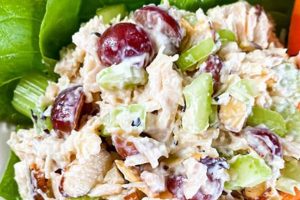
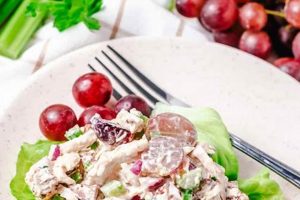
This dish typically combines cooked chicken, often diced or shredded, with walnuts, dried cranberries, and a mayonnaise-based dressing. Variations may include celery, red onion, grapes, or apples, and the dressing can be customized with ingredients like Dijon mustard, lemon juice, or Greek yogurt. It provides a balance of protein, healthy fats, and sweetness, making it a versatile option for sandwiches, wraps, salads, or as a standalone appetizer.
A combination of flavors and textures makes this a popular choice. The savory chicken and crunchy walnuts contrast with the tart cranberries and creamy dressing, creating a complex and satisfying culinary experience. It offers a good source of protein and fiber, and can be a lighter alternative to other, heavier salads. Historically, chicken salad gained popularity in the mid-19th century, with variations incorporating nuts and fruits emerging later as refrigeration and access to diverse ingredients improved.
Further exploration of this subject might include detailed recipe variations, nutritional information, tips for ingredient selection and preparation, suitable serving suggestions, and creative adaptations for different dietary needs.
Tips for a Perfect Walnut Cranberry Chicken Salad
Optimizing ingredient selection and preparation techniques can elevate this dish from simple to exceptional. Attention to detail ensures a balanced flavor profile and pleasing texture.
Tip 1: Chicken Selection: Opt for high-quality cooked chicken. Rotisserie chicken offers convenience, while poaching or grilling boneless, skinless breasts allows for greater control over seasoning and moisture content.
Tip 2: Walnut Toasting: Briefly toasting walnuts enhances their flavor and adds a satisfying crunch. Spread them on a baking sheet and toast in a preheated oven at 350F (175C) for 5-7 minutes, or until fragrant.
Tip 3: Cranberry Choice: Dried cranberries, preferably sweetened with fruit juice rather than added sugar, provide optimal sweetness and tartness. Consider using Craisins or similar dried cranberries.
Tip 4: Dressing Customization: While mayonnaise forms the base, flavor can be enhanced with Dijon mustard, plain Greek yogurt, or a squeeze of lemon juice. Experiment to achieve the desired balance of tanginess and creaminess.
Tip 5: Ingredient Incorporation: Gently fold the ingredients together to prevent overmixing and maintain the integrity of the chicken and other components.
Tip 6: Chilling Time: Allow the salad to chill for at least 30 minutes before serving. This allows the flavors to meld and enhances the overall experience.
Tip 7: Serving Suggestions: Serve the salad on croissants, in wraps, or lettuce cups for a lighter meal. It can also be enjoyed as a standalone appetizer or side dish.
By following these tips, one can consistently create a flavorful and satisfying walnut cranberry chicken salad. Attention to these details ensures a well-balanced and enjoyable culinary experience.
These practical tips ensure a successful outcome and provide a foundation for further culinary exploration.
1. Ingredients
Ingredient selection significantly impacts the overall quality and flavor profile of walnut cranberry chicken salad. Careful consideration of each component contributes to a balanced and satisfying culinary experience. The following facets illustrate the essential role ingredients play in this dish.
- Chicken
Cooked chicken serves as the foundation. Options include rotisserie chicken for convenience, or home-cooked chicken breast for greater control over seasoning. The chicken should be diced or shredded to an appropriate size for optimal texture and integration with other ingredients. Quality and preparation directly influence the final product’s taste and texture.
- Walnuts
Walnuts provide a crucial textural and flavor element. Toasting the walnuts beforehand enhances their natural oils and imparts a richer, nuttier flavor. The crunch of walnuts contrasts pleasantly with the other ingredients. Walnut pieces should be coarsely chopped, not finely ground, to maintain their presence within the salad.
- Cranberries
Dried cranberries introduce a sweet and tart counterpoint to the savory chicken and nuts. The choice of cranberries can significantly impact the sweetness level; cranberries sweetened with fruit juice are generally preferred over those with added sugar. The chewiness of cranberries adds another layer of textural complexity.
- Dressing/Binder
Mayonnaise typically serves as the base for the dressing, adding creaminess and binding the ingredients together. Variations can include Greek yogurt for a lighter option, or the addition of Dijon mustard for tanginess. The dressing contributes significantly to the overall flavor and moisture content of the salad.
The interplay of these core ingredients defines the character of walnut cranberry chicken salad. Consideration of each element’s quality, preparation, and contribution to the overall flavor and texture profile ensures a successful and enjoyable culinary outcome. Harmonizing these components through thoughtful selection and preparation elevates this simple dish to a more refined and satisfying level.
2. Preparation

Preparation methods significantly influence the final quality and enjoyment of walnut cranberry chicken salad. Proper techniques maximize flavor development and ensure a desirable texture. The following facets highlight crucial preparation steps:
- Chicken Preparation
Chicken preparation dictates the salad’s overall texture and flavor. While pre-cooked options like rotisserie chicken offer convenience, cooking chicken specifically for the salad allows control over seasoning and moisture content. Dicing or shredding the chicken into bite-sized pieces ensures even distribution throughout the salad and facilitates a pleasant eating experience. Overcooked, dry chicken will result in a less satisfying final product.
- Walnut Toasting
Toasting walnuts intensifies their inherent nutty flavor and creates a desirable crunch. Spreading walnuts in a single layer on a baking sheet and toasting them briefly in a preheated oven enhances their flavor profile and overall contribution to the salad. This step elevates the sensory experience, adding a depth of flavor often absent when using raw walnuts. Burning or under-toasting can negatively impact the final result.
- Ingredient Combining
The method of combining ingredients impacts the salad’s final texture. Gently folding the ingredients together prevents the chicken from shredding further and maintains the integrity of the other components. Overmixing can lead to a mushy texture, diminishing the desirable contrast between the crunchy walnuts, tender chicken, and chewy cranberries. Careful attention to this step preserves the individual character of each ingredient.
- Chilling and Resting
Chilling the prepared salad allows the flavors to meld and enhances the overall experience. Allowing the salad to rest in the refrigerator for at least 30 minutes before serving allows the flavors to harmonize, resulting in a more balanced and cohesive taste. This step is crucial for optimal flavor development and enjoyment.
Careful attention to each preparation step contributes significantly to the final quality of walnut cranberry chicken salad. Proper execution of these techniques ensures a harmonious blend of flavors and textures, resulting in a more satisfying culinary experience. These foundational steps form the basis for a successful and enjoyable dish.
3. Flavor Balance

Flavor balance is paramount in a successful walnut cranberry chicken salad recipe. A harmonious interplay of sweet, savory, tart, and rich elements elevates this dish beyond a simple combination of ingredients. Careful consideration of each component’s flavor profile and its contribution to the overall balance is essential for a satisfying culinary outcome.
- Sweetness of Cranberries
Dried cranberries provide the primary sweetness. The type of cranberry used influences the overall sweetness; cranberries sweetened with fruit juice offer a more balanced sweetness compared to those with added sugar. The sweetness of the cranberries plays a crucial role in offsetting the savory elements and contributing to the complexity of the flavor profile. Too much sweetness can overpower the other flavors, while too little can result in a bland salad.
- Savory Chicken
The chicken provides the savory base. The cooking method and any added seasonings influence the chicken’s flavor contribution. Plain, cooked chicken allows the other flavors to shine, while seasoned chicken can add another layer of complexity. The savory element grounds the sweetness and tartness, preventing the salad from becoming overly sweet or acidic. Proper seasoning enhances the savory notes without overwhelming the delicate balance.
- Tartness and Acidity
The tartness primarily comes from the cranberries, but can be further enhanced by adding a squeeze of lemon juice or a splash of apple cider vinegar to the dressing. This tartness provides a refreshing counterpoint to the richness of the nuts and the sweetness of the cranberries. The level of tartness should be carefully balanced to avoid an overly acidic or sharp taste. This acidity brightens the overall flavor profile, preventing it from becoming heavy or cloying.
- Richness of Walnuts
Walnuts contribute a rich, nutty flavor and satisfying crunch. Toasting the walnuts beforehand intensifies their flavor and enhances their textural contribution. This richness complements the other flavors, adding depth and complexity. The walnuts’ richness also balances the lighter elements, creating a more complete and satisfying flavor profile.
The interplay of these flavor components defines the overall balance and complexity of walnut cranberry chicken salad. A successful recipe hinges on the harmonious integration of these elements, resulting in a dish that is both refreshing and satisfying. The careful balancing of these flavors ensures a dynamic and enjoyable culinary experience, preventing any single flavor from dominating and creating a harmonious whole.
4. Texture Contrast
Textural contrast significantly contributes to the enjoyment of walnut cranberry chicken salad. The interplay of various textures creates a more dynamic and satisfying sensory experience. Understanding the role of each ingredient’s texture enhances appreciation for this dish’s complexity.
- Crunchy Walnuts
Walnuts provide a crucial textural element. Toasting enhances their inherent crunch, contrasting with the softer ingredients. This crispness adds a satisfying dimension, preventing the salad from becoming overly homogenous. The size of the walnut pieces also influences the textural experience; coarsely chopped pieces offer more pronounced crunch than finely ground ones.
- Tender Chicken
The chicken, whether diced or shredded, offers a tender contrast to the crunchy walnuts. The cooking method influences the chicken’s texture; poaching or grilling yields a more tender result than, for instance, pan-frying. The tenderness of the chicken balances the other textures, creating a harmonious mouthfeel.
- Chewy Cranberries
Dried cranberries contribute a chewy texture, distinct from both the walnuts and the chicken. This chewiness adds another layer of complexity, preventing the salad from becoming one-dimensional. The moisture content of the cranberries also plays a role; overly dry cranberries can be less palatable.
- Creamy Dressing
The creamy dressing, typically mayonnaise-based, binds the ingredients together and provides a smooth counterpoint to the other textures. The dressing’s consistency influences the overall textural experience; a thicker dressing provides a more substantial mouthfeel, while a thinner dressing creates a lighter, more delicate sensation.
The interplay of these texturescrunchy, tender, chewy, and creamyelevates walnut cranberry chicken salad from a simple mixture to a multi-dimensional culinary experience. The careful balance of these textural elements ensures a satisfying and enjoyable dish, highlighting the importance of texture contrast in achieving a well-rounded and appealing final product.
5. Nutritional Value
Nutritional value represents a key consideration within any recipe, and walnut cranberry chicken salad offers a profile worth exploring. Understanding the nutritional contributions of individual ingredients provides insights into the overall health benefits and dietary implications of this dish. Analyzing its nutritional composition allows for informed choices regarding portion sizes and dietary adaptations.
- Protein Content
Chicken, the foundational ingredient, provides a substantial amount of lean protein. Protein plays a crucial role in building and repairing tissues, supporting immune function, and maintaining satiety. The protein content makes this salad a suitable choice for those seeking to increase their protein intake, supporting muscle growth and overall health. The specific protein content varies based on the chicken preparation method and the amount used in the recipe.
- Healthy Fats
Walnuts contribute healthy fats, specifically omega-3 fatty acids. These fats offer various health benefits, including supporting heart health, reducing inflammation, and promoting brain function. Including walnuts in this salad enhances its nutritional value beyond basic protein and carbohydrate content. The quantity of walnuts influences the overall fat content and the balance of omega-3s.
- Fiber Contribution
Both cranberries and walnuts provide dietary fiber. Fiber aids in digestion, promotes regularity, and contributes to feelings of fullness. Adequate fiber intake supports digestive health and can assist in managing weight. The amount of fiber varies depending on the specific ingredients and their proportions within the salad.
- Micronutrients and Antioxidants
Cranberries are a source of antioxidants, specifically Vitamin C and other polyphenols. These compounds protect cells from damage caused by free radicals and contribute to overall health and well-being. While not a primary source of micronutrients, the cranberries’ contribution adds to the salad’s overall nutritional value.
The combined nutritional contributions of chicken, walnuts, and cranberries create a salad that offers more than just satisfying flavor and texture. Understanding the nutritional value allows individuals to appreciate this dish as a part of a balanced diet. Further nutritional considerations include variations in dressing ingredients and portion sizes, which can be adjusted to meet individual dietary needs and preferences. Analyzing the nutritional profile underscores the potential health benefits of incorporating this dish into a balanced dietary plan.
6. Serving options

Serving options significantly influence the overall dining experience of walnut cranberry chicken salad. The chosen presentation method affects not only visual appeal but also complements the salad’s flavor profile and textural complexity. Adapting serving styles expands the versatility of this dish, making it suitable for various occasions, from casual lunches to more formal gatherings. Understanding the range of serving options allows for a more tailored and enjoyable culinary experience.
- Sandwiches and Wraps
Serving the salad in sandwiches or wraps offers a classic and convenient approach. Croissants, whole-wheat bread, or tortillas provide a neutral canvas that complements the salad’s flavors and textures. Sandwiches and wraps offer portability, making them ideal for lunches or picnics. The choice of bread or wrap can further enhance the overall flavor profile, for instance, a buttery croissant adds richness, while a whole-wheat wrap contributes a subtle nuttiness.
- Salads and Lettuce Cups
Using the chicken salad as a topping for mixed greens or as a filling for lettuce cups presents a lighter and more refreshing option. This approach emphasizes the salad’s lighter aspects and caters to those seeking a lower-carbohydrate or calorie-conscious meal. The crispness of lettuce complements the creamy salad, providing a textural contrast. Adding other vegetables to the greens further enhances nutritional value and flavor complexity.
- Appetizers and Snacks
Serving smaller portions of the salad on crackers, endive leaves, or cucumber rounds transforms it into an elegant appetizer or snack. This presentation is well-suited for parties or gatherings, allowing for easy portioning and consumption. Garnishing with fresh herbs or a sprinkle of chopped nuts elevates the visual appeal. This approach highlights the salad’s versatility beyond traditional meal contexts.
- Stuffed Dishes
Incorporating the chicken salad as a stuffing for tomatoes, avocados, or baked potatoes presents a more substantial and creative serving option. This method offers a unique presentation and allows for a more complex interplay of flavors and textures. The addition of other ingredients within the stuffed dish can further complement the chicken salad, creating a more complete and satisfying meal.
The versatility of walnut cranberry chicken salad allows for a range of serving options that cater to various preferences and occasions. From the convenience of sandwiches to the elegance of appetizers, the chosen serving method significantly enhances the overall dining experience. Consideration of these options ensures a presentation that best complements the salad’s unique flavors and textures, maximizing enjoyment and showcasing its adaptability.
7. Dietary Adaptations

Dietary adaptations play a crucial role in expanding the accessibility and inclusivity of walnut cranberry chicken salad recipes. Modifying ingredients or preparation methods allows individuals with specific dietary needs or preferences to enjoy this dish without compromising flavor or satisfaction. Understanding the potential for adaptation empowers individuals to tailor the recipe to various dietary restrictions, including gluten-free, dairy-free, low-fat, or vegetarian/vegan diets. This adaptability ensures that the recipe remains a versatile and enjoyable option for a wider audience.
For those following a gluten-free diet, using gluten-free bread or crackers when serving the salad as a sandwich or appetizer ensures compliance without sacrificing enjoyment. Substituting the mayonnaise with plain Greek yogurt or a dairy-free alternative, such as avocado mayonnaise, caters to dairy-free requirements. Reducing the amount of mayonnaise or using a light mayonnaise reduces overall fat content, aligning with low-fat dietary goals. Replacing the chicken with chickpeas or cooked lentils offers a vegetarian or vegan adaptation, maintaining the salad’s core flavor profile while adhering to plant-based principles. These examples illustrate the practical application of dietary adaptations to create inclusive and accessible versions of the recipe.
Adapting walnut cranberry chicken salad recipes highlights the importance of inclusivity in culinary practices. Addressing dietary restrictions expands the recipe’s reach, allowing a wider range of individuals to enjoy a flavorful and satisfying dish. While adaptations require careful consideration of ingredient substitutions and their impact on overall flavor and texture, the potential benefits in terms of inclusivity and dietary compliance are significant. The ability to adapt this classic recipe underscores its versatility and enduring appeal in diverse culinary landscapes.
Frequently Asked Questions
This section addresses common inquiries regarding walnut cranberry chicken salad, providing concise and informative responses to facilitate a deeper understanding of the recipe and its variations.
Question 1: Can the walnuts be omitted for those with nut allergies?
Walnuts contribute significantly to the flavor and texture profile. While omission is possible, it alters the intended balance. Sunflower seeds or pumpkin seeds can offer a comparable crunch, though the flavor profile will differ. Careful consideration of alternative ingredients is recommended to maintain a balanced outcome.
Question 2: What is the best way to store leftover salad?
Storing the salad in an airtight container in the refrigerator maintains optimal freshness for up to three days. Prompt refrigeration after preparation minimizes bacterial growth and preserves quality. Consuming the salad within this timeframe ensures food safety and optimal flavor.
Question 3: Can canned chicken be used instead of fresh or rotisserie chicken?
While canned chicken offers convenience, its texture and flavor differ significantly from fresh or rotisserie chicken. Canned chicken tends to be drier and may impart a slightly metallic taste. If using canned chicken, rinsing it thoroughly and opting for a higher-quality brand can mitigate these differences. Fresh or rotisserie chicken generally provides a more desirable outcome.
Question 4: How can the sweetness level be adjusted?
The sweetness primarily derives from the dried cranberries. Using cranberries sweetened with fruit juice rather than added sugar offers a more balanced sweetness. Adjusting the quantity of cranberries used directly impacts the overall sweetness level. Adding a squeeze of lemon juice can balance excessive sweetness.
Question 5: Is it possible to make this salad ahead of time for a large gathering?
Preparing the salad a day in advance is feasible. Storing it in an airtight container in the refrigerator allows the flavors to meld. Adding the walnuts shortly before serving maintains their optimal crunch. This approach facilitates efficient preparation for larger gatherings without compromising quality.
Question 6: Can this salad be frozen?
Freezing is not recommended. Mayonnaise-based dressings tend to separate upon thawing, negatively affecting the texture and overall quality of the salad. Freezing also alters the texture of the other ingredients, compromising the intended balance and freshness.
Addressing these common inquiries provides clarity and guidance for preparing and enjoying walnut cranberry chicken salad. Careful consideration of ingredient selection, preparation methods, and storage practices ensures a successful culinary experience.
This information provides a comprehensive foundation for exploring further recipe variations and serving suggestions.
Walnut Cranberry Chicken Salad Recipe
Exploration of this recipe reveals a dish characterized by a careful balance of flavors and textures. From the selection of fresh ingredients to the nuanced interplay of sweet cranberries, savory chicken, crunchy walnuts, and creamy dressing, each component contributes to the overall culinary experience. Proper preparation techniques, including toasting the walnuts and gently combining ingredients, further enhance the final product. Nutritional considerations highlight the presence of lean protein, healthy fats, and dietary fiber, positioning this salad as a healthful and satisfying meal option. The adaptability of the recipe to various dietary restrictions, achieved through ingredient substitutions, underscores its versatility and inclusivity. Finally, the diverse serving suggestions, ranging from classic sandwiches to elegant appetizers, showcase the adaptability of this dish to various occasions and preferences.
Walnut cranberry chicken salad represents more than a simple combination of ingredients; it embodies a culinary synthesis of flavor, texture, and nutrition. Further exploration and experimentation with ingredient variations and serving presentations offer opportunities to personalize this classic dish, ensuring its continued enjoyment across diverse culinary landscapes. The enduring appeal of this salad lies in its balanced profile and adaptability, inviting culinary creativity and promising a consistently satisfying dining experience.