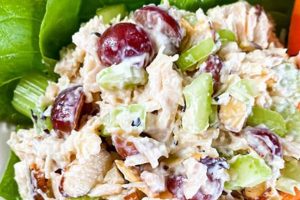
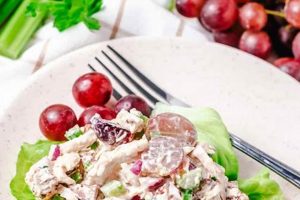
A superior chicken salad transcends basic ingredients. It involves careful selection of high-quality components, thoughtful flavor combinations, and meticulous preparation. This could include using free-range chicken, fresh herbs, artisanal mayonnaise, and unique additions like toasted nuts, dried fruits, or gourmet cheeses. An exemplary version might feature roasted chicken breast with grapes, tarragon, and a Dijon mustard-based dressing.
Elevating this classic dish offers a more satisfying culinary experience. The use of premium ingredients provides enhanced flavor and texture. Furthermore, a well-crafted salad can impress guests, elevate a simple lunch, or become a signature dish for potlucks and gatherings. While the basic combination of chicken and mayonnaise has a long history, modern interpretations continue to evolve, incorporating global influences and innovative techniques.
The following sections will delve into specific techniques and variations for creating exceptional chicken salads, covering ingredient selection, preparation methods, and presentation suggestions.
Tips for an Exceptional Chicken Salad
Creating a truly remarkable chicken salad requires attention to detail and a focus on quality. These tips offer guidance on elevating this classic dish.
Tip 1: Prioritize Chicken Quality: Opting for high-quality chicken, such as free-range or organic, significantly impacts the final flavor and texture. Roasting or grilling the chicken, rather than boiling, enhances its depth of flavor.
Tip 2: Balance Mayonnaise: Mayonnaise serves as the binder, but excessive amounts can overwhelm other flavors. Start with a smaller quantity and add more as needed to achieve the desired consistency.
Tip 3: Incorporate Fresh Herbs: Fresh herbs provide brightness and complexity. Tarragon, dill, chives, and parsley are excellent choices. Adding herbs just before serving preserves their vibrancy.
Tip 4: Add Textural Contrast: Consider incorporating ingredients that offer textural variety. Toasted nuts, such as pecans or walnuts, chopped celery, or grapes can add satisfying crunch and dimension.
Tip 5: Experiment with Flavor Profiles: Explore different flavor combinations by incorporating ingredients like dried cranberries, curry powder, or chopped apples. A touch of Dijon mustard or a squeeze of lemon juice can add brightness.
Tip 6: Season Thoughtfully: Proper seasoning is crucial. Freshly ground black pepper and sea salt are essential. Taste and adjust seasoning as needed throughout the preparation process.
Tip 7: Chill Thoroughly: Chilling the salad allows the flavors to meld and enhances the overall experience. Cover and refrigerate for at least 30 minutes before serving.
By following these guidelines, one can achieve a chicken salad that is both flavorful and memorable, exceeding expectations and offering a truly delightful culinary experience.
These tips provide a solid foundation for crafting a truly exceptional chicken salad. The following section will explore various serving suggestions and presentation ideas.
1. High-quality Chicken

High-quality chicken forms the cornerstone of a truly exceptional chicken salad. The chicken’s flavor and texture directly influence the final product’s overall quality. Tender, flavorful chicken elevates the salad, while dry, bland chicken results in a disappointing dish. Consider the difference between a salad made with freshly roasted, free-range chicken breast and one made with pre-cooked, processed chicken. The former offers a depth of flavor and succulence absent in the latter. This distinction highlights the crucial role of chicken quality in achieving a five-star result. The inherent flavor of the chicken permeates the entire salad, impacting how other ingredients interact and contribute to the overall taste profile.
Selecting high-quality chicken involves considering factors beyond simple labels. Free-range or organic chickens, raised in more natural environments, often exhibit richer, more complex flavors. The cooking method also plays a significant role. Roasting or grilling enhances the chicken’s natural flavors, creating a depth that boiling or poaching cannot replicate. Furthermore, using bone-in chicken during cooking contributes to a more flavorful and moist final product, even after the bones are removed. These nuances, often overlooked, can significantly elevate the final dish, transforming it from ordinary to extraordinary.
Prioritizing high-quality chicken represents a fundamental step towards achieving a five-star chicken salad. It establishes a strong flavor foundation upon which other ingredients can build. This attention to detail, from sourcing to preparation, ensures a final product that delivers a truly satisfying culinary experience. While other ingredients contribute, the chicken remains central, influencing the overall success of the dish. Investing in superior chicken is an investment in the overall quality and enjoyment of the final product.
2. Flavorful Enhancements
Flavorful enhancements distinguish a standard chicken salad from an exceptional one. These additions contribute complexity, depth, and balance, transforming a simple mixture into a culinary delight. Strategic incorporation of complementary flavors elevates the overall sensory experience, crucial for achieving a truly five-star result.
- Fresh Herbs:
Fresh herbs provide brightness and aromatic complexity. Chives offer a subtle onion flavor, while tarragon lends a distinctive anise note. Parsley contributes a clean, fresh taste, and dill introduces a slightly tangy, grassy element. The choice of herbs significantly influences the final flavor profile, allowing for customization based on personal preference and desired outcome. Fresh herbs should be added just before serving to maximize their impact and prevent wilting.
- Fruits and Nuts:
Incorporating fruits and nuts introduces textural contrast and complementary flavors. Sweet grapes offer a juicy burst, while dried cranberries provide a chewy sweetness with a hint of tartness. Toasted pecans or walnuts contribute a satisfying crunch and nutty depth. The combination of textures and flavors creates a more dynamic and engaging culinary experience.
- Spices and Zests:
Subtle additions of spices and zests can significantly elevate the flavor profile. A pinch of curry powder introduces warmth and complexity, while a touch of smoked paprika adds a smoky depth. Lemon zest provides a bright, citrusy lift, and a grating of fresh ginger offers a subtle warmth and spice. These nuanced additions create layers of flavor, transforming the salad from simple to sophisticated.
- Gourmet Additions:
Elevating the chicken salad further involves incorporating gourmet ingredients. Crumbled artisanal cheeses, such as blue cheese or goat cheese, introduce pungent and tangy notes. High-quality capers offer a briny, salty burst, and a drizzle of truffle oil imparts a luxurious aroma and earthy flavor. These additions create a more complex and refined flavor profile, befitting a five-star designation.
The careful selection and combination of these flavorful enhancements are essential for achieving a five-star chicken salad. They move beyond basic ingredients, adding depth, complexity, and balance to create a dish that is both delicious and memorable. These enhancements contribute not only to the overall flavor but also to the textural and aromatic experience, ensuring a truly satisfying culinary creation.
3. Balanced Seasonings

Balanced seasonings are fundamental to a five-star chicken salad recipe. They elevate the dish beyond basic flavors, creating a harmonious blend that enhances the quality of each ingredient. Seasoning is not merely about adding salt and pepper; it’s about a nuanced approach that considers the interplay of flavors and the overall desired taste profile.
- Salt:
Salt is essential for enhancing the natural flavors of the chicken and other ingredients. However, excessive salt can overwhelm the palate and mask subtle nuances. The correct amount of salt amplifies the existing flavors without dominating them. Sea salt, with its mineral complexity, is often preferred over table salt for its ability to enhance the overall flavor profile more subtly.
- Pepper:
Freshly ground black pepper adds depth and complexity. Its subtle heat and aromatic notes complement the richness of the chicken and other ingredients. Pre-ground pepper often lacks the vibrancy and depth of freshly ground peppercorns, making the latter essential for a truly five-star experience. Different varieties of peppercorns, such as white, pink, or green peppercorns, offer unique flavor profiles that can further enhance the dish.
- Acidity:
A touch of acidity brightens the flavors and balances the richness of the mayonnaise. A squeeze of lemon juice or a splash of apple cider vinegar can cut through the fattiness, creating a more refreshing and balanced taste. The acidity also helps to preserve the freshness of the salad. The type of acid used can influence the overall flavor profile, with lemon providing a brighter, citrusy note and vinegar offering a tangier element.
- Aromatics:
Incorporating aromatic ingredients enhances the complexity of the seasoning profile. A small amount of finely minced onion or shallot adds a subtle savory note. A pinch of garlic powder or a touch of grated fresh garlic introduces a pungent depth. These aromatics complement the other seasonings, creating a more layered and nuanced flavor experience. The careful balance of these aromatics prevents them from overpowering the delicate flavors of the chicken and other ingredients.
The careful balance of these seasonings is paramount in achieving a five-star chicken salad. Over-seasoning can mask the delicate flavors of the ingredients, while under-seasoning results in a bland and uninspired dish. The goal is to create a harmonious blend where each seasoning enhances the others, resulting in a complex and satisfying flavor profile that elevates the overall culinary experience.
4. Textural Variety

Textural variety is a defining characteristic of a five-star chicken salad. It elevates the dish beyond a homogenous mixture, engaging the palate with a dynamic interplay of contrasting sensations. This complexity contributes significantly to a more satisfying and memorable culinary experience. A monotonous texture, regardless of flavor, can lead to palate fatigue, diminishing enjoyment. Conversely, a well-executed range of textures keeps each bite interesting, encouraging continued appreciation of the dish.
Consider the difference between a chicken salad composed solely of finely chopped chicken and mayonnaise and one that incorporates coarsely chopped celery, toasted pecans, and crisp grapes. The latter offers a more engaging experience, contrasting the creamy smoothness of the mayonnaise with the crunch of nuts and celery and the juicy burst of grapes. This textural diversity prevents the salad from becoming monotonous, ensuring each bite delivers a complex and satisfying interplay of sensations. Furthermore, textural contrast enhances the perception of flavor, allowing individual ingredients to stand out while contributing to the overall harmony of the dish.
Achieving optimal textural variety requires careful consideration of ingredient selection and preparation. Dicing ingredients uniformly creates a predictable, potentially uninteresting texture. Varying the size and shape of ingredients introduces complexity. Consider incorporating slivered almonds alongside chopped celery, or adding halved grapes with crumbled bacon. The interplay of these different shapes and sizes amplifies the textural experience. Roasting nuts before adding them intensifies their crunch, further contributing to the overall textural contrast. Ultimately, strategic attention to texture elevates chicken salad from simple to sophisticated, reflecting the hallmark of a truly five-star culinary creation.
5. Fresh Ingredients

Fresh ingredients are paramount in achieving a five-star chicken salad recipe. The quality and freshness of each component directly impact the overall flavor, texture, and aroma of the final dish. Consider the difference between a salad made with freshly roasted chicken versus one using pre-cooked, packaged chicken. The freshly roasted chicken offers superior flavor and texture, contributing significantly to a more desirable outcome. Similarly, using fresh herbs, like vibrant parsley or fragrant dill, compared to dried counterparts, yields a brighter, more nuanced flavor profile. The volatile oils in fresh herbs provide a complexity and depth that dried herbs often lack. Freshly squeezed lemon juice offers a clean, vibrant acidity that bottled lemon juice cannot replicate. These distinctions underscore the crucial role of fresh ingredients in elevating a chicken salad to a five-star level. The inherent vibrancy of fresh ingredients translates to a more flavorful, aromatic, and texturally satisfying experience.
The impact of fresh ingredients extends beyond individual flavors. Fresh components interact synergistically, creating a more complex and harmonious overall taste. For example, fresh celery provides a crisp, clean flavor and satisfying crunch that complements the richness of the chicken and mayonnaise. Freshly chopped grapes add a juicy sweetness that balances the savory elements, enhancing the overall flavor profile. The use of fresh ingredients contributes not only to enhanced flavor but also to improved texture and aroma, crucial factors in a truly exceptional chicken salad. A salad made with wilted herbs or stale bread will inevitably fall short of five-star quality, regardless of other efforts. The emphasis on freshness reflects a commitment to quality and an understanding of the transformative impact of superior ingredients.
Prioritizing fresh ingredients demonstrates a commitment to culinary excellence. While convenience often dictates the use of pre-prepared or processed ingredients, a five-star chicken salad demands the superior quality that only fresh components can deliver. This commitment translates into a final product with superior flavor, texture, and aroma, justifying the extra effort involved in sourcing and preparing fresh ingredients. The freshness of ingredients directly correlates to the overall quality and enjoyment of the chicken salad, highlighting the essential role of freshness in achieving a truly five-star culinary creation.
6. Proper Chilling

Proper chilling is an often-overlooked but crucial step in crafting a five-star chicken salad. It significantly impacts the final dish’s flavor, texture, and overall quality. Chilling allows the flavors to meld and develop, creating a more cohesive and harmonious taste profile. Furthermore, proper chilling ensures food safety, preventing bacterial growth and maintaining the integrity of the ingredients.
- Flavor Development:
Chilling allows the individual flavors of the ingredients to meld and harmonize. The flavors of the chicken, mayonnaise, herbs, and other additions combine and deepen over time, creating a more complex and balanced taste profile. This melding of flavors distinguishes a hastily prepared salad from one that has been carefully chilled, allowing the ingredients to fully interact and enhance one another.
- Texture Enhancement:
Chilling firms the chicken and other ingredients, improving the overall texture of the salad. This is particularly important for salads containing ingredients like grapes or celery, which can become soggy if not chilled properly. The chilling process creates a more desirable texture, enhancing the overall sensory experience of the dish.
- Food Safety:
Proper chilling is crucial for food safety, especially with mayonnaise-based salads. Chilling inhibits the growth of harmful bacteria, preventing spoilage and ensuring the salad remains safe to consume. Maintaining a safe temperature throughout the preparation and storage process is paramount for protecting against foodborne illnesses.
- Presentation:
A properly chilled chicken salad holds its shape better, facilitating more attractive presentation. This is particularly important for serving the salad in sandwiches, wraps, or on lettuce cups. A chilled salad is less likely to become watery or spread excessively, maintaining its structural integrity and enhancing the visual appeal of the dish.
The impact of proper chilling underscores its importance in creating a truly five-star chicken salad. Chilling is not merely a final step; it is an integral part of the process, contributing significantly to the overall quality and enjoyment of the dish. Neglecting this crucial step compromises the flavor, texture, and safety of the salad, diminishing its potential to reach five-star status. A well-chilled chicken salad demonstrates attention to detail and a commitment to culinary excellence, reflecting the hallmarks of a truly superior culinary creation.
Frequently Asked Questions
This section addresses common inquiries regarding the preparation of exceptional chicken salad.
Question 1: What is the best type of chicken to use?
While various chicken types suffice, using high-quality chicken, such as free-range or organic, yields optimal flavor and texture. Roasting or grilling bone-in chicken enhances flavor, even after bone removal.
Question 2: How can one prevent the salad from becoming too watery?
Excess moisture can stem from several factors, including over-dressing, insufficiently drained ingredients (e.g., canned chicken), or high-water-content vegetables. Using freshly cooked chicken, thoroughly draining ingredients, and starting with less mayonnaise, adding more as needed, can mitigate this issue. Proper chilling also firms the salad and reduces wateriness.
Question 3: What are the best herbs to use?
Fresh herbs like chives, tarragon, parsley, and dill offer distinct flavor profiles. Experimentation is encouraged to determine preferred combinations. Adding herbs just before serving preserves their freshness and vibrancy.
Question 4: How long can chicken salad be stored?
Properly stored in an airtight container in the refrigerator, chicken salad typically lasts 3-5 days. Always observe visual and olfactory cues for spoilage before consumption.
Question 5: Can frozen chicken be used?
While feasible, using frozen chicken can compromise texture, resulting in a less desirable outcome. Thawing and properly draining the chicken are crucial if used. Freshly cooked chicken is generally recommended for optimal flavor and texture.
Question 6: How can one elevate chicken salad beyond basic ingredients?
Incorporating gourmet elements elevates the dish. Consider additions like toasted nuts, dried fruits, artisanal cheeses, or unique spices and zests. High-quality mayonnaise, Dijon mustard, or other flavorful dressings can also enhance the overall experience.
Careful attention to ingredient selection, preparation methods, and storage practices ensures a superior chicken salad. Prioritizing quality and freshness throughout the process contributes significantly to the final product.
The following section offers recipe variations to inspire culinary exploration and customization.
Five Star Chicken Salad Recipe
Achieving a five star chicken salad recipe hinges on a multifaceted approach. Prioritizing high-quality chicken, incorporating flavorful enhancements, achieving balanced seasonings, introducing textural variety, using fresh ingredients, and ensuring proper chilling are crucial elements. Each component contributes significantly to the overall quality, flavor, and enjoyment of the dish. Overlooking any of these aspects can compromise the final outcome, hindering the pursuit of culinary excellence. Careful attention to detail throughout the preparation process is essential for achieving a truly exceptional result.
Elevating chicken salad from a simple dish to a culinary masterpiece requires dedication to quality and a nuanced understanding of flavor interactions. Exploration of diverse ingredients and techniques allows for customization and the creation of signature variations. The pursuit of a five star chicken salad recipe represents a commitment to culinary excellence and the potential to transform a classic dish into a truly memorable experience.