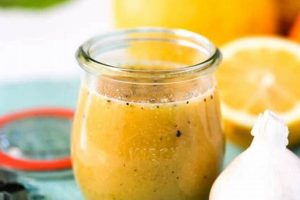
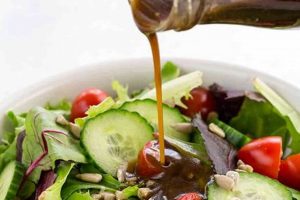
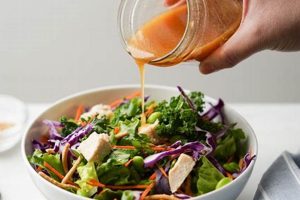
A vibrant and flavorful dressing specifically designed for taco salad typically features a base of oil and vinegar, often incorporating elements reminiscent of classic French dressings. This includes ingredients like Dijon mustard, paprika, chili powder, cumin, and garlic, creating a tangy, savory, and slightly spicy profile that complements the salad’s ingredients. Variations might include the addition of tomato paste, sugar, or lime juice for nuanced flavor adjustments. An exemplary combination would be olive oil whisked with red wine vinegar, Dijon mustard, minced garlic, chili powder, cumin, and a touch of honey.
This specialized dressing elevates a simple taco salad, enhancing the textures and flavors of the components, such as seasoned ground meat, crisp lettuce, crunchy tortilla chips, tomatoes, cheese, and other desired toppings. The right dressing pulls the dish together, providing a cohesive and satisfying culinary experience. The tangy and spicy notes contrast and complement the richness of the meat and cheese, while the emulsion coats the ingredients, distributing flavor evenly throughout. This specialized condiment’s popularity has risen alongside the increasing demand for flavorful, convenient meal options.
The following sections will delve into specific recipe variations, exploring ingredient substitutions and offering tips for achieving optimal flavor balance and texture. Detailed instructions will guide preparation, from basic emulsion techniques to advanced flavor layering.
Tips for Crafting the Perfect Taco Salad French Dressing
Achieving a well-balanced and flavorful taco salad French dressing involves careful consideration of ingredient selection and preparation techniques. The following tips offer guidance for optimal results.
Tip 1: Emulsification is Key: A stable emulsion prevents the dressing from separating, ensuring a consistent flavor and texture. Vigorous whisking or blending is crucial for combining oil and vinegar effectively.
Tip 2: Fresh Ingredients Matter: Using fresh garlic and high-quality spices significantly enhances the dressing’s overall flavor profile. Consider freshly grinding spices for maximum impact.
Tip 3: Balancing Flavor Profiles: Achieving the desired balance between tanginess, sweetness, and spiciness is essential. Adjust ingredients like vinegar, sugar, or honey, and chili powder to suit individual preferences.
Tip 4: Customize with Citrus: A squeeze of fresh lime or lemon juice can brighten the dressing and add a refreshing citrusy note that complements the other flavors.
Tip 5: Consider Texture: Minced or finely grated ingredients contribute to a smoother dressing, while coarsely chopped ingredients add textural complexity. Experiment to find the preferred consistency.
Tip 6: Taste and Adjust: Tasting the dressing throughout the preparation process allows for adjustments based on personal preferences. Incremental additions ensure a well-balanced final product.
Tip 7: Proper Storage: Store leftover dressing in an airtight container in the refrigerator for up to one week. Shake well before serving as some separation may occur.
By following these tips, one can create a taco salad French dressing that elevates the dish, providing a harmonious blend of flavors and textures. The investment in quality ingredients and mindful preparation techniques yields a superior culinary experience.
The following section will provide a comprehensive recipe incorporating these tips, allowing for practical application and further exploration of flavor customization.
1. Flavor Balance

Flavor balance is paramount in a successful taco salad French dressing recipe. A harmonious blend of tastes elevates the dressing beyond a simple condiment, transforming it into a crucial component that unifies the dish. Achieving this balance requires careful consideration of the interplay between various flavor profiles.
- Acidity
The acidity, primarily derived from vinegar, provides a necessary sharpness that cuts through the richness of the other ingredients. This tangy note acts as a counterpoint to the fattiness of the ground meat and the creaminess of the cheese or sour cream often found in taco salads. Too much acidity can make the dressing overly tart, while too little can result in a bland, uninspired flavor.
- Sweetness
A touch of sweetness, often from sugar, honey, or even a hint of tomato paste, tempers the acidity and adds depth. This sweetness doesn’t necessarily translate to an overtly sugary taste but rather rounds out the other flavors, creating a more complex profile. The level of sweetness should be subtle, enhancing the other components rather than dominating them.
- Spiciness
Spiciness, typically from chili powder or other spices like cayenne or chipotle, introduces a welcome heat that complements the savory elements of the taco salad. The level of spiciness should be adjusted according to personal preference, ranging from a mild warmth to a more fiery kick. The heat should enhance, not overwhelm, the overall flavor experience.
- Savory Notes
Savory notes from ingredients like garlic, onion powder, cumin, and paprika provide a grounding element to the dressing. These savory components contribute depth and complexity, complementing the other flavors and enhancing the overall taste experience. Their presence is essential for creating a well-rounded and satisfying dressing.
Mastering the interplay of these four elementsacidity, sweetness, spiciness, and savory notesis crucial for creating a taco salad French dressing that truly elevates the dish. A well-balanced dressing doesn’t just coat the ingredients; it enhances them, creating a cohesive and flavorful experience that satisfies the palate. The ultimate goal is to achieve a symphony of flavors where each component contributes to a harmonious whole.
2. Ingredient Quality

Ingredient quality significantly impacts the final flavor profile of a taco salad French dressing. Utilizing superior components elevates the dressing from satisfactory to exceptional, transforming the entire culinary experience. Subtle nuances in flavor derived from fresh, high-quality ingredients contribute to a more complex and satisfying outcome. The following facets illustrate the crucial role ingredient quality plays in crafting a truly remarkable dressing.
- Fresh Spices
Freshly ground spices offer a more vibrant and pronounced flavor compared to pre-ground alternatives. The volatile oils responsible for the characteristic aromas and tastes of spices degrade over time, resulting in a diminished impact when using pre-ground versions. Freshly ground cumin, chili powder, and paprika contribute significantly to the overall depth and complexity of the taco salad French dressing. The difference in flavor intensity is readily discernible, enhancing the overall sensory experience.
- High-Quality Vinegar
The type of vinegar employed contributes significantly to the dressing’s character. Standard distilled white vinegar provides a sharp, straightforward acidity, while options like red wine vinegar, apple cider vinegar, or even balsamic vinegar introduce nuanced flavors that complement the other ingredients. A high-quality vinegar contributes a depth of flavor beyond mere acidity, enhancing the overall balance and complexity of the dressing.
- Fresh Herbs and Garlic
Incorporating fresh herbs, such as cilantro or oregano, and freshly minced or pressed garlic, adds a vibrant, aromatic dimension to the dressing. Dried herbs can be used as a substitute, but the flavor intensity of fresh herbs offers a significant advantage, providing a brighter, more pronounced taste. This freshness elevates the dressing’s overall profile, adding a layer of complexity that dried herbs often lack.
- Type of Oil
The choice of oil also plays a crucial role in the dressing’s flavor and texture. Extra virgin olive oil offers a robust, fruity flavor, while lighter oils like avocado or grapeseed oil provide a more neutral backdrop that allows the other ingredients to shine. The oil’s flavor and texture contribute significantly to the overall mouthfeel and taste of the finished dressing.
Prioritizing ingredient quality when preparing a taco salad French dressing demonstrates a commitment to flavor excellence. The nuanced flavors derived from fresh, high-quality components create a dressing that elevates the entire dish, transforming a simple salad into a truly memorable culinary experience. By understanding the impact of each ingredient, one can craft a dressing that exemplifies the transformative power of quality components.
3. Emulsification Technique

Emulsification, the process of combining two immiscible liquids like oil and vinegar into a stable mixture, is crucial for a successful taco salad French dressing. A properly emulsified dressing exhibits a smooth, cohesive texture and prevents separation, ensuring consistent flavor distribution throughout the salad. The technique employed directly influences the dressing’s final quality and its ability to enhance the overall dish.
- Temporary vs. Permanent Emulsions
Taco salad French dressings typically involve temporary emulsions. While a temporary emulsion eventually separates, proper technique maximizes its stability during the meal. Permanent emulsions, often achieved with emulsifying agents like egg yolks, are generally not necessary or desirable for this application. The temporary nature allows the dressing to coat the salad ingredients effectively without becoming overly thick or heavy.
- Whisking Method
Whisking is the most common emulsification method for this type of dressing. Slowly adding the oil to the vinegar while vigorously whisking creates small droplets of oil dispersed within the vinegar, forming a temporary emulsion. The continuous agitation disrupts the surface tension between the liquids, facilitating their integration. This method is simple, readily accessible, and effective for achieving the desired consistency.
- Blender Method
Using a blender allows for a quicker and more thorough emulsification, particularly for larger batches. The high-speed blending action creates a finer emulsion, resulting in a smoother, more homogenous texture. This method is particularly advantageous when incorporating ingredients like fresh herbs or garlic, ensuring their even distribution throughout the dressing.
- Factors Affecting Stability
Several factors influence emulsion stability, including the ratio of oil to vinegar, temperature, and the presence of emulsifying agents, though typically not used in this context. A higher proportion of oil to vinegar generally yields a thicker, more stable emulsion. Room temperature ingredients emulsify more readily than cold ingredients. While additional emulsifying agents are not typically required, ingredients like Dijon mustard, often included in the recipe, contribute to a more stable emulsion due to their inherent emulsifying properties.
Effective emulsification ensures the taco salad French dressing clings evenly to the salad components, delivering a consistent flavor experience in every bite. The chosen technique, coupled with an understanding of the factors influencing stability, contributes significantly to the overall success and enjoyment of the dish. A well-emulsified dressing enhances the interplay of flavors and textures, elevating the taco salad from a simple meal to a more refined culinary experience.
4. Texture and Consistency

Texture and consistency play a crucial role in the overall enjoyment of a taco salad French dressing. These attributes influence not only the mouthfeel but also how the dressing interacts with the other salad components. A well-executed dressing exhibits a balance between smoothness and textural interest, complementing rather than overwhelming the other elements of the salad.
- Smoothness vs. Chunkiness
The desired degree of smoothness or chunkiness depends on personal preference and the specific ingredients used. A smoother dressing, typically achieved through fine mincing or pureeing of ingredients like garlic and onions, provides a uniform coating and a consistent flavor experience. A chunkier dressing, incorporating coarsely chopped ingredients, adds textural contrast and visual appeal. The balance between these two extremes contributes significantly to the overall sensory perception of the salad.
- Viscosity and Cling
The viscosity, or thickness, of the dressing affects how well it clings to the salad ingredients. A dressing that is too thin may run off the components, while a dressing that is too thick can become heavy and overpower the other flavors. The ideal viscosity allows the dressing to adhere lightly to the salad components, ensuring even flavor distribution and a pleasant mouthfeel.
- Ingredient Particle Size
The size of ingredient particles influences both texture and flavor release. Finely minced garlic and onions release their flavors more readily and contribute to a smoother dressing. Larger pieces offer textural interest and a more gradual flavor release. Consider the desired balance between immediate flavor impact and sustained aromatic presence when determining the appropriate particle size for ingredients.
- Emulsion Stability’s Impact
The stability of the emulsion directly impacts the dressing’s texture and consistency over time. A well-emulsified dressing maintains its homogenous texture, preventing separation of the oil and vinegar components. This stability ensures a consistent experience throughout the meal, avoiding pockets of excessive oiliness or acidity.
Understanding the interplay of these textural and consistency elements allows for precise control over the final product, ensuring the taco salad French dressing complements and enhances the overall dining experience. The carefully considered texture and consistency contribute not only to the sensory enjoyment of the dish but also to the harmonious integration of flavors and the visual appeal of the salad.
5. Customization Options

Customization options represent a significant advantage when preparing taco salad French dressing. Adaptability to individual preferences and dietary needs ensures a versatile and satisfying culinary experience. Exploring these options allows for the creation of a dressing perfectly tailored to complement the specific ingredients and desired flavor profile of the taco salad.
- Spice Level Adjustments
Adjusting the amount of chili powder, cayenne pepper, or other spices allows for precise control over the dressing’s heat. This customization caters to a range of palates, from those who prefer a mild warmth to those who enjoy a fiery kick. The spice level can be further refined by incorporating different types of peppers, such as chipotle or ancho powder, each offering unique flavor characteristics beyond mere heat.
- Vinegar Variations
Experimenting with different types of vinegar introduces nuanced flavor dimensions to the dressing. Red wine vinegar offers a subtle fruity tartness, while apple cider vinegar contributes a slightly sweeter, more mellow acidity. White wine vinegar provides a crisp, clean acidity, while balsamic vinegar introduces a deeper, more complex sweetness. The choice of vinegar significantly impacts the overall flavor profile of the dressing.
- Herb and Spice Incorporation
Incorporating fresh or dried herbs, such as cilantro, oregano, or chives, expands the aromatic complexity of the dressing. The addition of spices like cumin, paprika, or smoked paprika further enhances the flavor profile, adding depth and nuance. Customization through herb and spice combinations allows for the creation of unique flavor profiles tailored to individual preferences.
- Sweetener Modifications
Varying the type and amount of sweetener influences the dressing’s overall balance. Sugar provides a straightforward sweetness, while honey or maple syrup introduce subtle floral or caramel notes. Agave nectar offers a milder sweetness with a slightly earthy undertone. Adjusting the sweetener not only affects the perceived sweetness but also influences the interaction with other flavor components.
These customization options demonstrate the inherent versatility of taco salad French dressing. Adapting the recipe to suit specific tastes and dietary requirements transforms a basic dressing into a personalized culinary creation. This flexibility ensures a consistently satisfying and enjoyable experience, tailored to individual preferences and the unique composition of each taco salad.
Frequently Asked Questions
This section addresses common inquiries regarding the preparation and utilization of taco salad French dressing.
Question 1: What is the ideal ratio of oil to vinegar in a taco salad French dressing?
A standard ratio is 3:1 oil to vinegar, but this can be adjusted based on personal preference. A higher oil content yields a thicker, richer dressing.
Question 2: Can alternative oils be used besides olive oil?
Yes, avocado, grapeseed, or sunflower oil offer neutral flavors that allow other ingredients to shine. These alternatives can also be used for individuals with olive oil sensitivities.
Question 3: How long can taco salad French dressing be stored?
When stored in an airtight container in the refrigerator, the dressing can typically last for up to one week. Separation may occur, so shaking well before use is recommended.
Question 4: Can this dressing be used on other types of salads?
While specifically designed for taco salad, this dressing can complement other salads featuring southwestern or Mexican-inspired ingredients. Its versatility allows for experimentation with various flavor combinations.
Question 5: How can the dressing be adapted for dietary restrictions, such as low-sodium or sugar-free diets?
Sodium content can be reduced by using low-sodium ingredients and omitting added salt. Sugar substitutes or a smaller amount of honey or maple syrup can be used for sugar-free variations. Adjusting ingredient quantities ensures compatibility with various dietary needs.
Question 6: What are some common mistakes to avoid when making this dressing?
Common mistakes include inadequate emulsification, leading to separation, and overusing spices, resulting in an unbalanced flavor profile. Careful attention to technique and measured ingredient incorporation prevents these issues.
Understanding these frequently asked questions facilitates successful preparation and utilization of taco salad French dressing, contributing to a more informed and enjoyable culinary experience. Careful consideration of these points ensures optimal results, maximizing flavor and enjoyment.
The next section will provide a complete recipe, incorporating the elements discussed throughout this guide.
Taco Salad French Dressing Recipe
Exploration of taco salad French dressing recipes reveals the importance of balanced flavor profiles, quality ingredients, proper emulsification techniques, appropriate texture and consistency, and customization options. Achieving a harmonious blend of acidity, sweetness, spiciness, and savory notes elevates this condiment beyond a simple dressing. Fresh spices, high-quality vinegar, and appropriate oil selection contribute significantly to the overall flavor complexity. Effective emulsification ensures a stable and cohesive mixture, while careful attention to texture and consistency enhances the sensory experience. Customization options provide adaptability to individual preferences and dietary needs.
Culinary success with taco salad French dressing hinges on a thorough understanding of these key elements. Careful consideration of each component allows for the creation of a dressing that not only complements the salad’s ingredients but also elevates the entire dish, transforming a simple meal into a flavorful culinary experience. This exploration provides a foundation for informed experimentation and personalized recipe development, empowering individuals to create truly exceptional taco salad French dressings.