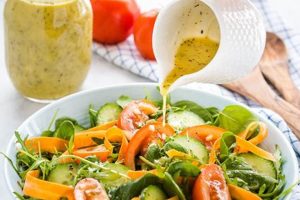
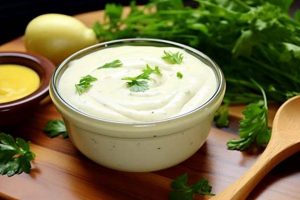
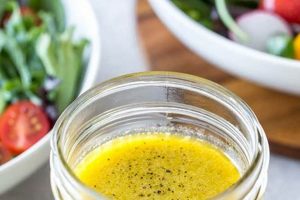
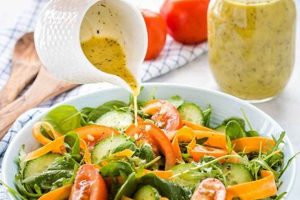
A vibrant and tangy emulsion typically combines citrus juice (such as lemon, lime, orange, or grapefruit), oil, and seasonings. A classic example involves whisking together fresh lemon juice, olive oil, salt, pepper, and perhaps a touch of Dijon mustard for a creamy texture. Variations can include herbs, spices, or a touch of sweetness like honey or maple syrup.
Light and refreshing, this type of dressing offers a healthy alternative to creamy dressings, contributing fewer calories and fat while providing a burst of flavor that complements various salads and dishes. The acidity of the citrus brightens the flavors of greens and vegetables, while the oil provides a richness that coats the ingredients. Historically, citrus fruits have been valued for their preserving qualities, and their use in dressings likely evolved from this practicality, eventually becoming a staple for its vibrant flavor profile. Their versatility makes them suitable for everything from delicate spring salads to heartier grain bowls.
The following sections will delve into specific formulations, exploring variations based on different citrus fruits, oils, and additional ingredients, as well as offering guidance on proper emulsification techniques and storage practices.
Tips for Crafting Exceptional Citrus Vinaigrettes
Achieving a well-balanced and flavorful citrus vinaigrette requires attention to detail and an understanding of the interplay between ingredients. The following tips offer guidance for creating dressings that elevate any salad.
Tip 1: Freshly Squeezed Juice is Paramount: Bottled citrus juice often contains additives and lacks the bright, vibrant flavor of freshly squeezed juice. The difference in taste is significant and crucial for a superior vinaigrette.
Tip 2: Balance Acidity and Oil: The standard ratio is three parts oil to one part citrus juice. However, taste preferences vary, so adjustments can be made. Start with the standard ratio and adjust according to personal preference.
Tip 3: Emulsify Thoroughly: Proper emulsification creates a smooth, creamy texture that prevents the dressing from separating. Whisk the ingredients vigorously or use a blender for a more stable emulsion.
Tip 4: Seasoning is Key: Salt and pepper are essential, but don’t be afraid to experiment with other seasonings. Dijon mustard adds creaminess and tang, while herbs like chives or parsley provide freshness. A pinch of sugar or honey can balance the acidity.
Tip 5: Consider the Oil: Extra virgin olive oil provides a robust flavor, while lighter oils like grapeseed or avocado oil offer a more neutral base. The choice of oil impacts the overall flavor profile of the vinaigrette.
Tip 6: Taste and Adjust: Taste the vinaigrette throughout the process and adjust seasonings as needed. The balance of flavors might change as the ingredients meld.
Tip 7: Proper Storage: Store leftover vinaigrette in an airtight container in the refrigerator for up to a week. Shake well before using, as some separation may occur.
By following these tips, one can create a vinaigrette that not only complements the salad but enhances its overall flavor profile, transforming a simple dish into a culinary delight.
With a solid understanding of the techniques and principles outlined above, exploration of specific recipe variations and advanced techniques can further elevate culinary skills.
1. Fresh Citrus Juice

Fresh citrus juice forms the cornerstone of a successful citrus vinaigrette. Its importance stems from the volatile aromatic compounds and acids present in freshly squeezed juice, which dissipate quickly after extraction. Bottled citrus juices often undergo pasteurization and contain additives, diminishing their brightness and complexity. This distinction significantly impacts the final flavor profile of the vinaigrette. Freshly squeezed juice contributes a vibrancy and depth that bottled alternatives simply cannot replicate. For instance, a lime vinaigrette made with fresh lime juice offers a clean, zesty flavor, while one made with bottled juice can taste flat and lack the characteristic lime aroma.
The effect of using fresh juice extends beyond mere flavor enhancement. The natural acids in fresh citrus juice contribute to the emulsification process, helping to bind the oil and other ingredients into a stable, homogenous dressing. Furthermore, these acids act as a natural preservative, extending the shelf life of the vinaigrette compared to dressings made with bottled juices that may contain added preservatives. This practical advantage underscores the multifaceted role of fresh citrus juice in the recipe.
In summary, the use of fresh citrus juice represents a crucial element in achieving a high-quality vinaigrette. The difference between fresh and bottled juice translates directly to the final product’s aroma, flavor, texture, and even shelf life. Understanding this connection empowers one to create superior dressings, highlighting the importance of fresh, high-quality ingredients in culinary endeavors.
2. High-Quality Oil
Oil serves as the foundation of a citrus vinaigrette, influencing its texture, flavor, and overall quality. High-quality oil is essential for achieving a balanced and flavorful dressing. The choice of oil significantly impacts the final result. Extra virgin olive oil, with its robust flavor and peppery notes, provides a complex backdrop for the bright citrus. Avocado oil offers a creamy texture and neutral flavor, allowing the citrus to shine. Grapeseed oil, with its light, clean taste, provides a subtle base that doesn’t compete with the other ingredients. The quality of the oil directly correlates to the overall quality of the vinaigrette. Using rancid or low-grade oil will result in a dressing with off-flavors and a compromised texture.
The interaction between oil and acid is crucial in creating a stable emulsion. High-quality oils possess inherent characteristics that contribute to a more stable emulsion, preventing the vinaigrette from separating quickly. This stability is essential for both the texture and presentation of the dressing. For example, a vinaigrette made with high-quality extra virgin olive oil will maintain its emulsified state longer than one made with a lower-grade oil. This allows the dressing to cling evenly to salad ingredients, enhancing their flavor and creating a visually appealing dish. Furthermore, high-quality oils contain beneficial antioxidants and fatty acids, contributing to the nutritional value of the salad.
Selecting the appropriate oil involves considering the desired flavor profile and intended use. Delicate oils, like grapeseed or avocado, complement lighter salads and delicate greens. Robust oils, such as extra virgin olive oil, enhance the flavor of heartier salads and roasted vegetables. Understanding these nuances allows for greater control over the final dish. The investment in high-quality oil ultimately elevates the citrus vinaigrette, transforming it from a simple dressing into a culinary highlight. This attention to detail reinforces the importance of ingredient selection in achieving culinary excellence.
3. Balanced Acidity

Balanced acidity represents a critical factor in a successful citrus vinaigrette. The inherent tartness of citrus juice requires careful management to avoid overwhelming other flavors. Achieving this balance elevates the vinaigrette from merely acidic to a complex and nuanced dressing.
- The Role of Acidity
Acidity provides the foundational brightness in a citrus vinaigrette. It cuts through richness, awakens the palate, and complements the flavors of vegetables and other salad components. However, excessive acidity can make the dressing unpleasantly tart. For example, an overly acidic lemon vinaigrette might overpower the delicate flavor of fresh greens. Properly balanced acidity enhances, rather than dominates, other ingredients.
- Balancing Agents
Several ingredients can temper the sharpness of citrus juice. A touch of sweetness, such as honey, maple syrup, or even a pinch of sugar, can round out the acidity and create a more harmonious flavor profile. Similarly, a small amount of Dijon mustard contributes a subtle creaminess and tang that complements the citrus. For instance, a lime vinaigrette with a touch of honey balances the lime’s tartness with a subtle sweetness, creating a more complex flavor.
- The Importance of Tasting and Adjusting
Balancing acidity is not a precise science; it relies on personal preference and the specific ingredients used. Tasting the vinaigrette throughout the preparation process is crucial. Start with a small amount of sweetener or other balancing agents and gradually increase until the desired balance is achieved. Adjustments may also be necessary based on the other ingredients in the salad. A vinaigrette intended for a bitter green salad might require more sweetness than one for a sweeter salad.
- Impact on Overall Flavor Profile
Balanced acidity allows the other flavors in the vinaigrette to shine. It creates a harmonious backdrop for herbs, spices, and other aromatics. The interplay between acidity, sweetness, and other flavor components contributes to the overall complexity and depth of the dressing. A well-balanced vinaigrette elevates the entire salad, transforming it from a simple dish into a more nuanced culinary experience. For example, an orange vinaigrette with balanced acidity allows the subtle notes of ginger and coriander to emerge, creating a layered and sophisticated flavor profile.
Mastering the art of balanced acidity elevates citrus vinaigrettes from simple dressings to sophisticated culinary creations. By understanding the role of acidity and employing appropriate balancing techniques, one can create vinaigrettes that enhance and complement a wide variety of salads and dishes. This attention to detail distinguishes a truly exceptional vinaigrette.
4. Proper Emulsification

Proper emulsification represents a critical step in creating a successful citrus vinaigrette. It transforms the individual ingredientsoil, citrus juice, and seasoningsinto a homogenous and stable mixture. This process directly impacts the texture, flavor, and visual appeal of the dressing. A well-emulsified vinaigrette clings evenly to salad ingredients, ensuring a consistent flavor experience with each bite. Without proper emulsification, the dressing separates, resulting in an oily, uneven coating and a less desirable culinary experience.
- The Science of Emulsification
Emulsification involves combining two immiscible liquids, such as oil and water (present in citrus juice), into a stable mixture. This is achieved by creating small droplets of one liquid dispersed within the other. In a vinaigrette, the oil forms the dispersed phase (small droplets) and the citrus juice forms the continuous phase (the surrounding liquid). Emulsifiers, such as mustard or honey, help stabilize the mixture by reducing surface tension between the two liquids. These emulsifiers contain molecules with both hydrophilic (water-loving) and lipophilic (oil-loving) ends, allowing them to bridge the gap between the oil and juice, preventing separation.
- Techniques for Emulsification
Several techniques facilitate proper emulsification. Whisking vigorously by hand creates shear force, breaking down the oil into smaller droplets and dispersing them throughout the citrus juice. A blender or food processor achieves a similar result more quickly and efficiently, creating a finer emulsion. Slow addition of the oil to the citrus juice while whisking or blending promotes even distribution and prevents the mixture from becoming overly oily. For example, slowly drizzling olive oil into lemon juice while whisking vigorously creates a smooth and stable emulsion.
- Indicators of Successful Emulsification
A successfully emulsified vinaigrette exhibits a smooth, creamy texture and a uniform appearance. The oil and citrus juice remain combined, showing minimal separation. The dressing clings to the whisk or blender, coating it evenly. When shaken, the vinaigrette appears homogenous and maintains its consistency. Conversely, a poorly emulsified vinaigrette separates quickly, with the oil floating on top of the citrus juice. This visual separation indicates instability and an uneven distribution of flavors.
- Impact on Flavor and Texture
Proper emulsification directly influences the flavor and texture of the vinaigrette. A stable emulsion ensures that the flavors are evenly distributed throughout the dressing. Each bite of the salad receives a consistent balance of citrus, oil, and seasonings. The texture becomes creamy and cohesive, coating the salad ingredients evenly. Conversely, a separated dressing leads to an uneven distribution of flavor, with some bites tasting overly oily and others overly acidic. The texture is compromised, resulting in a less appealing culinary experience.
Proper emulsification serves as a crucial bridge between individual ingredients and a harmonious citrus vinaigrette. Understanding the principles and techniques of emulsification allows for the creation of dressings that are not only flavorful but also visually appealing and texturally satisfying. This essential step elevates the vinaigrette from a simple mixture to a refined culinary element that enhances the overall dining experience.
5. Complementary Seasonings

Complementary seasonings represent a crucial element in elevating a citrus vinaigrette from simple to sophisticated. These seasonings interact with the foundational acidity and oil, adding depth, complexity, and nuance to the overall flavor profile. The careful selection and application of seasonings can transform a basic vinaigrette into a signature element of a dish.
The inherent brightness of citrus provides a versatile canvas for a wide range of seasonings. Fresh herbs, such as chives, parsley, mint, or dill, contribute a fresh, verdant note that complements the citrusy tang. Dried herbs, like oregano, thyme, or marjoram, offer a more concentrated and earthy flavor profile. Spices, including black pepper, red pepper flakes, cumin, or coriander, introduce warmth and complexity. The interplay between these seasonings and the citrus creates a dynamic flavor experience, enhancing the overall sensory perception of the dish. For instance, a lemon vinaigrette with fresh dill and black pepper complements grilled fish, while an orange vinaigrette with coriander and cumin enhances the flavors of a Moroccan-inspired salad.
Beyond flavor enhancement, complementary seasonings contribute textural nuances. Minced garlic or shallots add a pungent bite, while grated ginger provides a subtle warmth and textural complexity. The interplay of textures further enhances the sensory experience, creating a more dynamic and engaging culinary creation. Practical application requires consideration of the specific citrus used and the other ingredients in the dish. A delicate lime vinaigrette might benefit from the subtle addition of fresh mint, while a robust grapefruit vinaigrette could handle the boldness of crushed red pepper flakes. Understanding these nuances allows for the creation of vinaigrettes tailored to specific culinary contexts. This strategic use of seasonings distinguishes a thoughtfully crafted vinaigrette, demonstrating culinary expertise and attention to detail.
6. Appropriate Storage

Appropriate storage plays a vital role in preserving the quality and extending the lifespan of citrus vinaigrette salad dressings. Improper storage can lead to flavor degradation, textural changes, and even spoilage, compromising the intended culinary experience. Understanding and implementing correct storage practices ensures that the vinaigrette retains its vibrant flavor, desirable texture, and overall quality.
- Container Selection
Selecting an appropriate container is crucial for maintaining the quality of the vinaigrette. Airtight containers, preferably made of glass or high-quality plastic, are essential for preventing oxidation and minimizing exposure to air and light. These factors can degrade the flavor and quality of the oil and citrus juice. For instance, storing the vinaigrette in a loosely sealed container can lead to oxidation, resulting in off-flavors and a rancid taste. Using clear glass containers can expose the vinaigrette to light, accelerating the degradation process. A tightly sealed, opaque container protects the vinaigrette from these detrimental effects, preserving its fresh flavor and vibrant color.
- Refrigeration Temperature
Refrigeration at the correct temperature is paramount for inhibiting microbial growth and maintaining the emulsion’s stability. An ideal temperature range of 34-40F (1-4C) slows down enzymatic activity that can lead to flavor degradation and textural changes. Storing the vinaigrette at higher temperatures can promote bacterial growth, leading to spoilage. Conversely, excessively low temperatures can cause the oil to solidify, altering the texture and making it difficult to re-emulsify. Consistent refrigeration within the optimal temperature range ensures the vinaigrette remains fresh and maintains its desired consistency.
- Emulsion Stability During Storage
Even with proper storage, some separation of the emulsion may occur naturally. This is due to the density differences between oil and water. Before using refrigerated vinaigrette, gentle shaking or whisking re-emulsifies the ingredients, restoring the desired texture and ensuring even distribution of flavors. Failing to re-emulsify can lead to an uneven coating on salad ingredients, with some areas receiving predominantly oil and others primarily citrus juice, resulting in an unbalanced flavor experience.
- Shelf Life Considerations
While proper storage extends the shelf life of citrus vinaigrettes, they are not indefinitely stable. Generally, a properly stored citrus vinaigrette maintains optimal quality for up to one week. Beyond this point, flavor degradation becomes noticeable, and the risk of spoilage increases. Factors such as the specific ingredients used, the quality of the oil, and the storage conditions can influence the actual shelf life. Regularly checking for signs of spoilage, such as off-odors or mold growth, is crucial for ensuring food safety.
Appropriate storage practices serve as a crucial final step in the creation of a high-quality citrus vinaigrette. By adhering to these guidelines, one ensures that the time and effort invested in selecting fresh ingredients and crafting a balanced flavor profile are not compromised. Proper storage preserves the vibrant flavors, desirable texture, and overall quality of the vinaigrette, ultimately contributing to a more satisfying culinary experience. Neglecting these practices can lead to a diminished sensory experience and potentially pose food safety risks, underscoring the importance of appropriate storage in the overall culinary process.
Frequently Asked Questions
The following addresses common inquiries regarding citrus vinaigrette salad dressing preparation and utilization.
Question 1: What is the ideal ratio of oil to citrus juice in a vinaigrette?
A standard ratio is three parts oil to one part citrus juice. However, this can be adjusted based on personal preference and the specific citrus fruit used. Tasting and adjusting is crucial for achieving the desired balance.
Question 2: Can bottled citrus juice be used in place of fresh juice?
While bottled juice can be used, it often lacks the vibrant flavor and aromatic complexity of fresh juice. Freshly squeezed juice is strongly recommended for optimal results.
Question 3: How can one prevent the vinaigrette from separating?
Vigorous whisking or the use of a blender creates a stable emulsion. Adding the oil slowly to the citrus juice while whisking also aids in emulsification. A small amount of Dijon mustard or honey can act as an emulsifier and further stabilize the mixture.
Question 4: What are some common seasonings that complement citrus vinaigrettes?
Fresh or dried herbs, spices, minced garlic or shallots, and grated ginger are frequently used. The specific seasonings should complement the chosen citrus fruit and the other ingredients in the salad.
Question 5: How long can citrus vinaigrette be stored?
When stored in an airtight container in the refrigerator, citrus vinaigrette typically maintains optimal quality for up to one week. Always check for signs of spoilage before use.
Question 6: What types of salads pair best with citrus vinaigrettes?
Citrus vinaigrettes complement a wide variety of salads, including those featuring leafy greens, roasted vegetables, grains, or even fruit. The specific citrus used in the vinaigrette can be tailored to complement the other salad ingredients. For example, a lime vinaigrette pairs well with Southwestern-inspired salads, while a grapefruit vinaigrette complements salads with richer ingredients like avocado or nuts.
Understanding these fundamental aspects of citrus vinaigrette preparation contributes to achieving optimal flavor, texture, and overall quality. Careful attention to these details elevates a simple dressing into a culinary highlight.
The subsequent section will provide specific recipe variations showcasing the versatility and adaptability of citrus vinaigrettes.
Citrus Vinaigrette Salad Dressing Recipe
Exploration of citrus vinaigrette salad dressing recipes reveals a versatile culinary asset capable of elevating a wide range of dishes. Emphasis on fresh ingredients, balanced acidity, proper emulsification, and complementary seasonings contributes significantly to the final product’s quality. Understanding the interplay of these elements allows for customization and adaptation to diverse culinary applications, ranging from light and refreshing salads to more robust and complex flavor profiles. Proper storage techniques further ensure the longevity and enjoyment of these vibrant dressings.
Citrus vinaigrette salad dressing recipes, far from being static formulations, offer a dynamic platform for culinary creativity and exploration. Continued experimentation with diverse citrus varieties, oils, and seasonings promises an evolving landscape of flavor profiles and culinary possibilities. This adaptability ensures the enduring relevance of citrus-based dressings in the culinary world.