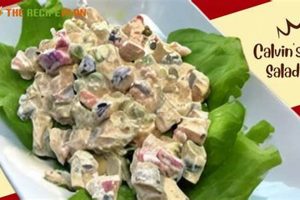
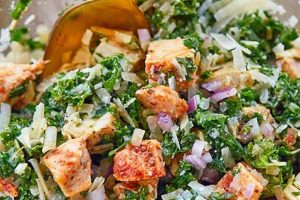
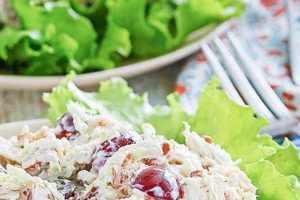
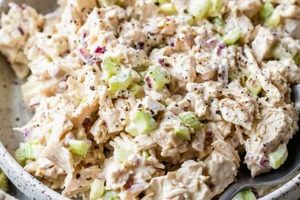
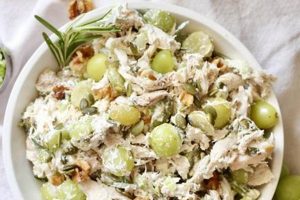
A superior chicken salad featuring fried chicken as its central component involves a careful balance of flavors and textures. This typically includes crispy, well-seasoned fried chicken, a creamy dressing (often mayonnaise-based), and complementary ingredients like celery, onion, grapes, or nuts. A well-executed version offers a satisfying contrast between the crunchy chicken and the other elements.
Achieving a harmonious blend of flavors and textures elevates this dish beyond a simple combination of ingredients. The choice of seasonings for the chicken, the creaminess of the dressing, and the freshness of the added components all contribute to a more enjoyable culinary experience. Historically, chicken salad has been a popular dish for its versatility and relative affordability. Using fried chicken adds a richer dimension to this classic.
The following sections will explore specific techniques and ingredient combinations for creating an outstanding fried chicken salad. Topics covered will include selecting the right chicken, frying methods, dressing variations, and incorporating complementary ingredients.
Tips for an Exceptional Fried Chicken Salad
Creating a truly exceptional fried chicken salad requires attention to detail throughout the preparation process. These tips offer guidance for achieving optimal results.
Tip 1: Brining the Chicken: Brining the chicken before frying ensures juicy, flavorful meat. A simple brine of salt and sugar in water, for at least 30 minutes, makes a significant difference.
Tip 2: Double Frying for Extra Crispiness: Frying the chicken twice, once at a lower temperature and then again at a higher temperature, creates an extra-crispy exterior that holds up well in the salad.
Tip 3: Seasoning Beyond the Basics: Don’t limit seasoning to just salt and pepper. Experiment with paprika, garlic powder, onion powder, cayenne pepper, or herbs like thyme and oregano for a more complex flavor profile.
Tip 4: Dressing Consistency: The dressing should be creamy but not overly thick. A thinner dressing coats the ingredients more evenly and prevents the salad from becoming heavy. Consider using a combination of mayonnaise and Greek yogurt for a lighter, tangier dressing.
Tip 5: Balancing Textures: Incorporate ingredients that provide textural contrast to the crispy chicken. Chopped celery, grapes, pecans, or toasted walnuts add satisfying crunch and variety.
Tip 6: Freshness of Ingredients: Use the freshest ingredients available. This is especially important for ingredients like celery, grapes, and herbs, which contribute significantly to the overall flavor and freshness of the salad.
Tip 7: Allowing the Chicken to Cool: Allow the fried chicken to cool completely before adding it to the salad. This prevents the heat from wilting other ingredients and ensures a more pleasant eating experience.
By following these tips, one can elevate fried chicken salad from a simple dish to a culinary masterpiece. Attention to detail in each step, from brining the chicken to balancing textures, results in a more satisfying and flavorful salad.
The following section will offer several variations on the classic fried chicken salad recipe, demonstrating the versatility of this dish.
1. Crispy Fried Chicken

Crispy fried chicken forms the cornerstone of a truly exceptional fried chicken salad. Its textural contribution is paramount; the crisp exterior provides a counterpoint to the creamy dressing and other softer ingredients. This contrast elevates the sensory experience, making each bite more dynamic and enjoyable. The structural integrity of crispy fried chicken also prevents the salad from becoming soggy, a common pitfall with salads featuring less substantial protein components. Consider a salad with grilled chicken: while flavorful, it lacks the textural interplay and can become lost within the other elements. In contrast, crispy fried chicken maintains its presence, offering a satisfying crunch even after being tossed with dressing and other ingredients. A practical example is the difference between using pre-made fried chicken strips, often lacking a robust crust, and freshly fried chicken pieces, which retain their desirable crispness.
The technique used to achieve crispiness significantly impacts the final outcome. Double frying, a method involving two stages of frying at different temperatures, yields a superior crust. The initial lower temperature fry cooks the chicken through, while the second higher temperature fry creates a golden, shatteringly crisp exterior. This technique minimizes the absorption of oil, resulting in a lighter, less greasy final product. Furthermore, proper seasoning before frying enhances the overall flavor profile, contributing to a more complex and satisfying salad. The choice of batter or breading also plays a crucial role; a light and airy batter produces a delicate crispness, while a thicker breading offers a more substantial crunch.
In conclusion, the importance of crispy fried chicken in a successful fried chicken salad cannot be overstated. Its contribution extends beyond mere flavor, impacting texture, structural integrity, and overall enjoyment. Achieving optimal crispiness through techniques like double frying and careful breading selection ensures a salad that is both flavorful and texturally satisfying. This understanding allows for the creation of a dish that transcends basic chicken salad, offering a truly elevated culinary experience.
2. Balanced, Flavorful Dressing

A balanced, flavorful dressing is integral to a superior fried chicken salad. The dressing serves as a unifying element, binding the diverse ingredients and creating a cohesive flavor profile. It should complement the crispy chicken, not mask it, enhancing the overall experience rather than dominating the palate. An overly sweet or tangy dressing can overwhelm the subtle flavors of the chicken and other components. Conversely, a bland dressing fails to elevate the dish, resulting in a less satisfying culinary experience. Consider the interplay between a classic buttermilk ranch dressing and fried chicken: the cool, creamy ranch provides a refreshing counterpoint to the richness of the chicken, while subtle hints of garlic and herbs enhance the savory notes. However, an overly sweet honey mustard dressing might clash with the savory profile of the chicken, creating a disharmonious flavor combination.
The balance of flavors within the dressing itself is equally crucial. A well-crafted dressing features a harmonious blend of acidity, sweetness, and savory notes. For example, a lemon-herb dressing might incorporate the bright acidity of lemon juice, balanced by the sweetness of honey and the savory depth of fresh herbs. This balanced approach prevents any single flavor from overpowering the others, resulting in a more nuanced and enjoyable dressing. Furthermore, the texture of the dressing contributes to the overall sensory experience. A creamy, emulsified dressing clings to the chicken and other ingredients, ensuring each bite is coated with flavor. However, a thin or watery dressing fails to adhere properly, leading to an uneven distribution of flavor and a less satisfying textural experience.
Understanding the role of a balanced, flavorful dressing is essential for crafting a truly exceptional fried chicken salad. It’s not merely a condiment, but rather a crucial component that elevates the dish. By carefully considering the interplay of flavors and textures, one can create a dressing that harmonizes with the other ingredients, enhancing the overall dining experience. This attention to detail distinguishes a mediocre salad from a truly memorable one, showcasing the transformative power of a well-crafted dressing.
3. Fresh, Complementary Ingredients
Fresh, complementary ingredients distinguish an exceptional fried chicken salad from a mediocre one. These ingredients contribute not only to the flavor profile but also to the textural complexity and overall appeal of the dish. Selecting and incorporating these components thoughtfully elevates the salad beyond a simple combination of fried chicken and dressing.
- Textural Contrast
Ingredients offering textural contrast enhance the sensory experience of the salad. Crispy fried chicken benefits from the addition of elements that provide a different mouthfeel. Consider the juxtaposition of crunchy celery or crisp grapes against the tender chicken and creamy dressing. This interplay of textures creates a more dynamic and engaging culinary experience. The absence of such contrasting elements can result in a monotonous texture, diminishing overall enjoyment.
- Flavor Balancing
Complementary ingredients play a vital role in balancing the richness of fried chicken. The inherent savory notes of the chicken are enhanced by the addition of ingredients that provide acidity, sweetness, or subtle bitterness. For example, the tartness of cranberries or the sweetness of grapes can cut through the richness of the chicken and dressing, preventing the salad from becoming overly heavy. Fresh herbs, such as dill or parsley, introduce herbaceous notes that further enhance the flavor profile, creating a more complex and balanced taste.
- Visual Appeal
Fresh, vibrant ingredients contribute significantly to the visual appeal of the salad. A visually appealing salad is more enticing and appetizing. Brightly colored ingredients, like red grapes, green celery, or orange segments, create a visually stimulating dish that enhances the dining experience. The careful arrangement of these ingredients adds to the overall presentation, transforming a simple salad into a visually appealing culinary creation. This visual aspect plays a crucial role in the overall perception and enjoyment of the dish.
- Seasonal Considerations
Utilizing seasonal ingredients maximizes flavor and freshness. Ingredients at their peak ripeness offer the most intense and nuanced flavors. A summer salad might incorporate fresh corn and ripe tomatoes, while a fall salad could feature roasted butternut squash and crisp apples. Adapting the salad to seasonal ingredients not only enhances the flavor profile but also connects the dish to the natural rhythms of the year. This consideration elevates the salad from a static recipe to a dynamic culinary expression that reflects the seasonality of ingredients.
The careful selection and incorporation of fresh, complementary ingredients elevate fried chicken salad from a simple dish to a culinary delight. By considering the interplay of textures, flavors, visual appeal, and seasonality, one can create a salad that is both satisfying and aesthetically pleasing. These elements work in harmony with the crispy fried chicken and flavorful dressing to produce a well-rounded and memorable dish.
4. Proper Ingredient Proportions

Achieving a “best” fried chicken salad hinges significantly on proper ingredient proportions. Balance is key; an overabundance of any single component can detract from the overall harmony and diminish the intended culinary experience. Careful consideration of ratios ensures that each ingredient contributes appropriately to the final product, creating a cohesive and satisfying dish.
- Chicken-to-Other-Ingredient Ratio
The proportion of fried chicken to other ingredients directly impacts the salad’s heartiness and overall flavor profile. Too much chicken can overwhelm the other components, while too little can leave the salad feeling incomplete. A successful recipe finds a balance where the chicken serves as the star without overshadowing the supporting cast of vegetables, fruits, or nuts. For instance, a salad dominated by chicken may lack textural and flavor diversity, while a salad sparse on chicken might feel more like a side dish than a main course. The ideal ratio allows the chicken’s flavor to shine while still providing a platform for other ingredients to contribute.
- Dressing Quantity
Dressing quantity significantly influences the salad’s texture and palatability. An excess of dressing can result in a soggy, heavy salad, where the individual ingredients lose their distinct characteristics. Conversely, too little dressing can leave the salad dry and unappealing. The optimal amount coats the ingredients evenly, providing flavor and moisture without compromising texture. This balance ensures that the dressing enhances the other components rather than masking them. Consider the difference between a salad swimming in dressing and one where the dressing merely glistens on the ingredients; the former overwhelms, while the latter complements.
- Balancing Flavor Profiles
Proportions extend beyond mere quantity to encompass the balance of flavor profiles. The relative amounts of sweet, savory, acidic, and spicy elements contribute to the overall complexity and harmony of the salad. For example, the sweetness of dried cranberries might be balanced by the savory notes of pecans and the tang of a vinaigrette. An imbalance can result in a salad that is overly sweet, excessively tangy, or lacking in depth. The “best” recipe achieves a nuanced flavor profile where each element complements and enhances the others.
- Visual Harmony
While often overlooked, visual appeal also ties into ingredient proportions. The distribution and arrangement of ingredients contribute to the salad’s overall presentation. A well-proportioned salad features a visually pleasing distribution of colors and textures. For example, a monochromatic salad might appear less appealing than one with a variety of colorful ingredients. This visual harmony enhances the dining experience, making the salad more enticing and enjoyable. Consider the difference between a haphazardly tossed salad and one where the ingredients are artfully arranged.
Proper ingredient proportions are fundamental to a successful fried chicken salad. They ensure a balance of flavors, textures, and visual appeal, creating a harmonious and satisfying dish. A well-proportioned salad allows each ingredient to contribute its unique characteristics, resulting in a more complex and enjoyable culinary experience. This attention to detail elevates the salad from a simple combination of ingredients to a carefully crafted culinary composition. Understanding and applying these principles are essential for achieving a truly “best” fried chicken salad recipe.
5. Thoughtful Texture Combinations
Texture plays a crucial role in the overall enjoyment of a fried chicken salad. A thoughtfully constructed combination of textures elevates the dish from simply palatable to truly exceptional. The interplay of contrasting textures creates a more engaging and satisfying sensory experience. This section explores the significance of textural combinations in crafting a superior fried chicken salad.
- Crispy Chicken as the Foundation
Crispy fried chicken provides the essential textural foundation upon which the other elements build. Its craggy exterior offers a satisfying crunch that contrasts with the softer components of the salad. The structural integrity of well-fried chicken also ensures that it maintains its crispness even after being tossed with dressing and other ingredients. This sustained crispness is crucial for a consistently enjoyable textural experience from the first bite to the last.
- Contrasting Creamy and Crunchy Elements
The richness and creaminess of the dressing benefit from the introduction of contrasting crunchy elements. These can include chopped nuts, such as pecans or walnuts, or vegetables like celery or bell peppers. These crunchy components provide a counterpoint to the smoothness of the dressing and the tenderness of the chicken, creating a dynamic interplay of textures. The absence of such contrasting elements can result in a texturally monotonous salad.
- Soft and Succulent Additions
Incorporating soft and succulent ingredients adds another layer of textural complexity. Grapes, dried cranberries, or chopped apples provide bursts of juiciness that contrast with the crispy chicken and crunchy vegetables. These softer elements contribute to a more balanced and nuanced textural profile, preventing the salad from becoming overly dry or crunchy. The variation in texture enhances the overall enjoyment and prevents sensory fatigue.
- Impact of Ingredient Preparation on Texture
The method of ingredient preparation can significantly impact the final texture of the salad. Consider the difference between finely diced celery and larger, more substantial pieces. Finely diced celery offers a subtle crunch, while larger pieces provide a more pronounced textural contrast. Similarly, the choice between toasted and raw nuts impacts the overall crunch and flavor profile of the salad. These seemingly small details contribute significantly to the overall textural experience.
Thoughtful consideration of texture combinations is essential for crafting a “best” fried chicken salad recipe. The interplay of crispy, creamy, crunchy, and soft elements creates a dynamic and engaging sensory experience. This attention to textural detail elevates the salad from a simple combination of ingredients to a carefully constructed culinary composition. A truly exceptional fried chicken salad delights not only the palate but also provides a satisfying and multi-faceted textural experience.
Frequently Asked Questions
This section addresses common inquiries regarding the creation of exceptional fried chicken salad.
Question 1: What is the best type of chicken to use for fried chicken salad?
Boneless, skinless chicken thighs are generally preferred for their juiciness and flavor. However, boneless, skinless chicken breasts can also be used, particularly if a leaner salad is desired. Bone-in chicken pieces offer more flavor but require deboning before adding to the salad.
Question 2: Can the fried chicken be made in advance?
Fried chicken can be prepared up to two days in advance and stored in the refrigerator. Reheat gently before adding to the salad to restore crispness. Avoid adding hot chicken directly to the salad, as this can wilt other ingredients and compromise the texture.
Question 3: What are some alternatives to mayonnaise-based dressings?
Alternatives to mayonnaise-based dressings include vinaigrettes, buttermilk dressings, or dressings based on Greek yogurt. These options offer lighter, tangier profiles and can complement the richness of the fried chicken.
Question 4: How can sogginess be prevented in fried chicken salad?
Sogginess can be prevented by ensuring the fried chicken is thoroughly cooled before adding to the salad. Additionally, adding the dressing just before serving helps maintain the crispness of the chicken and other ingredients. Storing the chicken and other salad components separately until serving also helps avoid sogginess.
Question 5: What are some suitable substitutions for common ingredients?
Celery can be substituted with fennel or chopped apple for a different flavor profile. Grapes can be replaced with dried cranberries or chopped cherries. Pecans or walnuts can be substituted with other nuts like almonds or cashews. Ingredient substitutions allow for customization based on individual preferences and dietary restrictions.
Question 6: How long can fried chicken salad be stored?
Fried chicken salad is best consumed within 24 hours of preparation. However, if stored properly in an airtight container in the refrigerator, it can last for up to two days. The quality of the salad may degrade over time as the ingredients lose their freshness and the chicken loses its crispness.
Understanding these key aspects contributes to a more informed approach to crafting exceptional fried chicken salad. Attention to detail in each stage, from ingredient selection to storage, ensures optimal results.
The following section will provide a complete recipe for creating a delicious fried chicken salad.
Best Fried Chicken Salad Recipe
Crafting a truly exceptional fried chicken salad involves a nuanced understanding of ingredient selection, preparation techniques, and flavor balancing. From the perfectly crispy chicken to the thoughtfully composed dressing and the carefully chosen complementary ingredients, each element contributes to the overall culinary experience. Proper ingredient proportions and textural combinations further elevate the dish, ensuring a harmonious blend of flavors and a satisfying interplay of textures. Attention to these details distinguishes a mediocre salad from a truly memorable one.
Culinary exploration extends beyond simply following a recipe. It involves an understanding of the underlying principles that govern flavor and texture. Applying these principles to the creation of fried chicken salad unlocks the potential for a truly exceptional dish. This pursuit of culinary excellence transforms a simple salad into an expression of creativity and a celebration of flavor. The “best” fried chicken salad recipe is not a static formula, but rather a dynamic process of experimentation and refinement, guided by a deep appreciation for the art of cooking.