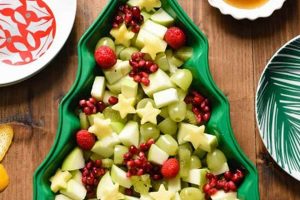
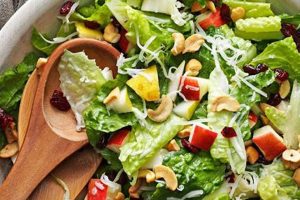
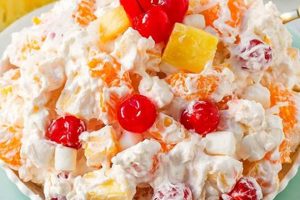
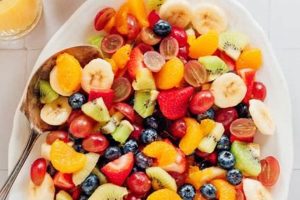
Combinations of marshmallows and fruit in a salad format offer a spectrum of flavors and textures. This typically involves incorporating miniature or regular-sized marshmallows with a variety of fresh or canned fruits, often bound by a creamy dressing like whipped cream or a yogurt-based mixture. A classic example includes fluffy marshmallows, grapes, pineapple chunks, and mandarin orange segments in a creamy, sweet dressing.
Such dishes provide a balance of sweetness and tanginess, appealing to a broad range of palates. The versatility of these combinations allows for adaptability to seasonal fruits, dietary restrictions, and individual preferences. Historically, these types of dessert salads gained popularity with the increased availability of commercially produced marshmallows in the 20th century, contributing to their presence at potlucks, picnics, and holiday gatherings.
Further exploration will cover variations on the basic formula, including specific ingredient recommendations, preparation techniques, and suggestions for presentation and serving.
Tips for Creating Delightful Fruit and Marshmallow Combinations
Achieving optimal results with fruit and marshmallow salads requires attention to several key factors. The following suggestions offer guidance for preparation and presentation.
Tip 1: Fruit Selection: Opt for fruits that hold their shape well and offer a variety of textures and flavors. Consider grapes, berries, melon chunks, and citrus segments. Avoid overly ripe or bruised fruits.
Tip 2: Marshmallow Choices: Miniature marshmallows distribute evenly, while larger marshmallows provide a more substantial textural contrast. Consider flavored marshmallows for added complexity.
Tip 3: Dressing Considerations: Whipped cream offers a classic light and airy texture, while yogurt-based dressings can add tanginess and reduce overall sweetness. A light coating prevents the salad from becoming overly saturated.
Tip 4: Timing is Key: Combine ingredients shortly before serving to prevent the marshmallows from absorbing excess moisture and becoming soggy. This preserves the desired texture.
Tip 5: Enhancing Visual Appeal: Arrange the salad in a visually appealing manner. Consider using a clear glass bowl to showcase the vibrant colors and textures. Garnish with fresh mint or a sprinkle of toasted coconut for an elegant touch.
Tip 6: Storage Recommendations: While best served immediately, leftovers can be stored in an airtight container in the refrigerator for a short period. Be aware that the texture may change slightly upon refrigeration.
Tip 7: Flavor Balancing: Balance the sweetness of the marshmallows with the tartness of certain fruits. A squeeze of lemon or lime juice can enhance the overall flavor profile.
By following these tips, one can create a visually appealing and flavorful dessert salad suitable for various occasions.
These insights provide a foundation for crafting personalized fruit and marshmallow salads tailored to individual preferences.
1. Fruit Selection

Fruit selection significantly impacts the overall quality of a marshmallow fruit salad. The choice of fruits influences not only the flavor profile but also the texture, visual appeal, and nutritional value. Compatibility among chosen fruits and their interaction with other ingredients, particularly the marshmallows and dressing, are crucial considerations. For instance, incorporating fruits with varying levels of acidity can balance the sweetness of the marshmallows and add depth of flavor. A combination of firm fruits like grapes and softer fruits like bananas offers textural contrast.
Using seasonal fruits maximizes flavor and often provides economic benefits. Locally sourced, in-season produce typically boasts superior taste compared to out-of-season alternatives. Furthermore, the selection process should consider the structural integrity of the fruits. Fruits that maintain their shape after being cut or mixed are preferable, preventing the salad from becoming overly watery or mushy. Examples include berries, melon chunks, and pineapple pieces. Delicate fruits like raspberries or sliced bananas should be added just before serving to prevent them from breaking down.
Careful fruit selection ensures a balance of flavors, textures, and colors, elevating the marshmallow fruit salad from a simple dessert to a more complex and enjoyable culinary experience. Overly ripe fruits should be avoided, as they can compromise the structural integrity of the salad and introduce unwanted flavors. Attention to these details contributes significantly to the overall success of the recipe.
2. Marshmallow Type
Marshmallow type plays a crucial role in the overall texture, flavor, and visual appeal of marshmallow fruit salads. Different types of marshmallows offer unique characteristics that contribute to the final product. Understanding these distinctions allows for informed decisions regarding marshmallow selection, ultimately enhancing the sensory experience of the salad.
- Size and Shape
Marshmallows are available in various sizes and shapes, from miniature to jumbo, and from standard cylindrical shapes to more whimsical forms. Miniature marshmallows distribute evenly throughout the salad and readily absorb flavors from the dressing and surrounding fruits. Larger marshmallows provide a more substantial textural contrast and visual presence. The choice depends on the desired aesthetic and textural outcome.
- Flavor Profile
Traditional marshmallows offer a neutral sweetness, allowing the flavors of the fruits and dressing to take center stage. However, flavored marshmallows, such as vanilla, strawberry, or toasted coconut, can introduce additional complexity and complement specific fruit combinations. For example, vanilla marshmallows pair well with berries, while toasted coconut marshmallows enhance tropical fruit salads.
- Texture and Consistency
Marshmallow texture ranges from soft and pillowy to slightly firmer. Fresher marshmallows tend to be softer and melt more readily into the salad, while slightly older marshmallows offer a chewier texture. The desired texture influences the overall mouthfeel of the salad. Consider the interplay between the marshmallow texture and the textures of the chosen fruits.
- Color Variations
While white is the traditional color, pastel-colored marshmallows or those with vibrant swirls can enhance the visual appeal of the salad, particularly for festive occasions. The color choice can be coordinated with the colors of the fruits or used to create a specific aesthetic theme.
Careful consideration of marshmallow type elevates the marshmallow fruit salad beyond a simple combination of ingredients. By understanding the nuances of size, shape, flavor, texture, and color, one can create a balanced and visually appealing dessert that caters to specific preferences and occasions. The interplay between these factors contributes significantly to the overall sensory experience.
3. Dressing Choices
Dressing choices significantly influence the flavor profile, texture, and overall appeal of marshmallow fruit salads. The dressing acts as a unifying element, binding the diverse fruits and marshmallows while contributing its own distinct characteristics. A well-chosen dressing complements the inherent sweetness of the marshmallows and balances the varying acidity levels of the fruits. The interplay between these components creates a harmonious blend of flavors.
Several factors merit consideration when selecting a dressing. Creamy dressings, such as whipped cream or a vanilla-flavored yogurt base, provide a light and airy texture that contrasts pleasantly with the chewiness of the marshmallows and the firmness of certain fruits. These options enhance the sweetness of the salad while offering a smooth, velvety mouthfeel. Alternatively, tangier dressings, like those based on Greek yogurt or sour cream, can cut through the sweetness and provide a refreshing counterpoint. Incorporating citrus zest or a splash of fruit juice further amplifies the tangy notes. The thickness of the dressing also impacts the final result. A thinner dressing coats the ingredients lightly, while a thicker dressing adds a more substantial presence.
The quantity of dressing used requires careful consideration. Too little dressing may result in a dry and disjointed salad, while an excess can lead to a soggy and overly sweet dish. The goal is to achieve a balance where the dressing enhances the flavors and textures without overpowering them. Ultimately, the choice of dressing depends on personal preference and the desired flavor profile. Experimentation with different dressings allows for customization and the creation of unique flavor combinations.
4. Preparation Methods
Preparation methods significantly influence the final quality and enjoyment of marshmallow fruit salad recipes. Careful attention to technique ensures optimal texture, flavor, and presentation. A systematic approach, from ingredient preparation to final assembly, contributes to a successful outcome. Improper methods can lead to undesirable results, such as soggy marshmallows, bruised fruit, or an uneven distribution of ingredients.
Initial steps involve preparing the chosen fruits. Washing, peeling, and cutting fruits into uniform sizes ensures even distribution and consistent texture throughout the salad. Gentle handling prevents bruising and maintains the visual appeal of delicate fruits. Marshmallows should be added closer to serving time to minimize their absorption of moisture from the fruit, preserving their desired texture. The dressing should be prepared separately and then gently folded into the fruit and marshmallow mixture, ensuring even coating without crushing the ingredients. A light hand prevents the salad from becoming overly saturated and maintains the distinct textures of each component.
Timing is crucial. Preparing the fruit and dressing in advance allows flavors to meld and develop. However, combining all ingredients too early can lead to textural degradation, particularly with softer fruits and marshmallows. A considered approach to timing ensures that each element contributes its optimal characteristics to the final product. Understanding the interplay between preparation methods and the desired outcome empowers one to create a marshmallow fruit salad that is both visually appealing and delectable. Attention to detail, from ingredient selection to final assembly, elevates the dish from a simple combination of components to a carefully crafted culinary creation.
5. Presentation Techniques
Presentation techniques significantly impact the perceived appeal and enjoyment of marshmallow fruit salad recipes. Visual presentation enhances the dining experience, influencing perceptions of flavor and quality. Thoughtful arrangement transforms a simple dessert into an aesthetically pleasing creation. Consideration of color, texture, and serving vessel contributes to the overall impression. A vibrant array of fruits, interspersed with the contrasting texture of marshmallows, creates visual interest. For instance, a clear glass bowl showcases the colorful layers of fruit and marshmallows, while individual servings in stemmed glasses elevate the presentation for special occasions.
Practical applications extend beyond mere aesthetics. Strategic placement of ingredients highlights key components and facilitates even distribution. For example, arranging larger fruit pieces around the perimeter of a serving bowl frames smaller fruits and marshmallows in the center, creating a balanced presentation. Garnishes, such as fresh mint sprigs or a sprinkle of toasted coconut, provide finishing touches that enhance visual appeal and introduce complementary flavors. The choice of serving implements, such as decorative spoons or tongs, also contributes to the overall presentation. These details demonstrate attention to detail and elevate the perceived value of the dish.
Effective presentation techniques enhance the sensory experience of enjoying a marshmallow fruit salad. Visual appeal stimulates appetite and anticipation, contributing to a more satisfying dining experience. While flavor remains paramount, presentation elevates the dish from a simple combination of ingredients to a carefully considered culinary creation. Attention to these details demonstrates a commitment to quality and enhances the enjoyment of both the preparer and the consumer. Understanding the impact of presentation techniques allows for the creation of visually appealing and memorable dessert experiences.
6. Storage Guidelines

Storage guidelines play a vital role in preserving the quality and extending the shelf life of marshmallow fruit salads. Due to the inclusion of fresh fruits and the moisture-absorbing nature of marshmallows, these salads are susceptible to textural changes and spoilage if not stored correctly. Improper storage can lead to undesirable outcomes such as soggy marshmallows, fruit discoloration, and bacterial growth. Therefore, adherence to appropriate storage practices is essential for maintaining the desired flavor, texture, and food safety of the salad. For instance, a salad containing bananas or berries will deteriorate more rapidly than one composed primarily of firmer fruits like grapes or melon. Understanding these nuances allows for informed decisions regarding storage duration and methods.
Practical application of storage guidelines involves utilizing airtight containers and refrigeration. Transferring the salad to an airtight container minimizes exposure to air, which can accelerate oxidation and drying. Refrigeration slows down enzymatic activity and bacterial growth, preserving the freshness of the fruit and preventing the marshmallows from becoming overly soft. However, even with proper refrigeration, marshmallow fruit salads are best consumed within a short timeframe, typically one to two days. Beyond this period, textural changes become more pronounced, and the quality of the salad diminishes. For optimal results, it is advisable to prepare and consume the salad within 24 hours, especially if it contains highly perishable fruits.
Effective storage practices are integral to maximizing the enjoyment of marshmallow fruit salads. Proper storage safeguards against spoilage, preserves desired textures, and extends the period during which the salad remains palatable. Ignoring these guidelines can compromise the quality of the dish, leading to a less satisfying culinary experience. Consequently, understanding and implementing appropriate storage techniques represents a crucial aspect of preparing and serving marshmallow fruit salads. This knowledge ensures that the time and effort invested in creating the salad are rewarded with a delicious and visually appealing dessert that can be enjoyed at its peak freshness.
Frequently Asked Questions
This section addresses common inquiries regarding the preparation and enjoyment of marshmallow fruit salads.
Question 1: How can sogginess in marshmallow fruit salads be prevented?
Sogginess can be minimized by combining the marshmallows with the other ingredients shortly before serving. This limits the time the marshmallows have to absorb moisture from the fruit. Additionally, selecting firmer fruits and using a light coating of dressing helps maintain texture.
Question 2: What fruits pair well with marshmallows in a salad?
Fruits offering a balance of sweetness and acidity, such as grapes, berries, pineapple, and mandarin oranges, generally complement the sweetness of marshmallows. Firm fruits maintain their structure better than softer options like bananas or overly ripe peaches.
Question 3: Can marshmallow fruit salad be prepared in advance?
While some components, such as the dressing and certain fruits, can be prepared ahead of time, combining all ingredients is best done immediately before serving. This preserves the texture of the marshmallows and prevents the salad from becoming watery.
Question 4: What alternatives exist to whipped cream as a dressing?
Yogurt-based dressings, particularly those flavored with vanilla or incorporating a hint of citrus zest, offer a lighter and tangier alternative to whipped cream. These options can also contribute to a lower overall sugar content.
Question 5: How long can marshmallow fruit salad be stored?
Refrigeration in an airtight container helps maintain freshness, but marshmallow fruit salad is best consumed within one to two days. Textural changes, particularly with the marshmallows, become more noticeable beyond this timeframe.
Question 6: How can one adapt marshmallow fruit salad recipes for specific dietary needs?
Adaptations for dietary restrictions can be made by substituting ingredients. Sugar-free marshmallows and dressings can be used for those managing sugar intake. Specific fruits can be omitted or substituted to accommodate allergies or intolerances. Coconut whipped cream serves as a dairy-free alternative to traditional whipped cream.
Understanding these aspects facilitates the creation of marshmallow fruit salads tailored to individual preferences and dietary needs. Consideration of ingredient selection, preparation methods, and storage techniques contributes to a successful and enjoyable culinary experience.
This information provides a comprehensive guide to creating delightful and personalized marshmallow fruit salads.
Marshmallow Fruit Salad Recipes
Exploration of marshmallow fruit salad recipes reveals a complex interplay of ingredients, techniques, and presentation strategies. Careful fruit selection, considering ripeness, texture, and flavor profiles, forms the foundation. Marshmallow type, encompassing size, shape, and flavor, introduces textural and taste nuances. Dressing choices, ranging from classic whipped cream to tangier yogurt-based options, bind ingredients and influence overall sweetness. Preparation methods prioritize timing to maintain optimal textures and prevent sogginess. Presentation techniques elevate visual appeal, transforming a simple dessert into an aesthetically pleasing creation. Proper storage practices ensure maximum enjoyment and prevent spoilage.
Successful execution of these recipes necessitates an understanding of these interconnected elements. Adaptability to individual preferences and dietary needs further expands culinary possibilities. Continued exploration and experimentation promise an evolving landscape of flavor and presentation within the realm of marshmallow fruit salad recipes.