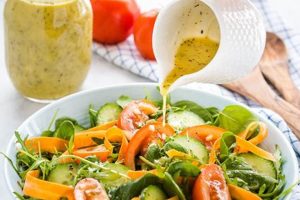
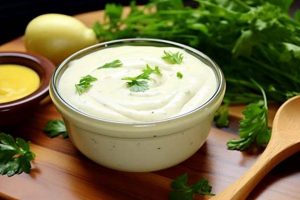
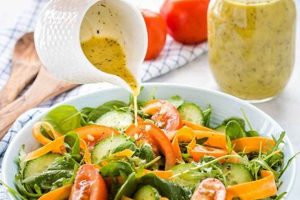
A creamy, tangy sauce for salads typically combines yogurt with additional ingredients like herbs, spices, citrus juice, or oil. A basic version might involve plain yogurt whisked with lemon juice, minced garlic, and salt. More complex variations can incorporate ingredients such as Dijon mustard, honey, fresh dill, or roasted red peppers. These dressings offer a versatile base adaptable to a wide range of flavor profiles.
Such dressings offer a healthier alternative to many commercially available salad dressings, often high in saturated fat and added sugars. Yogurt provides probiotics, beneficial bacteria supporting gut health. Furthermore, the versatility of these dressings allows for customization to complement diverse cuisines and dietary preferences, from light and herbaceous to rich and savory. Historically, yogurt has been a culinary staple in various cultures, its use in sauces and dressings reflecting a long-standing tradition of incorporating fermented dairy products for both flavor and preservation.
This discussion will further explore specific formulations, nutritional information, and culinary applications of yogurt-based dressings. Topics to be covered include the selection of appropriate yogurt types, techniques for achieving desired textures and consistencies, and suggestions for pairing dressings with various salad ingredients.
Tips for Crafting Exceptional Yogurt-Based Salad Dressings
Creating a delicious and healthful salad dressing with yogurt as a base involves understanding a few key principles. The following tips offer guidance for achieving optimal flavor, texture, and stability.
Tip 1: Choose the Right Yogurt: Greek yogurt provides a thicker, creamier consistency, while regular yogurt yields a lighter dressing. Consider the desired texture when selecting a base. Full-fat yogurt offers richness, while non-fat options create a lighter dressing.
Tip 2: Balance Flavors: Acidity is crucial. Lemon juice, vinegar, or other acidic ingredients cut through the richness of the yogurt and brighten the overall flavor profile. Achieve a balanced taste by incorporating sweetness (honey, maple syrup) or savory elements (mustard, garlic).
Tip 3: Emulsify Effectively: Whisking vigorously or using a blender creates a smooth, emulsified dressing that prevents separation. Slowly drizzling in oil while whisking helps create a stable emulsion.
Tip 4: Season Thoughtfully: Fresh herbs, spices, and seasonings elevate the flavor. Experiment with combinations like dill and lemon, cumin and coriander, or chives and garlic. Season with salt and pepper to taste.
Tip 5: Adjust Consistency: Achieve the desired thickness by adding a small amount of water or milk to thin the dressing or additional yogurt to thicken it.
Tip 6: Store Properly: Refrigerate the prepared dressing in an airtight container for up to three days. Allow the dressing to come to room temperature before serving to enhance the flavors.
Tip 7: Consider Dietary Restrictions: Adapt recipes to specific dietary needs. Use plant-based yogurt for vegan or dairy-free options. Substitute sweeteners with alternatives like agave nectar or stevia.
By following these tips, one can consistently create flavorful and healthful dressings that elevate any salad. These guidelines provide a foundation for exploration and customization, allowing for a diverse range of flavor combinations tailored to individual preferences.
These culinary insights provide a strong foundation for crafting exceptional yogurt-based salad dressings. Next, we will explore specific recipe examples that demonstrate these principles in practice.
1. Yogurt Selection (Greek or Plain)

Yogurt selection significantly impacts the final character of a yogurt-based salad dressing. Greek yogurt, strained to remove whey, possesses a thicker, creamier consistency and a tangier flavor profile. This density lends itself to dressings requiring a substantial body, clinging effectively to salad ingredients. Conversely, plain yogurt, retaining its whey content, offers a thinner, lighter texture and a milder taste. This characteristic makes it suitable for dressings intended to coat ingredients lightly or where a less pronounced yogurt flavor is desired. The choice between Greek and plain yogurt, therefore, directly influences the texture, flavor, and overall sensory experience of the dressing.
Consider a classic cucumber-dill dressing. Using Greek yogurt yields a thick, creamy dressing that adheres well to the cucumber slices, providing a substantial mouthfeel. Employing plain yogurt, however, creates a lighter dressing that delicately coats the cucumbers, allowing their crispness to remain prominent. Similarly, a lemon-herb dressing made with Greek yogurt offers a richer, more decadent experience, while a plain yogurt version provides a refreshing, less intense flavor. The fat content within each yogurt type also plays a role; full-fat versions contribute to richer dressings, while non-fat options produce lighter results.
Careful consideration of yogurt type is crucial for achieving the desired outcome in a yogurt-based salad dressing. Understanding the inherent differences between Greek and plain yogurt texture, flavor, and fat content allows for informed decisions that align with recipe goals and personal preferences. This foundational choice sets the stage for a successful and satisfying culinary experience.
2. Flavor Balance (Acidity, Sweetness)

Flavor balance represents a critical aspect of successful yogurt-based salad dressings. The inherent tanginess of yogurt necessitates careful consideration of acidity and sweetness to achieve a harmonious flavor profile. Acidity, often derived from lemon juice, vinegar, or citrus zest, provides brightness and cuts through the richness of the yogurt. Insufficient acidity can result in a bland, heavy dressing, while excessive acidity can create an overly sharp, unpalatable taste. Sweetness, incorporated through honey, maple syrup, or other sweeteners, tempers the acidity and adds complexity. The interplay of these elements defines the overall taste experience.
Consider a lemon-herb yogurt dressing. The tartness of lemon juice balances the richness of the yogurt, creating a refreshing flavor that complements delicate greens. Adding a touch of honey rounds out the sharpness of the lemon, creating a more nuanced and palatable dressing. Conversely, a dressing featuring roasted red peppers and garlic might benefit from a balsamic vinegar base, its deeper acidity complementing the savory notes of the roasted vegetables. A touch of maple syrup could then balance the intensity of the balsamic, preventing an overly acidic taste.
Achieving optimal flavor balance requires careful adjustment and tasting throughout the preparation process. The specific balance depends on the other ingredients in the dressing and the intended salad pairing. Understanding the role of acidity and sweetness allows for the creation of dressings that complement the overall flavor profile of the salad, enhancing its sensory appeal. This balanced approach is crucial for producing dressings that are both flavorful and enjoyable, contributing to a more satisfying culinary experience.
3. Ingredient Incorporation (Herbs, Spices)

Ingredient incorporation, specifically the thoughtful use of herbs and spices, elevates yogurt-based salad dressings beyond basic functionality, transforming them into flavorful culinary creations. The selection and combination of these aromatic components significantly influence the overall sensory experience, complementing the yogurt base and other dressing ingredients. A strategic approach to herb and spice integration is crucial for maximizing flavor complexity and achieving a balanced, well-rounded dressing.
- Fresh Herbs:
Fresh herbs offer vibrant, nuanced flavors that brighten yogurt dressings. Dill, parsley, mint, chives, and cilantro provide distinct aromatic profiles, each contributing unique characteristics to the final product. For instance, dill pairs well with lemon and cucumber, while mint complements Mediterranean-inspired salads with feta and olives. The delicate nature of fresh herbs requires careful handling and often necessitates adding them towards the end of the preparation process to preserve their vibrant flavors.
- Dried Spices:
Dried spices provide concentrated flavor and extended shelf life. Ground cumin, coriander, paprika, and chili powder introduce warmth and depth to yogurt dressings. A pinch of smoked paprika can add a smoky dimension, while a dash of cayenne pepper introduces a subtle heat. Dried spices benefit from blooming in oil or toasting before incorporation, enhancing their aromatic properties and contributing to a more robust flavor profile.
- Aromatic Vegetables:
Aromatic vegetables, such as garlic, shallots, and ginger, further enhance the complexity of yogurt dressings. Minced garlic provides a pungent savory note, while finely diced shallots offer a milder onion flavor. Grated ginger introduces a bright, zesty element. These ingredients can be incorporated raw or roasted, depending on the desired flavor intensity. Roasting mellows the flavors and adds a depth of caramelization.
- Balancing Flavors:
The art of ingredient incorporation lies in balancing the various flavors to create a harmonious whole. One dominant flavor should not overshadow the others. For instance, a dressing featuring fresh dill and lemon should balance the brightness of the lemon with the herbaceous notes of the dill, ensuring neither overpowers the other. A judicious approach to ingredient selection and quantity is crucial for achieving a well-balanced and nuanced flavor profile.
The strategic integration of herbs, spices, and aromatic vegetables allows for a wide range of flavor profiles in yogurt-based salad dressings. This versatility allows for customization to complement diverse cuisines and individual preferences. By understanding the unique characteristics of each ingredient and employing a balanced approach, one can create dressings that not only enhance the flavor of salads but also contribute to a more enriching and enjoyable culinary experience.
4. Emulsification Technique (Whisking, blending)
Emulsification plays a crucial role in creating a stable and homogenous yogurt-based salad dressing. The process combines immiscible liquidsin this case, the water-based yogurt and any added oilsinto a uniform mixture. The chosen technique directly influences the final texture, stability, and overall sensory experience of the dressing.
- Whisking:
Whisking, a manual method, effectively combines ingredients and creates a light, airy texture. This technique is particularly suitable for dressings with minimal oil content or those where a slightly thinner consistency is desired. Whisking incorporates air into the mixture, resulting in a lighter mouthfeel. However, whisked emulsions can be less stable, prone to separation over time, and may not fully incorporate thicker oils.
- Blending:
Blending, typically using an immersion or countertop blender, provides a more powerful approach to emulsification. This technique creates a smooth, homogenous texture, thoroughly incorporating all ingredients, including thicker oils and spices. Blending yields a more stable emulsion less prone to separation. The increased shear force of a blender can, however, sometimes create a denser, less airy texture compared to whisking.
- Stability and Separation:
Stability refers to an emulsion’s ability to resist separation back into its constituent parts. A stable emulsion remains uniform, preventing oil from pooling on the surface. Factors influencing stability include the ratio of oil to yogurt, the presence of emulsifying agents (like mustard or egg yolk, though less common in yogurt dressings), and the emulsification technique employed. Blending generally produces more stable emulsions than whisking due to its ability to create smaller, more evenly distributed oil droplets within the yogurt base.
- Texture and Mouthfeel:
Texture, a key sensory attribute, significantly influences the overall enjoyment of a salad dressing. Whisking results in a lighter, airier texture, suitable for dressings intended to lightly coat salad ingredients. Blending creates a smoother, creamier, and potentially more viscous texture, ideal for dressings designed to cling more substantially to salad components. The desired texture should inform the chosen emulsification technique.
The chosen emulsification method directly influences the final characteristics of the yogurt dressing, affecting both its stability and textural qualities. Careful consideration of these factors ensures a dressing that not only complements the salad but also provides a pleasant and satisfying culinary experience. Selecting the appropriate techniquewhisking for lighter, airier dressings and blending for smoother, more stable emulsionsallows for a customized outcome aligned with both the recipe requirements and individual preferences.
5. Consistency Adjustment (Thinning, thickening)

Consistency adjustment represents a crucial step in perfecting a yogurt-based salad dressing. The desired texture, whether a light coating or a creamy, clinging sauce, dictates the necessity of either thinning or thickening the base. This adjustment directly impacts the dressing’s ability to complement the salad, influencing both flavor delivery and visual appeal. Several factors influence the initial consistency, including the type of yogurt used (Greek yogurt being thicker than plain), the addition of other ingredients, and ambient temperature.
Thinning a yogurt dressing typically involves incorporating liquids like water, milk, or additional lemon juice or vinegar. Each liquid contributes unique properties beyond simply altering viscosity. Water provides a neutral thinning agent, while milk adds creaminess. Lemon juice or vinegar contribute both thinning and heightened acidity. For example, a thick Greek yogurt-based dressing intended for a delicate spring mix salad might benefit from thinning with lemon juice, simultaneously achieving the desired consistency and enhancing the brightness of the flavor profile. Conversely, a dressing deemed too thin can be thickened through various methods. Additional yogurt, if compatible with the overall flavor profile, offers a straightforward solution. Alternatively, incorporating a small amount of cornstarch or arrowroot powder whisked with water creates a slurry that thickens the dressing when gently heated. This method requires careful attention to prevent clumping and maintain a smooth texture. For instance, a dip-style dressing for crudits might benefit from thickening with cornstarch to ensure it adheres well to the vegetables.
Understanding the interplay of ingredients and techniques for consistency adjustment allows for precise control over the final product. Achieving the desired texture is essential for optimizing the sensory experience of the salad, ensuring the dressing complements rather than overwhelms the other components. Careful attention to consistency contributes not only to the visual appeal of the salad but also to how the flavors interact and coat the ingredients, ultimately enhancing the overall dining experience.
6. Storage & Serving (Refrigeration, temperature)
Proper storage and serving practices are essential for maintaining the quality, flavor, and safety of yogurt-based salad dressings. These practices directly impact the overall enjoyment of the salad, ensuring the dressing contributes positively to the sensory experience. Ignoring these guidelines can lead to flavor degradation, textural changes, and potential food safety risks.
- Refrigeration:
Refrigeration at temperatures below 40F (4C) is crucial for inhibiting bacterial growth and preserving the freshness of yogurt-based dressings. Storing the dressing in an airtight container prevents exposure to air and cross-contamination from other foods in the refrigerator. Proper refrigeration maintains the quality of the yogurt, preventing spoilage and preserving its characteristic tangy flavor. Failing to refrigerate the dressing can lead to rapid bacterial growth, rendering it unsafe for consumption.
- Temperature Fluctuations:
Minimizing temperature fluctuations during storage helps maintain the stability of the emulsion and the overall quality of the dressing. Repeatedly removing the dressing from the refrigerator and allowing it to warm to room temperature can destabilize the emulsion, leading to separation and textural changes. Consistent refrigeration ensures the dressing retains its intended consistency and prevents undesirable changes in flavor or texture.
- Serving Temperature:
The temperature at which the dressing is served affects its flavor perception and how it interacts with the salad ingredients. Serving a chilled dressing can dull the flavors, while serving it at room temperature allows the full range of flavors to develop. Allowing the dressing to sit at room temperature for a brief period before serving can enhance the flavor experience without compromising food safety. However, prolonged exposure to room temperature should be avoided.
- Shelf Life:
Yogurt-based dressings typically have a shorter shelf life compared to commercially produced dressings due to the absence of preservatives. Homemade dressings are best consumed within three to five days of preparation, even when stored correctly in the refrigerator. Observing visual cues like mold growth, discoloration, or off-odors indicates spoilage, even if within the recommended storage timeframe. When in doubt, discard the dressing to avoid potential foodborne illness.
Adhering to proper storage and serving guidelines ensures the yogurt-based dressing remains a flavorful and safe component of the salad. Careful attention to refrigeration, temperature stability, serving temperature, and shelf life maximizes the quality and enjoyment of the dressing, contributing positively to the overall culinary experience. Neglecting these practices can compromise both the sensory appeal and safety of the salad, detracting from the intended culinary outcome.
Frequently Asked Questions
This section addresses common inquiries regarding the preparation, storage, and utilization of yogurt-based salad dressings.
Question 1: What type of yogurt is best suited for salad dressings?
Greek yogurt, due to its thick consistency, creates creamy dressings. Plain yogurt offers a lighter alternative. Fat content (full-fat, low-fat, non-fat) further influences the richness and texture.
Question 2: How can separation in yogurt dressings be prevented?
Thorough emulsification, achieved through vigorous whisking or blending, helps prevent separation. Adding a small amount of mustard can act as an emulsifier, further stabilizing the mixture.
Question 3: What can be done if a yogurt dressing is too thick or too thin?
Thin dressings can be thickened by adding more yogurt or a cornstarch slurry. Thick dressings can be thinned with water, milk, or additional lemon juice/vinegar.
Question 4: How long can yogurt-based salad dressings be stored?
Refrigeration in an airtight container allows for storage up to three to five days. Discard the dressing if mold, discoloration, or off-odors develop.
Question 5: Can yogurt dressings be used for purposes other than salads?
Their versatility extends to use as dips for vegetables, marinades for meats, or spreads for sandwiches and wraps.
Question 6: How can one adapt yogurt dressings for specific dietary needs?
Plant-based yogurts provide dairy-free alternatives. Honey or maple syrup can be substituted with agave or stevia for sugar-conscious individuals.
Addressing these common inquiries provides a comprehensive understanding of how to create, store, and utilize yogurt-based salad dressings successfully.
This information provides a foundation for experimenting with various flavors and ingredients to create dressings tailored to individual preferences.
Conclusion
Yogurt-based salad dressings offer a versatile and healthful alternative to commercially produced options. Exploration of core componentsyogurt selection, flavor balance, ingredient incorporation, emulsification techniques, consistency adjustment, and storage practicesreveals the multifaceted nature of crafting these dressings. Understanding the interplay of these elements allows for customization to suit individual preferences and dietary needs, ranging from light and tangy to rich and savory profiles. Proper technique and ingredient selection ensure a stable emulsion and desirable texture, maximizing the dressing’s ability to complement salad ingredients.
Culinary exploration of yogurt-based dressings extends beyond basic recipes. Potential lies within experimentation, leading to innovative flavor combinations and personalized culinary creations. Adoption of these principles promotes healthful eating habits and enhances culinary experiences, transforming simple salads into flavorful, nutritious meals.