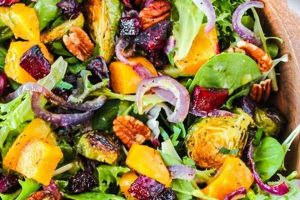
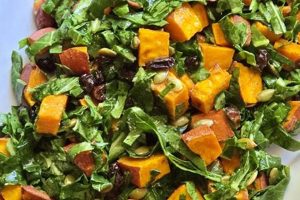
Dishes featuring this golden variety of beet offer a vibrant presentation and a subtly sweet, earthy flavor distinct from their red counterparts. These preparations often incorporate fresh herbs, citrus elements, and a variety of cheeses, nuts, or other vegetables to create a balanced and refreshing salad. An example might include thinly sliced golden beets tossed with goat cheese, toasted walnuts, orange segments, and a light vinaigrette.
Golden beets retain their vibrant hue when cooked, avoiding the bleeding that can occur with red beets. This characteristic makes them visually appealing in salads and other dishes. Their milder, less earthy taste appeals to a broader palate, offering an approachable entry point for those new to beet consumption. Furthermore, they provide similar nutritional benefits to red beets, being a good source of fiber, folate, and nitrates, contributing to a healthy diet.
The following sections will delve into specific preparation methods, ingredient pairings, and variations, offering a range of culinary possibilities for incorporating this unique vegetable into flavorful and visually striking salads.
Tips for Preparing Golden Beet Salads
Successful preparation of salads featuring golden beets relies on understanding their unique properties and employing techniques that enhance their flavor and presentation. These tips offer guidance for achieving optimal results.
Tip 1: Roasting vs. Boiling: Roasting intensifies the sweetness and concentrates the flavor of golden beets, while boiling results in a milder flavor and softer texture. Choose the method best suited to the desired outcome.
Tip 2: Handling Stains: While golden beets stain less than red beets, wearing gloves during preparation is recommended to avoid discoloration of hands.
Tip 3: Enhancing the Flavor Profile: Citrus fruits, such as oranges and grapefruit, pair well with the sweetness of golden beets, adding brightness and acidity. Vinegars, like apple cider or champagne, can further enhance the flavor.
Tip 4: Textural Contrast: Incorporating crunchy elements like toasted nuts (walnuts, pecans), seeds (pumpkin, sunflower), or croutons adds textural interest to the salad.
Tip 5: Cheese Pairings: Soft cheeses like goat cheese, feta, or ricotta complement the earthy sweetness of golden beets, creating a balanced flavor profile.
Tip 6: Herb Selection: Fresh herbs such as dill, mint, or parsley add freshness and aromatic complexity to golden beet salads.
Tip 7: Dressing Lightly: A light vinaigrette is often preferred to avoid overpowering the delicate flavor of the beets. A simple dressing of olive oil, lemon juice, salt, and pepper can be sufficient.
By following these tips, one can create visually appealing and flavorful salads showcasing the unique qualities of golden beets. These techniques ensure a balanced and enjoyable culinary experience.
The insights and suggestions provided throughout this exploration offer a comprehensive understanding of preparing and enjoying golden beet salads, highlighting the versatility and nutritional value of this often-overlooked vegetable.
1. Flavor Profiles
Flavor profiles play a crucial role in crafting successful yellow beet salad recipes. The inherent sweetness of yellow beets offers a versatile base upon which diverse flavor combinations can be built. Understanding this foundational flavor allows for strategic incorporation of complementary ingredients to achieve balanced and complex profiles. For instance, the earthy sweetness of yellow beets pairs well with acidic elements such as citrus fruits (orange, grapefruit) or vinegars (apple cider, champagne). This interplay of sweet and acidic notes creates a vibrant and refreshing taste experience. Similarly, incorporating salty elements like feta cheese or toasted nuts enhances the sweetness while adding a savory dimension. Balancing these contrasting flavors elevates a simple beet salad to a more sophisticated culinary creation.
Further exploration of flavor profiles reveals the potential for building layered complexity within yellow beet salad recipes. Consider the interplay of textures and temperatures alongside taste. A salad featuring roasted yellow beets, chilled goat cheese, and candied pecans offers a combination of warm, cool, creamy, and crunchy elements, each contributing to the overall flavor profile. The warmth of the roasted beets intensifies their sweetness, while the chilled goat cheese provides a refreshing contrast. The candied pecans introduce a sweet and crunchy element that complements the earthy notes of the beets. Such combinations demonstrate how a thoughtful approach to flavor profiles can transform individual ingredients into a harmonious and multi-dimensional dish.
Ultimately, a deep understanding of flavor profiles enables culinary creativity and ensures a well-balanced final product. By recognizing the inherent characteristics of yellow beets and strategically incorporating complementary ingredients, one can create yellow beet salad recipes that are not only visually appealing but also offer a complex and satisfying taste experience. This understanding allows for adaptation and customization of recipes to suit individual preferences and explore the full potential of this versatile root vegetable.
2. Ingredient Pairings

Ingredient pairings are fundamental to successful yellow beet salad recipes. Thoughtful combinations elevate the simple beet to a complex and flavorful dish. Understanding complementary flavors and textures is essential for creating a balanced and satisfying culinary experience.
- Acidity:
The earthy sweetness of yellow beets benefits from acidic counterpoints. Citrus fruits, such as oranges and grapefruits, provide brightness and cut through the sweetness. Vinegars, including apple cider, white wine, and champagne vinegar, offer similar benefits. A squeeze of lemon juice or a drizzle of balsamic glaze can also provide the necessary acidity. These acidic elements balance the sweetness of the beets, preventing the salad from becoming cloying.
- Cheese:
Cheese adds a creamy texture and savory element to yellow beet salads. Soft, fresh cheeses, such as goat cheese, feta, and ricotta, complement the beets’ sweetness. Stronger cheeses like blue cheese or gorgonzola offer a pungent contrast. The choice of cheese depends on the desired overall flavor profile. A mild goat cheese provides a subtle tang, while a bold blue cheese creates a more assertive flavor combination.
- Nuts and Seeds:
Nuts and seeds contribute texture and flavor. Toasted walnuts, pecans, or pistachios add crunch and nutty notes. Sunflower or pumpkin seeds offer a different textural and flavor dimension. These additions create a more interesting mouthfeel and prevent the salad from becoming monotonous. Toasted nuts enhance their inherent flavors, adding depth to the overall salad.
- Herbs:
Fresh herbs provide aromatic complexity and visual appeal. Dill, mint, parsley, and chives complement the earthy flavors of yellow beets. The choice of herbs depends on the desired flavor profile and complements other ingredients. Fresh dill adds a slightly tangy, anise-like flavor, while mint offers a refreshing coolness. The herbs vibrant green color also enhances the visual appeal of the salad.
Careful consideration of these ingredient pairings allows for the creation of a diverse array of yellow beet salad recipes. Each ingredient contributes to the overall flavor profile, texture, and visual appeal. The interplay of these elements transforms individual components into a harmonious and satisfying dish.
3. Textural Contrasts

Textural contrast significantly impacts the enjoyment of yellow beet salad recipes. A combination of textures creates a more dynamic and satisfying culinary experience. The inherent smoothness of cooked beets necessitates the incorporation of contrasting elements to prevent a monotonous mouthfeel. This can be achieved through various additions, each contributing a unique textural dimension to the salad.
Crunchy elements provide a stark contrast to the soft beets. Toasted nuts, such as walnuts, pecans, or almonds, offer a satisfying bite. Seeds, like sunflower or pumpkin seeds, introduce a different type of crunch. Croutons, either homemade or store-bought, provide a crisp and airy contrast. The interplay of soft beets and crunchy additions creates a more engaging and enjoyable eating experience. Consider a salad with roasted yellow beets, crumbled goat cheese, and candied pecans. The soft beets and creamy goat cheese are balanced by the crunch of the pecans, resulting in a delightful textural interplay.
Beyond crunch, other textures contribute to the complexity of a yellow beet salad. Leafy greens, such as spinach or arugula, introduce a slightly bitter flavor and a delicate texture. Adding thinly sliced raw vegetables, like fennel or carrots, offers a crisp and refreshing counterpoint to the cooked beets. Even the texture of the cheese plays a role. A creamy goat cheese contrasts differently than a crumbly feta. Understanding these nuances allows for careful construction of a salad that offers a variety of textures in each bite. This attention to textural contrast elevates the sensory experience of consuming yellow beet salads, transforming a simple dish into a more complex and satisfying culinary creation.
4. Presentation Techniques
Presentation techniques significantly influence the perceived appeal of yellow beet salad recipes. Visual appeal stimulates appetite and enhances the overall dining experience. Strategic plating elevates the dish beyond mere sustenance, transforming it into a culinary creation worthy of admiration. The vibrant hues of yellow beets offer a unique canvas for creative presentation. Consider the impact of contrasting colors. A salad composed of golden beets, deep green spinach, and bright orange segments creates a visually striking presentation. The interplay of colors enhances the perceived freshness and flavor of the dish.
Beyond color, other visual elements contribute to a compelling presentation. The arrangement of ingredients plays a crucial role. Instead of simply tossing ingredients together, consider layering them for a more dynamic visual effect. Thinly sliced beets can be arranged in a circular pattern, topped with crumbled cheese and strategically placed herbs. This deliberate arrangement adds a sense of artistry to the dish. Furthermore, the choice of serving vessel influences the overall presentation. A shallow bowl showcases the vibrant colors and textures of the salad, while a tall glass creates a more layered and dramatic effect. Even the choice of utensils can contribute to the aesthetic appeal. Using elegant serving forks and spoons adds a touch of sophistication.
Ultimately, effective presentation techniques enhance the enjoyment of yellow beet salad recipes. Visual appeal complements the flavors and textures of the dish, creating a holistic sensory experience. By considering color, arrangement, and serving vessels, one can transform a simple salad into a visually stunning culinary masterpiece. This attention to detail demonstrates care and elevates the dining experience, showcasing the full potential of yellow beet salads.
5. Preparation Methods
Preparation methods significantly influence the flavor, texture, and overall appeal of yellow beet salad recipes. Different techniques unlock distinct characteristics, offering a wide range of culinary possibilities. Understanding these methods allows for informed choices based on desired outcomes. Roasting intensifies the sweetness of yellow beets, concentrating their earthy flavors. This method caramelizes the natural sugars, resulting in a richer, more complex taste profile. Roasted beets hold their shape well, making them ideal for salads featuring visually appealing, distinct pieces. Boiling, conversely, yields a milder flavor and softer texture. This method is preferable for recipes requiring blended or pureed beets, or when a less intense flavor is desired.
Beyond roasting and boiling, other preparation methods offer unique advantages. Steaming preserves the beets’ vibrant color and nutrients while maintaining a tender texture. Pickling introduces a tangy, acidic element, adding a new dimension to the salad’s flavor profile. Raw, thinly sliced yellow beets offer a crisp and refreshing contrast to other ingredients, showcasing their delicate sweetness. The choice of preparation method depends on the desired flavor and textural profile of the salad. A salad featuring roasted beets paired with toasted walnuts and goat cheese emphasizes robust, earthy flavors. A salad incorporating pickled beets and fresh dill offers a brighter, more tangy experience. Raw, shaved beets with a citrus vinaigrette highlight the vegetable’s natural sweetness and refreshing qualities.
Appropriate selection of preparation methods ensures successful yellow beet salad recipes. This understanding allows for informed decisions based on desired outcomes. Careful consideration of flavor profiles, textural contrasts, and overall presentation goals guides the choice of preparation technique. Matching the preparation method to the recipe’s specific requirements results in a balanced and harmonious dish, showcasing the versatility and culinary potential of yellow beets.
6. Nutritional Benefits
Nutritional benefits are an integral aspect of yellow beet salad recipes. These salads offer more than just appealing flavors and textures; they contribute valuable nutrients to a balanced diet. Understanding these nutritional components provides a deeper appreciation for incorporating yellow beets into regular meal planning.
- Fiber:
Yellow beets are a good source of dietary fiber, essential for digestive health. Fiber promotes regularity, prevents constipation, and supports a healthy gut microbiome. Incorporating fiber-rich foods like yellow beet salads contributes to overall well-being.
- Folate:
Yellow beets contain folate, a B vitamin crucial for cell growth and development. Folate is especially important during pregnancy for preventing neural tube defects. Regular consumption of folate-rich foods like yellow beet salads supports healthy cell function.
- Nitrates:
Yellow beets are a natural source of nitrates, compounds that convert to nitric oxide in the body. Nitric oxide helps relax and widen blood vessels, improving blood flow and potentially lowering blood pressure. This benefit makes yellow beet salads a heart-healthy dietary choice.
- Antioxidants:
Yellow beets contain antioxidants, including betalains, which protect cells from damage caused by free radicals. These antioxidants contribute to overall health and may help reduce the risk of chronic diseases. Consuming yellow beet salads provides a dietary source of these protective compounds.
The nutritional profile of yellow beets enhances the value of yellow beet salad recipes. These salads provide essential nutrients contributing to overall health, from supporting digestive health to promoting cardiovascular function and protecting against cellular damage. This combination of flavor, visual appeal, and nutritional value makes yellow beet salads a valuable addition to any diet.
7. Seasonal Variations
Seasonal variations significantly influence yellow beet salad recipes, impacting ingredient availability and inspiring culinary creativity. Aligning recipes with seasonal produce maximizes flavor and nutritional value while supporting local agriculture. Summer’s abundance offers opportunities to incorporate fresh, delicate ingredients. A yellow beet salad featuring thinly shaved raw beets, fresh mint, crumbled goat cheese, and a light citrus vinaigrette exemplifies this seasonality. The salad’s refreshing qualities align with summer’s lighter fare preferences.
Autumn’s harvest inspires heartier salads incorporating roasted root vegetables and warming spices. A salad featuring roasted yellow beets, toasted walnuts, crumbled blue cheese, and a maple-balsamic vinaigrette reflects autumnal flavors. The roasted beets and nuts provide warmth, while the blue cheese adds a pungent complexity. Winter citrus season introduces bright, acidic notes that complement the earthy sweetness of yellow beets. A salad combining roasted yellow beets, orange segments, pistachios, and a blood orange vinaigrette embodies winter’s vibrant flavors. The citrus elements provide a refreshing contrast to the rich beets and nuts.
Adapting yellow beet salad recipes to seasonal variations ensures optimal flavor and nutritional value while celebrating the cyclical nature of agricultural abundance. This adaptability allows for year-round enjoyment of yellow beets, highlighting their versatility and compatibility with a range of seasonal ingredients. Understanding and embracing these seasonal influences enhances culinary creativity, resulting in dynamic and flavorful salads that reflect the essence of each season.
Frequently Asked Questions
This section addresses common inquiries regarding yellow beet salad recipes, providing clarity and practical guidance for optimal culinary results.
Question 1: Do yellow beets need to be peeled before using them in a salad?
While peeling is not strictly necessary, it is generally recommended for mature beets as the skin can become tough. Younger, smaller beets may have tender skins suitable for consumption after thorough washing.
Question 2: How can bleeding of yellow beets be minimized in salads?
Yellow beets are less prone to bleeding than red beets. Roasting, rather than boiling, further minimizes color bleeding and concentrates flavor. Adding an acidic element, such as vinegar or citrus juice, to the salad also helps preserve color.
Question 3: What are suitable substitutes for goat cheese in yellow beet salads?
Feta cheese, ricotta cheese, or even a plant-based alternative like cashew cream can provide similar creamy textures and complementary flavors. The choice depends on dietary preferences and desired flavor profiles.
Question 4: How long can a prepared yellow beet salad be stored?
Properly stored in an airtight container in the refrigerator, a prepared yellow beet salad typically lasts for up to three days. However, salads containing more delicate ingredients, such as fresh herbs or leafy greens, may have a shorter shelf life.
Question 5: Can canned yellow beets be used in salads?
While canned beets offer convenience, they often have a softer texture and less vibrant flavor compared to fresh or roasted beets. If using canned beets, ensure they are thoroughly drained and rinsed before incorporating them into the salad.
Question 6: How can the earthiness of yellow beets be balanced in a salad?
Balancing the earthiness of yellow beets can be achieved by incorporating bright, acidic elements such as citrus fruits (orange, grapefruit) or vinegars (apple cider, champagne). Sweet components, like honey or maple syrup, can also complement the earthy notes, while fresh herbs add brightness and aromatic complexity.
Addressing these frequently asked questions provides a comprehensive understanding of preparing and enjoying yellow beet salads. This knowledge empowers culinary exploration and ensures successful outcomes.
Further sections will explore specific recipe variations and offer additional tips for optimizing flavor and presentation.
Conclusion
Exploration of yellow beet salad recipes reveals a versatile culinary landscape. Careful consideration of ingredient pairings, textural contrasts, and preparation methods unlocks the full potential of this vibrant root vegetable. From the earthy sweetness of roasted beets paired with creamy goat cheese and crunchy nuts to the refreshing combination of raw beets, citrus segments, and fresh herbs, the possibilities are vast. Understanding the interplay of flavors, textures, and colors elevates these salads beyond simple side dishes to complex and satisfying culinary creations.
The nutritional benefits of yellow beets further enhance their appeal, offering a valuable contribution to a balanced diet. Rich in fiber, folate, nitrates, and antioxidants, these salads provide both culinary delight and health-conscious advantages. Continued exploration and experimentation with yellow beet salad recipes promise further culinary discoveries and inspire innovative approaches to incorporating this versatile ingredient into diverse dietary landscapes.