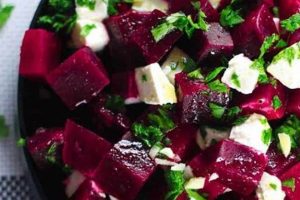
A dish featuring cooked quinoa, crumbled feta cheese, and a variety of other ingredients creates a nutritious and flavorful meal. Common additions include chopped vegetables like cucumbers, tomatoes, and red onion, fresh herbs such as mint or parsley, and a lemon vinaigrette. Variations can incorporate different vegetables, nuts, seeds, or dried fruits, offering diverse flavor profiles and textures.
This type of salad provides a complete protein source thanks to the quinoa, while the feta contributes calcium and a salty, tangy element. The inclusion of fresh produce boosts vitamin and mineral intake. Its adaptability to seasonal ingredients and diverse palates makes it a practical and appealing choice for various occasions, from light lunches to side dishes at larger gatherings. Historically, quinoa’s origins trace back to the Andean region of South America, while feta cheese is a staple of Greek cuisine. The modern combination of these ingredients reflects the global exchange of culinary traditions and the growing appreciation for healthy and flavorful meals.
Further exploration will cover specific ingredient combinations, preparation techniques, nutritional information, and serving suggestions. Whether seeking a quick and easy meal or a vibrant addition to a potluck, understanding the elements of this versatile dish opens up a world of culinary possibilities.
Tips for a Perfect Quinoa Feta Salad
Optimizing ingredient selection and preparation techniques elevates this simple salad to a culinary masterpiece. Attention to detail ensures a balanced flavor profile and a satisfying textural experience.
Tip 1: Rinse the quinoa. Rinsing removes the naturally occurring bitter coating (saponins) for a more palatable flavor.
Tip 2: Cook quinoa properly. Follow package instructions for the ideal water-to-quinoa ratio and cooking time. Fluffy, properly cooked quinoa enhances the salad’s texture.
Tip 3: Use high-quality feta. Authentic feta cheese, made from sheep’s or goat’s milk, provides a superior flavor and texture compared to cow’s milk feta.
Tip 4: Incorporate fresh, seasonal vegetables. Peak-season produce offers the best flavor and nutritional value. Consider tomatoes, cucumbers, bell peppers, and red onion.
Tip 5: Add fresh herbs. Mint, parsley, dill, or oregano complement the other flavors and add a refreshing element.
Tip 6: Toast nuts and seeds. Toasted nuts and seeds like pine nuts, walnuts, or sunflower seeds contribute a satisfying crunch and deeper flavor profile.
Tip 7: Prepare a balanced vinaigrette. A simple lemon vinaigrette with extra virgin olive oil, lemon juice, salt, and pepper complements the salad’s flavors without overpowering them. Experiment with different oils and vinegars for variation.
Tip 8: Chill before serving (optional). Chilling allows the flavors to meld, resulting in a more cohesive and refreshing salad. However, serving at room temperature also offers a pleasant experience.
By following these tips, one can achieve optimal flavor, texture, and nutritional value in this versatile dish. Proper preparation elevates simple ingredients, transforming them into a delightful culinary experience.
Considering these elements enhances appreciation for the interplay of flavors and textures present within this dish.
1. Ingredient Selection
Ingredient selection significantly impacts the final quality and character of a quinoa feta salad. Thoughtful choices elevate this dish from simple to exceptional. The interplay of flavors and textures relies heavily on the careful selection of each component. Fresh, high-quality ingredients contribute not only to taste but also to nutritional value and overall appeal. For example, using ripe, in-season tomatoes intensifies the salad’s freshness, while opting for high-quality feta, preferably from sheep or goat’s milk, adds a depth of flavor that generic feta lacks. Selecting vibrant, crisp vegetables enhances both visual appeal and textural contrast.
Specific ingredient combinations offer distinct flavor profiles. Cucumber adds a refreshing coolness, while red onion provides a subtle bite. Bell peppers introduce sweetness and a satisfying crunch. Incorporating herbs like mint or parsley contributes a refreshing herbal note. Toasted nuts or seeds add a textural element and boost healthy fats. Dried fruits like cranberries or currants can introduce a touch of sweetness and chewiness. Considering the interplay of these elements allows for customization based on individual preferences and dietary needs. One might choose Kalamata olives for a briny, salty counterpoint, or sun-dried tomatoes for an intensified, tangy flavor.
Successful ingredient selection relies on an understanding of flavor profiles and their complementary nature. A harmonious balance of sweet, salty, acidic, and savory elements is key to a well-rounded salad. Careful consideration of ingredients ensures a vibrant and flavorful final product. Furthermore, attention to ingredient quality and seasonality maximizes nutritional benefits and supports sustainable food practices. Overlooking ingredient selection can result in a bland or unbalanced dish, diminishing the potential of this versatile salad. By prioritizing quality and thoughtful combinations, one unlocks the full potential of the quinoa feta salad as a flavorful and nutritious meal.
2. Quinoa Preparation

Proper quinoa preparation is crucial for a successful quinoa feta salad. The texture and flavor of the quinoa significantly influence the overall dish. Overcooked quinoa becomes mushy, while undercooked quinoa remains hard and unpleasant. Correctly cooked quinoa provides a light, fluffy base that complements the other ingredients.
- Rinsing:
Rinsing quinoa removes saponins, a natural coating that can impart a bitter flavor. Thorough rinsing under cold water until the water runs clear is essential for enhancing the quinoa’s inherent nutty flavor and preventing any lingering bitterness in the salad.
- Cooking Method:
The absorption method, similar to cooking rice, yields optimal results. The standard ratio is two parts water to one part quinoa. Bringing the water to a boil, adding the rinsed quinoa, reducing heat to a simmer, covering, and cooking for approximately 15 minutes, or until all the water is absorbed, achieves a light and fluffy texture. Overcooking results in a mushy texture, detracting from the salad’s overall appeal.
- Cooling and Fluffing:
Once cooked, allowing the quinoa to cool completely prevents it from becoming sticky. After cooling, fluffing the quinoa with a fork separates the grains, ensuring a light and airy texture, rather than a dense, compact mass, which is essential for a pleasant salad experience. This step also helps to release steam, further preventing stickiness.
- Flavor Infusion (Optional):
While optional, infusing flavor during the cooking process can elevate the quinoa’s taste. Cooking the quinoa in vegetable broth instead of water imparts a subtle savory flavor. Adding herbs, spices, or even a squeeze of lemon to the cooking liquid further enhances the quinoa’s complexity, creating a more nuanced flavor profile that complements the other salad ingredients.
These preparation steps contribute significantly to the overall success of the quinoa feta salad. Properly prepared quinoa provides a pleasant textural foundation and a balanced flavor profile that enhances the other ingredients. The light, fluffy texture contrasts nicely with the creamy feta and crisp vegetables, creating a harmonious blend of flavors and textures. Neglecting proper quinoa preparation can compromise the entire dish, affecting both taste and texture. Therefore, attention to detail in these steps is essential for creating a truly delightful and satisfying quinoa feta salad.
3. Feta Quality
Feta quality significantly impacts the overall success of a quinoa feta salad recipe. The choice of feta affects not only the flavor profile but also the texture and overall sensory experience. Authentic feta, traditionally made from sheep’s milk or a blend of sheep and goat’s milk, possesses a distinct tangy, salty flavor and a creamy, crumbly texture. Lower-quality feta, often made from cow’s milk, tends to be milder in flavor and firmer in texture, lacking the characteristic complexity of true feta. This difference significantly alters the balance of the salad, potentially diminishing its overall impact. For instance, a mild feta may fail to provide the necessary salty counterpoint to the other ingredients, resulting in a less vibrant flavor profile.
The production method also influences feta quality. Traditional methods involve aging the cheese in brine, which contributes to its characteristic tang and creamy texture. Mass-produced feta often undergoes a shorter aging process, resulting in a less developed flavor profile and a firmer, less desirable texture. Furthermore, the quality of the milk itself plays a vital role. Feta made from high-quality milk from pasture-raised animals exhibits a richer, more complex flavor compared to feta made from conventionally produced milk. The milk source influences the concentration of beneficial fatty acids and other nutrients, impacting both flavor and nutritional value. Choosing a high-quality feta made from sheep or goat’s milk, aged in brine according to traditional methods, enhances the overall sensory experience and nutritional profile of the salad. For example, a salad made with authentic Greek feta, aged in brine for several months, offers a more nuanced flavor profile and a creamier texture compared to a salad made with a commercially produced cow’s milk feta.
Recognizing the impact of feta quality allows for informed ingredient selection, ensuring a balanced and flavorful quinoa feta salad. Opting for high-quality feta elevates the dish, creating a more complex and satisfying culinary experience. Failing to consider feta quality can result in a bland or unbalanced salad, diminishing the potential of this versatile dish. Selecting authentic feta ensures that its characteristic tangy, salty flavor complements the other ingredients, creating a harmonious blend of flavors and textures. This understanding empowers informed choices, ensuring the highest quality and most enjoyable culinary outcome. Therefore, prioritizing feta quality is essential for achieving optimal flavor, texture, and overall satisfaction in a quinoa feta salad recipe.
4. Vegetable Choices

Vegetable choices significantly influence the flavor profile, nutritional value, and textural complexity of a quinoa feta salad recipe. A thoughtful selection of vegetables elevates the dish beyond a simple combination of ingredients, transforming it into a vibrant and balanced culinary experience. The inherent versatility of the quinoa feta base allows for a wide range of vegetable additions, each contributing unique characteristics to the final product. Selecting a variety of colors, textures, and flavors ensures a well-rounded and appealing salad. For instance, incorporating crisp cucumbers and juicy tomatoes offers a refreshing contrast, while the addition of roasted sweet potatoes or butternut squash introduces a subtle sweetness and a heartier texture.
The interplay between vegetable choices and the core ingredientsquinoa and fetais crucial. The nutty flavor of quinoa and the salty tang of feta provide a foundation upon which the vegetable flavors can build. Balancing contrasting flavors and textures creates a harmonious and satisfying culinary experience. Consider the combination of peppery arugula, sweet roasted red peppers, and crunchy toasted walnuts: each element complements the others, creating a layered and nuanced flavor profile. Furthermore, incorporating seasonal vegetables maximizes flavor and nutritional content. A summer salad might feature fresh corn, ripe tomatoes, and zucchini, while an autumnal version could include roasted Brussels sprouts, butternut squash, and cranberries. This adaptability to seasonal ingredients ensures year-round enjoyment and nutritional variety.
Strategic vegetable choices maximize the nutritional density of the salad. Incorporating dark leafy greens like spinach or kale boosts vitamin and mineral content. Cruciferous vegetables such as broccoli or cauliflower provide antioxidants and fiber. Colorful vegetables like bell peppers and carrots offer a range of vitamins and phytonutrients. Understanding the nutritional contributions of various vegetables allows for the creation of a salad that not only tastes delicious but also supports optimal health and well-being. Therefore, careful consideration of vegetable choices is essential for optimizing the flavor, texture, nutritional value, and overall appeal of a quinoa feta salad recipe. This thoughtful approach transforms a simple salad into a versatile and satisfying culinary creation, adaptable to diverse tastes and dietary preferences.
5. Flavor Balancing
Flavor balancing is paramount in a successful quinoa feta salad recipe. The inherent flavors of quinoa and fetamildly nutty and salty, respectivelyprovide a foundation requiring careful consideration of additional components. A harmonious balance of sweet, sour, salty, bitter, and umami elements elevates the dish from simple to complex. Without proper balance, the salad can become overly salty, excessively tart, or bland. For example, the sharpness of a lemon vinaigrette requires tempering with a touch of sweetness, perhaps from roasted vegetables or dried fruit. The saltiness of feta needs balancing with other flavors to prevent it from dominating the palate. The interplay of these elements creates a dynamic and satisfying sensory experience. A salad relying solely on the saltiness of feta and the mildness of quinoa may lack depth and complexity, highlighting the importance of balancing these base flavors with other complementary tastes.
Achieving flavor balance involves understanding the characteristics of each ingredient. Acidic elements like lemon juice or vinegar brighten the flavors and cut through richness. Sweet components, such as roasted sweet potatoes or dried cranberries, provide a counterpoint to salty and acidic elements. Bitter greens like arugula or kale add complexity and depth. Umami-rich ingredients like sun-dried tomatoes or toasted nuts contribute savory notes. Herbs and spices further enhance the flavor profile, adding layers of complexity. Consider a salad featuring roasted butternut squash, toasted pecans, crumbled feta, and baby spinach, dressed with a lemon-maple vinaigrette: the sweetness of the squash and maple syrup balances the tangy lemon and salty feta, while the pecans provide a contrasting texture and subtle bitterness. The spinach contributes a mild bitterness that further enhances the complexity of the flavor profile.
Understanding flavor balancing principles empowers informed ingredient selection and recipe customization. Recognizing the interplay of tastes allows for adjustments based on personal preferences and seasonal ingredient availability. Successful flavor balancing results in a harmonious and satisfying quinoa feta salad that highlights the individual characteristics of each component while creating a unified and delicious whole. Failure to address flavor balance can lead to a less enjoyable culinary experience, emphasizing the practical significance of this understanding within the context of recipe development and execution. Mastering this aspect of culinary practice is essential for creating a quinoa feta salad that is not only nutritious but also a delight to the palate.
6. Dressing Selection

Dressing selection significantly influences the overall flavor profile and enjoyment of a quinoa feta salad recipe. The dressing acts as a unifying element, binding the individual components and creating a cohesive culinary experience. An appropriate dressing complements the inherent flavors of quinoa and feta, enhancing rather than masking their unique characteristics. A poorly chosen dressing can overwhelm the delicate flavors of the salad, resulting in a dish that is unbalanced and less satisfying. The interplay between the dressing and the other ingredients is crucial; the dressing should enhance the existing flavors, creating a harmonious blend rather than competing with them. For example, a heavy, creamy dressing might overpower the light and fluffy texture of the quinoa and the tangy saltiness of the feta, while a light vinaigrette complements these flavors, allowing them to shine through.
Several factors contribute to effective dressing selection. Acidity plays a crucial role, balancing the richness of the feta and adding brightness to the salad. Lemon juice, vinegar, or a combination thereof provides the necessary acidity. The type of oil used also impacts the flavor and texture of the dressing. Extra virgin olive oil offers a robust flavor, while lighter oils like grapeseed or avocado oil provide a more neutral base. The inclusion of herbs, spices, and other flavoring agents further enhances the dressing’s complexity. Freshly chopped herbs like mint, parsley, or dill add a refreshing element, while spices like cumin or sumac introduce earthy or tangy notes. A touch of sweetness, from honey or maple syrup, can balance the acidity and create a more well-rounded flavor profile. For instance, a lemon-herb vinaigrette with a touch of honey complements the flavors of quinoa, feta, and fresh vegetables, creating a light and refreshing salad, while a tahini-based dressing adds richness and nuttiness, suitable for a salad with roasted vegetables and chickpeas.
Successful dressing selection hinges on a clear understanding of flavor profiles and their interaction. The dressing should complement the other ingredients, creating a harmonious and balanced flavor profile. The texture of the dressing should also be considered; a light vinaigrette works well with delicate ingredients, while a creamier dressing may be more suitable for heartier salads. Ultimately, dressing selection significantly impacts the overall success of a quinoa feta salad recipe. Careful consideration of flavor profiles, acidity, oil choice, and additional flavoring agents ensures a dressing that enhances the inherent qualities of the salad, creating a delicious and satisfying culinary experience. Neglecting the importance of dressing selection can result in a dish that falls short of its potential, highlighting the practical significance of this aspect of recipe development and execution.
7. Serving Suggestions

Serving suggestions enhance the versatility of a quinoa feta salad recipe, transforming it from a basic dish into a customizable culinary experience. Considerations such as temperature, accompanying dishes, and presentation elevate the sensory experience and overall enjoyment. Appropriate serving suggestions maximize the salad’s potential, catering to various occasions and palates.
- Temperature
Temperature significantly influences the salad’s flavor profile and textural elements. Serving the salad chilled enhances the refreshing qualities of the fresh vegetables and herbs, particularly during warmer months. Room temperature allows the nuanced flavors of the quinoa and feta to shine through, offering a different sensory experience. The choice depends on personal preference and the overall composition of the salad. A chilled salad with cucumbers and mint provides a refreshing contrast on a hot day, while a room-temperature salad with roasted vegetables offers a more comforting experience.
- Accompanying Dishes
The quinoa feta salad functions effectively as a standalone light meal or as a side dish complementing various cuisines. Pairing the salad with grilled protein, such as chicken, fish, or tofu, creates a complete and balanced meal. Serving it alongside roasted vegetables or other grains provides a lighter accompaniment. Consideration of flavor profiles and textures ensures a harmonious combination. The salad’s Mediterranean flavors pair well with grilled lamb or fish, while its light and refreshing qualities complement heavier dishes like roasted meats or stews. For example, a quinoa feta salad with grilled salmon offers a balanced meal with contrasting flavors and textures.
- Presentation
Presentation elevates the visual appeal and perceived value of the quinoa feta salad. A simple yet elegant presentation enhances the dining experience. Consider serving the salad in individual bowls or on a platter garnished with fresh herbs, a sprinkle of toasted nuts, or a drizzle of extra virgin olive oil. Attention to detail, such as using attractive servingware and arranging the ingredients thoughtfully, demonstrates care and elevates the overall perception of the dish. A visually appealing salad, presented with fresh herbs and a sprinkle of feta, is more enticing and enjoyable than a haphazardly assembled one.
- Customization
The adaptability of the quinoa feta salad allows for customization based on individual preferences and dietary needs. Offering a variety of toppings, such as different nuts, seeds, dried fruits, or cheeses, allows diners to personalize their salads. Providing separate dressings caters to diverse tastes and dietary restrictions. This flexibility ensures that the salad remains a versatile and appealing option for a wide range of occasions and preferences. For instance, offering a selection of toppings like toasted almonds, sunflower seeds, dried cranberries, and crumbled goat cheese allows for customization and caters to diverse tastes.
Consideration of these serving suggestions transforms the quinoa feta salad recipe from a basic preparation into a customizable and adaptable culinary creation. Thoughtful attention to temperature, accompanying dishes, presentation, and customization options elevates the overall dining experience, ensuring a versatile and enjoyable meal for any occasion. These elements demonstrate the adaptability of this seemingly simple dish, showcasing its potential as a canvas for culinary creativity.
Frequently Asked Questions
This section addresses common inquiries regarding quinoa feta salad preparation and variations, providing concise and informative responses.
Question 1: Can quinoa be substituted with other grains?
While other grains like couscous or farro can be used, they possess different textures and flavor profiles, potentially altering the salad’s overall character. Quinoa’s unique nutritional profile and light, fluffy texture make it particularly well-suited for this application.
Question 2: What are suitable feta cheese alternatives?
Goat cheese offers a comparable tangy flavor and creamy texture. Ricotta salata provides a firmer, saltier alternative. However, these substitutions will subtly shift the flavor profile. Plant-based feta alternatives are also available for those seeking dairy-free options.
Question 3: How long can the salad be stored?
Refrigeration in an airtight container allows storage for up to three days. The texture may change slightly over time as the quinoa absorbs moisture. Adding the dressing just before serving helps maintain optimal texture and prevents the salad from becoming soggy.
Question 4: Can the salad be prepared in advance?
Preparing components like the cooked quinoa and chopped vegetables in advance streamlines the process. Storing them separately and combining them just before serving maintains optimal freshness and texture. The dressing should also be prepared separately and added just before serving.
Question 5: How can the nutritional value be maximized?
Incorporating a variety of colorful vegetables, such as bell peppers, spinach, and carrots, increases vitamin and mineral content. Adding nuts and seeds boosts healthy fats and protein. Using a minimally processed dressing further optimizes nutritional value. Consider adding ingredients like chickpeas or lentils for additional protein and fiber.
Question 6: Can this salad be adapted for specific dietary needs?
The recipe’s adaptable nature allows modifications for various dietary requirements. Gluten-free adherence is ensured by using certified gluten-free quinoa and avoiding cross-contamination. Vegan adaptations utilize plant-based feta alternatives and ensure all other ingredients are plant-based. Adjustments to sodium content can be made by selecting lower-sodium feta or using herbs and spices to enhance flavor without added salt. Ingredient substitutions can address specific allergies or intolerances.
Understanding these aspects optimizes recipe preparation and ensures a successful culinary outcome. Addressing common concerns enhances confidence in ingredient selection and customization.
Exploration of recipe variations follows in the next section, providing further inspiration and culinary possibilities.
Conclusion
Exploration of the quinoa feta salad recipe reveals a dish offering nutritional value and culinary versatility. Careful ingredient selection, including high-quality feta and fresh produce, contributes significantly to the final product. Proper quinoa preparation ensures optimal texture and flavor. Balancing flavors through strategic ingredient combinations and dressing selection creates a harmonious and satisfying culinary experience. Adaptability to various dietary needs and preferences further enhances the recipe’s appeal. Serving suggestions, considering temperature, accompanying dishes, and presentation, elevate the dining experience.
The quinoa feta salad recipe represents more than a simple combination of ingredients; it embodies a versatile and adaptable culinary concept. Understanding the underlying principles of ingredient selection, flavor balancing, and presentation unlocks the recipe’s full potential. This knowledge empowers culinary exploration and customization, resulting in a dish that is both nutritious and enjoyable. Continued experimentation with flavor combinations and ingredient variations promises further culinary discoveries within this versatile framework.