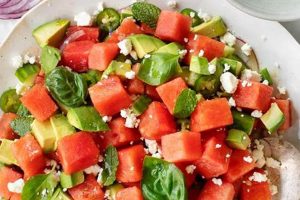
This refreshing dish combines the sweetness of summer watermelon with the salty tang of feta cheese and the cool, herbaceous notes of mint. A simple vinaigrette often enhances the flavors, creating a vibrant and balanced culinary experience. Variations may include red onion, cucumber, or other seasonal ingredients, offering a customizable base adaptable to individual preferences.
The juxtaposition of sweet, salty, and herbaceous flavors makes this salad a popular choice during warm weather. Its hydrating and nutrient-rich components contribute to its appeal as a light yet satisfying meal or side dish. The combination likely originated in Mediterranean cuisine, where fresh, seasonal ingredients are highly valued. Its increasing popularity reflects a broader culinary trend toward simpler, healthier dishes that highlight fresh produce.
Further exploration will delve into specific ingredient selections, preparation techniques, and variations to achieve optimal flavor combinations and presentation. Nutritional information and suggested pairings will also be provided.
Tips for a Perfect Summer Salad
Achieving optimal flavor and presentation requires attention to detail throughout the preparation process. The following tips offer guidance for creating a truly exceptional dish.
Tip 1: Watermelon Selection: Opt for a ripe, seedless watermelon with deep red flesh. A firm texture ensures desirable cubed pieces that hold their shape.
Tip 2: Feta Choice: Authentic Greek feta, made from sheep and/or goat milk, provides the ideal tangy, salty counterpoint to the watermelon. Crumbled feta is preferable for even distribution.
Tip 3: Mint Preparation: Fresh mint leaves should be gently torn or chopped to release their aromatic oils. Avoid over-processing, which can result in a bruised flavor.
Tip 4: Vinaigrette Enhancement: A simple vinaigrette of extra virgin olive oil, red wine vinegar, a touch of honey, and a pinch of salt enhances the flavors beautifully. Experiment with additions like lime juice or Dijon mustard for nuanced variations.
Tip 5: Ingredient Proportion: Maintaining a balance among the core ingredients is crucial. Overpowering the watermelon with too much feta or mint will diminish the overall complexity.
Tip 6: Chilling for Optimal Flavor: Allowing the salad to chill briefly before serving allows the flavors to meld and enhances the refreshing quality of the dish. Avoid excessive chilling, which can dull the flavors.
Tip 7: Presentation: Arrange the salad components attractively on a platter or in individual bowls. A sprinkle of flaky sea salt and a drizzle of extra virgin olive oil just before serving elevate the presentation.
By following these guidelines, one can create a flavorful and visually appealing salad that showcases the harmonious combination of watermelon, feta, and mint.
These tips provide a foundational understanding of creating a successful dish. Subsequent sections will offer variations and further insights into customizing this versatile salad.
1. Ripe Watermelon

Ripe watermelon forms the foundation of this refreshing summer salad. Its sweetness and juiciness provide a crucial counterpoint to the salty feta and herbaceous mint. Selecting and preparing the watermelon correctly is paramount to the dish’s overall success.
- Indicators of Ripeness
Several factors signal a ripe watermelon. A deep, hollow sound when thumped, a creamy yellow field spot where the melon rested on the ground, and a slightly sweet aroma at the stem end all suggest ripeness. Avoiding underripe or overripe melons is critical for optimal flavor and texture.
- Flavor Profile
A ripe watermelon offers a balanced sweetness without being cloying. This sweetness complements the saltiness of the feta, creating a dynamic interplay of flavors. An underripe melon will lack sweetness, while an overripe one can be mealy and excessively sweet, disrupting the intended balance.
- Textural Integrity
Ripe watermelon has a firm, yet juicy texture. This firmness ensures the cubed pieces hold their shape in the salad and provide a pleasant mouthfeel. Overripe watermelon tends to be mushy and disintegrates easily, detracting from the salad’s visual appeal and textural complexity.
- Preparation Techniques
Once a ripe watermelon is selected, proper preparation is essential. Removing the rind and seeds completely and cutting the flesh into uniform cubes ensures even flavor distribution and a visually appealing presentation. Chilling the cubed watermelon briefly before combining it with the other ingredients enhances its refreshing quality.
The careful selection and preparation of ripe watermelon contributes significantly to the overall balance and enjoyment of the watermelon, feta, and mint salad. Its sweetness, texture, and refreshing qualities provide the essential backdrop against which the other ingredients shine.
2. Authentic Feta

Authentic feta cheese, traditionally made from sheep’s milk or a blend of sheep and goat’s milk, plays a crucial role in the balance and complexity of this salad. Its distinct characteristics contribute significantly to the overall sensory experience.
The tangy, salty flavor profile of authentic feta provides a necessary counterpoint to the sweetness of the watermelon. This contrast creates a dynamic interplay that elevates the salad beyond a simple combination of ingredients. Substitutes, such as cow’s milk feta, often lack the characteristic sharpness and brininess, resulting in a less vibrant flavor profile. For instance, a salad made with cow’s milk feta may taste bland and lack the distinct salty bite that balances the watermelon’s sweetness.
Furthermore, the crumbly texture of authentic feta contributes to the salad’s textural appeal. It contrasts with the smooth, juicy watermelon and the delicate mint leaves, creating a multi-faceted sensory experience. This textural interplay is often absent when using firmer, less crumbly substitutes. Consider a salad where the feta is cut into cubes; its texture might clash with the watermelon, creating a less harmonious mouthfeel. Authentic feta, with its characteristic crumbly nature, blends seamlessly, enhancing the overall textural complexity.
In summary, authentic feta cheese is not merely an ingredient but a key component that contributes significantly to the success of the watermelon, feta, and mint salad. Its unique flavor and texture are essential for achieving the desired balance and complexity. Understanding the importance of using authentic feta ensures a more satisfying and authentic culinary experience.
3. Fresh Mint

Fresh mint provides a crucial aromatic and flavor dimension to the watermelon, feta, and mint salad. Its bright, cool notes balance the sweetness of the watermelon and the saltiness of the feta, creating a complex and refreshing flavor profile. Dried mint lacks the vibrancy and nuanced flavor of fresh mint, resulting in a less dynamic and potentially bitter taste. For instance, a salad made with dried mint might have a muted, almost dusty flavor, failing to provide the refreshing counterpoint that fresh mint offers. The cooling sensation of fresh mint also contributes to the overall sensory experience, particularly during warmer months.
The choice of mint variety influences the final flavor profile. Spearmint, with its sweeter, more delicate flavor, is a popular choice. Other varieties, such as peppermint or chocolate mint, offer more intense and distinctive flavors that can add unique nuances to the salad. Using peppermint, for example, introduces a more pronounced menthol note, which can be invigorating but potentially overpowering if used in excess. Understanding these subtle differences allows for customization and tailoring the salad to individual preferences. Selecting young, tender mint leaves ensures optimal flavor and avoids the tougher texture and potential bitterness of older leaves.
The preparation of fresh mint also impacts the final dish. Gently tearing or coarsely chopping the leaves releases their aromatic oils without bruising them. Over-processing, such as finely mincing or pureeing, can result in a less desirable flavor and appearance. For example, finely minced mint might release excessive chlorophyll, leading to a slightly bitter taste and a less vibrant green color. The proper handling of fresh mint ensures that its refreshing qualities are maximized, contributing significantly to the overall balance and enjoyment of the salad.
4. Balanced Vinaigrette

A balanced vinaigrette is essential for harmonizing the diverse flavors within a watermelon feta mint salad. The vinaigrette acts as a unifying element, bridging the sweetness of the watermelon, the saltiness of the feta, and the herbaceousness of the mint. An overly acidic vinaigrette can overwhelm the delicate sweetness of the watermelon, while a bland dressing fails to enhance the other components. Consider a vinaigrette made solely with olive oil and lemon juice; the high acidity might clash with the watermelon, creating an unbalanced flavor profile. Conversely, a dressing lacking acidity might not provide sufficient contrast to the other ingredients, resulting in a less vibrant salad.
The ideal vinaigrette complements rather than dominates the salad. A simple combination of high-quality extra virgin olive oil, a mildly acidic vinegar such as red wine or white wine vinegar, and a touch of sweetness, often from honey or maple syrup, provides a balanced foundation. A pinch of salt and freshly ground black pepper enhances the overall flavor profile. Further complexity can be achieved by incorporating Dijon mustard for a subtle tang or a small amount of minced shallot for a savory note. For example, a vinaigrette made with olive oil, red wine vinegar, a touch of honey, Dijon mustard, salt, and pepper offers a balanced flavor profile that enhances the salad without overpowering its individual components.
The quantity of vinaigrette used also plays a crucial role. Too much dressing can make the salad soggy and dilute the flavors, while too little leaves the ingredients tasting disjointed. The goal is to lightly coat the ingredients, allowing their individual flavors to shine while simultaneously creating a cohesive culinary experience. Achieving this balance requires careful consideration and often involves adjusting the vinaigrette based on the specific ingredients and personal preferences. Understanding the importance of a balanced vinaigrette and its impact on the overall flavor profile is key to creating a truly exceptional watermelon feta mint salad.
5. Careful Proportioning
Careful proportioning of ingredients is crucial for a successful watermelon feta mint salad. Balance among the primary componentswatermelon, feta, and mintensures that no single flavor dominates. An excess of feta, for instance, can overpower the sweetness of the watermelon and the refreshing mint, resulting in a salty, one-dimensional dish. Conversely, too much watermelon might dilute the other flavors, creating a bland and less satisfying salad. Consider a scenario where the ratio of watermelon to feta is significantly skewed; the salad might lack the dynamic interplay of sweet and salty notes essential for a balanced flavor profile.
The principle of proportion extends to the vinaigrette as well. While a well-crafted vinaigrette enhances the salad’s flavors, an excessive amount can overwhelm the delicate balance, making the salad soggy and masking the individual components. Conversely, too little vinaigrette may leave the ingredients feeling disjointed and lacking cohesion. Imagine a salad where the watermelon is adequately dressed, but the feta and mint remain dry; the lack of uniformity in flavor and texture diminishes the overall culinary experience.
Achieving optimal proportions often involves a degree of experimentation and adjustment based on personal preference and the specific characteristics of the ingredients. A sweeter watermelon, for example, might require slightly less feta to maintain balance. Similarly, a more pungent mint variety might necessitate a smaller quantity. Understanding the interplay of these flavors and adjusting proportions accordingly allows for customization and ensures a harmonious final product. This attention to detail elevates the salad from a simple combination of ingredients to a well-balanced and nuanced dish.
6. Proper Chilling

Proper chilling significantly impacts the flavor and textural integrity of a watermelon feta mint salad. Chilling enhances the refreshing qualities of the watermelon, creating a pleasant contrast with the salty feta and fragrant mint. Insufficient chilling results in a less invigorating salad, particularly during warm weather. Over-chilling, however, can negatively affect the texture of the watermelon, making it mushy and less appealing. Consider a scenario where the salad is left at room temperature for an extended period; the watermelon may become warm and lose its crispness, diminishing the overall refreshing quality of the dish. Conversely, if the salad is chilled for an excessive duration, the watermelon might become overly firm and lose some of its juiciness.
The ideal chilling time allows the flavors to meld without compromising the texture of the individual components. A brief chilling period, typically 30-60 minutes, is sufficient to enhance the watermelon’s refreshing qualities without adversely affecting its texture. This chilling period also allows the flavors of the vinaigrette to permeate the ingredients, creating a more cohesive flavor profile. For example, chilling the salad for approximately 45 minutes allows the vinaigrette to subtly enhance the watermelon, feta, and mint without making the salad soggy or excessively cold. This optimal chilling time ensures that the salad is served at the perfect temperature, maximizing both flavor and textural enjoyment.
Chilling affects the overall sensory experience of the salad. A properly chilled salad offers a refreshing and invigorating contrast of temperatures and textures. The cool, crisp watermelon, combined with the salty, crumbly feta and the fragrant mint, creates a complex and satisfying culinary experience. Attention to proper chilling, therefore, represents a crucial step in achieving the desired balance and maximizing the enjoyment of this summer salad. Neglecting this step can compromise the final product, diminishing its refreshing qualities and overall appeal.
7. Elegant Presentation

Elegant presentation elevates the watermelon, feta, and mint salad from a simple dish to a visually appealing culinary experience. Consideration of color, texture, and arrangement transforms the salad into a centerpiece worthy of any occasion. Thoughtful presentation enhances the perceived value and enjoyment of the dish, demonstrating care and attention to detail.
- Color Harmony
The vibrant colors of the salad components offer an opportunity for a visually striking presentation. The deep red of the watermelon, the bright white of the feta, and the verdant green of the mint create a natural color palette. Arranging these colors thoughtfully enhances their visual impact. For example, alternating slices of watermelon with crumbled feta and sprigs of mint creates a visually dynamic and appealing arrangement. Conversely, randomly mixing the ingredients might result in a less visually cohesive presentation.
- Textural Contrast
The varying textures of the ingredients contribute to the salad’s visual and tactile appeal. The smooth, juicy watermelon, the crumbly feta, and the delicate mint leaves offer a pleasing textural contrast. Highlighting these differences through strategic arrangement enhances the overall sensory experience. For instance, arranging the feta crumbles atop the watermelon slices allows the textural contrast to be readily apparent. Alternatively, burying the feta beneath the watermelon might diminish this visual and tactile element.
- Plating Techniques
The choice of serving vessel and the arrangement of ingredients influence the overall presentation. A simple white platter provides a neutral backdrop that allows the vibrant colors of the salad to shine. Alternatively, a rustic wooden bowl adds a touch of warmth and earthiness. Distributing the ingredients evenly across the serving vessel creates a balanced and visually appealing composition. For example, arranging the salad on a long platter allows for a more dynamic presentation than simply piling the ingredients into a bowl.
- Garnishes and Finishing Touches
A few well-chosen garnishes can elevate the presentation further. A sprinkle of flaky sea salt enhances the flavors and adds a touch of visual sparkle. A drizzle of high-quality olive oil adds richness and gloss. A scattering of fresh mint leaves or a few edible flowers provides a final flourish. These small details demonstrate attention to detail and enhance the overall dining experience. For instance, a light dusting of black pepper adds a touch of visual contrast and enhances the aromatic profile of the salad.
Elegant presentation enhances the enjoyment of the watermelon, feta, and mint salad. By considering color harmony, textural contrast, plating techniques, and garnishes, one can transform this simple salad into a visually stunning and memorable culinary creation. This attention to detail elevates the dining experience, demonstrating care and appreciation for the ingredients and their combined potential.
Frequently Asked Questions
This section addresses common inquiries regarding the preparation and enjoyment of watermelon, feta, and mint salad.
Question 1: Can other cheeses be substituted for feta?
While other cheeses can be used, authentic feta, made from sheep and/or goat milk, offers a distinct tangy and salty flavor profile that complements the watermelon and mint. Substitutes may not provide the same level of complexity. Goat cheese, however, can offer a similar tang, while a mild ricotta salata can provide a salty counterpoint.
Question 2: How long can the salad be stored?
The salad is best consumed fresh. Storage beyond two hours, even when refrigerated, can result in textural changes and diminished flavor quality due to the watermelon’s high water content. If storage is necessary, keep the components separate and combine just before serving.
Question 3: What are suitable accompaniments for this salad?
This salad pairs well with grilled proteins such as chicken, fish, or lamb. It also complements lighter fare like crusty bread or grilled vegetables. A dry ros wine or a crisp Sauvignon Blanc enhances the refreshing qualities of the dish.
Question 4: Can this salad be adapted for dietary restrictions?
The salad is naturally gluten-free and vegetarian. For vegan variations, omit the feta or substitute with a plant-based feta alternative. Adjustments to the vinaigrette, such as using maple syrup instead of honey, can accommodate specific dietary needs.
Question 5: How can one prevent the salad from becoming watery?
The high water content of watermelon can lead to excess liquid in the salad. To mitigate this, ensure the watermelon is thoroughly dried after cutting. Adding the dressing just before serving also prevents the watermelon from releasing too much moisture.
Question 6: Can other herbs be used in addition to, or in place of, mint?
While mint is traditional, other herbs can complement the salad. Basil, oregano, or even tarragon can offer interesting variations. Experimentation with different herb combinations allows for personalized flavor profiles. However, consider the intensity of each herb to avoid overpowering the delicate balance of the salad.
Understanding these key aspects ensures optimal preparation and enjoyment of this refreshing salad. Addressing common concerns enhances culinary success.
The next section provides a complete recipe, incorporating these insights for a truly exceptional culinary experience.
Watermelon Feta Mint Salad Recipe
This exploration has illuminated the essential elements that contribute to a successful watermelon feta mint salad recipe. From ingredient selection and preparation techniques to the nuances of flavor balancing and presentation, each step plays a crucial role in the final culinary outcome. The careful consideration of watermelon ripeness, the selection of authentic feta cheese, the delicate handling of fresh mint, and the crafting of a balanced vinaigrette contribute significantly to the salad’s overall complexity and enjoyment. Proper chilling and elegant presentation further enhance the sensory experience, elevating the dish beyond a simple combination of ingredients.
The synthesis of sweet, salty, and herbaceous flavors, combined with contrasting textures and vibrant colors, offers a refreshing and satisfying culinary experience. This exploration encourages informed culinary choices and inspires creative adaptations to personalize and elevate this versatile summer salad. The potential for customization, based on individual preferences and ingredient availability, ensures that this classic combination remains a vibrant and adaptable culinary staple.