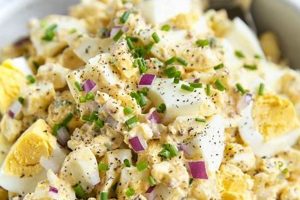
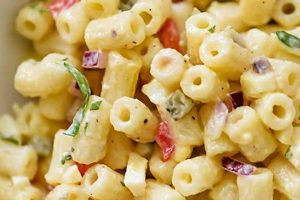
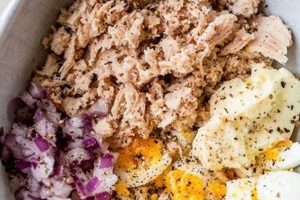
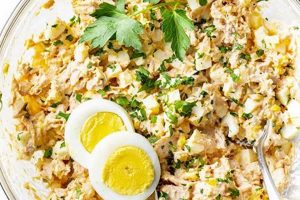
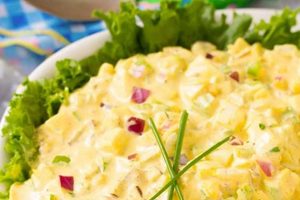
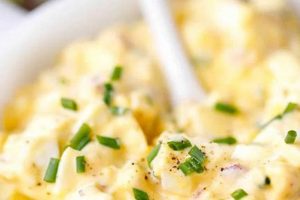
A classic dish combines canned tuna, hard-boiled eggs, and mayonnaise. Often enhanced with celery, onion, relish, or seasonings like salt, pepper, and paprika, this mixture is typically served cold as a sandwich filling, atop crackers, or in lettuce cups. Variations exist, including the addition of ingredients like mustard, lemon juice, or different types of herbs.
This combination provides a readily available, affordable, and protein-rich meal option. Its simple preparation makes it a convenient choice for lunches, quick dinners, or picnics. The adaptable nature of the dish allows for customization to individual preferences, making it a perennial favorite. Its popularity has endured for generations, evolving from a frugal dish to a versatile staple in many cultures.
The following sections will delve deeper into specific recipe variations, nutritional information, tips for optimal preparation, and suggestions for serving.
Tips for Preparing Tuna Salad with Egg and Mayonnaise
Optimizing ingredient selection and preparation techniques elevates this simple dish. Attention to detail ensures a flavorful and enjoyable culinary experience.
Tip 1: Tuna Selection: Opt for high-quality canned tuna packed in water or oil, depending on preference. Solid or chunk light tuna offers a firm texture, while flaked tuna provides a softer consistency.
Tip 2: Egg Preparation: Perfectly cooked hard-boiled eggs are essential. Avoid overcooking, which can lead to a dry, rubbery yolk. Immediately cool the eggs after cooking to prevent a green ring from forming around the yolk.
Tip 3: Mayonnaise Choice: The quality of mayonnaise significantly impacts the overall flavor. Experiment with different brands and varieties, such as light or full-fat, to determine preferred taste and texture.
Tip 4: Ingredient Proportions: Achieving the desired balance of tuna, egg, and mayonnaise is crucial. Start with a classic ratio and adjust according to individual taste preferences.
Tip 5: Enhancing Flavor: Freshly chopped celery and onion add a crisp, savory dimension. Consider incorporating finely diced pickles, relish, or capers for a tangy twist.
Tip 6: Seasoning: Salt and freshly ground black pepper are essential seasonings. A dash of paprika or a squeeze of lemon juice can brighten the flavors. Experiment with dried herbs like dill or chives.
Tip 7: Chilling Time: Allow the prepared salad to chill in the refrigerator for at least 30 minutes before serving. This allows the flavors to meld and enhances the overall taste experience.
By following these tips, one can consistently create a delicious and satisfying tuna salad.
The following section will provide concluding remarks and recipe variations.
1. High-Quality Tuna

High-quality tuna plays a pivotal role in the overall success of a tuna fish salad recipe with egg and mayonnaise. Tuna, as the primary ingredient, dictates the foundational flavor and texture of the final product. Selecting premium tuna ensures a desirable outcome, whereas opting for lower-grade tuna can compromise the dish, resulting in a less satisfying experience. The impact of tuna quality manifests in several ways: flavor, texture, and overall palatability. Premium tuna exhibits a clean, robust flavor profile, free from undesirable fishy or metallic notes often associated with lower-quality options. The texture of high-quality tuna is firm and flaky, providing a pleasant mouthfeel. This contrasts with the mushy or stringy texture often encountered in inferior products. Ultimately, the choice of tuna directly influences the overall enjoyment of the salad.
Consider a scenario where two identical recipes are prepared, differing only in the type of tuna employed. One recipe utilizes premium, sustainably sourced tuna, while the other incorporates a less expensive, generic brand. The resulting salads will likely exhibit noticeable differences. The salad made with higher-quality tuna will likely possess a richer, more nuanced flavor and a more pleasing texture. Conversely, the salad prepared with the lower-quality tuna may have a less appealing taste and a less desirable consistency. This illustrates the practical significance of selecting high-quality tuna.
Investing in superior-quality tuna represents a crucial step in crafting an exceptional tuna fish salad. While cost considerations may influence purchasing decisions, the impact on the final dish underscores the value of prioritizing quality. The enhanced flavor, improved texture, and increased overall enjoyment derived from using high-quality tuna ultimately justify the investment, contributing to a more satisfying culinary experience.
2. Perfectly Cooked Eggs
The quality of hard-boiled eggs significantly impacts the overall enjoyment of tuna fish salad. Properly cooked eggs contribute desirable textural and flavor elements, while improperly cooked eggs can detract from the final product. The following facets explore the importance of perfectly cooked eggs in this context.
- Yolk Consistency:
A perfectly cooked yolk is firm yet creamy, offering a pleasant contrast to the flaky tuna and smooth mayonnaise. Overcooked yolks become dry, crumbly, and chalky, negatively affecting the salad’s texture and flavor. Conversely, undercooked yolks, with their runny consistency, create an unappetizing, watery mixture. The ideal yolk retains its shape when sliced but readily mashes into the other ingredients, creating a harmonious blend.
- White Texture:
The egg white should be tender and opaque, not rubbery or translucent. Overcooked whites become tough and detract from the overall texture of the salad. Properly cooked whites offer a subtle textural counterpoint to the other ingredients, enhancing the eating experience. They should be easy to chop or slice, facilitating even distribution throughout the salad.
- Flavor Contribution:
Eggs contribute a subtle richness and depth of flavor to tuna salad. A perfectly cooked egg enhances these flavors, while an overcooked egg can impart a slightly sulfurous taste. The delicate flavor of a properly cooked egg complements the tuna and other ingredients without overpowering them.
- Visual Appeal:
The appearance of the sliced or chopped eggs contributes to the overall visual appeal of the salad. A perfectly cooked egg, with its vibrant yellow yolk and pristine white, enhances the presentation. Overcooked yolks often develop a grayish-green ring around the edge, detracting from the aesthetic appeal.
Achieving perfectly cooked eggs is essential for a well-balanced and enjoyable tuna fish salad. Attention to cooking time and cooling methods ensures optimal yolk and white consistency, maximizing both flavor and textural contributions. This seemingly minor detail significantly elevates the overall culinary experience.
3. Flavorful Mayonnaise

Mayonnaise serves as a critical binding agent and flavor enhancer in tuna fish salad. Its quality and flavor profile significantly influence the overall palatability of the dish. Mayonnaise contributes creaminess, richness, and a subtle tang, complementing the flavors of tuna and egg. The emulsification of oil and egg yolks in mayonnaise provides a luxurious texture that coats the other ingredients, creating a cohesive and enjoyable mouthfeel. Flavorful mayonnaise elevates the salad beyond a simple combination of ingredients, transforming it into a harmonious blend of textures and tastes. Different types of mayonnaise, such as those infused with herbs, spices, or citrus, can further enhance the complexity of the salad, offering a customized flavor experience. For instance, a lemon-infused mayonnaise can brighten the flavors of the tuna and egg, while a mayonnaise with a hint of Dijon mustard adds a subtle sharpness.
The choice of mayonnaise can dramatically impact the sensory experience of consuming tuna fish salad. A bland or low-quality mayonnaise can result in a dull, uninspired salad, lacking the richness and depth of flavor that a flavorful mayonnaise provides. Conversely, a high-quality mayonnaise, crafted with fresh ingredients and balanced flavor notes, elevates the salad, making it a truly satisfying culinary experience. Consider a scenario where two identical tuna salads are prepared, differing only in the type of mayonnaise used. One utilizes a generic, mass-produced mayonnaise, while the other incorporates a premium, artisanal mayonnaise made with fresh ingredients. The difference in taste and texture between the two salads would be readily apparent. The salad made with the premium mayonnaise would likely possess a richer, more nuanced flavor and a smoother, more luxurious texture.
Selecting a flavorful mayonnaise is essential for optimizing the taste and texture of tuna fish salad. The interplay between the mayonnaise, tuna, and egg creates a delicate balance of flavors and textures. A high-quality mayonnaise enhances this interplay, enriching the overall experience. Understanding the crucial role of mayonnaise in this classic dish empowers informed decision-making, leading to a more enjoyable and satisfying culinary outcome. Therefore, careful consideration of mayonnaise selection should be a priority when preparing tuna fish salad.
4. Complementary Seasonings
Seasonings play a crucial role in enhancing the flavor profile of tuna fish salad with egg and mayonnaise. While the core ingredients provide a foundational taste, carefully selected seasonings elevate the dish, adding depth, complexity, and balance. The nuanced interplay between seasonings and the primary ingredients transforms a simple mixture into a flavorful culinary experience. Understanding the function and impact of various seasonings allows for informed choices that cater to individual preferences and desired taste outcomes.
- Salt and Pepper:
Salt and pepper are fundamental seasonings in virtually all culinary applications, including tuna salad. Salt enhances the inherent flavors of the tuna, egg, and mayonnaise, while pepper adds a subtle bite and complexity. The proper balance of salt and pepper is crucial; too much salt can overpower the other flavors, while too little can result in a bland dish. Freshly ground black pepper is generally preferred over pre-ground pepper due to its more robust aroma and flavor.
- Herbs:
Fresh or dried herbs can significantly enhance the flavor profile of tuna salad. Dill, chives, parsley, and tarragon are popular choices, each offering a distinct flavor contribution. Dill adds a bright, slightly tangy note, while chives impart a mild onion flavor. Parsley provides a fresh, herbaceous element, and tarragon offers a subtle anise-like flavor. The quantity of herbs used should be carefully considered to avoid overpowering the other ingredients.
- Spices:
A touch of spice can add depth and complexity to tuna salad. Paprika, cayenne pepper, or a pinch of red pepper flakes introduce warmth and a subtle heat. Smoked paprika imparts a smoky flavor that complements the richness of the tuna. The judicious use of spices can create a more dynamic and interesting flavor profile.
- Acidic Elements:
A splash of lemon juice or vinegar can brighten the flavors of tuna salad, adding a refreshing tang. The acidity cuts through the richness of the mayonnaise, creating a more balanced flavor profile. A small amount of finely diced pickles or capers can also contribute acidity and a pleasant briny flavor. These acidic elements provide a counterpoint to the other ingredients, enhancing the overall taste experience.
The careful selection and application of complementary seasonings elevate tuna fish salad from a simple combination of ingredients to a well-balanced and flavorful dish. The interplay of salt, pepper, herbs, spices, and acidic elements creates a harmonious blend of tastes and textures. Understanding the impact of these seasonings allows for customized flavor profiles that cater to individual preferences, transforming a basic recipe into a personalized culinary creation.
5. Proper Chilling
Proper chilling is essential for maximizing the quality and safety of tuna fish salad prepared with egg and mayonnaise. Chilling allows the flavors to meld, enhances food safety by inhibiting bacterial growth, and improves the overall texture of the salad. Insufficient chilling can lead to flavor imbalances, potential health risks, and a less desirable textural experience.
- Flavor Development:
Chilling allows the individual flavors of the tuna, egg, mayonnaise, and seasonings to meld and harmonize. The flavors become more integrated and balanced after a period of chilling, resulting in a more cohesive and enjoyable taste experience. This is particularly important when using bold seasonings or acidic elements, as chilling allows their flavors to mellow and integrate with the other ingredients.
- Food Safety:
Mayonnaise-based salads are susceptible to bacterial growth, particularly at room temperature. Proper chilling, at temperatures below 40F (4C), significantly inhibits bacterial proliferation, reducing the risk of foodborne illness. This is particularly crucial for salads containing eggs, as they can harbor bacteria if not handled and stored correctly.
- Texture Enhancement:
Chilling firms the texture of the tuna salad, making it easier to handle and spread. This is especially beneficial when serving the salad in sandwiches or on crackers. The chilled temperature also enhances the perceived freshness and crispness of ingredients like celery and onion, contributing to a more pleasant textural experience.
- Optimal Serving Temperature:
A chilled tuna salad is more refreshing and palatable, especially in warmer weather. The cool temperature enhances the flavors and provides a welcome contrast to the richness of the mayonnaise. Serving tuna salad at the proper temperature maximizes its sensory appeal.
Proper chilling is an integral step in preparing a high-quality and safe tuna fish salad with egg and mayonnaise. It contributes not only to enhanced flavor development but also to food safety and improved texture. Neglecting this crucial step can compromise the overall quality and enjoyment of the dish, potentially leading to health risks. Therefore, adequate chilling should be considered a non-negotiable element in the preparation process.
Frequently Asked Questions
This section addresses common inquiries regarding tuna fish salad preparation, storage, and variations.
Question 1: What type of tuna is best suited for tuna salad?
Canned light tuna, packed in either water or oil, is commonly preferred. Solid or chunk light tuna offers a firmer texture, while flaked tuna provides a softer consistency. Albacore tuna, although a viable option, often has a stronger flavor that may not appeal to all palates.
Question 2: How can one prevent hard-boiled eggs from becoming overcooked and developing a green ring around the yolk?
Avoid overcooking by precisely timing the boiling process. Nine to eleven minutes in boiling water typically suffices. Immediately transfer the cooked eggs to an ice bath to halt the cooking process and prevent the green ring, which is caused by a reaction between sulfur in the egg white and iron in the yolk.
Question 3: How long can tuna salad be safely stored in the refrigerator?
Properly stored in an airtight container, tuna salad can be safely refrigerated for three to five days. However, consuming it within two days is generally recommended for optimal quality and flavor.
Question 4: Can tuna salad be frozen?
Freezing is not recommended. The mayonnaise-based dressing separates and becomes watery upon thawing, significantly compromising the texture and overall quality of the salad.
Question 5: What are some healthy variations of traditional tuna salad?
Substituting Greek yogurt for a portion of the mayonnaise reduces fat content while maintaining creaminess. Incorporating additional vegetables, such as chopped bell peppers, cucumbers, or shredded carrots, increases nutritional value and adds textural complexity.
Question 6: How can one prevent tuna salad from becoming too dry?
The ratio of mayonnaise to tuna and egg dictates the moisture content. Start with a conservative amount of mayonnaise and add more incrementally until the desired consistency is achieved. Over-mixing can also contribute to dryness, so combine the ingredients gently.
Addressing these common questions provides a foundation for successful tuna fish salad preparation. Consideration of these points ensures optimal flavor, texture, and safe handling practices.
The following section will offer concluding remarks and recipe variations.
Tuna Fish Salad Recipe with Egg and Mayo
This exploration has provided a comprehensive overview of the classic tuna fish salad recipe with egg and mayo. Key aspects, including ingredient selection (tuna, eggs, mayonnaise), the importance of complementary seasonings, proper chilling techniques, and addressing common preparation questions, have been thoroughly examined. Emphasis has been placed on the impact of ingredient quality on the final product, highlighting the significance of selecting premium tuna, achieving perfectly cooked eggs, and utilizing flavorful mayonnaise. The delicate balance of seasonings and the crucial role of proper chilling in enhancing both flavor and food safety have also been underscored.
The enduring popularity of this dish speaks to its adaptability and enduring appeal. From a simple lunch to a more elaborate meal component, tuna fish salad with egg and mayo remains a versatile culinary staple. Continued exploration of variations, incorporating diverse ingredients and flavor profiles, offers opportunities for personalized culinary expression. Ultimately, appreciation for the nuances of preparation elevates this classic dish from a simple combination of ingredients to a truly satisfying culinary experience.