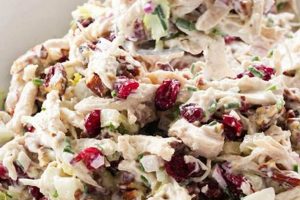
Classic chicken salad for sandwiches typically consists of cooked chicken, mayonnaise, and celery. Common additions include finely chopped onion, hard-boiled eggs, mustard, salt, and pepper. Variations may incorporate grapes, apples, nuts, or dried cranberries. These ingredients are combined to create a creamy, flavorful filling suitable for bread, croissants, or lettuce wraps.
This dish offers a versatile and convenient meal option. Its popularity stems from its adaptability, affordability, and the ease with which it can be prepared. Chicken salad can be made ahead of time, making it ideal for picnics, potlucks, and quick lunches. Historically, chicken salad emerged as a popular dish in the mid-19th century, coinciding with the increased availability of mayonnaise and the growing popularity of luncheon foods.
This discussion will further explore key aspects of creating delicious chicken salad sandwiches, including selecting the best ingredients, mastering various preparation techniques, and exploring creative flavor combinations.
Tips for Classic Chicken Salad Sandwiches
Optimizing classic chicken salad involves attention to detail and an understanding of fundamental techniques. The following tips offer guidance for achieving superior results.
Tip 1: Chicken Selection and Preparation: Poaching or roasting chicken specifically for salad yields optimal flavor and texture. Avoid pre-cooked or rotisserie chicken as these can be dry or overly seasoned. Allow the chicken to cool completely before shredding or dicing to prevent the mayonnaise from separating.
Tip 2: Mayonnaise Matters: High-quality mayonnaise is crucial. Experiment with different brands and fat content to find a preferred taste and consistency. Adding mayonnaise gradually allows for control over the final texture.
Tip 3: Celery Preparation: Finely dice celery for even distribution of flavor and to avoid large, crunchy pieces. Soaking diced celery in ice water for a few minutes before adding it to the salad can enhance its crispness.
Tip 4: Balancing Flavors: A careful balance of seasonings is essential. Freshly ground black pepper, a touch of Dijon mustard, and a pinch of salt enhance the other ingredients without overpowering the chicken flavor.
Tip 5: Enhancing Texture: Adding chopped hard-boiled eggs and toasted nuts introduces textural complexity. Consider incorporating finely diced apples or grapes for a touch of sweetness and crunch.
Tip 6: Chilling Time: Allow the chicken salad to chill for at least 30 minutes before serving. Chilling allows the flavors to meld and enhances the overall experience.
Tip 7: Bread Choice: Select bread that complements the chicken salad. Classic options include croissants, white bread, whole wheat bread, or rye. Lightly toasting the bread can prevent sogginess.
By following these tips, one can create a chicken salad that is both flavorful and texturally satisfying. Attention to these details elevates this simple dish to a culinary delight.
These insights provide a foundation for consistently producing excellent chicken salad. Experimentation with additional ingredients and variations can further personalize this classic recipe.
1. High-quality Chicken

High-quality chicken plays a pivotal role in traditional chicken salad sandwiches. The chicken itself forms the foundation of the dish, directly impacting the overall flavor, texture, and enjoyment. Tender, flavorful chicken elevates the salad, while dry, bland chicken results in a disappointing experience. Using high-quality chicken ensures a pleasant, satisfying texture that complements the other ingredients. Conversely, lower-quality chicken can be stringy or tough, detracting from the desired creamy consistency. For example, using free-range chicken, known for its richer flavor, results in a more complex and satisfying salad compared to using conventionally raised chicken.
The impact extends beyond taste and texture. High-quality chicken often signifies better sourcing and handling practices, contributing to a more wholesome and nutritious meal. Choosing chicken from reputable sources ensures freshness and minimizes potential food safety concerns. Furthermore, the cooking method employed influences the final result. Poaching or roasting a whole chicken offers superior control over flavor and moisture compared to using pre-cooked or processed chicken, which can often contain added sodium or preservatives. The difference is noticeable; freshly prepared chicken contributes a cleaner, brighter flavor that enhances the overall taste of the traditional chicken salad.
Ultimately, the selection of high-quality chicken demonstrates a commitment to excellence in preparing traditional chicken salad sandwiches. This seemingly simple choice significantly impacts the final product, contributing to a superior culinary experience. While other ingredients play important roles, the quality of the chicken remains paramount. Investing in superior chicken elevates this classic dish, ensuring a flavorful and satisfying meal.
2. Proper Mayonnaise

Mayonnaise serves as the crucial binding agent and flavor enhancer in traditional chicken salad recipes for sandwiches. Its quality and type significantly influence the final product’s texture, taste, and overall appeal. Selecting the appropriate mayonnaise is essential for achieving a balanced and enjoyable culinary experience.
- Type and Flavor Profile
Different mayonnaise varieties offer distinct flavor profiles. Standard mayonnaise provides a neutral base, allowing other ingredients to shine. However, flavored mayonnaises, such as olive oil or Dijon mustard mayonnaise, can introduce complexity and depth. The chosen mayonnaise type should complement the other ingredients without overpowering the chicken or other desired flavors. For example, a subtly flavored mayonnaise might be preferred for a chicken salad with delicate herbs, while a bolder mayonnaise might complement a spicier version.
- Consistency and Texture
Mayonnaise consistency plays a vital role in the final texture of the chicken salad. A thick, creamy mayonnaise creates a richer, denser salad, while a thinner mayonnaise results in a lighter, looser consistency. The desired texture depends on personal preference and intended use. A thicker mayonnaise may be preferred for a classic sandwich filling, while a thinner mayonnaise might be better suited for a chicken salad served on crackers or as a dip.
- Fat Content and Flavor Intensity
Mayonnaise fat content influences both flavor intensity and mouthfeel. Full-fat mayonnaise offers a richer, more luxurious texture and flavor, while reduced-fat or light mayonnaise options provide a lighter alternative. This choice affects the overall richness of the chicken salad. Full-fat mayonnaise contributes a more pronounced creaminess, whereas lower-fat options create a less intense flavor and texture. The fat content also impacts how the mayonnaise interacts with other ingredients, potentially influencing the salad’s overall stability.
- Quantity and Incorporation
The amount of mayonnaise used impacts the moisture content and overall balance of the chicken salad. Too little mayonnaise can result in a dry, crumbly mixture, while excessive mayonnaise can create a salad that is overly rich and heavy. Gradual incorporation of mayonnaise allows for adjustments to achieve the desired consistency. Adding a small amount at a time and mixing thoroughly ensures even distribution and prevents over-saturation. This method allows for precise control over the final texture and flavor, ensuring the chicken salad is neither too dry nor too wet.
Careful consideration of these facets of mayonnaise selection ensures a harmonious balance of flavors and textures in traditional chicken salad sandwiches. The appropriate mayonnaise elevates the other ingredients, contributing to a cohesive and enjoyable culinary experience. Understanding these elements allows for informed decisions that result in a truly satisfying chicken salad.
3. Fresh, Crisp Celery
Fresh, crisp celery plays a crucial role in traditional chicken salad recipes for sandwiches, contributing significantly to the overall texture, flavor, and enjoyment. Its presence offers a refreshing counterpoint to the richness of the mayonnaise and chicken, adding a distinct vegetal note and a satisfying crunch. Understanding the various facets of celery’s contribution provides insight into its essential role in this classic dish.
- Textural Contrast
Celery’s crisp texture provides a welcome contrast to the softer textures of the chicken and mayonnaise. This contrast prevents the salad from becoming overly homogenous and adds a satisfying crunch that enhances the eating experience. The cellular structure of celery, with its high water content, contributes to this desirable crispness. Without this textural element, the chicken salad could feel heavy or monotonous.
- Flavor Enhancement
Celery’s subtle, slightly peppery flavor complements the chicken and mayonnaise, adding a refreshing vegetal note that balances the richness of the other ingredients. The flavor compounds in celery, including phthalides and apiin, contribute to this unique taste profile. These compounds interact with the other flavors in the salad, creating a more complex and nuanced overall taste.
- Visual Appeal
The bright green color of celery adds visual appeal to the chicken salad, creating a more vibrant and appetizing appearance. The small pieces of celery dispersed throughout the salad provide visual interest and a sense of freshness. This visual element enhances the overall presentation and makes the dish more enticing.
- Nutritional Value
Celery contributes to the nutritional value of the chicken salad by providing vitamins, minerals, and dietary fiber. While often overlooked, celery offers a source of vitamin K, potassium, and folate. These nutrients complement the protein and other nutrients provided by the chicken, contributing to a more balanced and wholesome meal.
In conclusion, the inclusion of fresh, crisp celery in traditional chicken salad recipes is not merely a matter of tradition but a deliberate choice that enhances the dish in multiple ways. Its textural contrast, subtle flavor, visual appeal, and nutritional contribution all play a vital role in creating a well-balanced and enjoyable chicken salad sandwich. The careful selection and preparation of celery ensure that it contributes optimally to the overall culinary experience.
4. Balanced Seasonings
Balanced seasonings are essential for traditional chicken salad recipes, elevating the dish beyond simple ingredients to a flavorful experience. Careful consideration of seasonings transforms the chicken salad from bland to vibrant, complementing the other components and creating a cohesive, enjoyable flavor profile. Achieving this balance involves understanding the interplay of salt, pepper, herbs, and spices, and how they interact with the chicken, mayonnaise, and other ingredients.
- Salt’s Foundational Role
Salt acts as a foundational seasoning, enhancing the inherent flavors of the chicken and other ingredients. It amplifies the savory notes and provides a baseline against which other seasonings can be balanced. However, excessive salt can overpower the delicate flavors of the chicken salad, while insufficient salt can leave it tasting flat and uninspired. Using kosher salt allows for better control due to its larger crystal size. A pinch of salt added to the chicken while it’s cooking, and then a further adjustment to the final salad, ensures proper seasoning throughout.
- Black Pepper’s Complexity
Freshly ground black pepper adds complexity and depth. Its subtle heat and earthy notes provide a counterpoint to the richness of the mayonnaise and the savory chicken. Pre-ground pepper often lacks the vibrancy and aromatic intensity of freshly ground peppercorns. A generous grind of black pepper adds a noticeable lift to the chicken salad without overpowering the other flavors.
- Herbaceous Accents
Fresh herbs introduce bright, aromatic notes that complement the other ingredients. Dill, parsley, chives, or tarragon can be used, either individually or in combination, to create different flavor profiles. Fresh herbs should be added towards the end of the mixing process to preserve their delicate flavors and vibrant green color. For example, dill adds a slightly tangy, anise-like flavor, while chives contribute a mild onion flavor. The choice of herbs allows for customization and adds a layer of freshness.
- Acidic Brightness
A touch of acidity brightens the flavors of the chicken salad. A squeeze of lemon juice, a dash of apple cider vinegar, or a small amount of Dijon mustard cuts through the richness of the mayonnaise and adds a tangy counterpoint. This acidic element enhances the other flavors, preventing the salad from tasting overly heavy or rich. For instance, lemon juice adds a citrusy brightness, while Dijon mustard provides a subtle tang and complexity.
The interplay of these seasonings is crucial. The goal is not to highlight individual seasonings, but to create a harmonious blend that enhances the overall flavor of the traditional chicken salad. A well-seasoned chicken salad offers a balanced and complex flavor profile, where each ingredient complements the others, resulting in a satisfying and enjoyable culinary experience. Experimentation with different combinations of seasonings allows for personalized variations while maintaining the integrity of this classic dish.
5. Textural Variety
Textural variety is a key element in crafting exceptional traditional chicken salad sandwiches. A compelling interplay of textures elevates the eating experience, transforming a simple sandwich filling into a more engaging and satisfying meal. The strategic incorporation of ingredients with varying textures creates a dynamic mouthfeel that complements the flavor profile of the chicken salad.
- Chicken Texture
The texture of the chicken itself forms the foundation of the salad’s textural profile. Shredded chicken provides a finer, more delicate texture, while diced or cubed chicken offers a more substantial, chewier bite. This choice influences the overall mouthfeel and can be adjusted based on personal preference. For example, finely shredded chicken creates a smoother, more cohesive salad, while larger chunks of chicken offer a more pronounced chew.
- Crunchy Elements
Incorporating crunchy elements provides a satisfying contrast to the softer textures of the chicken and mayonnaise. Finely diced celery, chopped walnuts, or slivered almonds introduce a welcome crispness. These additions create textural complexity and prevent the salad from feeling overly smooth or homogenous. The contrast between the creamy base and the crunchy additions enhances the overall sensory experience.
- Soft Ingredients
Softer ingredients, such as grapes, dried cranberries, or finely diced apples, introduce a subtle chewiness and sweetness. These elements complement the crunchier components, creating a balanced textural profile. The interplay of soft and crunchy textures adds depth and interest to each bite. Grapes, for instance, offer a juicy burst that contrasts with the crisp celery and nuts.
- Bread Selection
The choice of bread also contributes to the overall textural experience. A soft, buttery croissant offers a delicate contrast to the chicken salad, while a crusty baguette provides a more robust counterpoint. The texture of the bread interacts with the filling, creating a harmonious or contrasting textural combination. A sourdough bread, for instance, adds a tangy flavor and a chewy texture that complements the chicken salad.
The careful consideration of textural variety elevates traditional chicken salad sandwiches from simple to sophisticated. The interplay of textures adds depth and complexity to the eating experience, making each bite more engaging and satisfying. A well-balanced textural profile complements the flavors of the chicken salad, resulting in a more complete and enjoyable culinary experience. By thoughtfully incorporating a variety of textures, one can transform a classic dish into a truly memorable meal.
6. Appropriate Bread

Bread selection significantly impacts the overall enjoyment of traditional chicken salad sandwiches. The bread acts as more than just a vehicle for the filling; it contributes to the sandwich’s structural integrity, flavor profile, and textural experience. Choosing appropriate bread enhances the complementary flavors and textures, creating a harmonious and satisfying culinary experience. Careful consideration of bread type ensures the final product is not only delicious but also structurally sound and aesthetically pleasing.
- Classic White Bread
Classic white bread offers a neutral backdrop that allows the flavors of the chicken salad to shine. Its soft, pillowy texture provides a gentle contrast to the creamy filling. While simple, white bread offers a reliable and familiar foundation for a traditional chicken salad sandwich. Its subtle sweetness can complement the savory notes of the salad, creating a balanced flavor profile. However, its delicate texture may require careful handling to prevent sogginess, particularly with wetter chicken salad mixtures.
- Whole Wheat Bread
Whole wheat bread introduces a slightly nutty, earthy flavor that complements the savory notes of the chicken salad. Its denser texture provides a more substantial base and holds up well to moist fillings. The added nutritional benefits of whole wheat bread make it a wholesome choice. Its slightly coarser texture provides a pleasant contrast to the creamy filling, adding a textural dimension. Whole wheat bread also offers a more robust structure, making it less prone to tearing or falling apart.
- Croissants
Croissants offer a buttery, flaky texture that contrasts beautifully with the creamy chicken salad. Their delicate, layered structure adds an element of elegance. The richness of the croissant complements the savory filling, creating a luxurious and indulgent sandwich experience. However, the flaky nature of croissants can make them more challenging to handle, particularly when filled with a wetter chicken salad mixture.
- Sourdough Bread
Sourdough bread provides a tangy, complex flavor profile that complements the savory chicken salad. Its chewy texture adds a satisfying chewiness to the sandwich. The distinct sourdough flavor enhances the overall taste experience, creating a more nuanced and interesting flavor combination. The sturdy structure of sourdough bread holds up well to various fillings, making it a versatile option.
The selection of appropriate bread elevates the traditional chicken salad sandwich beyond a simple meal. The bread’s texture and flavor interact with the chicken salad filling, creating a cohesive and enjoyable culinary experience. Considering the various factors, such as flavor compatibility, textural contrast, and structural integrity, ensures that the chosen bread complements the chicken salad, resulting in a truly satisfying sandwich. The seemingly simple choice of bread can significantly impact the overall enjoyment of this classic dish.
Frequently Asked Questions
Addressing common inquiries regarding traditional chicken salad recipes for sandwiches provides clarity and facilitates successful preparation. The following questions and answers offer guidance on various aspects of this classic dish.
Question 1: What is the best type of chicken to use?
Roasting or poaching a whole chicken yields optimal flavor and texture. Boneless, skinless chicken breasts offer convenience. Pre-cooked or rotisserie chicken should be avoided, as these can often be dry.
Question 2: How can one prevent the chicken salad from becoming too watery?
Ensuring the chicken is completely cooled before combining it with mayonnaise prevents excess moisture. Thoroughly draining any canned or jarred ingredients, such as diced water chestnuts, also helps maintain the desired consistency. Adding the mayonnaise gradually allows for better control over the final texture.
Question 3: How long can chicken salad be stored in the refrigerator?
Properly stored in an airtight container, chicken salad typically lasts for three to five days in the refrigerator. Always check for any signs of spoilage before consumption.
Question 4: Can traditional chicken salad be frozen?
While freezing is possible, the mayonnaise may separate upon thawing, affecting the texture and consistency. It is generally recommended to consume chicken salad fresh. If freezing is necessary, avoid adding celery or other crunchy vegetables, as these will become mushy upon thawing.
Question 5: How can one add more flavor to traditional chicken salad?
Fresh herbs, such as dill, parsley, or chives, enhance the flavor profile. Incorporating spices like curry powder or paprika offers unique variations. Adding a touch of acidity, such as lemon juice or apple cider vinegar, brightens the flavors.
Question 6: What are some alternative ingredients for traditional chicken salad?
Grapes, apples, dried cranberries, and nuts provide textural and flavor variations. Replacing celery with chopped water chestnuts or jicama offers a different type of crunch. Consider using Greek yogurt in place of some of the mayonnaise for a lighter, tangier version.
Understanding these common inquiries allows for confident preparation of traditional chicken salad sandwiches. Attention to detail and thoughtful ingredient selection ensures a delicious and satisfying result.
Beyond these frequently asked questions, further exploration of variations and creative adaptations can enhance culinary expertise.
Traditional Chicken Salad Recipes for Sandwiches
Exploration of traditional chicken salad recipes for sandwiches reveals the importance of quality ingredients, balanced seasonings, and textural variety. Careful selection of chicken, proper mayonnaise incorporation, and the inclusion of fresh, crisp celery contribute significantly to the overall flavor and texture. Attention to detail, such as appropriate bread selection and balanced seasoning, elevates this seemingly simple dish. From the foundational role of high-quality chicken to the nuanced impact of textural contrasts, each element contributes to a satisfying culinary experience.
Traditional chicken salad recipes offer a versatile platform for culinary creativity. While adherence to classic techniques ensures a consistently delicious outcome, exploration of flavor variations and ingredient adaptations allows for personalized interpretations. The enduring popularity of this dish underscores its adaptability and timeless appeal. Continued appreciation for traditional methods, coupled with innovative explorations, ensures the ongoing enjoyment of chicken salad sandwiches for generations to come.