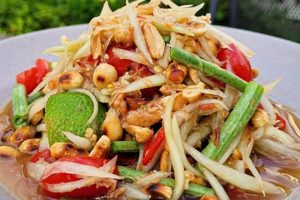
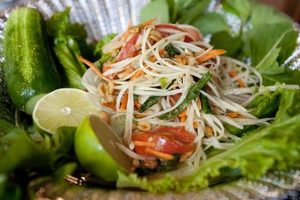
This vibrant dish, a staple of Thai cuisine, features shredded green papaya as its centerpiece. Commonly, the papaya is pounded in a mortar and pestle along with ingredients such as tomatoes, long beans, garlic, chilies, fish sauce, lime juice, and palm sugar, creating a complex interplay of sweet, sour, salty, spicy, and savory flavors. Variations may include additions like dried shrimp, peanuts, or brined crab. The resulting salad offers a refreshing and texturally intriguing experience.
Beyond its delicious flavor profile, this culinary creation provides a nutritious meal option. Papaya is rich in vitamins C and A, while the other ingredients contribute essential minerals and fiber. Historically, it emerged as a peasant food in the northeastern region of Thailand (Isan) and gained popularity throughout the country and internationally, becoming a beloved street food and restaurant staple, showcasing the vibrant flavors of Thai gastronomy.
Further exploration will delve into specific ingredient selections, variations in preparation methods, and tips for achieving an authentic flavor profile. Discussions will also include regional adaptations and the cultural significance of this dish within Thai society.
Tips for Preparing an Authentic Som Tum
Achieving the perfect balance of flavors and textures requires attention to detail throughout the preparation process. These tips offer guidance for crafting an exceptional rendition of this classic Thai salad.
Tip 1: Use a Mortar and Pestle: While food processors can shred the papaya, the traditional method of pounding the ingredients in a mortar and pestle releases flavors more effectively and creates the desired texture. This process gently bruises the ingredients, allowing them to absorb the dressing more thoroughly.
Tip 2: Source Green Papaya: Ripe papaya will not offer the necessary crispness. Select firm, unripe papayas with green skin for optimal results.
Tip 3: Balance Flavor Profiles: Adjust the proportions of lime juice, fish sauce, and palm sugar to achieve the signature sweet, sour, salty, and spicy balance. Start with smaller quantities and taste-test, adjusting as needed to suit individual preferences.
Tip 4: Incorporate Fresh Ingredients: The quality of ingredients directly impacts the final result. Use fresh chilies, garlic, long beans, and tomatoes for the most vibrant flavors.
Tip 5: Toast Peanuts (Optional): If using peanuts, toasting them lightly enhances their flavor and adds a satisfying crunch to the salad.
Tip 6: Don’t Overcrowd the Mortar: Work in batches if preparing a large quantity to ensure even pounding and prevent the ingredients from becoming mushy.
Tip 7: Serve Immediately: Som tum is best enjoyed fresh. The flavors and textures are most vibrant immediately after preparation.
By following these guidelines, one can create a truly authentic som tum experience that captures the essence of Thai cuisine. Attention to these details ensures a vibrant, flavorful, and texturally satisfying salad.
This exploration of preparation techniques provides a solid foundation for crafting delicious som tum. The following section will offer insights into variations and adaptations of this classic dish, expanding culinary horizons and showcasing the versatility of Thai cuisine.
1. Green Papaya

Green papaya serves as the foundational ingredient in som tum, providing not only textural complexity but also a subtle, slightly vegetal flavor that balances the other potent components. Its firm, crisp texture holds up well to pounding, absorbing the dressing while maintaining a pleasant crunch. Using ripe papaya would result in a mushy, overly sweet salad, drastically altering the intended profile. The slightly bitter notes of the green papaya contrast beautifully with the sour lime, salty fish sauce, and spicy chilies, creating a harmonious flavor profile. For example, the bitterness offsets the sweetness of palm sugar, preventing the dish from becoming cloying. This careful balance is a defining characteristic of Thai cuisine.
The selection and preparation of the green papaya directly impact the final quality of som tum. Choosing firm, unripe fruit is essential. The papaya is typically peeled, seeded, and then shredded or julienned before being pounded in the mortar and pestle. This process not only tenderizes the papaya but also releases its juices, which contribute to the overall flavor of the salad. The choice between shredding and julienning affects the final texture, with shredded papaya yielding a finer, more delicate result, and julienned papaya offering a more substantial bite. Understanding these nuances allows for greater control over the finished dish.
The crucial role of green papaya in som tum highlights the importance of ingredient selection in Thai cooking. Its specific properties contribute significantly to the dish’s signature flavor and texture. Ignoring this crucial element and substituting ripe papaya fundamentally alters the character of the salad. Appreciating the unique contribution of green papaya provides a deeper understanding of the complexities and balance inherent in Thai culinary traditions. This knowledge empowers individuals to create authentic and flavorful som tum, demonstrating a respect for the integrity of the recipe.
2. Mortar and Pestle

The mortar and pestle holds a crucial position in crafting authentic som tum. More than a simple tool, it serves as the key to unlocking the complex flavors and textures that define this iconic Thai salad. The rhythmic pounding action achieves two primary objectives: it gently bruises the ingredients, releasing their aromatic compounds and allowing them to meld harmoniously, and it creates the desired texture, a balance of tender and crisp elements not replicable by other methods. For instance, the pounding of chilies releases capsaicin, intensifying their heat, while simultaneously bruising the long beans and green papaya, making them more receptive to absorbing the dressing. Using a food processor, while convenient, results in a uniform texture that lacks the nuanced character achieved through traditional pounding. This highlights the irreplaceable role of the mortar and pestle in achieving the authentic taste and feel of som tum.
Consider the effect on the long beans. A knife would simply slice them into separate pieces. The mortar and pestle, however, gently crushes them, releasing their vegetal fragrance and allowing the dressing to permeate their fibrous structure. Similarly, the tomatoes, when pounded, release their juices, contributing to the overall sauce and intensifying their sweetness. This intricate interplay of flavors and textures, orchestrated by the mortar and pestle, distinguishes som tum from other salads. It transforms individual components into a unified whole, where each element contributes to the symphony of flavors. The choice of mortar and pestle can also subtly influence the final product. Granite mortars and pestles are favored for their durability and ability to effectively bruise ingredients. Clay or wooden versions, while gentler, offer a more rustic texture and can impart subtle earthy notes to the salad. This nuanced understanding showcases the depth of tradition and technique associated with som tum preparation.
The significance of the mortar and pestle extends beyond mere functionality. It represents a connection to culinary heritage, a tangible link to generations of Thai cooks who have perfected this art. Embracing the traditional method ensures the preservation of this cultural heritage, allowing individuals to experience som tum in its most authentic form. Understanding the crucial role of this simple tool provides not only practical culinary knowledge but also a deeper appreciation for the cultural context of this beloved Thai dish. It emphasizes the importance of respecting tradition while simultaneously appreciating the nuanced impact of technique on the final culinary creation. This understanding elevates the act of preparing som tum from a simple task to an act of cultural preservation and culinary artistry.
3. Balancing Flavors

The hallmark of an exceptional som tum lies in the delicate balance of its flavors. This dynamic interplay of sweet, sour, salty, spicy, and savory notes distinguishes the dish and elevates it beyond a simple salad. Achieving this harmony requires a nuanced understanding of the ingredients and their interaction, a testament to the sophistication of Thai cuisine. This section explores the multifaceted nature of flavor balancing in som tum, highlighting its significance in creating an authentic and satisfying culinary experience.
- The Foundation: Sweet, Sour, and Salty
These three primary tastes form the foundational layer of flavor in som tum. Palm sugar contributes sweetness, balancing the tartness of lime juice and the saltiness of fish sauce. The interplay of these three elements creates a complex base upon which other flavors can build. For example, the sweetness of the palm sugar mitigates the harshness of the lime juice, while the saltiness of the fish sauce enhances the overall savoriness of the dish. The precise ratio of these ingredients varies according to individual preference and regional variations, allowing for a personalized touch within the traditional framework. This foundational triad provides the essential canvas upon which the other flavors are painted.
- The Heat: Chili’s Role
The inclusion of chilies introduces the crucial element of spiciness, adding depth and complexity to the flavor profile. The type and quantity of chilies used dictate the level of heat, ranging from a mild tingle to a fiery burn. Bird’s eye chilies, known for their intense heat, are commonly used, but milder varieties can be substituted for those sensitive to spice. The chili’s pungency does more than just add heat; it interacts with the other flavors, enhancing the sweetness and sourness while adding a distinct layer of complexity. The careful calibration of chili ensures the spiciness complements rather than overwhelms the other flavors.
- Umami Depth: Savory Notes
Savory notes contribute a depth of flavor known as umami, rounding out the taste profile. Ingredients like dried shrimp, fish sauce, or pla ra (fermented fish sauce) introduce this element, adding a richness and complexity that elevates the dish. For instance, dried shrimp, with its concentrated seafood flavor, adds a distinctive umami dimension, while fish sauce provides a subtle salty backdrop. This savory layer complements the other flavors, creating a harmonious blend that satisfies the palate.
- Texture’s Influence: The Crunch Factor
While not strictly a flavor, texture plays a significant role in the overall sensory experience of som tum. The crispness of the green papaya, the crunch of peanuts (if added), and the snap of long beans provide a textural counterpoint to the softer elements, enhancing the overall enjoyment. This interplay of textures creates a dynamic mouthfeel, adding another layer of interest to the dish. For instance, the contrast between the crisp papaya and the juicy tomatoes provides a satisfying textural variation. This element contributes to the unique and enjoyable sensory experience of som tum.
The meticulous balancing of these flavor components is what distinguishes a truly exceptional som tum. It showcases the nuanced understanding of flavor profiles inherent in Thai cuisine. The precise interplay of these elements creates a symphony of tastes that tantalizes the taste buds, demonstrating the artistry and sophistication of this seemingly simple salad. Each bite offers a complex yet harmonious experience, a testament to the careful calibration of ingredients and techniques. This delicate balance is the key to unlocking the true potential of som tum and appreciating its status as a culinary masterpiece.
4. Ingredient Quality

Ingredient quality directly impacts the final flavor and overall experience of som tum. Fresh, vibrant ingredients are essential for capturing the authentic essence of this Thai salad. Consider the impact of using substandard produce. Limp long beans, mealy tomatoes, or overripe papaya will compromise the intended texture and diminish the vibrancy of the flavors. For instance, using fish sauce that is past its prime introduces an unpleasant, overly fermented taste, disrupting the delicate balance. Conversely, fresh, crisp long beans offer a satisfying snap, juicy ripe tomatoes provide a burst of sweetness and acidity, and firm green papaya delivers the essential textural element. High-quality fish sauce, with its balanced salty and umami notes, enhances the overall flavor profile without overpowering the other ingredients. This attention to detail, prioritizing the quality of each component, elevates the final dish, showcasing the importance of ingredient selection in Thai culinary tradition. The difference between using fresh, locally sourced chilies versus dried or pre-packaged ones is substantial; fresh chilies contribute a vibrant heat and aroma that dried versions often lack. Sourcing ingredients carefully is crucial for maximizing the flavor potential of som tum.
Practical applications of this understanding translate directly to the market or grocery store. Selecting firm, unripe papayas with vibrant green skin ensures the desired crispness. Opting for plump, fragrant tomatoes that yield slightly to the touch guarantees optimal juiciness and sweetness. Choosing long beans that are crisp and snap easily signifies freshness. Examining fish sauce for clarity and a balanced aroma prevents the use of a product that might negatively impact the flavor profile. Prioritizing ingredient quality, even seemingly minor components like garlic or chilies, lays the foundation for a truly exceptional som tum. Furthermore, this focus on quality extends beyond the main components. Freshly squeezed lime juice offers a brighter, more vibrant acidity compared to bottled varieties. Investing in high-quality palm sugar, with its complex caramel notes, adds depth to the flavor profile. This dedication to sourcing the best ingredients elevates the dish from simply good to outstanding. It demonstrates respect for the culinary tradition and a commitment to delivering an authentic and flavorful experience.
Ultimately, recognizing the vital connection between ingredient quality and the final outcome empowers individuals to create superior som tum. While convenience might tempt some to compromise on ingredient selection, the resulting dish will inevitably reflect these shortcuts. Prioritizing quality demonstrates a commitment to culinary excellence and a deeper appreciation for the nuanced flavors of Thai cuisine. This dedication translates to a more vibrant, balanced, and ultimately, more satisfying culinary experience, showcasing the profound impact of ingredient quality on this beloved Thai salad. By understanding this principle, individuals can elevate their culinary skills and create som tum that truly captures the essence of Thai gastronomy.
5. Regional Variations

Regional variations within Thailand contribute significantly to the diverse landscape of som tum. While the core elements of shredded green papaya, pounded with chilies, lime, and fish sauce, remain constant, regional adaptations introduce unique ingredients and flavor profiles, reflecting local tastes and culinary traditions. Examining these variations offers valuable insights into the adaptability of this iconic dish and its cultural significance across different regions.
- Isan (Northeastern Thailand) – The Heart of Som Tum
Isan is considered the birthplace of som tum, and its version often adheres to the most traditional preparation. Key characteristics include the prominent use of pla ra (fermented fish sauce), adding a pungent, umami-rich flavor. Dried shrimp and brined crab are also common additions, contributing further layers of savory complexity. The heat level tends to be higher in Isan-style som tum, reflecting the region’s preference for fiery dishes. For instance, a typical Isan som tum might feature a generous amount of bird’s eye chilies, resulting in a potent, sweat-inducing experience. This embodiment of bold flavors exemplifies the region’s robust culinary heritage.
- Central Thailand – A Milder Approach
Som tum in central Thailand often features a milder flavor profile compared to the Isan version. Pla ra is typically omitted, resulting in a less pungent taste. Palm sugar is used more liberally, adding a touch of sweetness to balance the sour and spicy notes. Peanuts are a frequent addition, providing a satisfying crunch. This adaptation caters to a broader palate while still retaining the essence of som tum. For example, som tum from Bangkok might incorporate dried shrimp for a hint of umami but omit the pla ra, resulting in a more approachable flavor profile for those unfamiliar with fermented fish sauce. This demonstrates the adaptability of the dish to regional preferences.
- Southern Thailand – Coastal Influences
Southern Thailand’s proximity to the sea influences its som tum variations. Seafood features prominently, often incorporating ingredients like salted crab or shrimp paste. The use of sour fruits like tamarind adds a unique tangy dimension to the flavor profile. The heat level is generally high, reflecting the region’s affinity for spicy cuisine. For example, a Southern Thai som tum might include shredded coconut, reflecting the prevalence of coconut in the region’s cuisine. This integration of coastal ingredients showcases the influence of local resources on culinary traditions.
- Northern Thailand – Subtle Nuances
Northern Thai som tum tends to be less common than in other regions, but its variations often incorporate local ingredients like pickled mustard greens or longan fruit. These additions introduce unique flavor dimensions, differentiating Northern som tum from other regional interpretations. The overall flavor profile is often more subdued, with a less intense focus on spiciness. For instance, the inclusion of longan fruit adds a delicate sweetness and subtle floral aroma, demonstrating the region’s preference for balanced, nuanced flavors. This illustrates how local ingredients can subtly transform a dish, reflecting regional culinary preferences.
Exploring these regional adaptations reveals the versatility of som tum and its ability to reflect local tastes and culinary traditions. These variations demonstrate how a single dish can evolve and adapt across different regions, enriching Thailand’s diverse culinary landscape. From the fiery intensity of Isan som tum to the milder, more nuanced flavors of the North, each variation offers a unique culinary experience, providing valuable insights into the rich tapestry of Thai gastronomy. Understanding these regional nuances adds a deeper appreciation for the complexity and cultural significance of this beloved dish.
6. Serving Suggestions

Serving suggestions enhance the enjoyment of som tum by considering complementary flavors, textures, and cultural contexts. Proper presentation elevates the dining experience, transforming a simple salad into a cohesive meal. Som tum’s bold flavor profile benefits from accompaniments that balance its intensity. Consider sticky rice, a staple in Thai cuisine. Its mild, slightly sweet flavor and chewy texture offer a counterpoint to the spicy, tangy salad. Grilled meats, such as chicken or pork, provide a savory element and textural contrast. The charred flavors of the meat complement the herbaceous notes of the salad. Fresh vegetables, like cabbage wedges or cucumber slices, offer a refreshing crunch and help mitigate the spiciness. These pairings create a balanced and satisfying meal, showcasing the multifaceted nature of Thai cuisine. For example, serving som tum alongside a platter of fresh herbs and vegetables allows diners to customize their experience, adding elements like mint, cilantro, or raw green beans for additional layers of flavor and texture.
Beyond individual pairings, understanding traditional serving practices provides cultural context. Som tum is often served family-style, placed in the center of the table for communal enjoyment. This encourages sharing and interaction, reflecting the importance of community in Thai culture. Furthermore, regional variations influence accompaniments. In Isan, som tum might be served with fermented sausages and raw vegetables, reflecting local preferences. In Southern Thailand, the inclusion of seafood alongside the salad highlights the region’s coastal influences. These variations underscore the connection between food and regional identity. Practical applications extend to creating balanced meals. Recognizing that som tum provides a significant source of spice and acidity allows for the selection of milder, complementary dishes to create a harmonious overall meal. For instance, serving a mild coconut soup alongside som tum tempers the heat and adds a creamy richness to the meal.
Understanding appropriate serving suggestions maximizes the enjoyment of som tum. Considering complementary flavors, textures, and cultural context elevates the dining experience beyond simply consuming a salad. This awareness enables informed choices regarding accompaniments, transforming individual dishes into a cohesive and culturally relevant meal. The practical application of these principles enhances appreciation for the complexities of Thai cuisine and fosters a deeper understanding of the interplay between food and culture. It highlights how seemingly simple choices, like serving sticky rice alongside som tum, contribute to a richer, more authentic dining experience, demonstrating the interconnectedness of flavors, textures, and cultural traditions within Thai gastronomy.
Frequently Asked Questions
This section addresses common inquiries regarding the preparation and enjoyment of som tum Thai salad.
Question 1: Can ripe papaya be substituted for green papaya?
Ripe papaya lacks the necessary firmness and possesses a sweetness unsuitable for som tum. Its use would result in a mushy texture and overly sweet flavor profile, significantly altering the intended character of the dish.
Question 2: Is a mortar and pestle essential for authentic som tum?
While food processors can shred ingredients, a mortar and pestle is crucial for achieving authentic flavor and texture. The pounding action releases aromatic compounds and creates a nuanced texture unattainable through other methods.
Question 3: How can the level of spiciness be adjusted?
Spiciness is determined by the type and quantity of chilies used. Reduce the number of chilies or opt for milder varieties to decrease the heat. Removing the chili seeds and membranes also reduces pungency.
Question 4: What are suitable alternatives to fish sauce for vegetarians?
Vegetarian alternatives include soy sauce, tamari, or mushroom sauce. However, these substitutions will alter the traditional flavor profile. Salt and a squeeze of lime can provide a basic substitute.
Question 5: How long can som tum be stored?
Som tum is best consumed immediately after preparation to maximize its flavor and texture. Refrigeration can impact the crispness of the papaya and diminish the overall quality. Storage beyond a few hours is not recommended.
Question 6: What are the health benefits associated with som tum?
Som tum offers several health benefits. Green papaya is a good source of vitamins C and A, while other ingredients contribute fiber and minerals. However, sodium content from fish sauce can be a concern for some individuals.
Understanding these key points ensures successful preparation and enjoyment of som tum. Careful consideration of these details allows individuals to create a truly authentic and flavorful Thai culinary experience.
The following section explores the cultural significance of som tum within Thai society.
Som Tum Thai Salad Recipe
This exploration of the som tum Thai salad recipe has delved into its various facets, from core ingredients and preparation techniques to regional variations and cultural significance. The importance of using fresh, high-quality ingredients, the crucial role of the mortar and pestle, and the delicate balance of flavors have been highlighted. Regional adaptations demonstrate the dish’s versatility and adaptability, reflecting diverse culinary traditions across Thailand. Furthermore, an understanding of proper serving suggestions and accompaniments enhances appreciation for the dish within its broader culinary context.
Som tum represents more than a simple salad; it embodies the essence of Thai culinary artistry. Its complex flavor profile, vibrant textures, and cultural significance highlight the rich tapestry of Thai gastronomy. Continued exploration of regional variations and culinary traditions promises further insights into this beloved dish and its enduring place within Thai culture. This understanding fosters greater appreciation for the complexities and nuances that contribute to the enduring popularity of som tum, encouraging culinary exploration and cultural exchange.