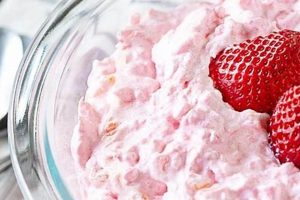
This dish is a cold dessert salad featuring chopped Snickers candy bars, typically combined with apples, whipped topping, and a pudding base. Variations often include ingredients like grapes, Granny Smith apples, or other fruits. The pudding component is frequently instant vanilla pudding, contributing a creamy sweetness and binding the other elements together.
The appeal lies in its simple preparation, satisfying blend of textures and flavors, and nostalgic quality. Its ease of assembly makes it a popular choice for potlucks, holidays, and casual gatherings. The contrasting textures of the crisp apple, chewy caramel and nougat, creamy pudding, and airy whipped topping provide a delightful sensory experience. This dessert has become a staple in many regions, especially during the fall and winter seasons, due to its association with celebratory meals and comforting flavors.
Further exploration of this dessert can involve examining regional variations, nutritional information, alternative ingredient choices, and tips for presentation and storage. This can encompass discussions on substituting healthier ingredients, exploring the history of the dish, and understanding its enduring popularity.
Tips for a Successful Dessert Salad
Preparation and ingredient selection significantly influence the final outcome of this dessert. Careful attention to these details ensures a balanced and enjoyable culinary experience.
Tip 1: Apple Selection: Opt for firm, tart apples like Granny Smith. Their tartness balances the sweetness of other components and maintains a pleasant texture even after being mixed with the other ingredients.
Tip 2: Pudding Choice: While vanilla pudding is traditional, consider butterscotch or even pistachio for a unique flavor profile. Sugar-free pudding can be used for a lower-calorie version.
Tip 3: Whipped Topping: Freshly whipped cream elevates the dessert. Stabilized whipped topping provides a longer-lasting structure, especially for potlucks or events. Cool Whip is a convenient alternative.
Tip 4: Candy Bar Preparation: Chill the candy bars before chopping for cleaner cuts and less sticking. A sharp knife facilitates even, bite-sized pieces.
Tip 5: Mixing Technique: Gently fold ingredients together to prevent overmixing, which can result in a mushy texture and break down the whipped topping.
Tip 6: Chill Time: Allowing the salad to chill for at least 30 minutes before serving allows flavors to meld and the apples to absorb some of the pudding’s moisture.
Tip 7: Presentation: Serve in a clear glass bowl to showcase the colorful layers. Garnish with chopped nuts, a drizzle of caramel, or a few extra pieces of chopped candy bar.
By considering these tips, one can consistently create a balanced, visually appealing, and delicious dessert salad that suits various preferences and occasions.
This guidance provides a foundation for experimenting with variations and personalizing this classic recipe to create a memorable dessert experience.
1. Snickers (candy)

The Snickers candy bar serves as the foundational element, lending its distinctive character to the dessert. Its combination of nougat, caramel, peanuts, and milk chocolate provides a complex flavor profile that interacts dynamically with other ingredients. The inherent sweetness of the Snickers necessitates a balance of tartness and creamy textures within the salad. For example, the tartness of Granny Smith apples offers a counterpoint to the candy’s rich sweetness, preventing the overall flavor from becoming cloying. Furthermore, the chopped Snickers introduces a textural variation, contrasting with the smooth pudding and airy whipped topping.
The quantity and preparation of the Snickers bar significantly influence the final product. Chopping the bars into smaller pieces allows for even distribution throughout the salad and ensures each bite contains a balance of flavors. Using fewer candy bars results in a lighter, less sweet dessert, while a greater quantity amplifies the candy’s influence. Consider a scenario where an individual substitutes a different candy bar, perhaps one with a higher proportion of caramel. This substitution would alter the overall sweetness and texture, necessitating adjustments to other components to maintain balance.
Understanding the Snickers bar’s role within this dessert is crucial for achieving the desired flavor and textural complexity. Its inherent characteristics dictate ingredient pairings and proportions, impacting the overall balance and enjoyment of the final dish. Adjustments based on specific preferences or dietary restrictions, like using a sugar-free version of the candy, necessitate careful consideration of how these alterations affect the overall composition and require corresponding modifications to other ingredients.
2. Apples (fruit)
Apples play a crucial role in a Snicker salad, providing a textural and flavor counterpoint to the other ingredients. Their selection and preparation significantly influence the overall balance and enjoyment of the dessert.
- Variety Selection
The specific apple variety chosen impacts the salad’s flavor profile and texture. Tart apples, such as Granny Smith, offer a refreshing acidity that balances the sweetness of the Snickers and pudding. Sweeter varieties, like Fuji or Gala, may create an overly sweet result. The apple’s firmness also contributes to the textural experience; a crisp apple maintains its structure within the salad, while a softer variety might become mushy.
- Preparation Methods
Dicing the apples into uniform pieces ensures even distribution and consistent texture throughout the salad. Leaving the peel on contributes fiber and visual appeal, but peeling might be preferred for a smoother texture. Pre-treating cut apples with a solution of lemon juice and water helps prevent browning and maintains their fresh appearance.
- Flavor Interaction
The apple’s tartness interacts with the sweetness of the Snickers and the creamy vanilla pudding, creating a balanced flavor profile. This interplay prevents the dessert from becoming overly sweet and adds a refreshing element. The apple’s subtle sweetness also complements the caramel and nougat notes of the Snickers.
- Textural Contribution
The apple’s crisp texture contrasts with the creamy pudding and the chewy Snickers, adding a dimension of complexity to each bite. This textural contrast enhances the overall sensory experience of the dessert. The firmness of the chosen apple variety is crucial; a softer apple may not hold its shape as well, resulting in a less appealing texture.
Careful consideration of apple selection and preparation methods ensures the fruit contributes positively to the Snicker salad’s overall balance of flavors and textures. The interplay between the apple’s tartness, sweetness, and texture alongside the other components ultimately determines the success of the dessert.
3. Vanilla pudding (base)

Vanilla pudding functions as a crucial binding agent and flavor component within the dessert. Its creamy texture adheres to the other ingredients, creating a cohesive salad while simultaneously contributing a smooth, sweet counterpoint to the other components. The pudding’s viscosity is essential; a thinner consistency would fail to bind the ingredients effectively, resulting in a loose, watery salad. Conversely, an overly thick pudding could overwhelm the other flavors and create a dense, heavy texture. The vanilla flavor complements the sweetness of the Snickers bar and the tartness of the apples, creating a balanced flavor profile. Consider, for instance, a scenario where chocolate pudding is substituted for vanilla. This alteration would introduce a more intense chocolate flavor, potentially overpowering the subtle nuances of the other ingredients and shifting the overall flavor balance. The vanilla pudding, therefore, not only acts as a structural element but also plays a key role in shaping the dessert’s overall taste.
The choice of pudding typeinstant, cook-and-serve, or homemadefurther influences the final product. Instant pudding offers convenience, while cook-and-serve pudding may yield a richer, more custardy texture. Homemade pudding allows for precise control over ingredients and sweetness levels, catering to specific dietary needs or flavor preferences. Furthermore, the pudding’s sweetness level contributes to the overall balance of the dish. A sweeter pudding might require fewer Snickers bars or the use of tarter apples to maintain equilibrium. Understanding the pudding’s role as a base highlights the importance of choosing the right type and sweetness level to complement the other ingredients and achieve the desired final outcome. For example, a lower-sugar pudding could be utilized when paired with a higher quantity of Snickers bars to control overall sweetness.
In essence, the vanilla pudding serves as a foundational element in a Snicker salad, impacting both its structure and flavor profile. The careful selection of pudding type and consideration of its sweetness level are essential for achieving a harmonious balance of textures and tastes. Deviation from the traditional vanilla pudding, while possible, necessitates careful consideration of how such changes will affect the interplay of flavors and the overall composition of the dessert.
4. Whipped topping (texture)
Whipped topping contributes a crucial textural element to this dessert, complementing the other ingredients and enhancing the overall sensory experience. Its lightness and airiness contrast with the denser components, creating a balanced and enjoyable mouthfeel. The choice and application of whipped topping significantly influence the final product’s texture, appearance, and stability.
- Type and Stability
Different types of whipped topping offer varying levels of stability and sweetness. Whipped cream, known for its delicate texture and rich flavor, provides a light and airy contrast to the denser elements of the salad, but it can be less stable over time. Stabilized whipped topping or whipped cream alternatives, such as Cool Whip, offer greater structural integrity, especially beneficial for gatherings where the dessert might sit out for extended periods. This stability prevents the topping from deflating or weeping, maintaining a visually appealing and texturally consistent salad.
- Incorporation and Distribution
The method of incorporating the whipped topping impacts the salad’s final texture. Gently folding the topping into the other ingredients ensures even distribution and prevents deflation, maintaining its airy lightness. Overmixing can lead to a dense, homogenous mixture, losing the desired textural contrast. Ensuring the whipped topping is evenly dispersed throughout the salad allows each bite to contain a balance of textures, contributing to a more enjoyable eating experience.
- Visual Appeal and Presentation
Whipped topping contributes to the dessert’s visual appeal, providing a clean, white backdrop that accentuates the colors of the other ingredients. A generous layer of whipped topping on top creates an attractive presentation and serves as a blank canvas for optional garnishes like chopped nuts, a drizzle of caramel, or additional candy pieces. This visual element enhances the overall enjoyment of the dessert, making it more appealing and appetizing.
- Flavor and Sweetness
While primarily a textural element, whipped topping also contributes to the dessert’s flavor profile. The subtle sweetness of whipped cream complements the other ingredients without overpowering them. Using a flavored whipped topping, such as vanilla or chocolate, could introduce an additional layer of flavor complexity, but requires careful consideration of how it interacts with the existing flavors of the Snickers, apples, and vanilla pudding. The sweetness level of the chosen topping also influences the overall balance of the dessert.
Whipped topping is essential to a well-executed dessert, impacting not only texture but also visual appeal, stability, and flavor balance. Understanding the nuances of different types of whipped topping and their incorporation techniques allows for informed choices that contribute to a successful and enjoyable dessert experience. The careful selection and handling of the whipped topping, combined with the other components, ultimately determine the final product’s overall quality and appeal.
5. Recipe (instructions)
A recipe provides a structured framework for creating a specific dish, outlining the necessary ingredients, their quantities, and the steps required for proper preparation. In the context of a Snicker salad with vanilla pudding, the recipe serves as a guide for achieving the desired balance of flavors and textures. A well-written recipe ensures consistency and facilitates successful replication of the dish, regardless of culinary experience.
- Ingredient List
A precise ingredient list specifies the type and quantity of each component required for the salad. This includes the variety of apple (e.g., Granny Smith), type of pudding (e.g., instant vanilla), and preferred whipped topping (e.g., Cool Whip). Specificity ensures consistent flavor and texture. Ambiguity or omissions can lead to variations in the final product, impacting the overall balance and quality.
- Preparation Steps
Clear, concise instructions detailing the order of operations are essential. This includes directions for chopping the Snickers, preparing the pudding, and combining the ingredients. The recipe might specify chilling times for optimal flavor development and texture. Detailed instructions minimize potential errors and ensure the desired outcome. For example, the recipe might instruct chilling the Snickers before chopping to prevent sticking and ensure clean cuts.
- Variations and Adaptations
A comprehensive recipe may offer variations or substitutions to accommodate dietary restrictions or preferences. This could include suggestions for using sugar-free pudding, alternative candy bars, or different fruits. These options allow for personalization while maintaining the fundamental structure of the dessert. For instance, the recipe might suggest using Greek yogurt instead of whipped topping for a lighter, tangier version.
- Presentation and Serving Suggestions
While not always included, some recipes offer guidance on presentation and serving. This might include suggestions for garnishes, serving dishes, or appropriate accompaniments. These details enhance the visual appeal and overall enjoyment of the dish. For example, the recipe might suggest garnishing with chopped nuts or a drizzle of caramel sauce.
A well-crafted recipe ensures a successful outcome when preparing this dessert. Precise instructions, clear ingredient lists, and potential variations guide the process, facilitating consistent results and allowing for individual customization. The recipe’s clarity and comprehensiveness directly correlate to the ease of preparation and the final product’s quality. A poorly written or incomplete recipe increases the likelihood of errors and deviations from the intended result.
6. Dessert salad (classification)

Categorizing this dish as a “dessert salad” clarifies its nature and distinguishes it from other dessert types. This classification highlights the presence of both fruit and a creamy element, typically a pudding or whipped topping base, which binds the ingredients together. “Dessert salad” implies a chilled, often sweet, dish served as a final course. This contrasts with other dessert categories like cakes, pies, or cookies, which possess distinct structural and textural characteristics. The “salad” designation also suggests a lighter, less dense composition compared to many other desserts. For example, classifying a fruit crumble as a dessert salad would be inappropriate due to its baked nature and crumbly topping, despite potentially containing fruit. Classifying a Snicker salad as a dessert salad accurately reflects its composition, texture, and intended serving occasion.
Understanding this categorization informs expectations regarding flavor profiles and presentation. A dessert salad often incorporates a balance of sweetness, tartness, and creamy textures. The inclusion of ingredients like Snickers, apples, and vanilla pudding exemplifies this balance. Presentation typically involves a serving bowl rather than individual portions, further reinforcing the communal, salad-like nature of the dish. This classification also influences appropriate serving contexts; dessert salads frequently appear at potlucks, picnics, and casual gatherings, aligning with the perception of salads as shareable and easily transportable dishes. Attempting to serve a Snicker salad in the same manner as a plated dessert, such as a slice of cake, would feel incongruous with its inherent characteristics. Therefore, the “dessert salad” classification provides valuable context for both preparation and consumption.
In conclusion, classifying this dish as a “dessert salad” effectively communicates essential information about its composition, intended role, and appropriate serving contexts. This categorization shapes expectations regarding flavor profiles, textures, and presentation, guiding both the preparation process and the overall dining experience. Challenges may arise when attempting to adapt or modify traditional dessert salad recipes while adhering to this classification. For instance, incorporating baked elements or denser textures could blur the lines between dessert salad and other dessert categories. Maintaining clarity within this classification requires careful consideration of how ingredient choices and preparation methods contribute to the dish’s defining characteristics.
Frequently Asked Questions
This section addresses common inquiries regarding the preparation and variations of this dessert.
Question 1: What type of apple is best suited for this dessert?
Tart, firm apples like Granny Smith are generally preferred. Their tartness balances the sweetness of the other ingredients, and their firmness prevents them from becoming mushy.
Question 2: Can other candy bars be substituted for Snickers?
While Snickers provide a characteristic flavor profile, other candy bars can be used. However, adjustments to other ingredients may be necessary to maintain flavor balance. Consider the candy bar’s sweetness and texture when making substitutions.
Question 3: What can be used in place of vanilla pudding?
Butterscotch or even pistachio pudding offer alternative flavor profiles. Sugar-free pudding can also be used for a lower-calorie option. The chosen pudding flavor should complement the other ingredients.
Question 4: How can the dessert be made healthier?
Using low-fat or sugar-free pudding, reducing the amount of candy, and incorporating additional fruits can contribute to a healthier version. Greek yogurt can be substituted for whipped topping to reduce fat and add protein.
Question 5: How long can the dessert be stored?
Storage time depends on the ingredients used. With traditional ingredients, it is best consumed within 2-3 days when refrigerated. Using stabilized whipped topping may extend shelf life. Monitor the appearance and texture for signs of spoilage.
Question 6: Can this dessert be made ahead of time?
Yes, it can be prepared a day in advance. However, its advisable to add the whipped topping shortly before serving to maintain its airy texture and prevent deflation. Store the salad without the topping in a covered container in the refrigerator.
Careful consideration of these points allows for a more informed approach to preparing and enjoying this dessert. Adaptation to individual preferences is encouraged while maintaining an understanding of the core principles that contribute to a successful outcome.
The following section will explore further variations and customizations of this classic dessert.
Conclusion
Examination of this dessert reveals a carefully balanced interplay of flavors and textures. The sweetness of the Snickers candy bar is offset by the tartness of the apples, while the creamy vanilla pudding provides a cohesive base. The addition of whipped topping introduces a contrasting airy element. Proper ingredient selection, preparation techniques, and adherence to a reliable recipe ensure a successful outcome. Variations in candy, fruit, and pudding choices offer opportunities for customization while maintaining the fundamental characteristics of this dessert salad.
This exploration underscores the importance of understanding individual components and their contributions to the overall composition. Adaptation and experimentation within this framework offer a pathway to personalized variations. Continued appreciation of this dessert lies in its adaptability and the enduring appeal of its combined flavors and textures.