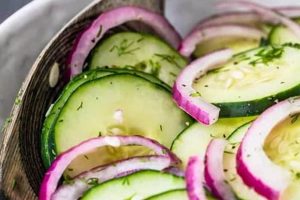
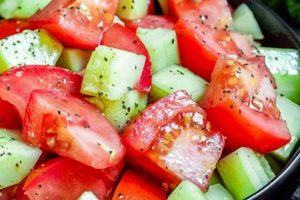
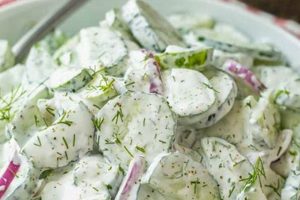
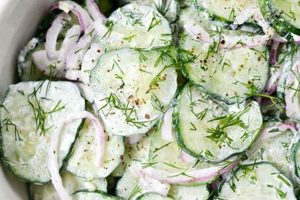
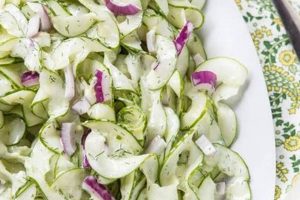
A refreshing and flavorful dish, this type of salad typically combines thinly sliced cucumbers with crumbled feta cheese. Common additions include red onion, fresh herbs like dill or mint, and a vinaigrette dressing often based on olive oil, lemon juice, and seasonings. Variations can incorporate other vegetables like tomatoes, bell peppers, or olives, and different herbs and spices to customize the flavor profile. A simple version might involve just cucumbers, feta, red onion, and a lemon-olive oil dressing.
This salad offers a balance of cool, crisp cucumbers, salty and tangy feta, and the bright acidity of the dressing. It is a versatile dish, suitable as a light lunch, a side dish for grilled meats or fish, or part of a larger buffet spread. The high water content of cucumbers makes it hydrating and refreshing, particularly during warmer months. Feta contributes calcium and protein. While the precise origins are difficult to pinpoint, the combination of cucumbers, feta, and olive oil resonates with Mediterranean cuisine, where these ingredients are staples.
The following sections will explore variations on this classic combination, offering specific recipes, tips for ingredient selection and preparation, and suggestions for complementary dishes. Guidance on achieving the perfect balance of flavors and textures will also be provided.
Tips for a Perfect Cucumber and Feta Salad
Achieving optimal flavor and texture requires attention to detail. These tips offer guidance for creating a truly exceptional salad.
Tip 1: Salt the Cucumbers: Salting the sliced cucumbers draws out excess moisture, preventing a watery salad. Place the cucumber slices in a colander, sprinkle with salt, and let them sit for 15-20 minutes before rinsing and patting dry.
Tip 2: Choose High-Quality Feta: Opt for feta packed in brine, as it retains better moisture and flavor. Crumble the feta just before adding it to the salad to prevent it from drying out.
Tip 3: Thinly Slice the Ingredients: Thinly slicing the cucumbers, onions, and any other vegetables ensures even distribution of flavors and a pleasant texture.
Tip 4: Balance the Flavors: The dressing should complement the other ingredients. A balance of acidity from lemon juice or vinegar, saltiness from the feta, and richness from olive oil is key.
Tip 5: Use Fresh Herbs: Fresh herbs like dill, mint, or parsley add a vibrant flavor dimension. Chop them finely just before adding them to the salad.
Tip 6: Chill Before Serving: Chilling the salad for at least 30 minutes allows the flavors to meld and enhances the refreshing quality.
Tip 7: Don’t Overdress: Add the dressing just before serving to prevent the salad from becoming soggy. Start with a small amount and add more if needed.
By following these tips, one can elevate a simple cucumber and feta salad to a truly delightful culinary experience.
The following section will provide specific recipe variations, incorporating these tips for optimal results.
1. Fresh Cucumbers

Fresh cucumbers are fundamental to a successful cucumber salad with feta. Their crisp texture and mild, refreshing flavor provide a crucial counterpoint to the salty, tangy feta. Cucumber quality directly impacts the overall sensory experience. A fresh cucumber offers a firm, crisp bite, whereas one that is older or improperly stored may be soft, mushy, or bitter, detracting significantly from the salad’s appeal. For instance, using a fresh, firm English cucumber, known for its thin skin and minimal seeds, results in a cleaner, more delicate salad compared to using a common cucumber with thicker skin and larger, more watery seed cavities. The choice of cucumber variety influences both the texture and flavor profile of the final dish.
The freshness of cucumbers also affects the salad’s structural integrity. Cucumbers with high water content, especially if not properly salted and drained, can release excess moisture, leading to a watery, diluted dressing and a less appealing presentation. Fresh, properly handled cucumbers maintain their structure and contribute to a crisp, refreshing salad. This is particularly important in a simple salad where the cucumber is a primary component. Consider a scenario where pre-sliced cucumbers, stored improperly, are used: the resulting salad will likely be limp and watery, lacking the desired textural contrast with the feta.
Selecting and preparing fresh cucumbers correctly is therefore essential for a high-quality cucumber and feta salad. Choosing firm cucumbers with intact, unblemished skin is the first step. Proper storage, ideally in the refrigerator, helps maintain freshness. Techniques like salting and draining sliced cucumbers further enhance texture and prevent excess moisture. These factors contribute significantly to the overall success of the dish, demonstrating the critical role of fresh cucumbers in this seemingly simple yet nuanced salad.
2. Quality Feta Cheese
Quality feta cheese plays a pivotal role in a successful cucumber salad. Feta contributes the crucial salty, tangy element, balancing the mild cucumber and creating a dynamic flavor profile. The quality of the feta directly impacts the overall taste experience. Inferior feta, often overly salty or lacking characteristic tang, can detract significantly from the salad’s balance. Conversely, high-quality feta, typically made from sheep’s or goat’s milk, possesses a nuanced flavor profile creamy, slightly salty, with a pleasant tang that elevates the entire dish. Consider a salad made with a crumbled, dry, pre-packaged feta versus one made with feta stored in brine: the latter, retaining more moisture and flavor complexity, contributes a richer, more authentic taste.
Beyond flavor, feta’s texture is essential. Quality feta, properly stored, offers a pleasant crumbly texture that contrasts nicely with the crisp cucumber. This textural interplay is key to the salad’s appeal. Poor quality feta may be excessively dry and hard, or conversely, too soft and mushy, disrupting the desired textural balance. The choice of feta also influences how it interacts with the dressing. A higher quality feta absorbs the dressing’s flavors without becoming excessively saturated or losing its structural integrity. For instance, a good quality feta will hold its shape when tossed with a vinaigrette, maintaining the desired crumbly texture, while a lower quality feta might disintegrate, resulting in a less appealing presentation.
Therefore, selecting quality feta cheese is paramount. Feta packed in brine, rather than pre-crumbled and dry, generally offers superior flavor and texture. Paying attention to the feta’s origin and milk source (sheep, goat, or a blend) can further inform the choice. The feta’s contribution to the overall balance of flavors and textures underscores its significance in this seemingly simple salad. Ultimately, the quality of feta is a defining factor in the overall success and enjoyment of a cucumber and feta salad.
3. Light Vinaigrette

A light vinaigrette is essential for a successful cucumber and feta salad. It provides a crucial acidic counterpoint to the richness of the feta and the mildness of the cucumber, enhancing the flavors without overpowering them. The vinaigrette’s lightness ensures the salad remains refreshing and prevents the cucumbers from becoming soggy. A heavy or overly rich dressing would mask the delicate flavors of the primary ingredients and create an unbalanced dish.
- Acidity
The acidity in the vinaigrette, typically derived from lemon juice, vinegar, or a combination, brightens the flavors and cuts through the richness of the feta. Lemon juice offers a fresh, citrusy note, while red wine vinegar contributes a subtle sharpness. The right balance of acidity prevents the salad from tasting bland and enhances the overall flavor profile. For example, a lemon vinaigrette provides a different flavor profile than a champagne vinaigrette. The choice of acid should complement the other ingredients and contribute to the desired flavor balance.
- Oil
The oil in the vinaigrette provides richness and helps distribute the flavors evenly throughout the salad. Extra virgin olive oil is a classic choice, offering a fruity, peppery flavor that pairs well with both cucumber and feta. Other lighter oils, such as grapeseed or avocado oil, can also be used. The oil should be high quality and complement the other vinaigrette ingredients. Using a strong flavored oil, like toasted sesame oil, would overpower the delicate cucumber and feta.
- Seasoning
Seasoning enhances the vinaigrette’s flavors and ties the ingredients together. Salt and freshly ground black pepper are essential, but other herbs and spices can be added to create complexity. Fresh dill, mint, or oregano complement the cucumber and feta beautifully. However, it’s important to use seasonings judiciously, allowing the natural flavors of the primary ingredients to shine through. Over-seasoning can easily mask the delicate cucumber and feta flavors.
- Emulsification
Proper emulsification ensures the vinaigrette ingredients combine effectively, creating a cohesive dressing that coats the salad evenly. Whisking the oil and acid together creates a temporary emulsion, preventing the dressing from separating and ensuring a consistent flavor in every bite. A stable emulsion prevents the oil and vinegar from separating, resulting in a more visually appealing and evenly flavored salad. This avoids pockets of excessive oil or vinegar and ensures a pleasant, consistent texture.
The careful balance of these elements in a light vinaigrette is crucial for enhancing the cucumber and feta’s natural flavors, creating a harmonious and refreshing salad. The vinaigrette acts as a bridge, unifying the individual components into a cohesive and flavorful dish. A well-executed light vinaigrette elevates the simple cucumber and feta salad from a basic dish to a culinary delight.
4. Fresh Herbs (Dill, Mint)

Fresh herbs play a crucial role in elevating the flavor profile of a cucumber salad with feta. Dill and mint, in particular, offer distinct yet complementary flavor profiles that enhance the refreshing nature of this salad. Their aromatic qualities and subtle nuances add depth and complexity, transforming a simple combination of ingredients into a more sophisticated culinary experience. Careful selection and application of these herbs can significantly impact the final result.
- Aromatic Enhancement
Fresh dill and mint contribute aromatic complexity to the salad. Dill offers a slightly tangy, almost anise-like flavor that complements the feta’s saltiness. Mint provides a cool, refreshing counterpoint, balancing the richer elements of the dish. This combination of aromatic notes creates a more dynamic and engaging sensory experience. For example, the subtle anise notes of dill can enhance the creamy, salty notes of the feta, while the bright, cooling flavor of mint provides a refreshing contrast.
- Flavor Balancing
Beyond aroma, these herbs contribute to the overall flavor balance. The subtle tang of dill enhances the feta’s saltiness and the cucumber’s mild flavor, preventing the salad from tasting bland. Mint’s refreshing quality helps cut through the richness of the feta, creating a lighter, more balanced flavor profile. This interplay of flavors prevents any single ingredient from dominating and ensures a harmonious overall taste.
- Visual Appeal
The vibrant green of fresh dill and mint enhances the visual appeal of the salad. Their inclusion adds color and textural variation, making the dish more attractive and appetizing. This visual element is particularly important in a salad where the primary ingredients are relatively pale in color. The bright green herbs provide a visual focal point and contribute to a more aesthetically pleasing presentation.
- Complementary Interactions
Dill and mint complement not only the cucumber and feta but also other potential salad additions. For instance, dill pairs well with red onion, while mint complements ingredients like tomatoes or bell peppers. These complementary interactions allow for variations on the classic cucumber and feta salad, expanding the possibilities for flavor combinations and customization. This versatility allows for tailoring the salad to individual preferences while maintaining a balanced and harmonious flavor profile.
The strategic use of fresh dill and mint elevates the cucumber and feta salad from a simple combination of ingredients to a more complex and nuanced dish. These herbs contribute not only aromatic and flavor complexity but also visual appeal, demonstrating their multifaceted role in enhancing this classic salad. Their complementary interactions with other potential ingredients further expand the possibilities for customization and flavor exploration, solidifying their significance in creating a truly exceptional culinary experience.
5. Red Onion
Red onion contributes a pungent, sharp flavor and vibrant color to cucumber salad with feta, enhancing the sensory experience. Its sharpness provides a crucial counterpoint to the creamy feta and mild cucumber, creating a more complex and balanced flavor profile. The onion’s piquancy cuts through the richness of the feta, preventing the salad from becoming overly creamy or bland. Furthermore, the red onion’s crisp texture provides a welcome contrast to the softer textures of the cucumber and feta, contributing to a more dynamic mouthfeel. For instance, a cucumber and feta salad without red onion might lack dimension, tasting predominantly of creamy feta and mild cucumber. The addition of thinly sliced red onion introduces a sharp bite that elevates the other flavors, creating a more harmonious and dynamic taste experience.
Beyond flavor and texture, red onion adds visual appeal. Its vibrant purple hue contrasts beautifully with the green cucumber and white feta, creating a more visually appealing dish. This visual enhancement is particularly important in salads, where aesthetics play a significant role in the overall dining experience. Furthermore, red onion’s inherent pungency can be modulated through preparation techniques. Soaking thinly sliced red onion in ice water for 10-15 minutes mellows its sharpness without sacrificing its crisp texture or vibrant color. This technique allows for customization of the onion’s intensity, catering to individual preferences and ensuring the desired balance of flavors within the salad. This allows for greater control over the final flavor profile, allowing one to achieve the precise level of pungency desired. Omitting this step may result in an overly sharp onion flavor that dominates the other delicate ingredients.
In summary, red onion serves a crucial role in cucumber salad with feta, contributing flavor complexity, textural contrast, and visual appeal. Its sharp flavor balances the richness of the feta and mildness of the cucumber, creating a more dynamic and satisfying salad. The ability to modulate the onion’s pungency through preparation techniques further enhances its versatility and allows for customization based on individual preferences. Understanding red onions role, both as a flavor component and a visual element, enables the creation of a more balanced and enjoyable culinary experience. This highlights the importance of considering each ingredient’s contribution, even in seemingly simple dishes, to achieve optimal flavor and textural harmony.
6. Proper Chilling
Proper chilling is essential for maximizing the flavor and textural qualities of a cucumber salad with feta. Temperature significantly influences the perception of taste and the structural integrity of ingredients. Chilling enhances the refreshing qualities of the salad while allowing the flavors to meld and develop more fully.
- Enhanced Crispness
Chilling firms the cucumber, enhancing its crispness and providing a more satisfying textural contrast to the creamy feta. This effect is particularly noticeable in salads prepared in advance. A chilled cucumber retains its structural integrity, preventing it from becoming soft or wilted, while a room-temperature cucumber may lose its desirable crunch. The contrast between the chilled cucumber’s crispness and the feta’s creamy texture is a key element of the salad’s appeal.
- Flavor Development
Chilling allows the flavors of the various ingredients, including the cucumber, feta, red onion, herbs, and vinaigrette, to meld and develop more fully. The lower temperature slows down enzymatic activity, preserving the fresh flavors and preventing them from degrading. This melding of flavors creates a more harmonious and balanced taste profile. A freshly made salad, when chilled, allows the individual flavors to combine and create a more unified and complex overall taste compared to one served immediately.
- Refreshing Quality
Chilling amplifies the inherent refreshing qualities of the cucumber and other ingredients. A chilled salad is particularly appealing in warm weather, providing a welcome respite from the heat. The cool temperature enhances the perception of freshness and makes the salad more palatable. This cooling effect is especially noticeable with ingredients like cucumbers, which have high water content. A chilled cucumber salad offers a more invigorating and refreshing sensory experience than one served at room temperature.
- Food Safety
Proper chilling is crucial for food safety, especially with salads containing perishable ingredients like feta cheese. Maintaining a low temperature inhibits the growth of harmful bacteria, reducing the risk of foodborne illness. Adhering to safe food handling practices, including proper chilling, is essential for ensuring the salad’s safety and preventing spoilage. A salad left at room temperature for an extended period, particularly one containing dairy products like feta, becomes a breeding ground for bacteria, increasing the risk of foodborne illness. Proper chilling mitigates this risk and preserves the salad’s quality.
Therefore, proper chilling is not merely a suggestion but a crucial step in creating a truly exceptional cucumber salad with feta. Chilling enhances not only the sensory experience by maximizing crispness, flavor development, and refreshing qualities, but also ensures food safety. By understanding the impact of temperature on the ingredients and the overall salad, one can appreciate the importance of proper chilling in elevating this simple dish to its full potential. A properly chilled cucumber salad with feta offers a superior dining experience compared to one served at room temperature, demonstrating the significant impact of this often overlooked step.
7. Minimal Seasoning
Minimal seasoning, a key principle in highlighting the fresh, natural flavors of a cucumber salad with feta, allows the inherent qualities of each ingredient to shine. Rather than masking these delicate flavors with excessive spices or seasonings, a minimalist approach emphasizes the interplay of the cucumber’s subtle sweetness, the feta’s salty tang, and the chosen herbs’ aromatic notes. This restraint in seasoning contributes to a lighter, more refreshing salad that celebrates the ingredients’ inherent deliciousness.
- Highlighting Natural Flavors
Minimal seasoning allows the natural flavors of the core ingredientscucumber and fetato take center stage. The cucumber’s refreshing, slightly sweet taste and the feta’s characteristic salty tang are allowed to shine without being overshadowed by strong spices or herbs. For example, using only a touch of salt and freshly ground black pepper in the vinaigrette allows the inherent cucumber and feta flavors to dominate, creating a cleaner, brighter taste profile. Over-seasoning, conversely, could mask these delicate nuances.
- Balancing Flavor Profiles
Careful restraint in seasoning contributes to a balanced flavor profile, where no single element overpowers the others. The subtle flavors of fresh herbs, such as dill or mint, enhance the overall taste without dominating the palate. A judicious use of salt in both the cucumber preparation (to draw out moisture) and the vinaigrette ensures a balanced salinity that complements, rather than overwhelms, the feta’s saltiness. This balance allows for a more nuanced and harmonious flavor experience.
- Enhancing Freshness
Minimal seasoning underscores the salad’s fresh, vibrant character. The absence of heavy spices or dried herbs allows the fresh ingredients, particularly the cucumber and herbs, to contribute their full aromatic and flavor potential. This emphasis on freshness aligns with the overall goal of creating a light, refreshing dish, perfect for warmer weather or as a palate cleanser. The bright, clean flavors are more perceptible when not masked by heavy seasonings.
- Customization and Adaptability
A minimally seasoned base recipe provides a versatile foundation for customization. While a simple vinaigrette with salt, pepper, and perhaps a touch of lemon juice is sufficient to highlight the core ingredients, the minimalist approach allows for the addition of other complementary flavors based on personal preference. A pinch of red pepper flakes, a drizzle of honey, or a sprinkle of toasted sesame seeds can add subtle nuances without overwhelming the fundamental flavor profile. This adaptability makes the recipe suitable for a wider range of tastes and occasions.
The principle of minimal seasoning in a cucumber salad with feta is not about omitting flavor but rather about showcasing the inherent deliciousness of fresh, high-quality ingredients. By exercising restraint and allowing the natural flavors to shine, one achieves a balanced, refreshing, and adaptable dish that exemplifies the elegance of simplicity in cooking. The focus shifts from complex flavor combinations to the pure enjoyment of each ingredient’s inherent qualities, resulting in a truly satisfying culinary experience.
Frequently Asked Questions
This section addresses common inquiries regarding cucumber salad with feta, providing concise and informative responses.
Question 1: Can English cucumbers be substituted for regular cucumbers?
English cucumbers, with their thinner skin and fewer seeds, offer a more delicate flavor and texture, often eliminating the need for salting. While regular cucumbers can be used, they may require salting and draining to prevent excess moisture in the salad.
Question 2: What type of feta cheese is recommended?
Feta packed in brine, preferably made from sheep’s or goat’s milk, is ideal. It retains moisture and offers a superior flavor profile compared to pre-crumbled, dry feta. Authenticity and quality are paramount for optimal results.
Question 3: How can the sharpness of red onion be mitigated?
Soaking thinly sliced red onion in ice water for 10-15 minutes mellows its pungency without compromising its crisp texture or vibrant color. This technique allows for a more balanced flavor profile.
Question 4: What dressings, besides vinaigrette, complement this salad?
While vinaigrette is the classic choice, a simple lemon-herb dressing or a yogurt-based dressing with dill and garlic can also complement the cucumber and feta well. The key is to maintain a light dressing that doesn’t overpower the salad’s fresh flavors.
Question 5: How long can this salad be stored in the refrigerator?
Ideally, this salad is best consumed fresh. However, it can be stored in an airtight container in the refrigerator for up to two days. The texture of the cucumbers may soften slightly over time.
Question 6: What are some suitable accompaniments for cucumber salad with feta?
This salad pairs well with grilled meats, fish, or roasted vegetables. It also serves as a refreshing counterpoint to richer, heavier dishes. Its versatility makes it a suitable side dish for various cuisines and occasions.
Understanding these frequently addressed points allows for informed choices in ingredient selection, preparation, and serving, contributing to a more successful and enjoyable culinary experience.
Further exploration of recipe variations and serving suggestions will follow in the next section.
Cucumber Salad Recipe with Feta
Exploration of this deceptively simple dish reveals a nuanced interplay of flavors and textures. Emphasis on fresh, high-quality ingredientscrisp cucumbers, tangy feta, vibrant red onion, and aromatic herbsis paramount. A light vinaigrette, judiciously applied, enhances these inherent qualities without masking their individual contributions. Proper chilling further elevates the sensory experience, amplifying the refreshing nature of the salad while allowing the flavors to meld harmoniously. Minimal seasoning underscores this focus on freshness, allowing the natural flavors to shine.
This exploration underscores the potential for culinary excellence even in seemingly basic preparations. Careful consideration of each elementfrom ingredient selection to preparation techniquesyields a dish that transcends its individual components. The cucumber salad recipe with feta exemplifies the transformative power of culinary awareness and the enduring appeal of fresh, vibrant flavors.