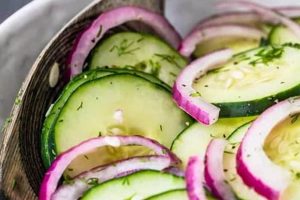
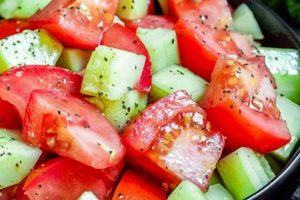
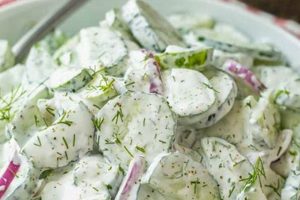
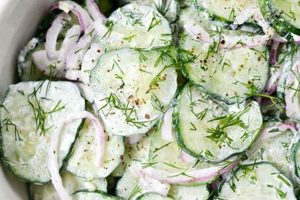
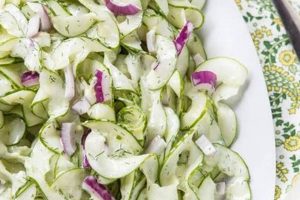
Fresh corn and cucumber salads offer a delightful combination of sweet and refreshing flavors, with a satisfying crunch. These salads can range from simple combinations with minimal ingredients to more complex creations incorporating various vegetables, herbs, proteins, and dressings. For example, a basic version might include chopped cucumber, kernels of fresh corn, and a light vinaigrette, while more elaborate versions might add ingredients like tomatoes, red onion, avocado, black beans, grilled chicken, or feta cheese.
Such combinations are not only palatable but also offer nutritional value. Corn provides fiber and antioxidants, while cucumbers offer hydration and contribute to vitamin K intake. The versatility of these salads makes them suitable for various occasions, from light lunches and side dishes at barbecues to refreshing additions to potlucks. Historically, corn has been a staple in the Americas for centuries, while cucumbers have origins in India, indicating the global appeal of this pairing.
The following sections will explore variations on this theme, covering different flavor profiles, dietary considerations, and tips for preparation and presentation. Recipes will be categorized to assist readers in finding options that best suit their tastes and needs, from classic vinegar-based dressings to creamy and spicy alternatives.
Tips for Corn and Cucumber Salads
Maximizing flavor and texture requires attention to ingredient selection and preparation techniques. The following tips offer guidance for creating exceptional corn and cucumber salads.
Tip 1: Corn Selection: Fresh corn, when in season, offers the best flavor. Look for plump kernels with bright color and milky liquid when pierced. Frozen corn can be substituted, but ensure it’s thawed and drained thoroughly.
Tip 2: Cucumber Preparation: English cucumbers, with their thinner skin and fewer seeds, are often preferred. For other varieties, consider peeling and seeding to reduce bitterness and excess moisture. Thinly slicing or dicing ensures even distribution throughout the salad.
Tip 3: Balancing Flavors: Acidity plays a crucial role. A simple vinaigrette with lemon juice or vinegar brightens the flavors of corn and cucumber. Adding herbs like dill, mint, or cilantro provides aromatic complexity.
Tip 4: Enhancing Texture: Consider incorporating ingredients that provide textural contrast. Crumbled feta cheese, toasted nuts, or croutons add a satisfying crunch.
Tip 5: Timing is Key: To maintain crispness, dress the salad shortly before serving. This prevents the cucumbers from becoming soggy and the corn from losing its sweetness.
Tip 6: Customization: Explore variations by adding other vegetables like bell peppers, red onion, or avocado. Protein additions such as grilled chicken, shrimp, or chickpeas create a more substantial meal.
Tip 7: Chill Factor: Chilling the salad for a short period before serving enhances the refreshing qualities, particularly during warmer months.
By following these guidelines, one can create corn and cucumber salads that are not only visually appealing but also deliver a balance of flavors and textures.
These insights provide a foundation for creating delicious and satisfying salads. The following section will present a collection of recipes that showcase the versatility of corn and cucumber combinations.
1. Fresh, Seasonal Ingredients

Ingredient seasonality significantly impacts the flavor and overall quality of corn and cucumber salads. Utilizing produce at its peak ripeness elevates these simple salads from satisfactory to exceptional. This section explores the connection between fresh, seasonal ingredients and the creation of superior salads.
- Peak Season Flavor:
Corn and cucumbers, when harvested in their respective peak seasons, possess optimal sweetness and crispness. Summer-harvested corn delivers a pronounced sweetness absent in out-of-season alternatives. Similarly, cucumbers grown during warmer months offer a refreshing, hydrating quality often lacking in those cultivated in other periods. Selecting ingredients at their peak ripeness maximizes flavor intensity and contributes to a more satisfying culinary experience.
- Nutritional Value:
Produce harvested in season generally boasts higher nutrient content. Studies suggest that fruits and vegetables allowed to ripen naturally on the vine or stalk retain more vitamins and minerals compared to those harvested prematurely and ripened artificially. Choosing seasonal corn and cucumbers ensures optimal nutritional intake from these ingredients.
- Supporting Local Agriculture:
Prioritizing seasonal produce often translates to supporting local farmers and reducing the environmental impact associated with long-distance transportation. Local sourcing minimizes transportation time and associated emissions, contributing to a more sustainable food system. Purchasing from local farmers markets or community-supported agriculture (CSA) programs offers a direct connection to the source of ingredients.
- Recipe Adaptability:
Seasonal variations encourage culinary creativity and recipe adaptability. While a classic corn and cucumber salad thrives on peak-season produce, variations incorporating other seasonal ingredients enhance flavor complexity and nutritional value. For instance, a summer salad might include fresh tomatoes and basil, while an early autumn version could incorporate roasted squash or pumpkin seeds.
By prioritizing fresh, seasonal ingredients, one elevates the flavor, nutritional value, and overall enjoyment of corn and cucumber salads. This approach not only results in a superior culinary experience but also supports sustainable agricultural practices and fosters a deeper appreciation for the natural rhythms of food production.
2. Balanced Flavor Profiles

Balanced flavor profiles are essential for successful corn and cucumber salads. The inherent sweetness of corn and the refreshing coolness of cucumber provide a foundation requiring careful consideration of complementary and contrasting tastes. A harmonious blend of sweet, sour, salty, bitter, and umami elements elevates these salads beyond simple ingredient combinations. Acidity, often introduced through vinegar or citrus juice, balances the sweetness of the corn. A touch of salt enhances the overall flavor profile and brings out the subtle nuances of the vegetables. Bitterness, perhaps from a leafy green like arugula or radicchio, adds complexity. Umami, achieved through ingredients such as crumbled feta cheese or a sprinkle of toasted sesame seeds, provides depth and richness. For example, a salad with corn, cucumber, feta cheese, red onion, and a lemon vinaigrette demonstrates this balance: the corn’s sweetness offsets the red onion’s sharpness, the feta contributes saltiness and umami, and the lemon vinaigrette provides acidity.
Understanding the interplay of these flavors allows for strategic ingredient selection and customized flavor combinations. Herbs and spices further contribute to complexity. Fresh dill or mint complement the cucumber’s coolness, while a pinch of chili flakes introduces a subtle heat. Textural variations also influence flavor perception. The crunch of toasted nuts or seeds contrasts with the softer textures of the corn and cucumber, creating a more dynamic and engaging culinary experience. The ratio of ingredients plays a crucial role; an overabundance of any single flavor can disrupt the balance and diminish the overall enjoyment.
Achieving a balanced flavor profile maximizes the potential of corn and cucumber salads. It transforms a simple combination of ingredients into a multi-dimensional culinary experience. This understanding allows for creativity and customization while adhering to core principles of flavor harmony. It enables the creation of salads that are not only refreshing and nutritious but also deeply satisfying and flavorful.
3. Variety of Textures
Textural diversity significantly enhances the enjoyment of corn and cucumber salads. The inherent textures of these primary ingredientsthe crisp cucumber and the slightly chewy corn kernelsbenefit from the introduction of contrasting elements. This interplay of textures elevates a simple salad from palatable to truly engaging. Consider the addition of toasted nuts or seeds: their brittle crunch provides a stark contrast to the softer vegetables, stimulating a more dynamic sensory experience. Crumbled feta cheese or goat cheese introduces a creamy element, further diversifying the textural profile. Even the inclusion of thinly sliced red onion contributes a subtle sharpness, both in flavor and texture. These contrasts create a more interesting and satisfying culinary experience, preventing the salad from feeling monotonous.
This principle extends beyond basic additions. Toasted croutons or tortilla strips offer a crunchy contrast, while avocado introduces a creamy smoothness. The preparation method also influences texture. Grilled or roasted corn kernels develop a smoky char and a firmer texture compared to their raw counterparts. Similarly, cucumbers can be ribboned, diced, or smashed, each technique offering a distinct textural variation. These subtle differences contribute significantly to the overall sensory experience, making the salad more complex and enjoyable. A salad with grilled corn, diced cucumber, crumbled feta, toasted pepitas, and a light vinaigrette exemplifies this concept. The interplay of charred corn, crunchy pepitas, creamy feta, and crisp cucumber creates a delightful textural journey.
Understanding the importance of textural variety allows for strategic ingredient selection and preparation techniques to maximize the sensory appeal of corn and cucumber salads. This knowledge empowers culinary creativity and enables the construction of salads that are not merely nutritious but also offer a satisfying and multifaceted eating experience. It transforms a simple combination of ingredients into a more dynamic and memorable dish.
4. Nutritional Considerations
Nutritional considerations play a vital role in the creation and consumption of corn and cucumber salads. These salads offer an inherently nutritious base, given the vitamin and mineral content of the core ingredients. Corn contributes dietary fiber, which aids digestion, and antioxidants, which protect cells from damage. Cucumbers provide hydration and are a source of vitamin K, essential for blood clotting. However, the overall nutritional profile of such a salad is significantly influenced by additional components and preparation methods. For example, adding a protein source like grilled chicken or chickpeas transforms a light side dish into a complete meal. Incorporating healthy fats, such as those found in avocado or a vinaigrette made with olive oil, enhances nutrient absorption and contributes to satiety. Conversely, excessive use of high-calorie dressings or toppings can diminish the nutritional benefits.
Awareness of nutritional impact allows for informed choices regarding ingredients and portion sizes. A salad featuring corn, cucumber, grilled salmon, avocado, and a light lemon-herb vinaigrette offers a balanced combination of protein, healthy fats, complex carbohydrates, and essential vitamins and minerals. This combination supports various health goals, from weight management to improved cardiovascular health. Conversely, a salad laden with bacon, cheese, and a creamy dressing, while palatable, may contribute excessive saturated fat and sodium. Understanding these implications empowers individuals to tailor their salads to specific dietary needs and preferences. Choosing whole-grain croutons over white bread varieties, for instance, increases fiber intake. Opting for a low-sodium dressing minimizes sodium consumption.
In conclusion, careful consideration of nutritional components elevates corn and cucumber salads from simple refreshments to valuable contributions to a balanced diet. Conscious ingredient selection and portion control are crucial. This awareness facilitates the creation of salads that are not only flavorful and satisfying but also align with individual health goals and dietary requirements. Understanding the nutritional implications of each component empowers informed choices and maximizes the health benefits derived from these versatile salads.
5. Versatile Serving Options
The adaptability of corn and cucumber salads lends itself to a wide array of serving options, enhancing their suitability for diverse culinary contexts. This versatility stems from the inherent compatibility of these ingredients with various flavors and textures, allowing for seamless integration into different meal structures and culinary traditions. As a light and refreshing dish, a corn and cucumber salad functions effectively as a standalone lunch or a complement to grilled meats or fish. Its adaptability extends to more substantial applications; the addition of protein, such as grilled chicken, shrimp, or chickpeas, transforms the salad into a complete and satisfying meal. Furthermore, variations in dressings and additional ingredients allow the salad to complement different cuisines, from Mediterranean to Asian-inspired flavors.
Consider, for example, a corn and cucumber salad with a Mediterranean twist. Feta cheese, Kalamata olives, and a lemon-herb vinaigrette create a flavor profile that complements grilled fish or lamb. Alternatively, a Southeast Asian-inspired version might incorporate peanuts, cilantro, mint, and a lime-ginger dressing, serving as an accompaniment to rice noodles or satay. The salad’s versatility also extends to its role within a larger meal structure. It can be served as a starter, a side dish, or a component of a buffet or potluck spread. Its refreshing qualities make it particularly appealing during warmer months, offering a cool and hydrating counterpoint to heavier dishes.
The practical significance of this versatility lies in its ability to simplify meal planning and cater to a range of dietary preferences and occasions. The ease of customization allows for adjustments to accommodate vegetarian, vegan, or gluten-free diets. The salad’s adaptability contributes to its value as a convenient and healthful option for both casual and more formal dining experiences. This inherent versatility positions corn and cucumber salads as a valuable asset within a diverse and dynamic culinary repertoire. Understanding this adaptability allows for strategic utilization of these salads across a spectrum of culinary scenarios, maximizing their potential as a versatile and consistently satisfying dish.
6. Simple Preparation Methods

The simplicity of preparation methods associated with corn and cucumber salads contributes significantly to their appeal and practicality. Minimal culinary expertise or specialized equipment is required to create a satisfying and flavorful salad. This ease of assembly stems from the limited processing required for the core ingredients. Fresh corn kernels are easily removed from the cob, and cucumbers require only slicing or dicing. Even more complex variations, incorporating additional vegetables, proteins, or herbs, maintain a relatively straightforward preparation process. This simplicity translates to reduced preparation time, making these salads ideal for quick meals or situations where elaborate cooking is impractical.
This inherent simplicity offers several advantages. It encourages culinary experimentation and improvisation. Individuals can readily adapt recipes based on available ingredients or personal preferences without compromising the final product’s quality. For example, a basic corn and cucumber salad can be enhanced with readily available ingredients like red onion, cherry tomatoes, or fresh herbs from a garden. The straightforward nature of preparation also makes these salads an accessible entry point for novice cooks. Building confidence through the successful creation of a simple yet satisfying dish fosters further culinary exploration. Furthermore, the minimal time commitment required for preparation encourages more frequent consumption of fresh produce, contributing to healthier dietary habits. A quickly assembled salad can easily become a regular component of a balanced diet.
The straightforward preparation associated with corn and cucumber salads enhances their accessibility, versatility, and practicality. This simplicity fosters culinary experimentation, supports healthier eating habits, and encourages participation in meal preparation regardless of culinary skill level. This ease of assembly elevates the value of these salads, positioning them as a convenient, healthful, and consistently satisfying culinary option.
7. Adaptable to Customizations
The adaptability of corn and cucumber salad recipes to customizations represents a significant advantage, enabling alignment with diverse dietary needs, flavor preferences, and available ingredients. This inherent flexibility stems from the neutral flavor profile of the core ingredients, allowing for seamless integration of a wide range of complementary flavors and textures. This adaptability extends beyond simple ingredient substitutions; it encompasses variations in dressings, preparation methods, and the incorporation of diverse culinary influences. Consider, for instance, a vegan adaptation utilizing avocado for creaminess or a gluten-free version employing quinoa or rice noodles in place of croutons. This adaptability ensures accessibility across a spectrum of dietary restrictions without compromising flavor or satisfaction.
The practical implications of this adaptability are substantial. Individuals can tailor recipes to accommodate specific health goals, such as reducing sodium intake by opting for low-sodium dressings or increasing protein content by adding grilled chicken or beans. Seasonal variations also benefit from this flexibility. Spring adaptations might incorporate fresh herbs like mint or dill, while autumn versions could include roasted butternut squash or pumpkin seeds. This adaptability also facilitates creative exploration within the kitchen. Experimentation with different herbs, spices, and flavor combinations allows for personalized variations that reflect individual tastes. A preference for spicy flavors might lead to the inclusion of jalapeos or a sriracha-infused dressing, while a desire for tanginess could incorporate pickled ginger or a citrus vinaigrette.
In conclusion, the adaptability of corn and cucumber salad recipes to customizations significantly enhances their value and utility. This inherent flexibility promotes inclusivity across diverse dietary needs and preferences, supports seasonal variations, and encourages culinary creativity. This characteristic fosters a deeper engagement with food preparation and allows for the creation of personalized dishes that are both satisfying and aligned with individual health goals and flavor preferences. This adaptability positions corn and cucumber salads not as static recipes, but as dynamic culinary platforms open to exploration and tailored adjustments.
Frequently Asked Questions
This section addresses common inquiries regarding corn and cucumber salad preparation, storage, and variations.
Question 1: How can sogginess in corn and cucumber salad be prevented?
Sogginess is often caused by excess moisture. Thoroughly draining the corn and, if using standard cucumbers, salting and draining them before adding to the salad helps reduce moisture content. Dressing the salad shortly before serving also prevents the vegetables from becoming waterlogged.
Question 2: What are suitable alternatives to vinegar in dressings?
Citrus juices, such as lemon or lime juice, offer a comparable acidity and a brighter flavor profile. Alternatively, a combination of yogurt and herbs can provide a creamy, tangy base for the dressing.
Question 3: How long can a corn and cucumber salad be stored?
Refrigeration in an airtight container extends shelf life. However, optimal flavor and texture are maintained within two days of preparation. Undressed salads generally last longer than dressed versions.
Question 4: Can frozen corn be used in these salads?
Frozen corn serves as a suitable substitute for fresh corn, especially when fresh corn is out of season. Ensure the corn is fully thawed and drained before adding to the salad to minimize excess moisture.
Question 5: How can these salads be made more substantial as a main course?
Incorporating protein-rich ingredients such as grilled chicken, shrimp, chickpeas, or beans elevates the salad from a side dish to a complete meal. Adding grains like quinoa or farro also increases satiety.
Question 6: What are effective methods for enhancing the flavor profile of these salads?
Fresh herbs, such as dill, mint, cilantro, or parsley, add depth of flavor. Spices, including chili flakes or cumin, introduce warmth. Toasted nuts or seeds contribute a nutty complexity and textural contrast.
Addressing these common queries clarifies optimal preparation techniques and storage methods for corn and cucumber salads. Understanding these aspects ensures consistent quality and maximizes enjoyment of these versatile dishes.
The following section provides a selection of curated recipes to demonstrate the diverse possibilities offered by corn and cucumber salads.
Salad Recipes with Corn and Cucumber
Exploration of corn and cucumber salad recipes reveals a versatile culinary foundation adaptable to diverse palates and dietary requirements. Emphasis on fresh, seasonal ingredients, balanced flavor profiles, and varied textures underscores the potential for both simplicity and complexity within this culinary framework. Nutritional considerations, versatile serving options, straightforward preparation methods, and adaptability to customizations further enhance the appeal and practicality of these salads. From light lunches to substantial main courses, the adaptability of corn and cucumber combinations allows for seamless integration into a wide range of meal scenarios.
Culinary exploration within this domain offers opportunities for continuous refinement and personalized expression. Strategic ingredient selection, thoughtful flavor pairings, and attention to textural nuances elevate these salads beyond basic sustenance, transforming them into culinary experiences that nourish and delight. The potential for customization encourages ongoing experimentation and adaptation, ensuring that corn and cucumber salads remain a vibrant and evolving component of culinary traditions.