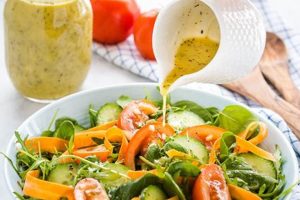
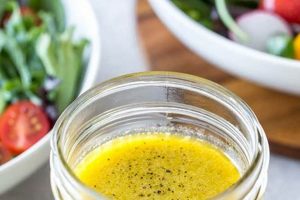
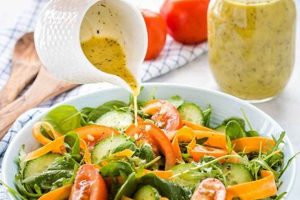
Vinaigrettes based on red wine vinegar and extra virgin olive oil are foundational in many cuisines. A simple emulsion of these two ingredients, often seasoned with salt and pepper, offers a bright, acidic counterpoint to the richness of the oil. Adding Dijon mustard helps create a more stable emulsion, while herbs, garlic, or shallots provide further complexity. For example, a classic French vinaigrette might include a 3:1 ratio of oil to vinegar, a pinch of Dijon, minced shallot, and fresh herbs like thyme or tarragon.
The combination of vinegar’s tartness and oil’s smoothness creates a versatile dressing that complements a wide array of salads and vegetables. The use of these ingredients dates back centuries, particularly in Mediterranean cultures where both olives and grapes are readily available. Beyond flavor, this type of dressing offers potential health benefits. Red wine vinegar is believed to have antioxidant properties, while extra virgin olive oil is rich in monounsaturated fats, linked to improved cardiovascular health.
This exploration will delve deeper into the world of these vinaigrettes, covering variations, techniques, and ideal pairings to enhance culinary experiences.
Tips for Crafting Exceptional Red Wine Vinegar and Olive Oil Vinaigrettes
Creating a perfect vinaigrette involves understanding the interplay of ingredients and employing proper techniques. The following tips offer guidance for achieving optimal flavor and texture.
Tip 1: Quality Ingredients Matter: The foundation of a great vinaigrette lies in using high-quality extra virgin olive oil and red wine vinegar. Opt for oils with a robust flavor profile and vinegars with a balanced acidity.
Tip 2: Emulsification is Key: A stable emulsion prevents the dressing from separating. Whisk the vinegar and oil vigorously or use a blender to create a creamy, cohesive texture. Adding a small amount of Dijon mustard acts as an emulsifier, further enhancing stability.
Tip 3: Balance is Crucial: The ideal vinaigrette achieves a harmonious balance between the acidity of the vinegar and the richness of the oil. Start with a classic 3:1 ratio of oil to vinegar and adjust to taste.
Tip 4: Seasoning Enhances Flavor: Salt and freshly ground black pepper are essential seasonings. A pinch of sugar can also help balance the acidity.
Tip 5: Fresh Herbs Elevate the Dressing: Incorporating fresh herbs like thyme, rosemary, or oregano adds depth and complexity. Finely chop the herbs to release their aromatic oils.
Tip 6: Experiment with Aromatics: Minced garlic, shallots, or a pinch of red pepper flakes can add nuanced flavors to the vinaigrette.
Tip 7: Taste and Adjust: Before dressing the salad, taste the vinaigrette and adjust the seasoning as needed. The flavor should be bright, balanced, and complementary to the other ingredients.
By following these tips, one can create vinaigrettes that elevate salads and other dishes, offering a delightful sensory experience.
These techniques offer a starting point for exploring the versatility of red wine vinegar and olive oil-based dressings. Experimentation and personal preference ultimately guide the creation of a perfect vinaigrette.
1. High-quality Ingredients

The success of a red wine vinegar and olive oil dressing hinges on the quality of its foundational components. Subpar ingredients will yield a mediocre dressing, while premium ingredients elevate the final product to a new level of culinary excellence. Selecting superior ingredients ensures a harmonious balance of flavors and a delightful sensory experience.
- Extra Virgin Olive Oil
Opt for extra virgin olive oil, the highest grade available, extracted solely through mechanical means without the use of heat or chemicals. A high-quality extra virgin olive oil possesses a distinct fruity aroma, a peppery finish, and a vibrant green-gold hue. Its complex flavor profile adds depth and richness to the dressing.
- Red Wine Vinegar
Select a red wine vinegar made from quality red wine. Look for a balanced acidity that is neither overly sharp nor too mellow. A good red wine vinegar will have a complex aroma and a deep red color. Aged red wine vinegars often offer a smoother, more nuanced flavor.
- Fresh Herbs and Aromatics
Using fresh, high-quality herbs and aromatics significantly impacts the final flavor profile. Ensure herbs are vibrant and free from blemishes. Freshly minced garlic and shallots offer a more pungent and nuanced flavor compared to pre-minced or powdered alternatives.
- Seasoning
Even seemingly simple ingredients like salt and pepper play a crucial role. Use high-quality sea salt or kosher salt for optimal flavor and texture. Freshly ground black pepper offers a more pronounced aroma and taste compared to pre-ground pepper.
By prioritizing high-quality ingredients, the resulting red wine vinegar and olive oil dressing transforms from a simple condiment into a culinary masterpiece. The nuanced flavors and superior quality of each component contribute to a more complex and enjoyable dining experience, showcasing the importance of ingredient selection in achieving culinary excellence.
2. Proper Emulsification

Emulsification is crucial for red wine vinegar and olive oil dressings, dictating both texture and flavor delivery. A properly emulsified dressing is smooth, creamy, and evenly distributes flavor across the palate. Conversely, a poorly emulsified dressing separates, leading to an uneven distribution of oil and vinegar, compromising the sensory experience.
- Temporary Emulsions
Whisking oil and vinegar creates a temporary emulsion. While simple, this method requires frequent whisking before serving, as the mixture separates quickly. This technique suits dressings used immediately. A temporary emulsion offers a lighter, less viscous texture.
- Permanent Emulsions
Incorporating an emulsifying agent, like Dijon mustard or egg yolk, creates a permanent emulsion. These agents contain molecules with both hydrophobic and hydrophilic ends, binding oil and vinegar together more effectively. This results in a stable, creamy dressing that resists separation, ideal for meal prepping or making larger batches.
- Factors Influencing Emulsification
Several factors influence emulsification success. The ratio of oil to vinegar significantly impacts stability, with a higher oil content generally leading to a more stable emulsion. Temperature also plays a role; ingredients at similar temperatures emulsify more readily. Vigorous whisking or blending provides the mechanical energy necessary to break down oil droplets and disperse them evenly within the vinegar.
- Impact on Sensory Experience
Proper emulsification contributes directly to the overall sensory experience. A stable emulsion delivers a smooth, consistent texture that coats salad ingredients evenly, ensuring a balanced flavor in every bite. Conversely, a separated dressing delivers alternating pockets of oil and vinegar, creating an unbalanced and less enjoyable culinary experience. A creamy texture, achieved through emulsification, also contributes to a perception of richness and flavor complexity.
Emulsification is not merely a technical step; it is integral to the overall success of a red wine vinegar and olive oil dressing. The chosen method and its effectiveness directly influence the final texture, flavor delivery, and overall dining experience, highlighting the importance of understanding and mastering this technique.
3. Balanced Flavor Profile
A balanced flavor profile is paramount in red wine vinegar and olive oil salad dressings. The inherent sharpness of red wine vinegar requires careful balancing with the richness of olive oil and other complementary ingredients. This balance prevents the dressing from being overly acidic or excessively oily, ensuring a harmonious and palatable experience. The interplay of these key components forms the foundation upon which further flavor complexities can be built. For instance, a dressing overly reliant on vinegar can overwhelm the palate, while an excess of olive oil can result in a greasy, unappetizing mouthfeel. A successful recipe hinges on achieving the right equilibrium.
Consider a classic vinaigrette: the sharp tang of red wine vinegar is tempered by the smooth, fruity notes of extra virgin olive oil. A touch of sweetness, often from a pinch of sugar or a drop of honey, further rounds out the acidity. Salt enhances the existing flavors and provides a savory counterpoint. The addition of Dijon mustard not only acts as an emulsifier but also contributes a subtle pungency that complements both the vinegar and oil. Finally, freshly ground black pepper adds a touch of spice and complexity. Each element plays a vital role in creating a multi-dimensional and balanced flavor profile, where no single ingredient dominates. Without this careful consideration, the dressing risks becoming one-dimensional and failing to complement the salad itself.
Achieving a balanced flavor profile requires an understanding of the interplay between different taste elements: acidity, richness, sweetness, saltiness, and spice. It also necessitates careful measurement and tasting throughout the preparation process. The ability to adjust ingredients based on personal preference and the specific components of the salad further contributes to the creation of a dressing that enhances, rather than overpowers, the overall dish. This principle of balance extends beyond simple vinaigrettes and applies to more complex dressings involving herbs, spices, and other aromatics. In each case, the ultimate goal remains the same: a harmonious blend of flavors that elevates the culinary experience.
4. Complementary Seasonings
Complementary seasonings play a vital role in elevating red wine vinegar and olive oil-based salad dressings beyond simple vinaigrettes. These seasonings, carefully selected and balanced, interact with the core ingredients to create depth, complexity, and a more nuanced flavor profile. The inherent acidity of red wine vinegar and the richness of olive oil provide a foundation upon which a wide range of seasonings can build. Understanding these interactions is crucial for crafting dressings that not only complement the salad but also offer a unique and enjoyable sensory experience.
Salt and freshly ground black pepper are fundamental seasonings in virtually all vinaigrettes. Salt enhances the flavors of both the vinegar and oil, while pepper adds a touch of piquancy. Beyond these basics, a spectrum of seasonings can be incorporated. Granulated sugar or a touch of honey can balance the acidity of the vinegar, creating a more rounded flavor profile. A small amount of Dijon mustard acts as both an emulsifier and a seasoning, contributing a subtle tang. Garlic, whether minced or pressed, introduces a pungent savory note, while shallots provide a milder, slightly sweet allium flavor. Herbs, such as fresh thyme, oregano, rosemary, or chives, add layers of complexity and freshness. A pinch of red pepper flakes can introduce a subtle heat, while a dash of Worcestershire sauce adds umami and depth. Consider a classic Nicoise salad dressing: the red wine vinegar and olive oil are enhanced by minced garlic, anchovies, and black olives, creating a dressing specifically designed to complement the other salad components. Similarly, a Greek salad dressing might include dried oregano, mint, and a squeeze of lemon juice to harmonize with the flavors of feta cheese, olives, and cucumbers.
The choice of complementary seasonings should always consider the other ingredients in the salad. A delicate salad with fresh greens and light vegetables might benefit from a simpler dressing with subtle herbs and a touch of shallot. A more robust salad with roasted vegetables or grilled meats could handle bolder seasonings like garlic, red pepper flakes, or Worcestershire sauce. The ultimate goal is to create a harmonious balance between the dressing and the salad, where the seasonings enhance the overall flavor profile without overpowering the other components. Mastering the art of complementary seasonings allows for endless variations and the creation of dressings tailored to specific culinary creations, transforming a simple salad into a sophisticated and satisfying dish.
5. Fresh Herbs and Aromatics
Fresh herbs and aromatics are essential for elevating red wine vinegar and olive oil salad dressings beyond basic vinaigrettes. These ingredients introduce layers of complexity and freshness, transforming a simple dressing into a nuanced culinary experience. Their careful selection and application are crucial for achieving a balanced and flavorful final product that complements the other salad components.
- Herb Selection
The choice of herbs significantly impacts the dressing’s overall character. Mediterranean herbs like oregano, thyme, and rosemary pair well with the robust flavors of red wine vinegar and olive oil. Chives and parsley offer a milder, brighter note, while mint provides a refreshing coolness. Dill can add a subtle anise flavor, particularly suitable for salads with cucumbers or fish. Experimentation with different herb combinations allows for a wide range of flavor profiles.
- Aromatic Additions
Aromatics such as garlic, shallots, and onions introduce savory depth. Garlic, minced or pressed, offers a pungent bite, while shallots provide a milder sweetness. Onions, finely diced, contribute a sharper, more assertive flavor. Ginger, though less common, can add a warm, spicy note. These aromatics can be used individually or in combination to create unique flavor combinations.
- Balancing Flavors
The key to using herbs and aromatics effectively lies in balance. Too much of a single ingredient can overpower the dressing and the salad. Start with small amounts and taste frequently, adjusting as needed. The intensity of different herbs and aromatics varies, requiring careful consideration of their relative strengths. For example, a robust herb like rosemary should be used more sparingly than a milder herb like parsley.
- Preparation Techniques
Proper preparation techniques maximize the flavor contribution of herbs and aromatics. Fresh herbs should be finely chopped to release their aromatic oils. Garlic and shallots can be minced, pressed, or thinly sliced, depending on the desired intensity. Some aromatics, like garlic, can be briefly sauted in olive oil to mellow their flavor before incorporating them into the dressing. This technique adds a subtle roasted garlic note to the final product.
The strategic use of fresh herbs and aromatics is essential for creating red wine vinegar and olive oil dressings that are both flavorful and complex. By understanding the characteristics of different herbs and aromatics, and by employing careful preparation techniques, one can create dressings that complement a wide variety of salads and elevate them to new culinary heights. The interplay of these ingredients with the acidity of the vinegar and the richness of the oil provides a foundation for a truly exceptional culinary experience.
6. Versatile Applications

The versatility of red wine vinegar and olive oil-based dressings extends far beyond simple green salads. Their adaptable nature makes them suitable for a wide array of culinary applications, demonstrating their value as a foundational element in various cuisines. This versatility stems from the inherent balance between the acidity of the vinegar and the richness of the oil, a combination that complements diverse flavor profiles and textures. This characteristic allows for customization through the addition of herbs, spices, and other aromatics, further broadening their applicability.
As a marinade, these dressings tenderize and impart flavor to meats, poultry, and fish. The acidity of the vinegar helps break down tough muscle fibers, while the olive oil adds moisture and richness. For example, a simple marinade of red wine vinegar, olive oil, garlic, and herbs can transform chicken breasts before grilling or roasting. Furthermore, these dressings function effectively as a finishing drizzle for roasted vegetables, adding brightness and depth. The vinaigrette’s acidity cuts through the richness of roasted root vegetables, while the olive oil enhances their natural sweetness. Consider roasted carrots drizzled with a red wine vinegar and olive oil dressing infused with thyme and honey: the dressing adds a layer of complexity that elevates the dish. These dressings also serve as a base for more complex sauces. By incorporating ingredients like pureed fruits, toasted nuts, or crumbled cheese, the simple vinaigrette transforms into a flavorful sauce for grilled meats or steamed vegetables. In addition, they can be used to dress grain salads, adding a bright counterpoint to the heartiness of grains like quinoa or farro. The possibilities are vast and limited only by culinary creativity.
Understanding the versatile applications of red wine vinegar and olive oil dressings expands culinary horizons. Their adaptability as marinades, finishing drizzles, sauce bases, and grain salad dressings underscores their significance as a fundamental component in a well-stocked kitchen. This versatility not only simplifies meal preparation but also offers opportunities for creative flavor exploration, contributing to a more dynamic and satisfying culinary experience. By mastering the core principles of balancing flavors and incorporating complementary ingredients, one can leverage the full potential of these dressings and elevate a wide range of dishes.
Frequently Asked Questions
This section addresses common inquiries regarding the preparation and utilization of red wine vinegar and olive oil-based salad dressings.
Question 1: What is the ideal ratio of red wine vinegar to olive oil in a basic vinaigrette?
A classic starting point is a 3:1 ratio of olive oil to red wine vinegar. However, this ratio can be adjusted based on personal preference and the specific ingredients in the salad. A more acidic dressing may be preferred for robust greens, while a milder dressing might suit delicate herbs.
Question 2: How can one prevent the vinaigrette from separating?
Vigorous whisking creates a temporary emulsion. For a more stable emulsion, incorporate an emulsifying agent such as Dijon mustard or egg yolk. These agents help bind the oil and vinegar together, preventing separation.
Question 3: What are the best types of olive oil to use in these dressings?
Extra virgin olive oil, known for its robust flavor and health benefits, is generally preferred. However, other olive oils, such as virgin olive oil or light olive oil, can be used depending on the desired flavor profile.
Question 4: Can these dressings be made ahead of time?
Dressings made with an emulsifying agent can be prepared in advance and stored in an airtight container in the refrigerator for several days. Dressings without an emulsifier should be whisked again immediately before serving.
Question 5: Beyond salads, how else can these dressings be used?
These versatile dressings can be used as marinades for meat, poultry, and fish, as finishing drizzles for roasted vegetables, or as a base for more complex sauces.
Question 6: How can one adjust the flavor profile of these dressings?
The flavor profile can be customized through the addition of various ingredients. Sweetness can be added with honey or sugar, herbs and spices can add complexity, and aromatics such as garlic or shallots can contribute savory depth.
Understanding these fundamental aspects ensures successful preparation and versatile application of red wine vinegar and olive oil-based dressings.
This information provides a foundation for creating and utilizing these versatile dressings in diverse culinary applications.
Crafting Culinary Excellence
Exploration of red wine vinegar and olive oil-based dressings reveals their significance as a versatile culinary foundation. From the selection of high-quality ingredients to the mastery of proper emulsification techniques, each step contributes to the final product’s success. Balancing the inherent acidity of the vinegar with the richness of the oil is paramount, while the judicious use of complementary seasonings, fresh herbs, and aromatics elevates these dressings beyond simple vinaigrettes. Their adaptability extends to marinades, finishing drizzles, and sauce bases, showcasing their remarkable versatility.
Culinary innovation thrives on exploration and adaptation. Mastery of these fundamental principles empowers continued experimentation and refinement, ultimately enhancing culinary experiences. The potential of these dressings remains vast, inviting further exploration of flavor profiles and applications.