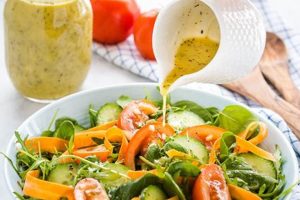
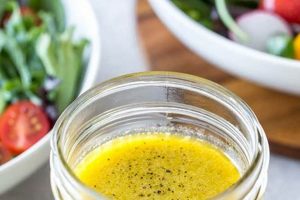
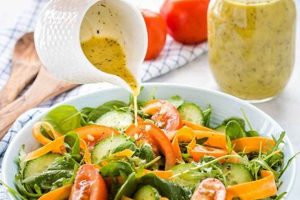
A classic emulsion of oil and vinegar, typically featuring red wine vinegar as its acidic component, forms the base of this versatile dressing. Often enhanced with Dijon mustard for emulsification and body, additional flavor dimensions are achieved through ingredients like shallots, garlic, herbs, and sweeteners such as honey or maple syrup. A simple preparation involves whisking together the vinegar, mustard, and seasonings, then slowly drizzling in the oil while continuously whisking to create a stable emulsion.
This type of dressing offers a balanced flavor profile, combining the tartness of vinegar with the richness of oil, complemented by aromatic notes from herbs and spices. Its versatility allows it to enhance a wide range of salads, from simple greens to more complex compositions involving roasted vegetables, cheeses, and proteins. Historically, vinegar-based dressings have been a staple in culinary traditions across the globe, appreciated for both their flavor and preservative qualities.
This exploration will delve into the nuances of crafting exemplary versions, covering topics such as ingredient selection, techniques for achieving perfect emulsification, and creative variations to customize the flavor profile. Furthermore, the versatility of the dressing will be highlighted through suggested salad pairings and complementary dishes.
Tips for Crafting an Exceptional Red Wine Vinaigrette
Achieving a harmonious balance of flavors and a stable emulsion are key to a successful vinaigrette. These tips offer guidance for creating a dressing that elevates any salad.
Tip 1: Quality Ingredients Matter: Opt for a high-quality red wine vinegar, preferably one with a nuanced flavor profile. Extra virgin olive oil provides a robust foundation, but other oils, such as avocado or grapeseed, offer lighter alternatives.
Tip 2: Emulsification is Crucial: A stable emulsion prevents the dressing from separating. Whisk the vinegar, mustard, and seasonings vigorously before slowly drizzling in the oil while continuing to whisk. A blender or food processor can also create a smooth, emulsified dressing.
Tip 3: Balance Acidity and Sweetness: The tartness of red wine vinegar can be balanced with a touch of sweetness. A small amount of honey, maple syrup, or even a pinch of sugar can enhance the overall flavor profile.
Tip 4: Seasoning is Key: Freshly ground black pepper is essential. Salt should be added gradually, tasting as you go. Consider incorporating finely minced shallots or garlic for added depth.
Tip 5: Fresh Herbs Elevate Flavor: Fresh herbs like thyme, rosemary, or oregano introduce aromatic complexity. Add them finely chopped to the vinaigrette.
Tip 6: Taste and Adjust: Taste the vinaigrette and adjust the seasoning as needed. Additional vinegar can heighten the tartness, while more oil can mellow the flavor.
Tip 7: Make it Your Own: Experiment with different flavor combinations. A dash of Dijon mustard adds creaminess, while a pinch of red pepper flakes introduces a subtle heat.
By focusing on quality ingredients, proper emulsification, and balanced seasoning, one can create a vinaigrette that transforms a simple salad into a culinary delight.
These foundational tips provide a starting point for exploring the endless possibilities of this versatile dressing, paving the way for culinary creativity and personalized flavor experiences.
1. High-quality red wine vinegar
High-quality red wine vinegar constitutes a cornerstone of a successful red wine vinaigrette. The vinegar’s character significantly influences the final dressing’s flavor profile. Vinegars made from superior wines offer complexity and depth, contributing nuanced notes of fruit, oak, or even subtle tannins. This complexity translates to a more sophisticated and flavorful vinaigrette. Conversely, using a lower-quality vinegar, often characterized by harsh acidity and a lack of depth, can result in a dressing that tastes flat or unbalanced. For example, a red wine vinegar crafted from Cabernet Sauvignon grapes might impart subtle black currant and cedar notes to the vinaigrette, while a generic red wine vinegar could lack such distinct characteristics. Selecting a high-quality vinegar establishes a strong foundation upon which other ingredients can build, ultimately elevating the entire culinary experience.
The impact of vinegar quality extends beyond mere flavor. High-quality vinegars tend to possess a smoother, more rounded acidity compared to their less refined counterparts. This balanced acidity contributes to a more palatable and enjoyable vinaigrette. Furthermore, superior vinegars often undergo a more meticulous production process, resulting in a cleaner, more refined flavor profile free from undesirable off-notes. This purity allows the other ingredients in the vinaigrette, such as herbs, spices, and oils, to shine through without being masked by harsh or unbalanced vinegar notes. For instance, a vinaigrette made with a high-quality aged red wine vinegar allows the delicate flavor of fresh tarragon to emerge, whereas a lower-quality vinegar might overpower the herb’s subtle aroma.
Understanding the significance of high-quality red wine vinegar empowers one to create truly exceptional vinaigrettes. Investing in a superior vinegar ensures a richer, more complex flavor profile and contributes to a more balanced and enjoyable sensory experience. While other ingredients undoubtedly play a role, the foundation established by the vinegar sets the stage for the overall quality of the final product. Recognizing this connection between ingredient quality and final outcome underscores the importance of thoughtful ingredient selection in culinary endeavors.
2. Extra Virgin Olive Oil

Extra virgin olive oil plays a pivotal role in red wine vinaigrette, contributing significantly to both flavor and texture. Its inherent richness and fruity notes complement the tartness of red wine vinegar, creating a balanced flavor profile. The oil’s viscosity also establishes the dressing’s body and mouthfeel, influencing how it coats and clings to salad ingredients. For example, a robust Tuscan extra virgin olive oil, with its peppery and slightly bitter undertones, provides a counterpoint to the vinegar’s acidity, while a milder oil, like a Spanish Arbequina, offers a gentler, more delicate backdrop. The choice of extra virgin olive oil directly impacts the overall sensory experience of the vinaigrette.
Beyond flavor and texture, extra virgin olive oil contributes valuable health benefits to the vinaigrette. Rich in monounsaturated fats and antioxidants, it aligns with dietary recommendations for heart health. The inclusion of extra virgin olive oil transforms the vinaigrette into a nutrient-dense addition to salads and other dishes. For instance, incorporating an extra virgin olive oil high in polyphenols, such as a Koroneiki variety, not only enhances the vinaigrette’s flavor but also boosts its antioxidant content. Understanding these nutritional benefits underscores the value of incorporating high-quality extra virgin olive oil into culinary creations.
Selecting the right extra virgin olive oil for a red wine vinaigrette requires careful consideration. Factors such as the oil’s flavor profile, intensity, and acidity level influence the final dressing’s characteristics. The desired balance between fruitiness, bitterness, and pungency should guide the selection process. A delicate vinaigrette might benefit from a milder oil, while a more robust salad could pair well with an oil exhibiting stronger flavors. Ultimately, the chosen extra virgin olive oil shapes the vinaigrette’s character and contributes to a more satisfying and healthful culinary experience. Recognizing these nuances empowers informed decision-making and allows for a tailored approach to vinaigrette preparation.
3. Emulsification technique

Emulsification represents a critical process in crafting a successful red wine vinaigrette. It involves combining two immiscible liquidsoil and vinegarinto a stable mixture. This stability prevents the dressing from separating into distinct layers, ensuring a consistent texture and flavor distribution. The emulsification process relies on the creation of tiny droplets of one liquid dispersed within the other, increasing the surface area contact and thereby enhancing the interaction between the ingredients. This interaction ultimately results in a harmonious blend of flavors. For example, a properly emulsified vinaigrette will evenly coat salad greens, delivering a balanced taste with each bite, whereas a separated dressing leads to an uneven and less satisfying experience. The chosen emulsification technique directly impacts the vinaigrette’s final quality and sensory appeal.
Several methods facilitate emulsification in red wine vinaigrette preparation. Whisking by hand represents a traditional approach, requiring vigorous and continuous agitation to disperse the oil into the vinegar. Alternatively, a blender or food processor provides a more efficient and consistent emulsification process. These mechanical methods create smaller droplets, resulting in a smoother and more stable emulsion. In addition to mechanical techniques, emulsifying agents, such as Dijon mustard or egg yolks, enhance stability by reducing surface tension between the oil and vinegar. These agents create a bridge between the two phases, promoting a more homogenous and long-lasting emulsion. For instance, incorporating a small amount of Dijon mustard into the vinaigrette not only aids emulsification but also contributes a subtle tang and creamy texture. The selected method and the potential use of emulsifying agents should align with the desired texture and flavor profile of the vinaigrette.
Achieving a stable emulsion requires careful attention to technique and ingredient ratios. Adding the oil slowly to the vinegar while continuously whisking, or processing in a blender, ensures proper droplet formation and prevents separation. Furthermore, the balance of oil to vinegar significantly influences the emulsion’s stability. Too much oil or too much vinegar can destabilize the mixture, leading to separation over time. Understanding these principles allows for precise control over the emulsification process, resulting in a vinaigrette with the desired consistency and flavor distribution. Mastery of emulsification techniques elevates vinaigrette preparation from a simple task to a culinary skill, ensuring a consistently superior and enjoyable dressing.
4. Balanced Seasoning

Balanced seasoning forms the crux of a successful red wine vinaigrette, elevating it from a simple mixture of oil and vinegar to a complex and flavorful dressing. The interplay of salt, pepper, and other seasonings directly impacts the vinaigrette’s overall character. Salt, in particular, plays a multifaceted role, not only enhancing the inherent flavors of the other ingredients but also modulating the perceived acidity of the vinegar. For instance, a pinch of salt can temper excessive tartness, allowing the fruity nuances of the red wine vinegar to emerge. Furthermore, salt contributes to the structural integrity of the vinaigrette, influencing its texture and mouthfeel. Black pepper adds a layer of complexity, providing a subtle warmth and a contrasting bite to the richness of the oil and the sharpness of the vinegar. A vinaigrette lacking properly balanced seasoning may taste bland or unbalanced, failing to complement the salad it accompanies. A classic example illustrates this point: a vinaigrette with insufficient salt will taste overly acidic, masking the delicate flavors of fresh greens, whereas excessive salt can overwhelm the palate and obscure the other nuanced notes of the dressing.
Beyond basic salt and pepper, other seasonings can further enhance the complexity of a red wine vinaigrette. Incorporating finely minced shallots or garlic introduces a subtle savory element, adding depth and dimension to the flavor profile. The pungent allium notes harmonize with the fruity vinegar and herbaceous additions, creating a more well-rounded flavor experience. Similarly, a touch of Dijon mustard not only aids in emulsification but also contributes a subtle tang and a creamy texture, enriching the overall sensory experience. Herbs, both fresh and dried, offer another avenue for flavor exploration. Fresh thyme, oregano, or rosemary, added sparingly, introduce aromatic complexity, while a pinch of dried herbs can impart a more concentrated flavor. However, caution is advised: excessive use of potent seasonings can easily overpower the delicate balance of the vinaigrette, masking the other carefully chosen ingredients. A classic French vinaigrette exemplifies this balance: finely minced shallots, a touch of Dijon mustard, and a pinch of fresh thyme combine harmoniously with the red wine vinegar and olive oil, creating a complex yet balanced flavor profile that complements a variety of salads.
Achieving balanced seasoning requires careful consideration and a nuanced approach. The quality of the ingredients, the desired flavor profile, and the specific salad being dressed all influence the seasoning choices. Gradual incorporation and frequent tasting allow for precise adjustments, ensuring that each seasoning element contributes harmoniously to the overall composition. Mastery of balanced seasoning transforms the red wine vinaigrette from a simple condiment into a sophisticated culinary creation, elevating the dining experience and showcasing the transformative power of thoughtfully chosen ingredients.
5. Fresh Herbs (Optional)

Fresh herbs offer an opportunity to elevate red wine vinaigrette salad dressings, introducing aromatic complexity and nuanced flavors. While optional, their judicious use can significantly enhance the sensory experience, transforming a basic vinaigrette into a more sophisticated culinary creation. The selection and application of fresh herbs require careful consideration, balancing their intensity with the other components of the dressing.
- Aromatic Enhancement
Fresh herbs contribute aromatic complexity to red wine vinaigrettes. Their volatile oils, released when chopped or bruised, infuse the dressing with distinctive fragrances. For example, thyme imparts an earthy, slightly lemony aroma, while rosemary offers a more pungent, piney scent. These aromatic notes complement the vinegar’s tartness and the oil’s richness, creating a more layered olfactory experience.
- Flavor Nuances
Beyond aroma, fresh herbs introduce subtle flavor nuances to the vinaigrette. Chives offer a delicate onion flavor, parsley provides a fresh, slightly peppery taste, and oregano contributes a bold, earthy note. These flavors intertwine with the existing components of the dressing, adding depth and complexity. For instance, a vinaigrette featuring fresh oregano pairs well with Mediterranean-inspired salads, while a thyme-infused vinaigrette complements roasted vegetables. The choice of herb directly influences the final flavor profile.
- Visual Appeal
Fresh herbs also enhance the visual appeal of the vinaigrette. Their vibrant green hues add a pop of color, making the dressing more visually enticing. Speckled throughout the emulsion or used as a garnish, fresh herbs contribute to the overall presentation of the salad. For instance, a scattering of chopped chives adds a vibrant green touch to a vinaigrette drizzled over a simple green salad. This visual enhancement elevates the dining experience.
- Balancing Intensity
Balancing the intensity of fresh herbs is crucial. Their flavors should complement, not overpower, the other vinaigrette components. A light hand is often best, especially with more potent herbs like rosemary or sage. Starting with a small amount and tasting as you go allows for adjustments and ensures a harmonious balance. Overpowering the delicate flavors of the vinegar and oil with excessive herbs can diminish the overall enjoyment of the vinaigrette. For example, a subtle hint of thyme enhances a vinaigrette without masking the other flavors, while an excessive amount can create an overpowering herbal taste. Careful consideration of herb intensity contributes to a more balanced and enjoyable final product.
The considered inclusion of fresh herbs allows for customization and creativity in red wine vinaigrette preparation. By understanding their aromatic and flavor contributions, and by carefully balancing their intensity, one can craft dressings that perfectly complement a wide range of salads and dishes, elevating the culinary experience from simple to sophisticated.
6. Sweetener (optional)

The optional inclusion of a sweetener in a red wine vinaigrette recipe serves a crucial balancing function, modulating the interplay of acidity and richness. Red wine vinegar, while contributing desirable tartness, can sometimes exhibit excessive sharpness. A sweetener, judiciously applied, tempers this acidity, creating a more harmonious flavor profile. This balancing act allows the other nuanced flavors of the vinaigrettethe fruitiness of the oil, the pungency of aromatics, and the herbaceous notes of herbsto emerge more fully. The choice of sweetener and its quantity significantly impact the final result. For example, a touch of honey introduces a subtle floral sweetness and a delicate viscosity, while a small amount of maple syrup contributes a mild caramel note. Granulated sugar offers a neutral sweetness, allowing other flavors to take center stage. Conversely, excessive sweetness can mask the desirable tartness of the vinaigrette, resulting in an unbalanced and cloying dressing.
The interaction between sweetener and acidity extends beyond mere taste. Sweeteners influence the perceived texture and mouthfeel of the vinaigrette. They contribute a subtle body, enhancing the way the dressing coats and clings to salad ingredients. Honey, for example, adds a slight viscosity, while maple syrup imparts a delicate smoothness. This textural impact further contributes to the overall sensory experience of the salad. Furthermore, the choice of sweetener can complement specific salad ingredients. A honey-sweetened vinaigrette pairs well with salads featuring fruits and nuts, while a maple syrup-infused dressing complements roasted vegetables and autumnal greens. Understanding these nuances allows for a tailored approach, creating vinaigrettes that enhance specific flavor combinations.
Careful consideration of sweetener type and quantity is essential for achieving a balanced and flavorful red wine vinaigrette. The goal is not to create a sweet dressing but rather to modulate the acidity and enhance the overall flavor profile. Starting with a small amount and tasting incrementally allows for precise adjustments, ensuring the sweetener complements rather than dominates the other ingredients. This nuanced approach elevates the vinaigrette from a simple condiment to a carefully crafted component of the culinary experience. Mastering this balance unlocks the full potential of the red wine vinaigrette, transforming it into a versatile and sophisticated dressing capable of enhancing a wide range of salads and dishes.
7. Flavor Adjustments
Flavor adjustments represent a crucial final step in crafting a truly exceptional red wine vinaigrette. While a basic recipe provides a foundation, achieving a perfectly balanced and nuanced dressing necessitates a tailored approach. Individual palates vary, and the specific ingredients usedthe red wine vinegar’s particular tartness, the olive oil’s unique flavor profile, the pungency of aromaticsall contribute to the final taste. Therefore, relying solely on a standardized recipe often falls short of realizing the vinaigrette’s full potential. Flavor adjustments, guided by careful tasting and incremental additions, allow for personalized customization, ensuring the dressing perfectly complements the intended salad or dish. For instance, if a particular red wine vinegar exhibits pronounced acidity, a touch of honey or maple syrup can restore balance. Conversely, if the vinaigrette lacks brightness, a squeeze of fresh lemon juice or a pinch of citric acid can provide the necessary lift.
The process of flavor adjustment involves a systematic evaluation of the vinaigrette’s taste profile. Assessing the balance of sweet, sour, salty, and savory elements is paramount. Does the acidity of the vinegar overpower the other flavors? Does the dressing lack sufficient salt to bring out the nuances of the ingredients? Addressing these questions through small, measured additions allows for precise control over the final outcome. A splash more vinegar might enhance a vinaigrette destined for a robust salad with bitter greens, while a drizzle of additional olive oil can mellow the dressing for more delicate ingredients. Furthermore, flavor adjustments extend beyond the core components. A pinch of red pepper flakes can introduce a subtle heat, while a dash of Worcestershire sauce adds umami depth. These nuanced additions, guided by careful tasting and a clear understanding of flavor interactions, transform the vinaigrette from a basic template into a customized culinary creation.
Mastering the art of flavor adjustment distinguishes a competent cook from a truly skilled culinary artist. It demonstrates an understanding of the interplay of ingredients and a commitment to achieving a perfectly balanced and harmonious flavor profile. This process, while seemingly simple, embodies the essence of culinary expertise: the ability to adapt and refine, ensuring a consistently exceptional outcome. Embracing flavor adjustments as an integral part of vinaigrette preparation elevates the simple act of dressing a salad to a nuanced and rewarding culinary endeavor.
Frequently Asked Questions
This section addresses common inquiries regarding the preparation and utilization of red wine vinaigrette salad dressings.
Question 1: How can separation in a red wine vinaigrette be prevented?
Vigorous whisking while slowly adding the oil to the vinegar-seasoning mixture promotes a stable emulsion. Alternatively, using a blender or food processor ensures thorough emulsification. Adding a small amount of Dijon mustard acts as an emulsifier, further stabilizing the dressing.
Question 2: What type of oil is best suited for red wine vinaigrette?
Extra virgin olive oil is generally preferred for its flavor and health benefits. However, other oils like avocado or grapeseed oil offer lighter alternatives. The oil’s flavor profile should complement the vinegar and other ingredients.
Question 3: How long can red wine vinaigrette be stored?
Stored in an airtight container in the refrigerator, red wine vinaigrette typically lasts for up to one week. Check for any signs of spoilage, such as off-odors or mold growth, before using.
Question 4: Can red wine vinaigrette be used for marinades?
The acidity of red wine vinaigrette makes it an effective marinade for meats, poultry, and vegetables. The dressing’s flavor profile complements a variety of proteins and enhances their natural flavors.
Question 5: How can the sweetness of red wine vinaigrette be adjusted?
Small amounts of honey, maple syrup, or granulated sugar can balance the vinaigrette’s acidity. Taste and adjust incrementally until the desired sweetness is achieved.
Question 6: What types of salads pair well with red wine vinaigrette?
Red wine vinaigrette complements a wide range of salads, including those with robust greens, roasted vegetables, cheeses, nuts, and grilled meats. Its versatility allows for diverse pairings.
Understanding these common inquiries empowers one to create and utilize red wine vinaigrette effectively, maximizing its versatility and culinary potential.
The following section explores specific recipe variations and provides detailed instructions for crafting diverse and delicious red wine vinaigrettes.
Conclusion
Exploration of the elements comprising a successful red wine vinaigrette salad dressing recipe reveals the interplay of high-quality ingredients, precise techniques, and balanced flavors. From the selection of a nuanced red wine vinegar and robust extra virgin olive oil to the mastery of emulsification and the judicious application of seasonings, each step contributes to the final product’s overall quality. The potential for customization through the incorporation of fresh herbs and sweeteners further expands the dressing’s versatility, allowing for tailored flavor profiles to complement a diverse range of culinary creations. Understanding these fundamental principles empowers culinary practitioners to craft vinaigrettes that elevate salads from simple accompaniments to sophisticated and satisfying dishes.
The seemingly simple red wine vinaigrette, when approached with intention and attention to detail, offers a canvas for culinary expression. It serves as a testament to the transformative power of quality ingredients and the impact of thoughtful preparation. Continued exploration of flavor combinations and innovative techniques promises further evolution and refinement of this classic dressing, ensuring its enduring presence in culinary traditions for generations to come. The potential for discovery within this seemingly basic recipe remains vast, inviting both seasoned chefs and home cooks to embark on a journey of flavor exploration and culinary mastery.