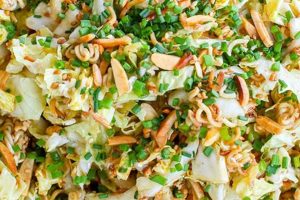
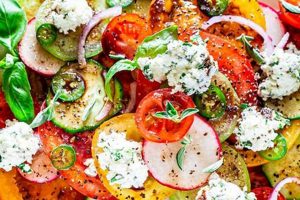
Dishes featuring sliced or diced capsicums as a primary ingredient offer a vibrant and refreshing culinary experience. These preparations can range from simple combinations with a light vinaigrette to more complex incorporations with other vegetables, cheeses, proteins, and grains. For instance, a straightforward version might involve thinly sliced red bell peppers, red onion, and a lemon-herb dressing. More elaborate versions might include roasted peppers, feta cheese, olives, or grilled chicken.
Capsicum-focused salads contribute significant nutritional value, being rich in vitamins A and C, as well as providing dietary fiber. Their versatility allows them to complement various cuisines and dietary preferences, serving as a light lunch, a side dish, or part of a larger meal. Historically, peppers have played diverse roles in culinary traditions worldwide, adding color, flavor, and texture to countless dishes. Their adaptability continues to inspire contemporary cooks and contribute to a healthy and enjoyable diet.
This article will delve into a range of topics related to preparing and enjoying dishes centered on this versatile ingredient, covering variations, nutritional information, suitable pairings, and tips for maximizing flavor and presentation.
Tips for Preparing Capsicum Salads
Optimizing flavor and presentation elevates capsicum-based salads from simple to exceptional. These tips offer guidance for achieving culinary excellence with this versatile ingredient.
Tip 1: Selecting Peppers: Choose firm, brightly colored peppers free from blemishes or soft spots. Different colors offer subtle flavor variations; red peppers tend to be sweeter, while green peppers offer a slightly more vegetal taste.
Tip 2: Roasting for Depth: Roasting peppers intensifies their sweetness and imparts a smoky complexity. Place whole peppers directly over a flame or under a broiler, turning occasionally, until the skin blackens. Place in a sealed bag for 10 minutes to steam, then peel and slice.
Tip 3: Balancing Flavors: Acidic elements, such as vinegar or citrus juice, brighten the flavor of peppers. Combine with a quality oil and seasonings for a well-rounded vinaigrette.
Tip 4: Adding Texture: Incorporate textural contrast with ingredients like toasted nuts, crumbled feta cheese, or crispy croutons.
Tip 5: Enhancing Visual Appeal: Consider the color and shape of additional ingredients. Slicing peppers into uniform shapes creates a professional look. Garnishes like fresh herbs enhance visual appeal.
Tip 6: Proper Storage: Store cut peppers in an airtight container in the refrigerator for up to three days. For longer storage, freezing roasted peppers maintains their quality.
Tip 7: Creative Combinations: Explore various flavor profiles by incorporating ingredients like olives, capers, grilled halloumi, or different types of vinegar and oil.
By employing these techniques, one can elevate the simplest capsicum salad to a culinary masterpiece, maximizing both flavor and presentation.
This exploration of tips and techniques provides a foundation for creating exceptional capsicum-based salads. The following sections will delve into specific recipe variations and offer further inspiration.
1. Fresh, Crisp Peppers

The foundation of any successful dish featuring these vibrant vegetables lies in the quality of the produce itself. Fresh, crisp peppers provide optimal flavor, texture, and visual appeal, significantly impacting the overall culinary experience.
- Flavor Optimization
Fresh peppers possess a bright, sweet flavor that diminishes with age or improper storage. Peak flavor translates to a more vibrant and enjoyable salad. A freshly picked pepper offers a sweetness and subtle vegetal note often absent in older produce. This vibrancy is crucial for a simple preparation where the pepper’s inherent flavor takes center stage.
- Textural Integrity
Crispness is essential for a satisfying textural experience. A pepper that has begun to soften loses its desirable crunch, negatively impacting the salad’s overall appeal. In a salad with diverse ingredients, a crisp pepper contributes a refreshing contrast against softer elements like cheese or cooked grains.
- Visual Appeal
The vibrant colors of fresh peppers enhance the salad’s aesthetic presentation. Glossy, unblemished skin signifies freshness and quality, making the dish more visually appealing. A salad featuring vibrant red peppers is naturally more inviting than one with dull, wrinkled peppers. This visual freshness contributes to a positive dining experience.
- Nutritional Value
While not always visible, nutritional content degrades over time. Fresh peppers at their peak offer the highest concentration of vitamins and antioxidants. Maximizing nutritional intake requires utilizing the freshest ingredients. A salad made with fresh peppers contributes more effectively to a healthy diet than one made with less vibrant produce.
By prioritizing the selection of fresh, crisp peppers, one ensures the highest quality ingredients, ultimately resulting in a more flavorful, visually appealing, and nutritious salad. This emphasis on quality ingredients elevates the final dish, transforming a simple salad into a culinary delight.
2. Balanced Vinaigrette

A balanced vinaigrette plays a crucial role in a successful red pepper salad, elevating the dish beyond a simple combination of ingredients. The vinaigrette acts as a unifying element, harmonizing the flavors and textures while adding brightness and complexity. Its impact extends beyond mere flavor enhancement, influencing the overall sensory experience.
The inherent sweetness of red peppers requires a vinaigrette that provides complementary acidity and appropriate seasoning. An overly sweet or bland dressing can mask the pepper’s natural flavor, while an excessively acidic vinaigrette can overpower it. A balanced vinaigrette, therefore, creates a harmonious interplay, allowing the sweetness of the pepper to shine while adding depth and complexity. For instance, a vinaigrette composed of high-quality olive oil, balsamic vinegar, a touch of Dijon mustard, and fresh herbs offers a balanced profile that complements the red pepper’s sweetness without overshadowing it. Another example could be a lighter vinaigrette with lemon juice, garlic, and a hint of red pepper flakes, offering a brighter, more pungent counterpoint to the pepper’s flavor.
Achieving this balance requires careful consideration of the vinaigrette’s components and their proportions. The quality of the oil influences the vinaigrette’s mouthfeel and flavor, while the type of vinegar determines its acidity and complexity. Additional elements like herbs, spices, and sweeteners contribute further nuance. Understanding the interplay of these elements allows for precise tailoring of the vinaigrette to complement the specific characteristics of the red pepper salad. The practical application of this understanding results in a more satisfying and flavorful culinary experience, demonstrating the significant impact a well-crafted vinaigrette has on the overall success of the dish.
3. Complementary Ingredients

Complementary ingredients are essential for elevating a red pepper salad from simple to exceptional. These additions contribute not only to flavor complexity but also textural contrast and visual appeal. Careful selection of these components ensures a harmonious balance, preventing the salad from becoming monotonous or one-dimensional. Consider the interplay of flavors and textures when incorporating complementary ingredients. For instance, the sweetness of roasted red peppers pairs well with the salty tang of feta cheese, while the smooth texture of the cheese contrasts with the pepper’s slight char. Adding toasted pine nuts introduces a nutty flavor and satisfying crunch, further enhancing the complexity of the salad.
Several categories of complementary ingredients work particularly well in red pepper salads. Cheeses, such as feta, goat cheese, or mozzarella, provide creamy or tangy notes that balance the pepper’s sweetness. Nuts and seeds, like toasted almonds, sunflower seeds, or pumpkin seeds, offer textural contrast and healthy fats. Proteins, including grilled chicken, shrimp, or chickpeas, transform the salad into a more substantial meal. Other vegetables, such as cucumbers, red onions, or olives, contribute varying flavors and textures, enhancing the salad’s overall complexity. Lastly, fresh herbs, like basil, mint, or parsley, provide a refreshing aromatic element that brightens the flavor profile. The strategic incorporation of these ingredients elevates the sensory experience, transforming a basic red pepper salad into a multi-dimensional culinary creation.
Understanding the role of complementary ingredients is crucial for crafting a well-balanced and flavorful red pepper salad. These additions provide depth, contrast, and visual interest, ultimately enhancing the overall dining experience. Experimentation with different combinations allows for the discovery of unique flavor profiles and personalized variations. The careful consideration and strategic inclusion of complementary ingredients showcase an understanding of culinary principles and elevate the final dish beyond a simple salad.
4. Proper Preparation Techniques

Proper preparation techniques are integral to a successful red pepper salad, directly influencing the final dish’s flavor, texture, and overall appeal. These techniques extend beyond simply chopping vegetables; they encompass methods that optimize the pepper’s inherent qualities and enhance its compatibility with other ingredients. The impact of proper preparation is evident in the final product, impacting both the sensory experience and nutritional value.
Consider the effect of different cutting techniques. Thinly slicing raw red peppers creates a delicate texture that complements a light vinaigrette, while thicker slices offer a more substantial bite. Roasting peppers, on the other hand, intensifies their sweetness and imparts a smoky char, adding depth to the salad’s flavor profile. Similarly, removing the pepper’s skin after roasting yields a smoother, more refined texture. These examples illustrate how specific preparation methods directly influence the final dish’s characteristics. A salad featuring roasted red peppers offers a different flavor profile and textural experience compared to one with thinly sliced raw peppers, demonstrating the importance of selecting the appropriate technique.
Furthermore, proper preparation extends to other ingredients incorporated into the salad. Toasted nuts offer enhanced flavor and crunch, while properly washed and dried greens prevent a soggy salad. These seemingly minor details contribute significantly to the overall quality and enjoyment of the dish. Failure to employ proper techniques can result in a subpar salad, highlighting the crucial connection between preparation and outcome. A salad with limp greens or stale nuts diminishes the overall culinary experience, even if the red peppers themselves are properly prepared. Therefore, consistent application of proper preparation techniques across all ingredients is paramount for achieving a successful red pepper salad.
5. Flavorful Presentation

Flavorful presentation elevates a red pepper salad from a simple dish to a culinary experience. While taste remains paramount, visual appeal significantly enhances enjoyment and perceived value. A thoughtfully presented salad engages multiple senses, creating a more satisfying dining experience. This connection between presentation and enjoyment underscores the importance of visual considerations in recipe development.
- Color Harmony and Contrast
Strategic use of color enhances visual appeal. Red peppers provide a vibrant base, and incorporating complementary or contrasting colors creates a dynamic presentation. Pairing red peppers with green herbs, yellow corn, or orange segments creates visual interest. Conversely, combining various shades of red, like red onions and tomatoes, offers a monochromatic yet appealing presentation. Color choices influence perception of freshness and flavor, contributing significantly to the overall dining experience.
- Textural Variation
Visual texture contributes as much as physical texture to enjoyment. Combining smooth, roasted peppers with crunchy elements like toasted nuts or croutons adds visual depth. Similarly, incorporating ingredients with different shapes and sizes, like crumbled cheese or whole olives, creates visual intrigue. A visually dynamic presentation enhances the perceived complexity of flavors and textures, elevating the overall sensory experience.
- Plating Techniques
Thoughtful plating elevates a simple salad. Avoid overcrowding the plate, allowing each element to stand out. Consider height and layering to create visual interest. A strategically placed garnish, like a sprig of fresh herbs or a drizzle of balsamic glaze, adds a finishing touch. These techniques transform a basic salad into a visually appealing dish, increasing perceived value and enjoyment.
- Serving Vessel Selection
The serving vessel plays a subtle yet important role. A shallow bowl showcases the vibrant colors and textures, while a deeper bowl offers a more rustic presentation. The choice of material, whether ceramic, glass, or wood, further influences the visual impact. Selecting an appropriate serving vessel complements the salad’s composition and enhances its overall presentation. This seemingly minor detail contributes to a cohesive and aesthetically pleasing dining experience.
These elements of flavorful presentation demonstrate the interconnectedness of visual appeal and culinary enjoyment. A well-presented red pepper salad not only tastes delicious but also provides a visually engaging experience that enhances appreciation for the dish. By considering these factors, one can elevate a simple red pepper salad to a more refined and satisfying culinary creation. The attention to detail in presentation underscores a commitment to quality and enhances the overall dining experience.
Frequently Asked Questions
This section addresses common inquiries regarding the preparation and enjoyment of dishes centered on capsicums.
Question 1: How can one prevent cut peppers from becoming soft in the refrigerator?
Storing cut peppers in an airtight container lined with paper towels helps absorb excess moisture and maintain crispness. Keeping the container away from high-humidity areas within the refrigerator further aids preservation.
Question 2: What are the best methods for roasting peppers for salads?
Roasting methods include placing peppers directly over a gas flame, broiling in an oven, or roasting on a grill. Each method imparts a slightly different flavor profile, but all achieve the desired char and intensified sweetness.
Question 3: Can different colored bell peppers be used interchangeably in recipes?
While interchangeable in many cases, subtle flavor variations exist. Red peppers tend to be sweeter, while green peppers have a slightly more vegetal taste. Yellow and orange peppers fall somewhere in between.
Question 4: How can one remove the skin from roasted peppers efficiently?
After roasting, placing peppers in a sealed bag or container for approximately 10 minutes allows the skin to loosen, making it easier to peel or rub off.
Question 5: What are some suitable substitutes for feta cheese in a red pepper salad?
Goat cheese, ricotta salata, or even crumbled halloumi offer comparable textures and flavors that complement the sweetness of red peppers.
Question 6: How long can a prepared red pepper salad be stored safely?
Properly stored in an airtight container in the refrigerator, a prepared salad should maintain optimal quality for up to three days. However, salads containing more perishable ingredients, such as protein, should be consumed within 24 hours.
Addressing these frequently asked questions provides clarity and guidance for preparing and enjoying capsicum-based salads. Understanding these aspects contributes to a more successful and enjoyable culinary experience.
The following section offers a curated selection of recipes showcasing the versatility and culinary potential of red peppers.
Red Pepper Salad Recipe
This exploration of dishes centered on red peppers has provided insights into maximizing their culinary potential. From selecting the freshest produce to understanding the nuances of complementary ingredients and vinaigrettes, the path to creating a vibrant and flavorful salad lies in appreciating the multifaceted nature of this key ingredient. Proper preparation techniques, whether roasting for smoky sweetness or thinly slicing for delicate crispness, further enhance the sensory experience. Finally, thoughtful presentation elevates the dish from simple sustenance to a visually appealing culinary creation.
The versatility of red pepper salads allows for endless variations and personalized creations. Culinary exploration with this vibrant ingredient offers a pathway to both nutritional and gastronomic satisfaction. By embracing the principles outlined herein, one can unlock the full potential of the red pepper, transforming a basic salad into a culinary masterpiece.