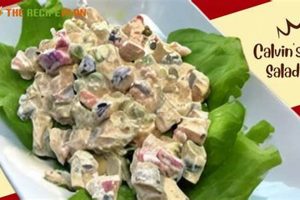
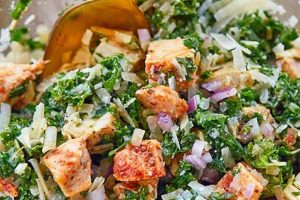
This dish typically combines cooked pasta (often rotini, farfalle, or penne), grilled or rotisserie chicken, crispy bacon, and a creamy ranch dressing. Variations may include additions such as cherry tomatoes, black olives, red onion, cheddar cheese, or avocado. It’s a common dish for potlucks, picnics, and casual gatherings due to its make-ahead convenience and crowd-pleasing flavors.
The combination of protein, carbohydrates, and fat makes this type of salad a satisfying meal. Its customizable nature allows for adjustments based on dietary preferences and ingredient availability. The cool, creamy dressing provides a refreshing contrast to the savory bacon and chicken, contributing to the dish’s widespread popularity, particularly in North America. While its exact origins are unclear, the dish’s rise likely corresponds with the increasing popularity of ranch dressing in the mid-20th century.
Discussions surrounding this popular dish often encompass variations in ingredients, dressing preparation (homemade versus store-bought), cooking techniques for the chicken and bacon, and optimal pasta shapes for ensuring even coating. Food safety guidelines for preparing and storing the salad are also important considerations.
Tips for a Superior Pasta Salad
Optimizing ingredient selection and preparation techniques elevates this classic dish from satisfactory to exceptional.
Tip 1: Pasta Selection: Opt for short, sturdy pasta shapes like rotini, farfalle, or penne. These shapes hold the dressing well and provide textural contrast.
Tip 2: Chicken Preparation: Grilled or rotisserie chicken offers optimal flavor. Cubing the chicken into bite-sized pieces ensures even distribution throughout the salad.
Tip 3: Bacon Enhancement: Crisp bacon adds a savory dimension. Properly draining the bacon on paper towels removes excess grease, preventing a soggy salad. Crumbling the bacon facilitates even dispersal.
Tip 4: Ranch Dressing Considerations: High-quality ranch dressing is crucial. Homemade dressings allow for customized flavor profiles, while store-bought options offer convenience. Greek yogurt can be incorporated into the dressing to enhance creaminess and tang.
Tip 5: Fresh Vegetable Incorporation: Adding fresh vegetables such as chopped celery, bell peppers, or red onion introduces textural and flavor complexity. Halved cherry tomatoes or quartered grape tomatoes offer juicy bursts of sweetness.
Tip 6: Cheese Integration: Shredded cheddar, crumbled blue cheese, or grated Parmesan add savory notes and enhance the overall richness.
Tip 7: Chilling and Serving: Chilling the salad for at least 30 minutes allows the flavors to meld. This also enhances the refreshing quality of the dish. Serve chilled.
Careful attention to these details results in a well-balanced and flavorful pasta salad, maximizing enjoyment.
By implementing these suggestions, one can create a pasta salad that is both delicious and visually appealing.
1. Ingredients

Ingredient selection significantly influences the character of a chicken bacon ranch pasta salad. The interplay of flavors and textures hinges on the quality and type of components used. For instance, using fresh, high-quality bacon contributes a smoky richness and satisfying crispness, whereas pre-cooked bacon may lack depth of flavor and become soggy. Similarly, choosing flavorful, ripe tomatoes adds a burst of sweetness and acidity, contrasting with the creamy ranch dressing. Substituting rotisserie chicken for grilled chicken breasts offers convenience while maintaining a desirable level of flavor and tenderness.
Specific ingredients also contribute to the overall nutritional profile. Leaner cuts of chicken breast offer a lower-fat protein source compared to chicken thighs. Incorporating a variety of colorful vegetables, such as bell peppers or chopped broccoli, boosts the vitamin and fiber content. The type of pasta chosen influences the carbohydrate content and texture. Whole wheat pasta, for example, provides added fiber compared to refined pasta. The choice of ranch dressing also plays a role. Lower-fat or homemade versions can reduce the overall calorie and fat content compared to full-fat store-bought options.
Understanding the role each ingredient plays empowers informed choices. Thoughtful selection results in a balanced and delicious salad that caters to specific dietary preferences and goals. This includes considering potential allergies or sensitivities, such as gluten intolerance or dairy restrictions. Substitutions, such as gluten-free pasta or dairy-free ranch dressing, allow greater inclusivity and expand the possibilities for customization. Ultimately, ingredient awareness ensures a flavorful, nutritious, and enjoyable culinary experience.
2. Preparation
Preparation significantly impacts the quality and enjoyment of a chicken bacon ranch pasta salad. Methodical preparation ensures optimal flavor development, ingredient cohesion, and food safety. Overlooking key steps can result in a subpar dish, highlighting the critical role of proper technique.
- Ingredient Preprocessing
Ingredient preprocessing includes cooking the pasta al dente, crisping the bacon, and properly chopping vegetables. For example, overcooked pasta becomes mushy and absorbs less dressing, while undercooked pasta offers an unpleasant, firm texture. Similarly, evenly diced vegetables ensure consistent flavor distribution and a pleasing aesthetic. Preprocessing contributes significantly to both the final texture and the overall appeal of the salad. Improperly handled ingredients can negatively impact the final dish. Burning the bacon, for instance, introduces an acrid flavor, while unevenly chopped vegetables create an inconsistent texture.
- Component Cooling
Allowing cooked components like pasta, bacon, and chicken to cool completely before combining them with the dressing prevents the dressing from thinning and the other ingredients from becoming soggy. Combining hot pasta with cold ingredients can lead to uneven temperatures and potential food safety concerns. Proper cooling ensures the desired textures are maintained and the salad remains fresh. For instance, adding hot bacon to the salad can wilt delicate vegetables and make the dressing oily.
- Dressing Incorporation
The method of dressing incorporation impacts flavor distribution and overall salad consistency. Gently tossing the ingredients with the dressing ensures even coating and prevents the salad from becoming overly saturated or dry in certain areas. Adding all the dressing at once can overwhelm delicate ingredients and create uneven flavor distribution. Gradual incorporation allows adjustments to the desired consistency and prevents the salad from becoming overly dressed. Overdressing can mask the flavors of the other components, while underdressing results in a dry, less flavorful salad.
- Chilling Time
Chilling time is crucial for flavor development and food safety. Allowing the salad to chill for a sufficient period allows the flavors to meld and the ingredients to marinate in the dressing. This chilling period intensifies the flavors and creates a more cohesive final product. Consuming the salad immediately after preparation limits flavor development. Sufficient chilling time, typically at least 30 minutes, is crucial. Neglecting to chill adequately can also compromise food safety.
These preparatory steps directly impact the final product, underscoring the critical role of meticulous preparation in achieving a high-quality chicken bacon ranch pasta salad. Consistent application of proper techniques contributes to a well-balanced, flavorful, and visually appealing dish. Careful attention to detail throughout the preparation process elevates the culinary experience, transforming simple ingredients into a satisfying and flavorful dish.
3. Flavor Balance

Flavor balance is paramount in a successful chicken bacon ranch pasta salad. The dish thrives on the interplay of contrasting yet complementary tastes. Savory elements from the bacon and chicken harmonize with the creamy, tangy ranch dressing. Without proper balance, one element can overpower the others, resulting in a less satisfying experience. For example, excessively salty bacon can mask the subtle tang of the ranch, while an overabundance of dressing can dilute the savory contributions of the chicken and bacon. The interplay of these flavors creates a dynamic and enjoyable sensory experience.
Achieving this balance requires careful consideration of ingredient proportions and individual flavor profiles. The saltiness of the bacon should complement, not overwhelm, the other components. The richness of the ranch dressing should enhance, not obscure, the flavors of the chicken and vegetables. Fresh elements, such as chopped vegetables, contribute brightness and acidity, counterbalancing the richness of the bacon and dressing. Consider the specific ranch dressing used some are tangier, some are herbier and adjust other ingredients accordingly. For instance, if using a particularly tangy ranch, one might opt for a milder cheese or add a touch of sweetness with chopped bell peppers. If using a ranch with a strong dill flavor, balancing it with other herbs, like parsley or chives, can create a more complex and rounded flavor profile.
A well-balanced chicken bacon ranch pasta salad offers a complex and satisfying flavor profile where each ingredient contributes without dominating. This harmonious blend of flavors distinguishes a truly exceptional salad from a mediocre one. Challenges can arise from variations in ingredient quality, such as overly salty bacon or bland chicken. Addressing these challenges requires adjustments during preparation. Tasting and adjusting seasoning throughout the process is essential. This iterative approach ensures the final product achieves the desired balance, resulting in a delicious and well-rounded dish.
4. Texture
Textural diversity distinguishes a memorable chicken bacon ranch pasta salad. The interplay of contrasting textures elevates this dish beyond simple flavor combinations. Crunchy elements, creamy components, and tender additions create a multi-dimensional eating experience. The choice of pasta shape contributes significantly. Rotini, with its spirals, offers a different mouthfeel than penne or farfalle. The crisp bacon provides a stark contrast to the tender chicken and the creamy ranch dressing. Adding vegetables, such as chopped celery or bell peppers, introduces another layer of crispness. Consider the textural impact of additional ingredients. Croutons, for example, amplify the crunch factor, while crumbled cheese adds a creamy, sometimes crumbly, element.
Balancing these textures is essential. Too much of one texture can create an unbalanced experience. An excess of crunchy elements can overwhelm the softer components, while too much creamy dressing can result in a heavy, less enjoyable salad. Achieving textural balance requires careful ingredient selection and preparation. Properly cooked pasta offers the ideal level of firmness without being mushy. Crispy, not burnt, bacon provides the desired crunch. Fresh, crisp vegetables, not wilted or soggy ones, offer optimal textural contrast. The interplay of these varying textures enhances the overall sensory experience.
Understanding the role of texture allows for informed decisions regarding ingredient selection, preparation techniques, and additions or substitutions. This understanding elevates the chicken bacon ranch pasta salad from a simple combination of ingredients to a carefully constructed culinary creation. Challenges may arise from ingredient quality or storage. Soggy bacon or limp vegetables detract from the intended textural profile. Addressing these challenges requires careful ingredient handling and attention to storage conditions. Proper storage maintains ingredient freshness and desired textures, preserving the intended balance and maximizing enjoyment. Ultimately, mastering the art of textural balance elevates this classic dish to a new level of culinary sophistication.
5. Presentation
Presentation significantly impacts the perceived quality and enjoyment of a chicken bacon ranch pasta salad. While flavor and texture are paramount, visual appeal enhances the dining experience. A thoughtfully presented salad entices the appetite and suggests care in preparation. Conversely, a haphazardly arranged salad, even if well-balanced in flavor and texture, can appear less appealing. Consider a salad served in a plain, overflowing bowl versus one artfully arranged on a platter, garnished with fresh herbs. The latter presentation immediately elevates the perceived value of the dish, creating a more enticing and satisfying experience.
Several factors contribute to effective presentation. The choice of serving vessel plays a crucial role. A shallow platter or bowl allows for better visibility and distribution of ingredients, showcasing the variety of components. Garnishes, such as sprigs of fresh parsley, chives, or a sprinkle of paprika, add visual interest and enhance the color palette. Strategic placement of key ingredients, such as arranging the bacon and chicken attractively on top, further enhances visual appeal. Consider the context of the serving occasion. A casual picnic might call for a simpler presentation than a more formal gathering. The goal is to create a visually appealing dish that complements the flavors and textures, maximizing the overall dining experience.
Understanding the impact of presentation allows for informed decisions regarding plating, garnishing, and serving. This attention to detail elevates the chicken bacon ranch pasta salad from a simple dish to a more refined culinary offering. Challenges may arise when dealing with large quantities or time constraints. However, even simple adjustments, such as using a more attractive serving bowl or adding a quick garnish, can significantly improve presentation. Ultimately, recognizing the importance of visual appeal enhances the enjoyment of this classic dish, demonstrating an appreciation for both culinary artistry and the sensory experience of dining. This attention to detail transforms a simple pasta salad into a more memorable and satisfying meal.
Frequently Asked Questions
This section addresses common inquiries regarding the preparation and enjoyment of chicken bacon ranch pasta salad.
Question 1: What type of pasta is best suited for this salad?
Sturdy, short pasta shapes like rotini, farfalle, and penne hold the dressing well and provide textural contrast. Avoid long, thin pasta like spaghetti, which can become tangled and difficult to eat in a salad.
Question 2: Can the salad be prepared in advance?
Yes, this salad is ideal for make-ahead preparation. It can be prepared up to a day in advance and stored, covered, in the refrigerator. This allows the flavors to meld and enhances the overall experience. However, adding the bacon just before serving helps maintain its crispness.
Question 3: How can sogginess be prevented?
Sogginess can be avoided by ensuring all ingredients, particularly the pasta, chicken, and bacon, are cooled completely before combining them with the dressing. Adding the dressing too early can result in a watery, less appealing salad. Additionally, ensure the bacon is properly drained of excess grease before adding it to the salad.
Question 4: What are suitable substitutions for chicken or bacon?
For those seeking alternatives to chicken, diced ham, turkey, or even chickpeas offer viable protein substitutions. Vegetarian bacon or pan-fried tofu can replace traditional bacon. These substitutions cater to varying dietary preferences and restrictions.
Question 5: How can the nutritional value of the salad be increased?
Incorporating a variety of vegetables, such as chopped bell peppers, broccoli florets, or halved cherry tomatoes, increases the vitamin and fiber content. Using whole wheat pasta adds further nutritional value. Greek yogurt can be incorporated into the dressing to boost protein content.
Question 6: How should leftover salad be stored?
Leftover salad should be stored in an airtight container in the refrigerator for up to three days. Consume within this timeframe for optimal quality and food safety.
Addressing these common questions promotes a greater understanding of this versatile and popular dish, ensuring a successful and enjoyable culinary experience. Careful consideration of these points facilitates the creation of a well-balanced, flavorful, and texturally satisfying salad.
Additional topics related to this dish often include variations in dressings, exploration of different ingredients, and discussions of food safety guidelines for optimal salad preparation and storage.
Chicken Bacon Ranch Pasta Salad Recipe
Exploration of this popular dish reveals the importance of balanced flavors, varied textures, and thoughtful presentation. Ingredient selection, from the type of pasta to the quality of the ranch dressing, significantly influences the final outcome. Proper preparation techniques, including cooking the pasta al dente and crisping the bacon, are essential for achieving the desired textures and preventing a soggy salad. The interplay of savory elements, like bacon and chicken, with the creamy, tangy ranch dressing creates a dynamic flavor profile. Furthermore, visual appeal enhances the dining experience, highlighting the importance of thoughtful presentation.
Achieving a truly exceptional chicken bacon ranch pasta salad requires attention to detail throughout the entire process, from ingredient selection to final presentation. Culinary success hinges on understanding the interplay of flavors, textures, and visual elements. This knowledge empowers informed choices, enabling the creation of a dish that satisfies both the palate and the eye. Further exploration of variations and adaptations promises continued enjoyment and culinary discovery within this classic recipe’s framework.