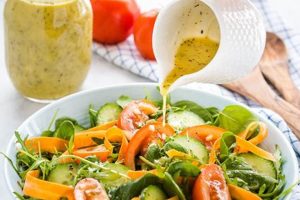
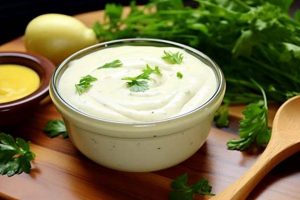
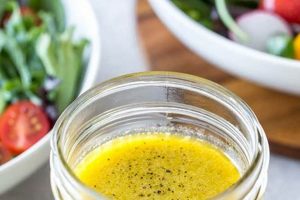
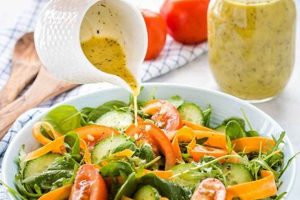
A basic vinaigrette, at its core, involves emulsifying an acidic element, typically vinegar, with a fat, usually oil. This creates a stable mixture that coats and flavors salad ingredients. A classic example combines three parts oil with one part vinegar, seasoned with salt and pepper. Variations can incorporate ingredients like Dijon mustard (for emulsification and flavor), honey or maple syrup (for sweetness), minced garlic or shallots (for pungency), and fresh or dried herbs (for aromatic complexity).
The simplicity and versatility of this dressing are key to its enduring popularity. It offers a light and refreshing counterpoint to leafy greens and other salad components, enhancing their flavors without overwhelming them. From ancient civilizations using oil and vinegar mixtures to preserve and flavor foods, to modern chefs creating innovative variations with infused oils and specialty vinegars, its history reflects a fundamental culinary principle: balancing fat and acidity creates delicious and harmonious flavors. Beyond salads, vinaigrettes find applications as marinades for meat and vegetables, sauces for cooked dishes, and flavorful dips for bread.
The following sections will explore the fundamental elements of a successful vinaigrette, discuss the diverse range of oils and vinegars available, and provide detailed instructions and inspiring recipes for creating both classic and innovative variations.
Tips for Crafting the Perfect Vinaigrette
Achieving a well-balanced and flavorful vinaigrette involves understanding the interplay of ingredients and employing proper techniques. The following tips offer guidance for consistent success.
Tip 1: Oil Selection Matters. The choice of oil significantly impacts the dressing’s flavor profile. Extra virgin olive oil offers a robust, peppery flavor, while avocado oil provides a neutral base that allows other ingredients to shine. Experiment with oils like grapeseed, walnut, or hazelnut for unique nuances.
Tip 2: Explore Vinegar Variety. Beyond standard white vinegar, consider the complexities of red wine vinegar, apple cider vinegar, balsamic vinegar, or even rice vinegar. Each imparts a distinct character to the final dressing.
Tip 3: Emulsification is Key. Proper emulsification creates a creamy, cohesive texture and prevents the oil and vinegar from separating. Whisk vigorously or use a blender to achieve a stable emulsion.
Tip 4: Seasoning Beyond Salt and Pepper. Enhance the flavor profile with Dijon mustard (which also aids emulsification), honey or maple syrup for a touch of sweetness, minced garlic or shallots for pungency, or fresh or dried herbs for added complexity.
Tip 5: Taste and Adjust. Before serving, taste the vinaigrette and adjust the seasoning as needed. A pinch of sugar can balance excessive acidity, while a squeeze of lemon juice can brighten the flavors.
Tip 6: Freshly Made is Best. While vinaigrettes can be stored, they are best enjoyed freshly made. The flavors meld and intensify over time, but the emulsion can break down with prolonged storage.
Tip 7: Proper Storage. If storing, keep the vinaigrette in an airtight container in the refrigerator. Bring to room temperature and whisk or shake vigorously before serving to re-emulsify.
By understanding these core principles, one can elevate simple ingredients into a versatile and flavorful dressing that enhances a wide range of dishes.
Mastering the art of the vinaigrette opens a world of culinary possibilities, empowering experimentation and personalized flavor combinations.
1. Oil (type and quality)
Oil forms the foundation of a vinaigrette, significantly influencing its flavor, texture, and overall quality. The choice of oil should be carefully considered, as it interacts directly with the other ingredients, particularly the vinegar. High-quality oils, typically cold-pressed and unrefined, possess distinct flavor profiles that contribute complexity to the dressing. For example, extra virgin olive oil lends a peppery and robust character, while avocado oil offers a neutral, creamy base that allows other flavors to shine. The oil’s quality directly correlates with the dressing’s overall taste and nutritional value. Using rancid or low-quality oil will negatively impact the final product, resulting in an unpleasant flavor and potentially reducing health benefits.
Selecting the appropriate oil also depends on the intended application of the vinaigrette. A delicate salad of fresh greens might benefit from a light and fruity olive oil, while a heartier salad with roasted vegetables might pair well with a more robust oil like walnut or hazelnut. The oil’s viscosity also plays a role. Lighter oils create thinner, more fluid dressings, while denser oils contribute to a richer, creamier texture. Understanding these nuances allows for greater control over the final product, enabling the creation of dressings tailored to specific dishes and palates. Consider a vinaigrette for grilled fish; a light and flavorful extra virgin olive oil might complement the delicate fish, while a heavier oil could overwhelm the subtle flavors. Conversely, a robust salad with roasted root vegetables could benefit from the nutty notes of walnut oil.
Oil selection within a vinaigrette is not merely a functional choice but a critical flavor component. The oil’s quality and inherent characteristics directly impact the overall sensory experience. Investing in high-quality oils and understanding their individual profiles are essential for creating flavorful and well-balanced vinaigrettes. The delicate balance between oil and vinegar, coupled with other ingredients, ultimately determines the dressing’s success. Ignoring the importance of oil quality compromises this delicate balance, potentially resulting in a subpar culinary outcome.
2. Vinegar (variety and acidity)

Vinegar provides the essential acidic counterpoint to oil in a vinaigrette, contributing brightness and complexity. Its variety and acidity level significantly influence the dressing’s final character. Acidity, measured as a percentage of acetic acid, dictates the vinegar’s sharpness. Higher acidity requires careful balancing with other ingredients, especially the oil. Different vinegar types possess unique flavor profiles derived from their source materials. For example, red wine vinegar contributes fruity and slightly tannic notes, while apple cider vinegar offers a mellow sweetness. Balsamic vinegar, aged for extended periods, provides a rich, syrupy sweetness and complex depth. Rice vinegar, commonly used in Asian cuisine, offers a milder, slightly sweet flavor.
The interplay between vinegar variety and acidity creates diverse flavor possibilities. A robust red wine vinegar, with its higher acidity, cuts through the richness of a salad with grilled meats, while a delicate white wine vinegar complements lighter salads with fresh greens and herbs. The sweetness of balsamic vinegar enhances roasted vegetables, while rice vinegar provides a subtle tang to Asian-inspired salads. Consider a salad featuring roasted beets and goat cheese; the earthy sweetness of balsamic vinegar complements the beets, while its acidity balances the creamy goat cheese. Conversely, a light salad with cucumbers and dill benefits from the subtle tang of white wine vinegar. Choosing the correct vinegar establishes a foundation of balanced flavor.
Understanding the role of vinegar variety and acidity is crucial for crafting well-balanced and flavorful vinaigrettes. Matching the vinegar’s characteristics to the other salad ingredients ensures a harmonious flavor profile. Experimentation with different vinegars expands culinary horizons, allowing for the creation of unique and personalized dressings. The careful consideration of vinegar is not merely a matter of preference but a critical step in achieving culinary excellence in vinaigrette preparation. Overlooking this element can lead to an unbalanced and less satisfying result.
3. Ratio (oil to vinegar)
The ratio of oil to vinegar constitutes a fundamental aspect of vinaigrette preparation, directly influencing the dressing’s flavor, texture, and overall balance. A classic vinaigrette typically employs a 3:1 ratio of oil to vinegar. This proportion provides a balance between the richness of the oil and the sharpness of the vinegar, creating a harmonious flavor profile. However, this ratio serves as a guideline rather than a strict rule. The specific ratio can be adjusted based on the vinegar’s acidity and the desired intensity of the dressing. A more acidic vinegar might necessitate a higher oil ratio to balance its sharpness, while a milder vinegar might allow for a lower oil ratio. For instance, a robust red wine vinegar might require a 4:1 oil-to-vinegar ratio, whereas a milder white wine vinegar might benefit from a 2:1 ratio. Adjusting the ratio allows for customization and control over the final product, enabling the creation of dressings tailored to specific taste preferences and culinary applications.
Consider a vinaigrette intended for a delicate salad of fresh greens. A lower oil-to-vinegar ratio, such as 2:1, might be preferred to avoid overwhelming the subtle flavors of the greens. Conversely, a heartier salad featuring roasted vegetables might benefit from a higher oil-to-vinegar ratio, such as 4:1, to provide richness and balance the bolder flavors. Furthermore, the intended use of the vinaigrette influences the ideal ratio. A marinade for grilled meat might require a higher oil content to tenderize and flavor the meat effectively, while a dressing for a simple green salad might benefit from a lower oil content for a lighter, more refreshing taste. The ratio, therefore, acts as a critical parameter in balancing the dressing’s components and achieving the desired culinary outcome.
Understanding the impact of the oil-to-vinegar ratio empowers culinary control over the vinaigrette’s final profile. This understanding allows for adjustments based on ingredient characteristics and intended application. Failure to consider the ratio can lead to an unbalanced dressing, either too acidic or too oily, thus compromising the overall dining experience. Mastering this fundamental element allows for the creation of vinaigrettes tailored to specific needs and preferences, enhancing culinary versatility and creativity.
4. Emulsification (method and stability)

Emulsification represents a critical process in creating a successful vinaigrette, directly influencing its texture, appearance, and flavor delivery. Vinaigrettes are, by nature, unstable mixtures of oil and vinegar. These two immiscible liquids tend to separate, resulting in a layered, rather than cohesive, dressing. Emulsification overcomes this natural separation by dispersing tiny droplets of one liquid (the dispersed phase) within another (the continuous phase). In a vinaigrette, the oil typically forms the dispersed phase, while the vinegar constitutes the continuous phase. This dispersion creates a temporarily stable emulsion, providing a smooth, creamy texture and ensuring that the flavors of both the oil and vinegar are evenly distributed throughout the dressing. The method of emulsification significantly impacts the stability and texture of the final product.
Several methods achieve emulsification in vinaigrettes. Vigorous whisking by hand creates a temporary emulsion, sufficient for immediate use. The shearing force of the whisk breaks down the oil into smaller droplets, allowing them to disperse within the vinegar. However, this method typically produces an emulsion that breaks down relatively quickly. For a more stable emulsion, a blender or food processor offers greater shearing force, creating smaller oil droplets and a more homogenous mixture. The addition of emulsifying agents, such as Dijon mustard or egg yolk, further enhances stability. These agents contain molecules with both hydrophilic (water-loving) and lipophilic (fat-loving) ends. These molecules position themselves at the interface between the oil and vinegar droplets, reducing surface tension and preventing coalescence, thus creating a more stable and longer-lasting emulsion. For example, a classic French vinaigrette often incorporates Dijon mustard, not only for flavor but also for its emulsifying properties.
The stability of a vinaigrette emulsion influences its sensory qualities and shelf life. A stable emulsion prevents the oil and vinegar from separating, ensuring a consistent flavor and texture throughout the salad. It also enhances the visual appeal of the dressing, providing a creamy, opaque appearance rather than a separated, oily layer. While temporary emulsions are suitable for immediate consumption, stable emulsions offer the advantage of make-ahead preparation and storage. Understanding the factors that influence emulsion stability, including the method of emulsification and the use of emulsifying agents, allows for greater control over the final product and optimizes the vinaigrette’s quality and longevity. This knowledge empowers the creation of dressings that not only taste delicious but also maintain their desired texture and appearance over time.
5. Seasoning (salt, pepper, herbs)

Seasoning plays a crucial role in the final flavor profile of a vinegar and oil salad dressing. Salt, pepper, and herbs not only enhance the individual flavors of the oil and vinegar but also create a cohesive and balanced taste experience. Salt, in particular, acts as a flavor enhancer, amplifying the inherent tastes of the other ingredients. It also helps to meld the disparate flavors of oil and vinegar, creating a unified taste. Pepper adds a subtle layer of complexity, providing a gentle heat and a contrasting note to the acidity of the vinegar. Herbs contribute aromatic complexity and freshness, further enhancing the dressing’s overall flavor profile. The careful selection and balance of these seasonings are essential for achieving a well-rounded and palatable vinaigrette. For instance, a classic vinaigrette might utilize a combination of sea salt, freshly ground black pepper, and finely chopped fresh herbs like parsley, chives, or tarragon. The quantity and specific types of seasonings can be adjusted based on personal preference and the other ingredients in the salad.
The choice of herbs can significantly alter the character of the vinaigrette. Robust herbs like rosemary or thyme complement heartier salads with roasted vegetables or grilled meats. Delicate herbs like dill or mint enhance lighter salads with fresh greens or seafood. Dried herbs can also be used, but they typically possess a more concentrated flavor and should be used sparingly. Furthermore, the timing of herb addition impacts their flavor contribution. Adding herbs early in the preparation process allows their flavors to infuse the oil and vinegar more thoroughly. Adding herbs just before serving preserves their fresh, vibrant character. Consider a vinaigrette for a Mediterranean salad; oregano and basil, added just before serving, contribute a fresh, herbaceous note that complements the other ingredients, like feta cheese, olives, and tomatoes. Alternatively, a vinaigrette for a grilled steak salad might benefit from the robust flavor of rosemary infused in the oil during preparation.
Proper seasoning elevates a simple vinegar and oil dressing from functional to flavorful. It transforms a basic mixture of oil and vinegar into a complex and nuanced culinary creation. Understanding the role and impact of each seasoning element empowers informed choices, leading to dressings tailored to specific salads and palates. Failure to consider the importance of seasoning can result in a bland or unbalanced dressing, diminishing the overall dining experience. The judicious use of salt, pepper, and herbs is therefore an essential step in crafting a truly exceptional vinaigrette, demonstrating culinary expertise and enhancing the enjoyment of any salad. This attention to detail transforms a simple mixture of oil and vinegar into a sophisticated and flavorful culinary element.
6. Additional flavors (garlic, mustard, honey)

Beyond the foundational elements of oil, vinegar, and seasonings, additional flavor components contribute significant complexity and depth to vinegar and oil salad dressings. Ingredients like garlic, mustard, and honey offer distinct flavor profiles and functional properties that enhance the overall sensory experience. Garlic, with its pungent and savory notes, adds a depth of flavor that complements both robust and delicate salads. Mustard, particularly Dijon mustard, contributes a tangy complexity and acts as an emulsifier, promoting a stable and creamy texture. Honey introduces a subtle sweetness that balances the acidity of the vinegar and adds a nuanced layer of flavor. The judicious incorporation of these additional flavors elevates a basic vinaigrette, transforming it into a more sophisticated and versatile culinary creation. For instance, a vinaigrette featuring roasted garlic, Dijon mustard, and a touch of honey provides a balanced and complex flavor profile that complements grilled chicken or roasted vegetables. The garlic provides savory depth, the mustard adds tang, and the honey balances the acidity with a touch of sweetness.
The selection and combination of additional flavors should be carefully considered, taking into account the other ingredients in the salad and the desired overall flavor profile. The intensity of garlic can be adjusted through various preparation methods. Minced garlic offers a more pronounced flavor, while roasted garlic provides a mellow sweetness. Different types of mustard offer varying levels of pungency and sweetness. Dijon mustard, with its balanced flavor profile, is a versatile choice, while whole-grain mustard provides a more robust and textured experience. Honey varieties, ranging from light and floral to dark and robust, contribute unique nuances to the vinaigrette. Consider a salad featuring delicate greens and fresh berries; a vinaigrette with a touch of honey and a hint of lemon zest enhances the sweetness of the berries without overpowering the delicate greens. Alternatively, a salad with roasted root vegetables and crumbled blue cheese might benefit from a vinaigrette featuring roasted garlic and a touch of Dijon mustard, complementing the earthy sweetness of the vegetables and the pungent cheese.
The strategic use of additional flavors like garlic, mustard, and honey represents a hallmark of culinary expertise in vinaigrette preparation. These ingredients not only enhance flavor but also contribute to texture and overall balance. Understanding the interplay of these flavors allows for the creation of dressings tailored to specific culinary applications and individual preferences. Failure to consider the potential of these additional elements limits the complexity and depth achievable in a vinaigrette. The thoughtful incorporation of these components demonstrates culinary sophistication and elevates the simple vinegar and oil dressing to a versatile and nuanced culinary creation, enhancing the overall dining experience.
7. Storage (container and duration)

Proper storage is essential for maintaining the quality and extending the lifespan of a vinegar and oil salad dressing. Storage considerations encompass both the choice of container and the duration of storage. Appropriate storage practices preserve the dressing’s flavor, texture, and prevent spoilage, ensuring a safe and enjoyable culinary experience.
- Container Material and Airtightness
The ideal storage container for vinegar and oil salad dressing is made of non-reactive material, such as glass or high-quality food-grade plastic. Avoid using reactive materials like metal, which can interact with the acidic components of the dressing and impart undesirable flavors or potentially leach harmful substances. The container should also be airtight to prevent oxidation and exposure to airborne contaminants. An airtight seal minimizes flavor degradation and inhibits the growth of microorganisms. Properly sealing the container maintains the dressing’s quality and extends its shelf life.
- Refrigeration Temperature and Stability
Refrigeration is crucial for preserving the freshness of vinegar and oil salad dressings, especially those containing perishable ingredients like fresh herbs or garlic. A consistent, cool temperature inhibits microbial growth and slows down enzymatic reactions that can lead to spoilage. However, refrigeration can also affect the stability of the emulsion, causing the oil and vinegar to separate. Storing the dressing in the refrigerator door, where temperature fluctuations are more common, can exacerbate this issue. Ideally, store the dressing in the main compartment of the refrigerator, away from the door, to maintain a more stable temperature and minimize emulsion breakdown.
- Storage Duration and Quality Degradation
While refrigeration extends the shelf life of vinegar and oil salad dressings, their quality inevitably degrades over time. The flavors can become muted, and the texture may change as the emulsion breaks down. Generally, a properly stored vinaigrette can last for up to one week in the refrigerator. Dressings containing fresh ingredients, such as herbs or garlic, may have a shorter shelf life. Always inspect the dressing before use for any signs of spoilage, such as mold growth, off-odors, or significant changes in texture. Discard any dressing that exhibits signs of spoilage.
- Re-Emulsification and Serving
Due to the tendency of oil and vinegar to separate during storage, re-emulsification is often necessary before serving a refrigerated vinaigrette. Vigorous shaking or whisking can restore the emulsion and ensure a homogenous mixture. If the emulsion has broken down significantly, a brief blend in a food processor or immersion blender can effectively re-emulsify the dressing. Allowing the dressing to come to room temperature before serving enhances its flavor and texture. Cold temperatures can dull the flavors and thicken the oil, potentially masking the delicate nuances of the dressing.
Adhering to proper storage practices is crucial for maximizing the quality and longevity of vinegar and oil salad dressings. The choice of container, refrigeration temperature, and attention to storage duration all contribute to preserving the dressing’s flavor, texture, and safety. These practices ensure that the carefully crafted balance of flavors and textures remains intact, enhancing the overall culinary experience.
Frequently Asked Questions
This section addresses common inquiries regarding the preparation and utilization of vinegar and oil salad dressings.
Question 1: What is the ideal ratio of oil to vinegar in a vinaigrette?
A classic vinaigrette typically uses a 3:1 ratio of oil to vinegar. However, this ratio can be adjusted based on the vinegar’s acidity and desired flavor profile. More acidic vinegars may require a higher proportion of oil.
Question 2: How can one achieve a stable emulsion in a vinaigrette?
Vigorous whisking or the use of a blender can create a temporary emulsion. For increased stability, incorporating an emulsifying agent like Dijon mustard or egg yolk is recommended. These agents help bind the oil and vinegar, preventing separation.
Question 3: What types of oils are best suited for vinaigrettes?
A variety of oils can be used, each contributing distinct flavor characteristics. Extra virgin olive oil offers a robust flavor, while avocado oil provides a neutral base. Other options include grapeseed, walnut, and hazelnut oils.
Question 4: Can vinegar and oil salad dressings be stored?
Yes, vinaigrettes can be stored in an airtight container in the refrigerator for up to one week. However, the emulsion may separate during storage, requiring re-whisking or blending before use. Fresh ingredients may reduce shelf life.
Question 5: How can one adjust the flavor of a vinaigrette?
Flavor adjustments can be made by adding ingredients like minced garlic, shallots, honey, maple syrup, or herbs. A pinch of sugar can balance excessive acidity, while a squeeze of lemon juice can add brightness.
Question 6: Beyond salads, how else can vinaigrettes be used?
Vinaigrettes have versatile applications beyond salads. They can serve as marinades for meat and vegetables, sauces for cooked dishes, and flavorful dips for bread.
Understanding these fundamental aspects of vinaigrette preparation ensures a successful and flavorful outcome, enabling culinary creativity and customization.
The subsequent section will provide a selection of specific recipes for various vinegar and oil salad dressings.
Conclusion
This exploration of vinaigrette preparation has highlighted the essential components and techniques necessary for crafting a successful emulsion. From the selection of high-quality oils and vinegars to the understanding of ratios, emulsification methods, and the judicious use of seasonings and additional flavors, each element contributes to the final product’s overall quality and character. Proper storage techniques maintain the dressing’s freshness and extend its shelf life, ensuring optimal flavor and texture. The versatility of vinaigrettes extends beyond salads, encompassing applications as marinades, sauces, and dips, demonstrating their adaptability and culinary value.
Mastery of vinaigrette preparation empowers culinary creativity and personalized flavor exploration. Through understanding the underlying principles and techniques discussed, one can elevate simple ingredients into complex and nuanced flavor profiles. Continued experimentation with diverse oils, vinegars, and flavor combinations expands culinary horizons, offering endless possibilities for enhancing and enriching a wide array of dishes. The seemingly simple combination of oil and vinegar provides a foundation for culinary expression, demonstrating that even the most basic preparations can achieve remarkable depth and complexity through informed technique and thoughtful ingredient selection.