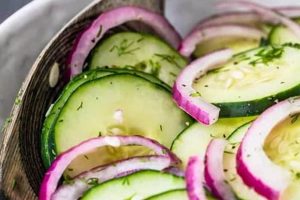
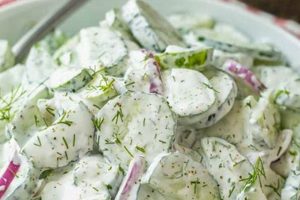
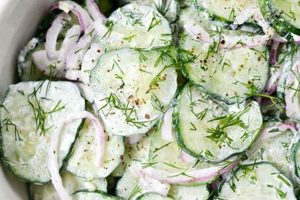
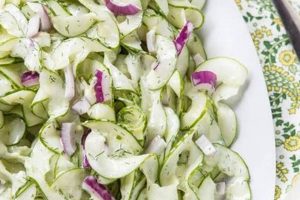
A cool, creamy, and refreshing dish, this simple preparation typically combines thinly sliced cucumbers with a sour cream-based dressing. Variations often include additions such as dill, onions, garlic, vinegar, and seasonings like salt and pepper. It can be a light side dish, a component of a larger meal, or even a standalone snack.
The dish’s popularity stems from its ease of preparation, affordability, and versatility. The mild flavor of cucumbers complements the tangy sour cream, creating a balanced and palatable experience. Historically, cucumbers have been cultivated for thousands of years, and their incorporation into salads with dairy-based dressings has a long tradition in various cultures, particularly in Eastern and Northern Europe. The refreshing nature of this salad makes it especially appealing in warmer weather.
This exploration will further delve into variations of this classic dish, covering topics including optimal ingredient selection, diverse preparation techniques, and complementary pairings to enhance the dining experience.
Tips for a Superior Cucumber Salad
Achieving optimal flavor and texture requires attention to detail throughout the preparation process. The following tips offer guidance for creating a truly exceptional cucumber salad.
Tip 1: Salt the Cucumbers: Salting sliced cucumbers draws out excess moisture, preventing a watery salad. Place the cucumber slices in a colander, sprinkle generously with salt, and let them sit for at least 15 minutes before rinsing and thoroughly drying.
Tip 2: Thinly Slice the Cucumbers: Thinly sliced cucumbers ensure a delicate texture and allow the flavors of the dressing to permeate more effectively. A mandoline slicer yields consistent, thin slices.
Tip 3: Use High-Quality Sour Cream: The sour cream forms the base of the dressing, so its quality significantly impacts the overall flavor. Full-fat sour cream offers a richer, creamier texture.
Tip 4: Fresh Dill Enhances Flavor: Fresh dill adds a bright, herbaceous note that complements cucumbers beautifully. Finely chop the dill before adding it to the salad.
Tip 5: Balance Tanginess with Sweetness: A touch of sugar or a sweetener like honey can balance the tanginess of the sour cream and vinegar, creating a more rounded flavor profile.
Tip 6: Chill Before Serving: Chilling the salad allows the flavors to meld and enhances the refreshing qualities of the dish. Refrigerate for at least 30 minutes before serving.
Tip 7: Consider Textural Variety: Adding thinly sliced red onion or chopped chives provides textural contrast and additional flavor dimensions.
By following these tips, one can elevate a simple cucumber salad into a truly memorable culinary experience. Attention to these details ensures a crisp, flavorful, and refreshing dish.
These insights provide a foundation for creating exceptional cucumber salads. The following section will offer concluding thoughts and suggestions for further exploration.
1. Fresh Cucumbers

Fresh cucumbers are fundamental to a successful cucumber salad with sour cream. Their crisp texture and mild, subtly sweet flavor provide a refreshing counterpoint to the tangy sour cream dressing. Using less-than-fresh cucumbers results in a watery, less flavorful salad, diminishing the overall quality of the dish. The choice of cucumber also influences the final product; varieties like English cucumbers, with their thinner skin and fewer seeds, offer a more delicate texture compared to standard slicing cucumbers. Selecting firm cucumbers with vibrant green skin ensures optimal freshness and flavor.
The importance of fresh cucumbers extends beyond flavor and texture. Their high water content contributes to the refreshing nature of the salad, making it particularly appealing in warmer weather. The crispness of fresh cucumbers also offers a pleasant textural contrast to the creamy dressing. Consider a scenario where wilted or overripe cucumbers are used; the resulting salad would be mushy and lack the desired refreshing qualities. This underscores the crucial role fresh cucumbers play in achieving the desired outcome.
In summary, the quality and freshness of cucumbers directly impact the overall success of a cucumber salad with sour cream. Prioritizing fresh, firm cucumbers ensures optimal flavor, texture, and refreshment. This understanding empowers informed ingredient selection and contributes to a superior culinary experience.
2. High-Quality Sour Cream

High-quality sour cream forms the foundation of the dressing, significantly influencing the overall taste and texture of the dish. Its creamy texture provides a luxurious mouthfeel, while its characteristic tang complements the subtle sweetness of fresh cucumbers. The quality of sour cream directly correlates with the richness and depth of flavor in the salad. Using a low-fat or generic brand often results in a thinner, less flavorful dressing, diminishing the overall sensory experience. A premium sour cream, with its higher fat content and carefully cultured base, delivers a noticeably richer, more satisfying result. Consider the difference between a salad dressed with a thin, watery sour cream versus one enriched with a thick, flavorful variety; the latter elevates the dish from simple to exceptional.
Furthermore, the quality of sour cream affects the stability of the dressing. High-quality sour cream, with its optimal balance of fat and acidity, creates a stable emulsion that clings to the cucumbers, ensuring even distribution of flavor. Lower-quality options might result in a dressing that separates or becomes watery, compromising both the aesthetic appeal and the overall enjoyment of the salad. For instance, a salad prepared for a picnic or potluck benefits from a stable, high-quality sour cream dressing, maintaining its appealing texture and flavor even after some time has elapsed.
In conclusion, selecting high-quality sour cream represents a crucial step in crafting an exceptional cucumber salad. Its impact extends beyond basic flavor enhancement, influencing the texture, stability, and overall sensory experience. Understanding this connection empowers informed decision-making, enabling the creation of a dish that truly delights the palate. Prioritizing quality ingredients contributes not only to a superior culinary outcome but also to a deeper appreciation for the nuanced interplay of flavors and textures within this seemingly simple dish.
3. Thin Slicing Technique

The technique employed for slicing cucumbers significantly influences the final quality of a cucumber salad with sour cream. Thinly sliced cucumbers offer several advantages, impacting flavor absorption, texture, and overall aesthetic appeal. This exploration delves into the multifaceted relationship between slicing technique and the ultimate success of this classic dish.
- Enhanced Flavor Infusion
Thin cucumber slices provide a greater surface area for the sour cream dressing to penetrate. This maximizes flavor infusion, ensuring each bite delivers a harmonious blend of cucumber and dressing. Thicker slices, conversely, limit flavor penetration, resulting in a less satisfying experience where the cucumber and dressing remain distinct rather than melding together. This principle applies universally across culinary applications; marinades, for example, penetrate thinly sliced meats more effectively than thicker cuts.
- Delicate Texture
Thinly sliced cucumbers contribute to a delicate, refined texture, enhancing the overall palatability of the salad. This delicate texture contrasts pleasantly with the creamy richness of the sour cream dressing, creating a balanced sensory experience. Thickly sliced cucumbers, in contrast, can create a dense, almost cumbersome mouthfeel, detracting from the desired lightness and refreshment. Consider the difference between thinly sliced sashimi and a thick steak; the former offers a delicate, melt-in-your-mouth experience, while the latter presents a more robust, chewy texture.
- Visual Appeal
Thinly sliced cucumbers enhance the aesthetic presentation of the salad. Their uniformity and translucence create a visually appealing dish that is as pleasing to the eye as it is to the palate. Thick, uneven slices, conversely, can appear clumsy and less refined, diminishing the overall presentation. Similar principles apply in other culinary contexts; consider the visual appeal of a finely julienned vegetable garnish compared to roughly chopped pieces.
- Ease of Eating
Thinly sliced cucumbers facilitate effortless consumption. Their delicate nature allows for easy incorporation into each bite, ensuring a pleasant and manageable dining experience. Thick slices, in contrast, can be awkward to handle and consume, potentially disrupting the flow of a meal. This aspect is particularly relevant in formal dining settings or when serving the salad as part of a larger buffet or spread.
In summary, the thin slicing technique contributes significantly to the success of a cucumber salad with sour cream, influencing flavor absorption, texture, visual appeal, and ease of consumption. These interconnected factors underscore the importance of precise knife skills in elevating this seemingly simple dish to a truly refined culinary experience. Mastering this technique allows for consistent, high-quality results, ensuring a delightful and refreshing salad every time.
4. Fresh Dill or Other Herbs
The incorporation of fresh herbs elevates cucumber salad with sour cream from a simple side dish to a more complex and flavorful culinary experience. Fresh dill, with its bright, slightly tangy, and anise-like flavor, holds a prominent place in this context. However, exploring alternative herbs unlocks further dimensions of flavor and allows for creative customization.
- Dill’s Traditional Role
Dill’s affinity for cucumbers is well-established in various cuisines. Its flavor profile complements the cucumber’s subtle sweetness and the sour cream’s tang, creating a harmonious balance. This classic combination appears frequently in Eastern European and Scandinavian culinary traditions, reflecting a long-standing appreciation for the synergistic relationship between these ingredients. For example, in Polish cuisine, dill is a staple in many cucumber salads, showcasing its widespread acceptance and integration.
- Exploring Alternative Herbs
While dill remains a classic choice, other herbs offer intriguing alternatives. Fresh mint, with its cool, refreshing notes, provides a contrasting yet complementary flavor profile. Parsley, with its clean, slightly peppery taste, adds a different dimension of complexity. Chives, with their delicate onion flavor, contribute a subtle sharpness that balances the richness of the sour cream. These alternatives allow for customization based on personal preference or the desired flavor profile of the overall meal.
- Balancing Herbal Intensity
The key to successful herb integration lies in achieving balance. Overpowering the delicate flavors of cucumber and sour cream with excessive herbs diminishes the overall balance of the dish. A judicious approach, using herbs sparingly yet effectively, allows their unique characteristics to shine through without dominating the other components. The specific quantity depends on the chosen herb’s potency; for instance, a smaller quantity of mint might be required compared to a larger amount of the milder parsley.
- Freshness as a Prerequisite
The emphasis on fresh herbs is crucial. Dried herbs lack the vibrant flavor and aromatic intensity of their fresh counterparts. Using dried herbs in this context results in a dull, muted flavor profile that fails to elevate the salad. Fresh herbs contribute a brightness and vibrancy that significantly enhances the overall sensory experience. Consider the difference between a pesto made with fresh basil versus dried; the former bursts with vibrant flavor, while the latter tastes flat and lifeless.
The thoughtful selection and application of fresh herbs elevates cucumber salad with sour cream from a simple accompaniment to a more nuanced and flavorful culinary creation. Understanding the interplay between herbs, cucumbers, and sour cream allows for customized flavor profiles and a truly satisfying dining experience. Whether adhering to the traditional elegance of fresh dill or venturing into the diverse realm of alternative herbs, prioritizing freshness and balance ensures a salad that delights the palate and complements any meal.
5. Balanced Seasoning
Balanced seasoning is crucial for a successful cucumber salad with sour cream. It transforms a collection of ingredients into a harmonious dish. This exploration delves into the critical aspects of seasoning, highlighting its impact on the overall culinary experience.
- Salt’s Dual Role
Salt performs two essential functions. First, it enhances the inherent flavors of the cucumbers and sour cream, allowing their subtle nuances to shine. Second, it draws out excess moisture from the cucumbers, preventing a watery salad and contributing to a crisp, refreshing texture. This dual functionality underscores salt’s pivotal role; imagine a bland, watery saladthe absence of properly applied salt becomes immediately apparent.
- Acidity as a Balancing Agent
Acidity, typically from vinegar or lemon juice, provides a counterpoint to the richness of the sour cream and the subtle sweetness of the cucumbers. This balance prevents the salad from becoming overly rich or cloying, adding a refreshing brightness. Consider the role of vinegar in classic potato salad; it provides a similar balancing effect, cutting through the richness of the mayonnaise.
- Black Pepper’s Subtle Complexity
Black pepper introduces a subtle layer of complexity. Its gentle heat and earthy notes complement the other flavors without overpowering them. Freshly ground black pepper offers a more pronounced aroma and flavor compared to pre-ground options, further enhancing the sensory experience. Its subtle presence contributes to the overall depth of flavor, much like a touch of nutmeg elevates a bchamel sauce.
- Sugar’s Balancing Touch
A small amount of sugar or honey rounds out the flavor profile, balancing the tanginess of the sour cream and vinegar. This subtle sweetness enhances the overall palatability, creating a more harmonious blend of flavors. This principle mirrors the use of sugar in tomato-based sauces; it balances the acidity of the tomatoes, creating a more rounded flavor.
Achieving balanced seasoning in a cucumber salad with sour cream requires careful consideration of each element. The interplay of salt, acidity, pepper, and a touch of sweetness creates a harmonious flavor profile that elevates the dish beyond its individual components. Understanding these nuances empowers informed decision-making, ensuring a consistently delicious and refreshing culinary experience.
6. Adequate Chilling Time
Adequate chilling time plays a crucial role in the final quality of cucumber salad with sour cream. Chilling allows the flavors of the various componentscucumbers, sour cream, herbs, and seasoningsto meld and harmonize. This integration of flavors creates a more cohesive and nuanced taste profile compared to a freshly made salad. The lower temperature also enhances the perceived crispness of the cucumbers, contributing to a more refreshing sensory experience. Consider the difference between a chilled gazpacho and a room-temperature version; the chilled version offers a heightened perception of freshness and a more unified flavor profile. Similarly, chilling a cucumber salad intensifies its refreshing qualities, making it particularly appealing in warmer weather.
Beyond flavor development and textural enhancement, adequate chilling time allows the dressing to further permeate the cucumber slices. This deeper penetration ensures that each bite delivers a balanced blend of flavors, maximizing the impact of the carefully selected ingredients. Imagine marinating meat; sufficient marinating time ensures the flavors penetrate deeply, impacting the entire piece rather than just the surface. Similarly, chilling allows the sour cream dressing to fully interact with the cucumbers, resulting in a more flavorful and satisfying experience. Insufficient chilling, conversely, limits flavor penetration, resulting in a less harmonious blend where the individual components remain distinct rather than merging into a cohesive whole.
In summary, adequate chilling time represents a critical, yet often overlooked, aspect of preparing cucumber salad with sour cream. Its importance extends beyond simple temperature reduction, impacting flavor development, textural enhancement, and the overall integration of ingredients. Understanding this principle allows for informed preparation and elevates this seemingly simple dish to a truly refined culinary experience. Prioritizing adequate chilling demonstrates an attention to detail that distinguishes a truly exceptional cucumber salad from a merely satisfactory one. The resulting enhancement in flavor, texture, and overall enjoyment justifies the relatively small investment of time required for proper chilling.
7. Optional additions (onions, garlic)

While cucumbers and sour cream form the core of this classic salad, optional additions offer opportunities to introduce complexity and personalize the flavor profile. Onions and garlic, two commonly incorporated ingredients, contribute distinct characteristics that enhance the overall sensory experience. Understanding their individual contributions allows for informed decisions regarding inclusion and quantity, ultimately leading to a more tailored culinary outcome.
- Onions: Textural and Flavor Contrast
Onions introduce both textural contrast and a pungent flavor dimension. Thinly sliced red onions offer a crisp bite that complements the softer texture of the cucumbers, while their sharp flavor balances the richness of the sour cream. This interplay of textures and flavors prevents the salad from becoming monotonous, adding depth and intrigue. The intensity of the onion flavor can be adjusted by macerating the sliced onions in cold water before adding them to the salad, mitigating their sharpness while retaining their crisp texture. Sweet onions, like Vidalia, offer a milder alternative, contributing sweetness and a less assertive onion flavor.
- Garlic: Pungency and Depth
Garlic contributes a pungent, savory depth that complements the other ingredients. Minced or grated garlic infuses the salad with a subtle warmth and complexity, enhancing the overall flavor profile. However, garlic’s intensity requires careful application; excessive amounts can easily overpower the delicate flavors of the cucumbers and sour cream. A small amount, judiciously incorporated, creates a balanced and more nuanced flavor profile. Roasting the garlic before adding it to the salad mellows its pungency and introduces a subtle sweetness, offering a different flavor dimension compared to raw garlic.
- Balancing Act: Flavor Harmony
The key to successfully incorporating onions and garlic lies in achieving balance. Overpowering the core flavors of the cucumber and sour cream diminishes the essence of the dish. The quantity of these additions should complement, not dominate, the existing flavors. Consider the overall flavor profile being sought; a more assertive flavor might benefit from a greater quantity of onions and garlic, while a subtler profile requires a more restrained approach. This principle extends to other culinary applications; for example, balancing the spices in a curry ensures that no single flavor overwhelms the others.
- Cultural Variations and Personal Preferences
The inclusion and quantity of onions and garlic often reflect cultural preferences and individual tastes. Some cuisines favor a more pronounced garlic presence, while others emphasize the subtle sweetness of onions. Personal preferences also play a significant role; those who enjoy bold flavors might opt for a more generous application, while those who prefer subtler nuances might exercise restraint. This flexibility allows for customization, ensuring the salad caters to individual tastes and complements the overall meal. For example, a Greek salad typically incorporates raw red onion, while a German potato salad might include finely diced pickled onions, reflecting cultural variations in flavor preferences.
Incorporating optional additions like onions and garlic allows for a personalized approach to this classic salad. Understanding their individual contributions, achieving balance, and considering personal preferences empowers informed decision-making, resulting in a more nuanced and satisfying culinary experience. Whether adhering to traditional combinations or exploring innovative flavor profiles, careful consideration of these optional ingredients elevates the cucumber salad with sour cream from a simple side dish to a more complex and flavorful culinary creation.
Frequently Asked Questions
This section addresses common inquiries regarding cucumber salad with sour cream, providing clear and concise information to ensure optimal preparation and enjoyment.
Question 1: How can excess moisture be prevented in cucumber salad?
Salting the cucumber slices before adding them to the salad draws out excess water. Place the slices in a colander, sprinkle generously with salt, and allow them to sit for 15-30 minutes. Rinse and thoroughly dry the cucumbers before combining them with the other ingredients.
Question 2: What type of cucumber is best suited for this salad?
English cucumbers, known for their thin skin and minimal seeds, are often preferred. However, standard slicing cucumbers work well too. Select firm cucumbers with vibrant green skin, indicating freshness.
Question 3: Can low-fat sour cream be used?
While low-fat sour cream can be used, it often results in a thinner, less flavorful dressing. Full-fat sour cream provides a richer, creamier texture and enhances the overall flavor profile.
Question 4: How long should the salad be chilled before serving?
Chilling the salad for at least 30 minutes allows the flavors to meld and enhances the refreshing qualities of the dish. Longer chilling times, up to a few hours, further intensify the flavors.
Question 5: Can dried herbs be substituted for fresh herbs?
Fresh herbs offer a brighter, more vibrant flavor profile compared to dried herbs. While dried herbs can be used in a pinch, they lack the same intensity and aromatic complexity as fresh herbs.
Question 6: What can be done if the salad becomes too watery?
If the salad becomes too watery, drain off the excess liquid. Alternatively, add a small amount of additional sour cream to thicken the dressing and absorb some of the moisture.
These responses address key considerations for preparing cucumber salad with sour cream. Understanding these points ensures optimal results and a satisfying culinary experience.
The following section offers a collection of recipe variations, allowing for customization and exploration of diverse flavor profiles.
Cucumber Salad with Sour Cream
This exploration has delved into the multifaceted nature of cucumber salad with sour cream, examining its core components, optimal preparation techniques, and potential variations. From the importance of fresh, high-quality ingredients to the nuances of balanced seasoning and adequate chilling time, each aspect contributes to the final culinary outcome. The analysis encompassed the significance of thin slicing for optimal flavor infusion and textural appeal, the role of fresh herbs in elevating the sensory experience, and the potential for customization through optional additions like onions and garlic. Addressing frequently asked questions provided practical guidance for common challenges, further ensuring successful preparation.
Cucumber salad with sour cream, often perceived as a simple side dish, reveals a surprising depth of culinary potential. Attention to detail and a thorough understanding of its fundamental elements transform this seemingly basic preparation into a truly rewarding culinary experience. Further exploration and experimentation with variations promise continued enjoyment and an ever-deepening appreciation for this classic dish’s versatility and enduring appeal.