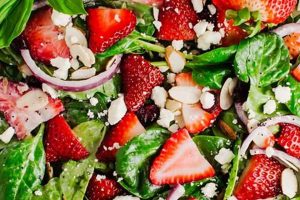
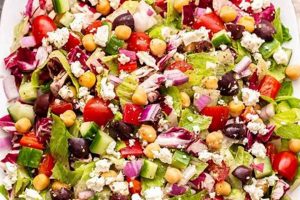
Dishes suitable for communal gatherings where each guest contributes a dish often center around salads featuring leafy greens. These versatile creations can range from simple combinations of lettuce, vegetables, and a light vinaigrette to more elaborate compositions incorporating fruits, nuts, cheeses, and proteins. For instance, a spinach salad with strawberries, feta cheese, and candied pecans offers a delightful balance of sweet and savory flavors, while a classic Caesar salad provides a familiar and satisfying option.
Such dishes offer numerous advantages in a potluck setting. Their transportability, often requiring minimal assembly at the event, makes them convenient for both the contributor and the host. The refreshing and light nature of these salads provides a welcome counterpoint to heavier dishes commonly found at potlucks. Furthermore, they cater to diverse dietary preferences, often easily adaptable to vegetarian, vegan, or gluten-free diets. Historically, communal meals have emphasized shared resources and collective effort, and these contributions continue to embody that spirit.
The following sections will explore various factors contributing to successful salad preparation for a shared meal. Topics covered include selecting appropriate greens, creating balanced flavor profiles, ensuring safe food handling practices, and presenting the dish attractively.
Tips for Successful Potluck Salad Contributions
Careful planning and execution are essential for creating a salad that travels well, complements other dishes, and satisfies a variety of palates. The following tips offer guidance for contributing a successful dish to a shared meal.
Tip 1: Choose Durable Greens: Opt for robust greens such as romaine, kale, or spinach that can withstand transport and maintain their texture. Delicate greens like butter lettuce are best avoided.
Tip 2: Dress Separately: To prevent soggy salads, pack dressings in separate containers and add them just before serving. This preserves the crispness of the greens and other ingredients.
Tip 3: Consider Texture: Add elements for textural contrast, such as nuts, seeds, croutons, or dried fruit. This elevates the sensory experience beyond just taste.
Tip 4: Balance Flavors: Strive for a balance of sweet, salty, sour, and bitter elements. A combination of fresh berries, tangy cheese, and toasted nuts exemplifies this principle.
Tip 5: Prioritize Food Safety: Thoroughly wash all produce and adhere to safe food handling practices. Transport the salad in a chilled container to maintain a safe temperature.
Tip 6: Simplify Transport: Utilize containers designed for easy transport and serving. Consider using a clear container to showcase the salad’s visual appeal.
Tip 7: Label Clearly: Include a clear label listing ingredients to inform guests about the salad’s components and address any potential dietary restrictions or allergies.
By following these guidelines, contributors can ensure their salad is a welcome addition to the potluck spread. A thoughtfully prepared salad enhances the overall dining experience and reflects the contributor’s consideration for fellow diners.
These practical tips provide a solid foundation for crafting a delicious and successful potluck salad. The next section offers a curated selection of specific recipes incorporating these principles.
1. Fresh, Seasonal Ingredients

Ingredient seasonality significantly impacts the flavor and quality of salads intended for shared meals. Utilizing produce at its peak ripeness intensifies natural sweetness and minimizes the need for excessive. A summer salad showcasing ripe tomatoes and cucumbers, for instance, requires little more than a light vinaigrette to highlight their inherent flavors. Conversely, out-of-season produce often lacks vibrancy and may necessitate heavier dressings or seasonings to compensate. This not only affects the taste but can also lead to a less refreshing, potentially heavier dish, less suited for a potluck setting. Choosing seasonal ingredients supports local agriculture and reduces the environmental impact associated with long-distance transport.
Selecting seasonal produce offers practical advantages for potluck contributions. Farmers’ markets provide access to a wide array of freshly harvested fruits and vegetables, often at lower costs than grocery stores. This allows for creative exploration of flavor combinations unique to a particular time of year. A spring salad might feature asparagus and fresh peas, while an autumn salad could showcase roasted root vegetables like beets and carrots. Such seasonality adds an element of excitement and anticipation to the shared meal. Furthermore, using readily available, in-season produce simplifies meal planning and reduces preparation time, crucial factors for busy individuals contributing to a potluck.
Prioritizing seasonal ingredients demonstrates a commitment to both flavor and sustainability. This approach elevates the overall dining experience, offering a taste of the current season while minimizing environmental impact. The practice of selecting produce at its peak ripeness aligns seamlessly with the communal spirit of potlucks, emphasizing resourcefulness and shared enjoyment of nature’s bounty.
2. Variety of Textures
Textural diversity significantly enhances the sensory experience of salads designed for shared meals. A combination of crisp, crunchy, smooth, and chewy elements elevates a simple green salad from basic to engaging. Consider a salad featuring crisp romaine lettuce, crunchy toasted walnuts, creamy goat cheese, and chewy dried cranberries. The interplay of these textures provides a more stimulating and satisfying culinary experience compared to a salad solely comprised of leafy greens. This variety caters to a broader range of palates and adds depth to the overall flavor profile. Textural contrast prevents monotony, encouraging guests to explore and savor each bite.
Achieving textural variety in a potluck salad involves strategic ingredient selection and preparation methods. Nuts and seeds offer readily available sources of crunch, while roasted vegetables, such as chickpeas or sweet potatoes, provide a satisfying chewiness. Incorporating elements like croutons or tortilla strips introduces a contrasting crispness. The choice of greens also contributes to textural complexity. Kale offers a hearty chew, while spinach provides a smoother texture. Combining different greens further enhances the textural experience. Consideration of cutting techniques also plays a role. Larger, roughly chopped vegetables offer a different mouthfeel compared to finely diced or julienned pieces. These nuanced decisions contribute significantly to the overall enjoyment of the salad.
Understanding the importance of textural variety allows contributors to create potluck salads that are both visually appealing and gastronomically satisfying. A well-composed salad, showcasing a diverse range of textures, demonstrates culinary expertise and consideration for fellow diners. This attention to detail elevates the shared meal experience, transforming a simple side dish into a memorable culinary contribution. Incorporating a spectrum of textures adds complexity and enjoyment to a potluck salad, ensuring it is a welcome and appreciated addition to the spread.
3. Balanced Flavor Profiles

Balanced flavor profiles are essential for successful potluck green salad recipes. A harmonious blend of sweet, sour, salty, bitter, and umami elements ensures the salad appeals to a wide range of palates. A salad featuring solely sweet components, such as fruits and candied nuts, may become cloying. Conversely, an overly bitter salad, dominated by strong greens like kale or arugula without balancing elements, might not appeal to all guests. Achieving balance prevents any single flavor from overpowering the others, creating a more nuanced and enjoyable culinary experience. For instance, a salad combining peppery arugula, sweet roasted butternut squash, salty feta cheese, tangy cranberries, and a subtly umami vinaigrette demonstrates flavor balance. This complexity ensures the salad complements, rather than competes with, other dishes at the potluck.
Constructing a balanced flavor profile involves careful consideration of ingredient combinations and complementary dressings. The inherent bitterness of certain greens, such as radicchio or endive, can be offset by the sweetness of fruits like pears or apples. The saltiness of cured meats or cheeses harmonizes with the acidity of vinegar-based dressings. Adding umami-rich ingredients, such as toasted nuts or crumbled parmesan, provides depth and complexity. Furthermore, the intensity of each flavor component plays a crucial role. A small amount of a potent ingredient, like a strong cheese or a spicy pepper, can add a welcome dimension without overwhelming the overall balance. Skillful flavor balancing elevates a simple green salad from a basic side dish to a culinary highlight.
Understanding the interplay of flavors allows for the creation of potluck salads that are both refreshing and satisfying. This careful orchestration of tastes ensures the salad complements the diverse array of dishes typically found at a potluck. A well-balanced salad enhances the overall dining experience, offering a harmonious blend of flavors that appeals to a broad spectrum of palates. This attention to flavor balance reflects the contributor’s culinary expertise and consideration for fellow diners, contributing to a more enjoyable and successful potluck gathering. Failure to achieve balance can result in a dish that is either too one-dimensional or overly complex, potentially detracting from the overall potluck spread.
4. Easy Transportability
The ease of transport is a critical factor in the success of potluck green salad recipes. A dish easily transported minimizes potential spills, maintains its structural integrity, and arrives at the gathering in optimal condition for serving. This consideration directly influences ingredient selection, preparation methods, and container choice.
- Container Choice
Selecting appropriate containers is paramount. Durable, leak-proof containers with secure lids prevent spills and maintain freshness during transit. A sturdy container also protects delicate ingredients from damage. Consider divided containers to keep components separate until serving, preventing premature mixing or sogginess. Clear containers allow for easy identification and showcase the salad’s visual appeal. The container’s size should align with the quantity of salad, avoiding excessive airspace which can lead to ingredient shifting and damage.
- Ingredient Selection
Ingredients prone to wilting or bruising during transport should be avoided or strategically packed. Delicate greens, like butter lettuce, are less suitable than sturdier options such as romaine or kale. Soft fruits, like berries, require careful packing to prevent crushing. Consider using heartier vegetables that hold their shape well. Pre-chopped ingredients can be transported separately and combined at the destination, minimizing the risk of damage during travel.
- Dressing Strategy
Transporting dressings separately is crucial for maintaining salad freshness. Combining dressing with the salad prior to transport can lead to soggy greens and diluted flavors. Pack dressings in airtight containers and add them just before serving. This preserves the crispness of ingredients and allows guests to customize their dressing amount.
- Assembly Method
Consider the salad’s structural integrity during transit. Layering ingredients strategically can prevent heavier components from crushing delicate greens. For instance, placing heavier items like nuts or croutons at the bottom and lighter greens on top maintains optimal texture. If possible, assemble the salad at the potluck location to maximize freshness and minimize potential transport-related issues.
These considerations are integral to a successful potluck contribution. A thoughtfully transported salad arrives in optimal condition, ready to be enjoyed by fellow attendees. Prioritizing ease of transport demonstrates consideration for the host and contributes to a smoother, more enjoyable potluck experience. Failure to address transportability can result in a compromised dish, detracting from the overall meal.
5. Make-ahead Convenience

Make-ahead convenience represents a significant advantage in potluck green salad recipes. The ability to prepare components or the entire salad in advance reduces stress on the day of the event, allowing contributors to focus on other aspects of participation or simply enjoy the gathering. This convenience factor becomes particularly crucial when contributing to large potlucks or when time constraints are a factor. Certain salad components, such as roasted vegetables, grains, or dressings, lend themselves well to advance preparation. For instance, roasting root vegetables a day or two prior streamlines the final salad assembly process. Similarly, preparing a vinaigrette in advance allows flavors to meld and intensify. Choosing durable greens, like kale or romaine, that hold their texture well after being washed and stored also contributes to make-ahead convenience.
Practical applications of make-ahead strategies abound in potluck salad preparation. Consider a layered salad featuring quinoa, roasted sweet potatoes, chickpeas, and kale. The quinoa and sweet potatoes can be cooked and cooled a day ahead, while the chickpeas can be roasted and stored separately. The kale can be washed and chopped in advance. On the day of the potluck, these components are simply layered in a transportable container with the dressing packed separately. This approach minimizes on-site preparation and maximizes freshness. Another example involves preparing a large batch of vinaigrette, which can be stored in the refrigerator for several days and used for multiple salads or other dishes throughout the week. Embracing make-ahead strategies simplifies the entire potluck contribution process.
Prioritizing make-ahead convenience contributes significantly to a less stressful and more enjoyable potluck experience. This approach allows for greater flexibility in menu planning and execution. By strategically preparing components or the entire salad in advance, contributors can focus on enjoying the social aspect of the potluck rather than rushing through last-minute preparations. This emphasis on convenience enhances the overall communal spirit of the event. Failure to leverage make-ahead strategies can lead to unnecessary stress and time constraints, potentially impacting the quality of the contribution and the contributor’s enjoyment of the gathering.
6. Dietary Accommodations
Dietary accommodations play a crucial role in potluck green salad recipes, ensuring inclusivity and catering to a diverse range of needs and preferences. Modern potlucks often involve attendees with varying dietary restrictions, including vegetarian, vegan, gluten-free, dairy-free, and nut allergies. Disregarding these requirements can lead to exclusion and limit participation. Therefore, incorporating dietary accommodations into salad planning is essential for a successful and welcoming potluck experience. This consideration impacts ingredient selection, preparation methods, and labeling practices. Offering a variety of options, clearly labeled with allergen information, ensures all guests can partake in the shared meal without concern.
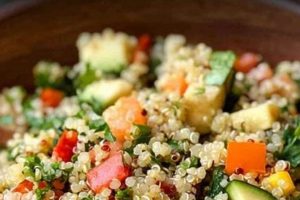
Practical applications of dietary accommodations in potluck salads involve careful planning and execution. For a vegetarian potluck, a quinoa salad with roasted vegetables and a lemon-herb vinaigrette offers a hearty and flavorful option. A vegan alternative could utilize a maple-tahini dressing instead of the vinaigrette. For gluten-free diets, ensuring croutons and other bread-based ingredients are omitted is vital. Salads featuring naturally gluten-free components, such as beans, lentils, or roasted vegetables, provide safe and satisfying options. Accommodating nut allergies requires careful ingredient selection and preparation in a nut-free environment. Clearly labeling each salad with a comprehensive list of ingredients allows guests with dietary restrictions to make informed choices and avoid potential allergens. Providing separate serving utensils for each salad prevents cross-contamination and further safeguards against allergic reactions.
Addressing dietary needs enhances the communal nature of potlucks. Inclusivity fosters a sense of belonging and ensures all guests feel welcomed and valued. This consideration reflects a thoughtful approach to potluck contributions, demonstrating respect for individual dietary needs and promoting a more enjoyable shared dining experience. Failure to address dietary accommodations can lead to exclusion and diminish the overall success of the potluck. Therefore, careful consideration of dietary restrictions is an integral aspect of planning and preparing potluck green salad recipes.
7. Attractive Presentation
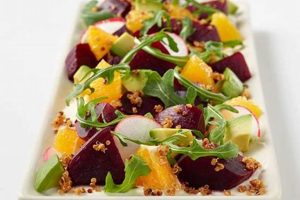
Attractive presentation elevates potluck green salad recipes from simple sustenance to visually appealing culinary contributions. Visual appeal significantly influences perceptions of flavor and overall enjoyment. A thoughtfully presented salad entices guests and communicates care and attention to detail. This visual aspect plays a crucial role in the overall potluck experience, enhancing the shared meal’s aesthetic appeal. Consider a vibrant salad featuring a mix of colorful greens, artfully arranged segments of citrus fruits, and a sprinkle of toasted nuts. Such a presentation immediately draws the eye and suggests a refreshing, flavorful experience. Conversely, a haphazardly tossed salad lacking visual appeal may be perceived as less appetizing, even if the flavor profile is well-balanced.
Practical applications of attractive presentation in potluck salads involve strategic choices in serving vessels, ingredient arrangement, and garnishing techniques. Utilizing an attractive serving bowl or platter enhances the salad’s visual impact. A clear glass bowl showcases the vibrant colors and textures of the ingredients, while a rustic wooden bowl adds a touch of natural elegance. Arranging ingredients thoughtfully, rather than simply tossing them together, creates visual interest. Consider layering ingredients or grouping similar colors and textures together. Garnishing with fresh herbs, edible flowers, or a sprinkle of spice adds a finishing touch that elevates the presentation. For instance, a simple Caprese salad can be transformed by arranging slices of tomatoes and mozzarella in an overlapping pattern on a platter, drizzled with balsamic glaze, and garnished with fresh basil leaves. These seemingly small details significantly enhance the overall presentation and perceived value of the dish.
Attention to attractive presentation demonstrates respect for fellow diners and enhances the communal aspect of the potluck. A visually appealing salad contributes to the overall aesthetic of the spread, creating a more festive and enjoyable dining experience. While flavor remains paramount, presentation plays a significant role in influencing perception and enjoyment. Therefore, incorporating visually appealing elements is an integral aspect of crafting successful and appreciated potluck green salad recipes. Neglecting presentation can diminish the perceived value of the contribution, regardless of the quality of ingredients or flavor profile. A visually appealing salad communicates care, attention to detail, and a desire to contribute positively to the shared meal.
Frequently Asked Questions about Potluck Green Salad Recipes
This section addresses common inquiries regarding the preparation and contribution of green salads to potluck gatherings. Clear and concise responses aim to provide practical guidance for ensuring successful contributions.
Question 1: How far in advance can a green salad be prepared for a potluck?
While some components, such as dressings or roasted vegetables, can be prepared several days in advance, it is generally recommended to assemble the salad as close to the event as possible to maintain optimal freshness. Heartier greens, such as kale or romaine, can be washed and stored a day or two prior, but more delicate greens are best prepared the day of the potluck.
Question 2: What are the best greens to use for a potluck salad?
Durable greens that can withstand transport and maintain their texture are ideal for potlucks. Romaine, kale, spinach, and mixed greens are good choices. Avoid delicate greens like butter lettuce, which wilt easily.
Question 3: How can one prevent a potluck salad from becoming soggy?
The key is to pack dressings separately and add them just before serving. This prevents the greens from becoming saturated and maintains their crispness.
Question 4: What are some good additions to a green salad for added flavor and texture?
Nuts, seeds, dried fruits, cheeses, croutons, roasted vegetables, and grilled proteins can add both flavor and textural contrast. Consider the overall flavor profile and balance when selecting additions.
Question 5: How can dietary restrictions be accommodated in potluck salad recipes?
Careful ingredient selection and clear labeling are crucial. Offer a variety of options, clearly indicating ingredients and potential allergens. Provide separate serving utensils to prevent cross-contamination.
Question 6: What are some tips for transporting a green salad to a potluck?
Use a sturdy, leak-proof container with a secure lid. Pack dressings separately. Layer ingredients strategically to prevent crushing. If possible, assemble the salad at the potluck location.
Addressing these common questions assists in the successful preparation and transport of green salads for potluck gatherings. Careful planning ensures contributions are both enjoyable and appreciated by fellow attendees.
The following section provides a curated selection of potluck-appropriate green salad recipes incorporating these principles.
Conclusion
Successful contributions of this nature rely on a confluence of factors. Fresh, seasonal ingredients, diverse textures, and balanced flavor profiles elevate enjoyment. Practical considerations such as ease of transport, make-ahead convenience, and dietary accommodations ensure inclusivity and minimize logistical challenges. Attractive presentation enhances visual appeal and reflects consideration for fellow diners. Understanding these elements allows for the creation of dishes that are both delicious and contribute positively to the shared meal experience.
Thoughtful preparation elevates these seemingly simple dishes, transforming them into memorable contributions. Emphasis on quality ingredients, balanced flavors, and attractive presentation demonstrates a commitment to the communal spirit of potlucks. Such contributions enrich the shared dining experience and foster a sense of connection among participants.