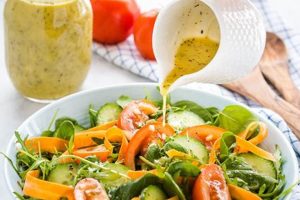
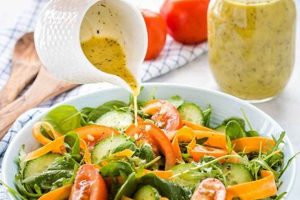
Simple vinaigrettes form the foundation of countless salads. These dressings, typically composed of a fat like olive oil, an acid like vinegar or citrus juice, and seasonings, offer a light and flavorful way to enhance fresh ingredients. A basic example includes extra virgin olive oil, red wine vinegar, salt, and pepper. From this fundamental template, variations can be created using different oils, vinegars, herbs, spices, and sweeteners.
The popularity of these straightforward dressings stems from their versatility, health benefits, and ease of preparation. Olive oil, rich in monounsaturated fats, contributes to heart health and provides a smooth, luxurious texture. The acidic component balances the oil’s richness while adding brightness and complexity. Quickly whisked together, these dressings require minimal effort and readily adapt to seasonal ingredients, dietary restrictions, and personal preferences. Historically, olive oil and vinegar mixtures have been used for both culinary and medicinal purposes, demonstrating their enduring value in gastronomy and wellbeing.
This exploration will delve further into specific recipes and techniques for crafting delicious and healthy olive oil-based salad dressings, including variations for different palates and dietary needs. It will also address the selection of high-quality ingredients and offer tips for proper emulsion and storage.
Tips for Creating Simple and Delicious Olive Oil Salad Dressings
Crafting a flavorful vinaigrette requires attention to a few key details. The following tips offer guidance for achieving optimal results when preparing uncomplicated, olive oil-based dressings.
Tip 1: Utilize High-Quality Olive Oil. Extra virgin olive oil, with its robust flavor and health benefits, is recommended. The oil’s quality significantly impacts the dressing’s overall taste.
Tip 2: Experiment with Different Vinegars. Red wine vinegar, balsamic vinegar, apple cider vinegar, and white wine vinegar each impart distinct flavor profiles. Lemon and lime juice offer citrusy alternatives.
Tip 3: Balance Flavors Carefully. The standard ratio for oil to vinegar is 3:1. However, this can be adjusted based on personal preference and the specific ingredients used. Taste and adjust as needed.
Tip 4: Embrace Fresh Herbs and Spices. Freshly chopped herbs like parsley, oregano, thyme, and chives elevate the dressing’s aroma and complexity. Ground spices such as black pepper, garlic powder, and onion powder can also be incorporated.
Tip 5: Consider Adding Sweetness. A touch of honey, maple syrup, or agave nectar can balance the acidity and add depth. Start with a small amount and adjust according to taste.
Tip 6: Emulsify Thoroughly. Whisking the ingredients vigorously creates a temporary emulsion, preventing the oil and vinegar from separating. A blender or food processor can be used for a smoother, more stable emulsion.
Tip 7: Season Properly. Salt and freshly ground black pepper are essential for enhancing the flavors of the other ingredients. Taste and adjust seasoning as needed.
By following these tips, one can consistently create flavorful and healthful dressings that complement a wide variety of salads and dishes. These simple guidelines provide a foundation for culinary exploration and personalized flavor combinations.
These foundational techniques pave the way for more advanced exploration of vinaigrette preparation, empowering culinary creativity and personalization.
1. High-quality olive oil

The foundation of a truly exceptional, simple olive oil salad dressing rests upon the quality of its primary ingredient: olive oil. Selecting a high-quality olive oil significantly impacts the final flavor, aroma, and health benefits of the dressing. This exploration delves into the facets of high-quality olive oil and their connection to crafting superior, uncomplicated dressings.
- Extra Virgin Classification
Authentic extra virgin olive oil represents the highest quality grade. Produced through mechanical processes without the use of heat or chemicals, it retains the natural flavors and aromas of the olives. In a simple salad dressing where the olive oil’s flavor is prominent, using extra virgin ensures a vibrant and nuanced taste experience.
- Acidity Level
Lower acidity levels are indicative of higher quality olive oil. A lower free acidity (expressed as oleic acid) suggests careful olive handling and processing, resulting in a smoother, less bitter flavor. This contributes to a more balanced and palatable dressing.
- Flavor Profile
High-quality olive oils possess a complex flavor profile, ranging from fruity and peppery to grassy and buttery. These distinct characteristics influence the overall character of the dressing. Selecting an olive oil with a flavor profile that complements the other ingredients ensures a harmonious final product. For example, a robust, peppery olive oil might pair well with a balsamic vinaigrette, while a milder, buttery oil might be better suited for a lemon vinaigrette.
- Aroma
The aroma of high-quality olive oil should be fresh and fragrant, devoid of musty or rancid notes. A pleasant aroma translates to a more appealing sensory experience when consuming the dressing. Aromas like fresh-cut grass, green apple, or almond are desirable indicators of quality.
By prioritizing these elements when selecting olive oil, one elevates a simple salad dressing from ordinary to extraordinary. The nuances of a high-quality olive oil contribute not only to superior flavor but also to the overall health benefits and sensory enjoyment derived from the dressing. The seemingly straightforward act of choosing the right olive oil becomes a crucial step in creating a memorable culinary experience.
2. Acidic Component

The acidic component plays a crucial role in balancing the richness of olive oil in simple salad dressings. It provides brightness, complexity, and a pleasant tang, transforming a blend of oil and seasonings into a vibrant, cohesive culinary creation. Understanding the diverse options for acidic components and their impact on the overall flavor profile is essential for crafting exceptional dressings.
- Vinegars
Various vinegars, each with unique characteristics, contribute distinct flavors to olive oil dressings. Red wine vinegar imparts a robust, fruity tartness, while white wine vinegar offers a lighter, crisper acidity. Apple cider vinegar contributes a subtle sweetness, while balsamic vinegar adds a deeper, more complex sweetness and tang. The choice of vinegar significantly influences the dressing’s final character.
- Citrus Juices
Freshly squeezed citrus juices, such as lemon and lime, provide a refreshing and vibrant acidity. Lemon juice offers a bright, zesty flavor, while lime juice adds a more tropical, tart note. These options are particularly well-suited for lighter dressings and pair exceptionally well with fresh herbs and seafood.
- Other Acidic Ingredients
Beyond vinegars and citrus juices, other acidic ingredients can contribute complexity and depth to olive oil dressings. These include ingredients like verjus (the pressed juice of unripe grapes), which offers a delicate tartness, and pomegranate molasses, which adds a sweet and tangy complexity. Exploring these less common options opens up a world of flavor possibilities.
- Balancing Acidity
Achieving the right balance of acidity is crucial. Too much acid can make the dressing overly sharp, while too little can leave it bland and oily. The standard ratio of oil to vinegar is 3:1, but this can be adjusted based on personal preference and the specific ingredients used. Tasting and adjusting the acidity throughout the preparation process ensures a harmonious and palatable final product.
The careful selection and balanced incorporation of the acidic component are integral to creating a simple yet flavorful olive oil salad dressing. This seemingly minor addition profoundly impacts the overall taste experience, transforming a basic mixture of oil and seasonings into a vibrant and harmonious culinary delight. By understanding the nuances of different acidic ingredients and how they interact with other components, one can consistently create dressings that elevate the simplest of salads.
3. Flavorful Seasonings
Flavorful seasonings are essential for elevating simple olive oil salad dressings beyond basic oil and acid combinations. They provide depth, complexity, and character, transforming a simple vinaigrette into a culinary expression. Exploring the diverse world of seasonings and their strategic application allows for the creation of dressings that complement and enhance a wide range of salads and dishes. This exploration delves into the crucial role of seasonings in crafting exceptional, yet easy, olive oil-based dressings.
- Fresh Herbs
Fresh herbs offer a vibrant and aromatic dimension to olive oil dressings. Classic choices include parsley, chives, oregano, thyme, and rosemary. Their delicate flavors and bright aromas infuse the dressing with complexity and freshness. For example, chopped chives lend a mild onion flavor, while rosemary provides a more robust, piney note. The selection of herbs should complement the other ingredients in the salad and the overall flavor profile desired.
- Spices
Ground spices contribute warmth and depth to olive oil dressings. Commonly used spices include black pepper, garlic powder, onion powder, paprika, and cumin. These spices add layers of flavor and can be used to create dressings with specific regional influences. For instance, a pinch of cumin can add a smoky, earthy note, while paprika provides a touch of sweetness and vibrant color. The use of spices allows for customization and creativity in dressing preparation.
- Sweeteners
A touch of sweetness can balance the acidity and add depth to olive oil dressings. Options include honey, maple syrup, agave nectar, and granulated sugar. These sweeteners provide a subtle counterpoint to the tartness of the vinegar or citrus juice, creating a more rounded and harmonious flavor profile. For example, a drizzle of honey complements the sharpness of apple cider vinegar, while a pinch of sugar balances the tartness of lemon juice. The amount of sweetener used should be carefully considered to avoid overpowering the other flavors.
- Other Flavor Enhancers
Beyond herbs, spices, and sweeteners, other ingredients can enhance the flavor profile of olive oil dressings. Minced garlic, shallots, or ginger add pungent notes, while Dijon mustard provides a creamy texture and tangy flavor. These additions contribute further complexity and depth to the dressing, allowing for greater customization and experimentation. For instance, a teaspoon of Dijon mustard adds a creamy texture and a subtle tang, while minced garlic provides a pungent and savory note.
The strategic use of flavorful seasonings elevates simple olive oil salad dressings from basic to exceptional. By carefully selecting and combining herbs, spices, sweeteners, and other flavor enhancers, one can create dressings that are not only delicious but also tailored to complement specific salad ingredients and personal preferences. The versatility and ease of incorporating these seasonings underscore the simplicity and accessibility of crafting flavorful and personalized olive oil-based dressings.
4. Proper Emulsification

Proper emulsification is crucial for creating a successful and easy olive oil salad dressing. Emulsification is the process of combining two immiscible liquids, in this case, oil and vinegar (or another acidic component), into a stable mixture. A properly emulsified dressing exhibits a smooth, creamy texture and prevents the oil and vinegar from separating, ensuring a consistent flavor experience with each bite. Without emulsification, the dressing will quickly separate, resulting in an oily mouthfeel and uneven distribution of flavor.
Several factors contribute to successful emulsification in simple olive oil dressings. Vigorous whisking is the most common method and creates a temporary emulsion by breaking down the oil into smaller droplets and dispersing them throughout the vinegar. Adding an emulsifying agent, such as a small amount of Dijon mustard or honey, can enhance stability. These agents contain molecules with both hydrophilic (water-loving) and lipophilic (fat-loving) ends, allowing them to bridge the gap between the oil and vinegar, creating a more durable emulsion. The ratio of oil to vinegar also impacts stability; a classic 3:1 ratio often provides the best balance for emulsification. A higher proportion of oil may lead to separation.
The practical significance of understanding emulsification is evident in the final product. A well-emulsified dressing coats salad ingredients more evenly, ensuring that each bite contains the balanced flavors of oil, acid, and seasonings. It also contributes to a more visually appealing dressing, free from unsightly oil slicks. While temporary emulsions created by whisking require re-shaking before serving, employing techniques like adding an emulsifying agent or using a blender can create more stable emulsions, further simplifying the process and ensuring a consistently enjoyable salad dressing experience.
5. Balanced Taste
Balanced taste is paramount in a simple olive oil salad dressing. It represents the harmonious interplay of flavors, where no single element overpowers the others. This balance ensures palatability and allows the individual componentsolive oil, acid, and seasoningsto complement each other, creating a cohesive and enjoyable culinary experience. Achieving this balance requires careful consideration of ingredient proportions and flavor profiles, transforming a simple mixture into a nuanced and satisfying dressing.
- The Interplay of Fat and Acid
The relationship between olive oil (fat) and the acidic component (vinegar or citrus juice) forms the foundation of balanced taste. The richness of the olive oil is tempered by the brightness of the acid, creating a harmonious contrast. A typical ratio of 3:1 (oil to acid) provides a good starting point, but adjustments may be necessary depending on the specific ingredients and personal preference. For example, a robust, peppery olive oil might require slightly more acid to balance its intensity.
- The Role of Seasonings
Seasonings, including herbs, spices, and sweeteners, contribute complexity and depth to the flavor profile. However, their judicious use is crucial for maintaining balance. Over-seasoning can mask the delicate flavors of the olive oil and acid, while under-seasoning can result in a bland dressing. A small amount of salt is almost always necessary to enhance the other flavors, while other seasonings should be added gradually, tasting frequently to ensure a harmonious blend. For instance, a pinch of dried oregano can complement a lemon vinaigrette without overpowering the citrus notes.
- The Influence of Ingredient Quality
The quality of the individual ingredients significantly impacts the overall balance. High-quality extra virgin olive oil possesses a more complex flavor profile than lower-grade oils, contributing depth and nuance to the dressing. Similarly, fresh herbs and spices offer more vibrant flavors than their dried counterparts. Using high-quality ingredients simplifies the process of achieving balanced taste, as their inherent flavors contribute to a more harmonious blend. For instance, freshly squeezed lemon juice will provide a brighter, more nuanced acidity than bottled lemon juice.
- The Importance of Tasting and Adjusting
The final step in achieving balanced taste is tasting and adjusting. Palates vary, and what constitutes balance for one person may differ for another. Tasting the dressing throughout the preparation process allows for adjustments to the proportions of oil, acid, and seasonings. This iterative process ensures that the final product aligns with individual preferences and creates a truly balanced and enjoyable flavor profile. A small adjustment, like an additional pinch of salt or a few drops of lemon juice, can make a significant difference in achieving optimal balance.
In the context of easy olive oil salad dressings, balanced taste is not merely a desirable characteristic, but a defining element. It transforms simple ingredients into a harmonious and flavorful whole, demonstrating that simplicity and complexity can coexist beautifully in culinary creations. By understanding the interplay of fat, acid, and seasonings, and by prioritizing ingredient quality and the iterative process of tasting and adjusting, one can consistently create easy yet exquisite olive oil dressings that elevate any salad.
6. Fresh Ingredients
The emphasis on fresh ingredients in simple olive oil salad dressings is paramount. Freshness directly correlates with flavor intensity, vibrancy, and overall quality. Utilizing fresh ingredients elevates these simple dressings, transforming them from basic mixtures into culinary highlights. This exploration delves into the multifaceted impact of fresh ingredients on the creation of exceptional, yet easy, olive oil-based dressings.
- Herbs
Fresh herbs offer a marked difference in flavor compared to dried counterparts. The vibrant aromas and nuanced flavors of freshly chopped herbs like parsley, dill, mint, or cilantro contribute a brightness and complexity difficult to replicate with dried versions. Fresh herbs impart a delicate, yet noticeable, lift to the dressing, enhancing the overall sensory experience.
- Citrus Juice
Freshly squeezed citrus juice contributes a vibrancy and zest unattainable with bottled counterparts. The bright acidity and aromatic oils present in freshly squeezed lemons, limes, or oranges elevate the dressing, adding a layer of complexity and freshness. The difference is noticeable in both aroma and taste, significantly impacting the overall quality of the vinaigrette.
- Garlic and Ginger
Freshly minced or grated garlic and ginger provide a pungent and aromatic dimension absent in pre-minced or powdered versions. The volatile compounds responsible for their characteristic flavors are most potent when fresh, contributing a depth and complexity that enhances the overall profile of the dressing. Using fresh garlic and ginger ensures a more pronounced and authentic flavor experience.
- Olive Oil
While not typically considered in the same category as herbs or citrus, the freshness of olive oil is also crucial. High-quality extra virgin olive oil, properly stored and not past its prime, offers the most robust flavor and aroma. Fresh olive oil contributes a clean, vibrant flavor that forms the foundation of a delicious dressing, enhancing the impact of other fresh ingredients.
The consistent use of fresh, high-quality ingredients elevates simple olive oil salad dressings from ordinary to extraordinary. The vibrant flavors, nuanced aromas, and overall quality achieved through freshness underscore the importance of this seemingly simple element. By prioritizing fresh ingredients, one transforms a basic vinaigrette into a culinary expression, demonstrating that simplicity and exceptional taste can coexist harmoniously in the realm of olive oil-based dressings.
7. Simple Technique
The ease of preparation is a defining characteristic of olive oil-based salad dressings. “Simple technique” is intrinsically linked to the concept of an “easy recipe,” as it minimizes complexity and maximizes efficiency. This straightforward approach allows individuals with varying culinary skill levels to create flavorful dressings quickly, contributing to the widespread popularity of these versatile condiments. The following facets explore the components and implications of this simplicity.
- Basic Equipment
One of the hallmarks of a simple technique is the minimal equipment required. A small bowl and a whisk are often sufficient for preparing a basic vinaigrette. This accessibility eliminates barriers to entry, allowing anyone to create a fresh, flavorful dressing without specialized tools. The absence of complex equipment streamlines the process and minimizes cleanup.
- Minimal Steps
Easy recipes are characterized by a limited number of steps. Olive oil dressings typically involve combining ingredients in a specific order and whisking to emulsify. This straightforward process reduces the likelihood of errors and ensures consistent results, even for novice cooks. The simplicity of the technique contributes to the speed and efficiency of preparation.
- Adaptability and Improvisation
Simple techniques often allow for adaptability and improvisation. Olive oil dressings can be easily customized by substituting different types of oil, vinegar, or seasonings based on personal preferences or ingredient availability. This flexibility encourages experimentation and allows for the creation of personalized flavor profiles without sacrificing simplicity. The adaptable nature of the technique enhances its versatility and practicality.
- Quick Preparation Time
The efficiency of a simple technique translates to a short preparation time. Olive oil dressings can be prepared in minutes, making them ideal for busy weeknights or impromptu gatherings. This speed and convenience contribute to the practicality and appeal of these dressings, allowing for fresh, flavorful additions to meals without extensive time investment.
The connection between simple technique and easy olive oil salad dressing recipes is undeniable. The minimal equipment, limited steps, adaptability, and quick preparation time associated with these dressings contribute to their accessibility and widespread appeal. This simplicity empowers individuals to create fresh, flavorful condiments effortlessly, enhancing the enjoyment of meals without demanding extensive culinary expertise or time commitment. The ease of preparation underscores the inherent practicality and versatility of olive oil-based dressings, solidifying their position as a staple in kitchens worldwide.
Frequently Asked Questions
This section addresses common inquiries regarding the preparation and utilization of simple olive oil-based salad dressings.
Question 1: What is the ideal ratio of olive oil to vinegar in a basic vinaigrette?
A standard starting point is a 3:1 ratio of olive oil to vinegar. However, this can be adjusted based on personal preference and the specific ingredients used. A more robust olive oil might benefit from slightly more vinegar, while a milder vinegar might require less.
Question 2: Can other oils be substituted for olive oil?
While olive oil is traditional, other oils, such as avocado, grapeseed, or walnut oil, can be substituted. Each oil possesses unique flavor characteristics that will influence the final taste of the dressing. Neutral oils like canola or sunflower oil can also be used, though they will contribute less flavor.
Question 3: How can one prevent an olive oil dressing from separating?
Vigorous whisking creates a temporary emulsion. For a more stable emulsion, a small amount of Dijon mustard, honey, or egg yolk can be added as an emulsifying agent. Storing the dressing in a tightly sealed container and shaking well before serving also helps maintain emulsification.
Question 4: How long can olive oil salad dressing be stored?
Homemade olive oil dressings can typically be stored in the refrigerator for up to one week. The presence of fresh ingredients, such as herbs or garlic, may shorten the storage life. Always check for signs of spoilage before consuming.
Question 5: What are some ways to enhance the flavor of a basic olive oil vinaigrette?
Fresh herbs, spices, sweeteners, and other flavor enhancers, such as minced garlic, shallots, or grated ginger, can add complexity and depth. Experimentation with different flavor combinations is encouraged. Start with small amounts and adjust to taste.
Question 6: Can olive oil dressings be used for purposes other than salad dressings?
Olive oil dressings are versatile and can be used as marinades for meat, poultry, or vegetables. They also make excellent dipping sauces for bread or crudits, and can be drizzled over roasted vegetables or grilled fish for added flavor.
Understanding these fundamental aspects allows for greater control and creativity in crafting simple, yet delicious, olive oil-based salad dressings. Experimentation and personalized adjustments are encouraged.
The following section offers a collection of specific recipes, demonstrating the practical application of these principles.
Olive Oil Salad Dressing Recipe Easy
Simple olive oil salad dressing recipes represent a cornerstone of culinary practice. This exploration has highlighted the core elements contributing to their enduring appeal: high-quality olive oil as a foundation, the balancing role of acidic components, the nuanced impact of seasonings, the importance of proper emulsification, the pursuit of balanced taste, the prioritization of fresh ingredients, and the efficiency of simple techniques. Each facet contributes to the creation of dressings that are not only easy to prepare but also deliver exceptional flavor and versatility.
The accessibility and adaptability of these recipes empower culinary creativity and personalization. By understanding the interplay of these fundamental elements, individuals can consistently create dressings that enhance a wide array of dishes. Continued exploration and experimentation with flavors and techniques will further enrich the culinary landscape and solidify the position of the simple olive oil salad dressing as a timeless and indispensable culinary asset.