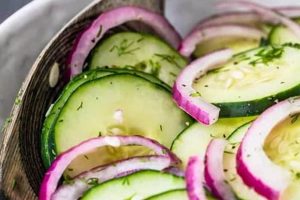
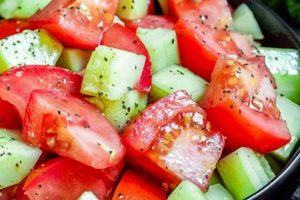
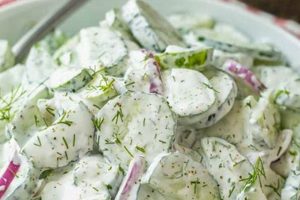
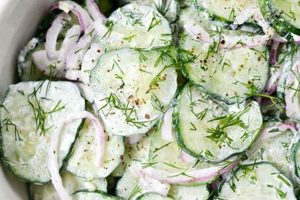
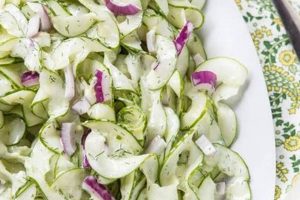
A refreshing and typically light dish, this preparation combines shredded or chopped cabbage and sliced cucumbers, often with other vegetables like bell peppers, carrots, or onions. Dressings vary widely, from simple vinaigrettes with vinegar and oil to creamy variations incorporating yogurt or mayonnaise. Flavor profiles can be further enhanced with herbs, spices, or seeds.
Such salads offer a nutritious and hydrating option, contributing vitamins, minerals, and fiber to the diet. The high water content of both cabbage and cucumber makes them particularly appealing in warmer weather. Variations of these salads have been enjoyed across cultures for generations, adapting to regional ingredients and preferences.
The following sections will explore specific ingredient choices, diverse dressing options, and techniques for creating both simple and elaborate versions of this versatile dish. Nutritional information and tips for maximizing flavor and texture will also be provided.
Tips for a Superior Cabbage and Cucumber Salad
Optimizing ingredient selection and preparation techniques elevates this simple salad to a culinary delight. Attention to detail ensures a crisp, flavorful, and visually appealing dish.
Tip 1: Cabbage Selection and Preparation: Opt for fresh, firm cabbage heads. Avoid pre-shredded options, as these tend to be drier. Finely shred or thinly slice cabbage for optimal texture and flavor infusion.
Tip 2: Cucumber Preparation: English cucumbers, with their thinner skin and fewer seeds, are ideal. For a milder flavor, peel the cucumbers before slicing. Salting sliced cucumbers and allowing them to drain reduces excess moisture, preventing a watery salad.
Tip 3: Enhancing Flavor and Texture: Incorporating additional vegetables like thinly sliced red onion, bell peppers, or shredded carrots adds complexity and visual appeal. Fresh herbs, such as dill, mint, or parsley, contribute brightness.
Tip 4: Dressing Selection and Application: The dressing should complement, not overpower, the vegetables. Light vinaigrettes with a balance of acidity and sweetness are often preferred. Creamy dressings, if used, should be applied just before serving to prevent the salad from becoming soggy.
Tip 5: Timing is Key: For optimal crispness, dress the salad shortly before serving. This prevents the vegetables from becoming limp and losing their vibrant texture.
Tip 6: Chill for Enhanced Flavor: Chilling the salad for a short period after dressing allows the flavors to meld and intensifies the refreshing qualities.
By following these guidelines, one can achieve a salad that is both flavorful and visually appealing, showcasing the inherent qualities of the fresh ingredients.
The following section will provide specific recipe examples incorporating these techniques.
1. Fresh Ingredients

Ingredient freshness significantly impacts the overall quality of a cabbage and cucumber salad. Fresh cabbage provides crisp texture and a subtly sweet flavor, contrasting with stale cabbage, which can be tough and bitter. Similarly, fresh cucumbers offer a refreshing, hydrating element; older cucumbers often become mushy and develop an unpleasant taste. The delicate flavors of these vegetables are easily overwhelmed by less-than-optimal ingredients. For instance, a dressing made with rancid oil or wilted herbs will detract from the salad’s intended lightness and vibrancy.
This principle extends beyond the core ingredients. Supporting elements, such as herbs, spices, and other vegetables, should also be of high quality. Fresh dill or mint can brighten the salad with their aromatic oils, while dried or wilted herbs contribute little. Incorporating other fresh vegetables, such as bell peppers or carrots, elevates the nutritional value and flavor complexity. However, these additions must also be fresh to avoid compromising the overall quality. A limp bell pepper, for example, introduces an undesirable textural element and detracts from the intended crispness.
Prioritizing fresh ingredients is a fundamental principle when preparing a cabbage and cucumber salad. The delicate flavors and crisp textures of these vegetables are best showcased when combined with other high-quality components. Attention to ingredient freshness ensures a vibrant, flavorful, and enjoyable culinary experience. Neglecting this aspect can result in a salad that is not only less flavorful but also potentially unappetizing in terms of texture and overall appeal. Ultimately, the pursuit of freshness elevates this simple dish from ordinary to exceptional.
2. Proper Shredding/Slicing
Proper shredding and slicing techniques are fundamental to a successful cabbage and cucumber salad. These techniques influence not only the final presentation but also the texture, flavor absorption, and overall eating experience. Uniformity in size and shape ensures even dressing distribution and consistent texture throughout the salad.
- Cabbage Preparation
Cabbage preparation necessitates careful consideration of the desired outcome. Thinly slicing cabbage with a sharp knife or mandoline creates delicate strands ideal for absorbing dressings and offering a tender texture. Conversely, coarser shreds, achieved through a food processor or wider knife cuts, provide more substantial texture, suitable for salads with heartier components. The choice depends on the specific recipe and desired textural complexity.
- Cucumber Handling
Cucumber handling requires attention to both aesthetics and practicality. Thinly slicing cucumbers creates appealing visual uniformity and ensures even flavor distribution. However, overly thin slices may become limp quickly. Thicker slices offer more substantial texture but require careful consideration of dressing application to ensure adequate flavor penetration. Removing seeds from cucumbers, particularly standard varieties, reduces excess moisture and prevents a watery salad.
- Uniformity and Aesthetics
Uniformity in cutting promotes an aesthetically pleasing presentation and contributes to a harmonious blend of flavors and textures. Unevenly sized pieces can result in some parts being overdressed while others remain underdressed, leading to an inconsistent flavor experience. Uniformity also ensures that each bite offers a similar textural profile, enhancing the overall enjoyment of the salad.
- Impact on Dressing Absorption
The method of shredding and slicing directly influences how the vegetables absorb the dressing. Thinly sliced or shredded pieces offer a larger surface area, facilitating greater absorption and flavor infusion. Thicker cuts, while offering a different textural element, absorb less dressing, potentially leading to a less flavorful experience unless the dressing is adjusted accordingly or allowed to marinate longer.
Careful attention to shredding and slicing techniques ensures a visually appealing and palatable cabbage and cucumber salad. The choice of technique influences not only the aesthetics but also the texture, flavor distribution, and overall harmony of the final dish. Considering these factors ensures a consistently satisfying culinary experience.
3. Complementary Dressing
Dressing selection significantly impacts the overall success of a cabbage and cucumber salad. The inherent flavors of cabbage and cucumbermildly sweet and subtly vegetalrequire a dressing that complements rather than overpowers. An overly acidic dressing can make the salad unpleasant, while an excessively rich dressing can overwhelm the delicate flavors of the vegetables. A complementary dressing enhances the existing flavors, creating a balanced and harmonious taste profile.
Consider the effect of different dressings. A light vinaigrette, perhaps with a base of rice vinegar and a touch of sesame oil, enhances the refreshing qualities of the salad, creating a light and zesty flavor profile. Alternatively, a creamy dressing based on Greek yogurt with fresh dill and lemon juice provides a tangy counterpoint to the sweetness of the vegetables. Even a simple dressing of olive oil, lemon juice, salt, and pepper can be remarkably effective when fresh, high-quality ingredients are used. The choice of dressing depends on the desired flavor profile and overall balance of the salad.
Successfully pairing a dressing with a cabbage and cucumber salad requires careful consideration of the other ingredients. If the salad incorporates additional elements, such as red onion or herbs, the dressing should harmonize with these flavors as well. For instance, a salad with red onion might benefit from a slightly sweeter dressing to balance the onion’s pungency. A salad with fresh dill might be enhanced by a lemon-based dressing to complement the dill’s bright, citrusy notes. Ultimately, the dressing should unify the flavors of all ingredients, creating a cohesive and enjoyable culinary experience.
4. Balanced Flavors
A successful cabbage and cucumber salad hinges on a careful balance of flavors. The inherent mildness of the primary ingredients allows for a wide range of flavor combinations, but achieving a harmonious blend requires careful consideration of each element’s contribution. A well-balanced salad offers a complex interplay of tastessweet, sour, salty, umami, and spicythat engage the palate without any single flavor dominating.
- Acidity
Acidity provides brightness and lift, cutting through the richness of any creamy elements and enhancing the fresh flavors of the vegetables. Sources of acidity can include vinegar (rice vinegar, apple cider vinegar, white wine vinegar), citrus juice (lemon, lime), or fermented ingredients like sauerkraut or kimchi. The level of acidity should be carefully calibrated to complement, not overpower, the other flavors.
- Sweetness
Sweetness provides a counterpoint to acidity and other savory elements. It can be introduced through ingredients like sugar, honey, maple syrup, or fruits such as diced apples or raisins. The sweetness should be subtle, enhancing the natural sweetness of the vegetables rather than creating a dessert-like profile. In some cases, the sweetness of the dressing can be balanced by the addition of a pinch of salt.
- Saltiness
Salt is essential for enhancing the flavors of all ingredients. It should be used judiciously to avoid overpowering the delicate flavors of the vegetables. Sea salt or kosher salt is generally preferred over table salt for its cleaner flavor. Salting the cucumbers before adding them to the salad helps draw out excess moisture and prevents the salad from becoming watery, while also subtly seasoning the cucumbers themselves.
- Umami and Spice (Optional)
Umami, the savory fifth taste, can add depth and complexity. Ingredients like soy sauce, fish sauce, or nutritional yeast can contribute umami notes. A touch of spice, from ingredients like black pepper, red pepper flakes, or a pinch of chili powder, can add a pleasant warmth and further complexity. These elements should be used sparingly, particularly in salads intended to be refreshing and light.
The interplay of these flavor components creates a dynamic and engaging sensory experience. A well-balanced cabbage and cucumber salad is more than the sum of its parts; it’s a harmonious blend of flavors that complement and enhance one another, creating a dish that is both refreshing and satisfying. The careful consideration of these elements elevates a simple salad to a culinary creation.
5. Optimal Texture
Texture plays a crucial role in the overall enjoyment of a cabbage and cucumber salad. The contrast between the crispness of the vegetables and the creaminess or lightness of the dressing creates a dynamic sensory experience. Achieving this optimal texture requires careful consideration of ingredient preparation, dressing selection, and timing.
- Crispness of Vegetables
Maintaining the crispness of both cabbage and cucumbers is paramount. This requires proper handling and storage of the vegetables before preparation. Soaking shredded cabbage in ice water for a short period can enhance crispness. Salting sliced cucumbers and allowing them to drain removes excess moisture, preventing a watery salad and maintaining their desirable texture. Avoiding over-dressing or dressing the salad too far in advance helps prevent the vegetables from becoming soggy.
- Dressing Consistency
The dressing’s consistency contributes significantly to the overall textural experience. A light vinaigrette allows the crispness of the vegetables to shine through. A creamy dressing, while offering a different textural element, should complement rather than mask the vegetables’ texture. The amount of dressing applied also influences the final texture; too much dressing can make the salad heavy and soggy.
- Additional Ingredients
Incorporating additional ingredients can introduce further textural complexity. Toasted nuts or seeds provide a satisfying crunch, while dried fruits offer a chewy counterpoint. These additions should be considered carefully to ensure they complement the overall textural profile of the salad. For example, adding too many crunchy elements might detract from the desired balance of crisp and tender.
- Temperature
Serving temperature impacts the perceived texture of the salad. A chilled salad enhances the refreshing qualities of the vegetables and the dressing. However, over-chilling can make the vegetables too firm and diminish their flavor. Ideally, the salad should be chilled just enough to enhance its crispness and refreshing qualities without sacrificing flavor.
The interplay of these textural elements creates a multi-dimensional eating experience. A well-executed cabbage and cucumber salad offers a delightful contrast between crisp and tender, light and creamy, creating a dish that is both refreshing and satisfying. Careful attention to these textural nuances elevates this simple salad to a new level of culinary enjoyment.
6. Seasonality
Seasonality significantly influences the flavor profile and ingredient selection of a cabbage and cucumber salad. While both vegetables are available year-round in many regions, their peak seasons offer optimal flavor and texture. Cabbage, particularly summer varieties, reaches peak flavor during cooler months, exhibiting a delicate sweetness and crisp texture. Cucumbers, on the other hand, thrive in warmer months, offering peak freshness and hydration during summer. Aligning ingredient selection with these natural cycles yields a superior culinary experience. For example, a summer salad might feature freshly harvested cucumbers alongside tender herbs like dill and mint, while an autumn version might incorporate heartier cabbage varieties paired with toasted nuts or dried cranberries.
Understanding seasonality allows for adaptation and creative ingredient incorporation. During peak seasons, the simplicity of a classic cabbage and cucumber salad shines, requiring minimal additions to showcase the fresh flavors. However, during off-seasons, incorporating other seasonal produce can enhance the salad. Winter salads might include citrus segments or pomegranate seeds for brightness, while spring salads could benefit from the addition of fresh peas or asparagus. This adaptability ensures a flavorful and interesting salad throughout the year, maximizing the use of readily available, high-quality produce.
Appreciating the influence of seasonality elevates the cabbage and cucumber salad beyond a simple dish to a celebration of nature’s bounty. By aligning ingredient choices with seasonal availability, one achieves not only optimal flavor and texture but also a deeper connection to the natural world. This awareness encourages culinary creativity and resourcefulness, resulting in a dish that is both delicious and reflective of the time of year. Furthermore, embracing seasonality often supports local agriculture and reduces the environmental impact associated with long-distance transportation of produce.
Frequently Asked Questions
This section addresses common inquiries regarding cabbage and cucumber salad preparation, offering practical guidance for achieving optimal results.
Question 1: How can one prevent a cabbage and cucumber salad from becoming watery?
Salting sliced cucumbers and allowing them to drain for approximately 15-20 minutes before incorporating them into the salad draws out excess moisture. This step significantly reduces water accumulation and maintains the desired texture.
Question 2: What are the best cabbage varieties for this type of salad?
While green cabbage is commonly used, savoy cabbage and Napa cabbage offer interesting textural and flavor variations. Savoy cabbage contributes a delicate, slightly peppery flavor, while Napa cabbage offers a milder, sweeter taste and a more tender texture. Ultimately, the choice depends on individual preference.
Question 3: Can this salad be prepared in advance?
While the salad is best consumed fresh, it can be prepared a few hours in advance. Store the shredded cabbage and sliced cucumbers separately and combine them just before serving. The dressing should be added immediately before serving to prevent the vegetables from becoming soggy.
Question 4: How can one enhance the flavor of a simple vinaigrette for this salad?
A simple vinaigrette can be elevated with additions such as Dijon mustard, minced garlic, fresh herbs (dill, mint, parsley), or a touch of honey or maple syrup. These additions contribute complexity and depth of flavor.
Question 5: What are suitable alternatives to cucumbers if they are unavailable or undesirable?
Zucchini, bell peppers, or celery offer similar textural qualities and can be substituted for cucumbers. Adjustments to the dressing might be necessary to balance the flavors of these alternative ingredients.
Question 6: How can nutritional value be maximized in this salad?
Incorporating additional vegetables, such as shredded carrots, bell peppers, or chopped scallions, increases the vitamin and mineral content. Adding protein-rich elements like chickpeas, edamame, or grilled chicken or fish transforms the salad into a more substantial meal.
Understanding these key aspects of preparation helps ensure a successful and satisfying culinary experience. Attention to detail, from ingredient selection to dressing application, optimizes the flavor, texture, and overall enjoyment of this versatile salad.
The following section will offer specific recipe variations to inspire culinary exploration.
Cabbage and Cucumber Salad Recipe
This exploration has provided a comprehensive overview of creating a successful cabbage and cucumber salad. Key elements highlighted include the importance of fresh, high-quality ingredients, proper shredding and slicing techniques, selecting a complementary dressing, achieving balanced flavors, optimizing texture, and considering seasonality. Understanding these factors allows for informed ingredient choices, appropriate preparation methods, and ultimately, a more enjoyable culinary outcome.
Culinary experimentation with variations in ingredients, dressings, and additions allows for personalized flavor profiles and exploration of diverse culinary traditions. The adaptability of this simple salad provides a foundation for creative expression, showcasing the versatility of fresh produce and the potential for culinary artistry in even the most straightforward dishes. Continued exploration of flavor combinations and textures offers endless possibilities for culinary discovery.