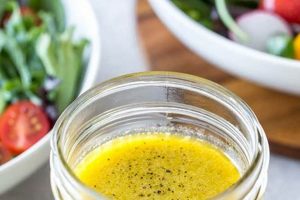
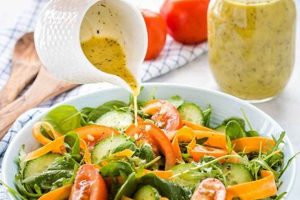
Plant-based culinary practices often seek alternatives to traditional ingredients like oil. Dressings for salads, typically reliant on oil for their texture and flavor delivery, can be crafted without it, using ingredients such as fruit juices, vinegar, nuts, seeds, and blended vegetables. A recipe for such a dressing, entirely plant-derived, provides a flavorful and healthful option for those adhering to a vegan diet. For example, a creamy avocado-lime dressing can be created by blending ripe avocado, lime juice, water, and cilantro.
Eliminating oil contributes to lower caloric intake and reduced saturated fat consumption. This approach aligns with health-conscious dietary choices and may be particularly relevant for individuals managing specific health conditions. Furthermore, excluding animal products caters to ethical and environmental concerns associated with animal agriculture. The increasing availability of diverse plant-based ingredients has broadened culinary possibilities, leading to innovative recipes that prioritize both flavor and well-being. Historically, numerous cultures have employed techniques to create flavorful sauces and condiments without relying on oil, demonstrating the longstanding feasibility of this approach.
This article will further explore various approaches to crafting flavorful and nutritious plant-based dressings without the use of oil. Topics covered will include ingredient selection, blending techniques, flavor profiles, and storage recommendations. Readers will gain practical insights into preparing diverse options to enhance their salads and other culinary creations.
Tips for Crafting Oil-Free Vegan Salad Dressings
Creating flavorful and satisfying plant-based salad dressings without oil requires thoughtful ingredient selection and preparation techniques. The following tips offer guidance for achieving optimal results.
Tip 1: Embrace the Power of Acidity: Acidity plays a crucial role in balancing flavors and creating vibrant dressings. Citrus juices (lemon, lime, orange), vinegars (apple cider, balsamic, red wine), and acidic fruits (tamarind, pomegranate) contribute brightness and complexity.
Tip 2: Explore Nut and Seed Bases: Soaked cashews, sunflower seeds, or almonds can be blended into creamy bases, offering richness and body. These provide healthy fats and contribute to a satisfying texture.
Tip 3: Harness the Versatility of Blended Vegetables: Cooked or raw vegetables, such as roasted red peppers, carrots, or tomatoes, can be incorporated to add depth of flavor, color, and natural sweetness.
Tip 4: Experiment with Flavor Enhancers: Nutritional yeast offers a cheesy flavor profile, while miso paste contributes umami notes. Fresh herbs, spices, garlic, and ginger can be added to elevate the flavor complexity.
Tip 5: Adjust Consistency with Water or Vegetable Broth: Achieving the desired consistency is essential. Water or vegetable broth can be added gradually to thin the dressing as needed.
Tip 6: Season Mindfully: Salt and pepper are essential seasonings. Consider adding a touch of maple syrup or agave nectar for a subtle sweetness if desired.
Tip 7: Proper Storage Extends Shelf Life: Store prepared dressings in airtight containers in the refrigerator for up to five days. Shake well before serving, as some separation may occur.
By following these tips, one can create a diverse array of oil-free, plant-based salad dressings that are both flavorful and healthful. These dressings can elevate salads and contribute to a balanced and satisfying dietary experience.
The following section will offer a collection of sample recipes showcasing the practical application of these principles.
1. Plant-based Ingredients

Plant-based ingredients are fundamental to crafting oil-free vegan salad dressings. They provide the foundation for flavor, texture, and nutritional value, offering a diverse range of options for creating delicious and healthful dressings. Exploring the specific components within this category reveals the breadth of culinary possibilities.
- Fruits:
Fruits contribute natural sweetness and acidity, balancing the overall flavor profile. Citrus fruits like lemons and limes provide brightness, while blended fruits such as berries or mangoes offer a richer, sweeter dimension. These natural sugars reduce the need for refined sweeteners.
- Vegetables:
Blended or pureed vegetables, such as roasted red peppers, carrots, or tomatoes, add depth of flavor, vibrant color, and often a subtle sweetness. They can also contribute to a creamy texture, replacing the role of oil in providing body to the dressing.
- Nuts and Seeds:
Soaked nuts and seeds, such as cashews, almonds, or sunflower seeds, form creamy bases when blended. They provide healthy fats, contributing to a satisfying texture and richness. These ingredients offer a nutritional boost, adding protein and essential fatty acids.
- Herbs, Spices, and Aromatics:
Fresh herbs, spices, garlic, ginger, and onions elevate the flavor complexity of the dressing. These ingredients provide depth and nuance, allowing for a wide range of flavor profiles, from savory to zesty to herbaceous. They can also offer antioxidant and anti-inflammatory benefits.
The strategic combination of these plant-based components allows for the creation of oil-free vegan salad dressings that are not only flavorful and healthful but also demonstrate the versatility and richness achievable within plant-based cuisine. These dressings can be tailored to complement a variety of salads and dishes, offering a nutritious and flavorful alternative to traditional oil-based options.
2. Flavor Balance

Flavor balance is paramount in successful oil-free vegan salad dressings. The absence of oil, which often carries and distributes flavor, necessitates a more nuanced approach to achieving a harmonious blend of tastes. A well-balanced dressing avoids extremes, ensuring no single element dominates. This involves carefully considering the interplay of sweet, sour, salty, bitter, and umami elements. For instance, the sharpness of vinegar might be balanced by the sweetness of maple syrup, while the earthiness of tahini can be complemented by the brightness of lemon juice. The intensity of each component must be adjusted to create a unified and pleasing overall taste.
Achieving this balance requires attentiveness during preparation. Tasting and adjusting throughout the process is essential. A small addition of an ingredient can significantly impact the overall profile. For example, a pinch of salt can heighten other flavors, while a touch of acidity can cut through richness. Understanding the inherent properties of each ingredient is crucial. The sweetness of roasted carrots differs from that of dates, and the acidity of apple cider vinegar varies from that of lime juice. These nuances must be considered to create a balanced and flavorful outcome. A practical application of this understanding involves gradually incorporating ingredients, tasting frequently, and making small adjustments until the desired flavor profile is achieved. This iterative process ensures a harmonious blend, compensating for the absence of oil’s unifying properties.
In conclusion, flavor balance in oil-free vegan salad dressings relies on a deep understanding of ingredient interactions and careful adjustments throughout preparation. This meticulous approach compensates for the lack of oil, resulting in dressings that are not only healthful but also offer complex and satisfying flavor profiles. Mastery of this principle enables the creation of a wide variety of dressings suitable for diverse culinary applications.
3. Creamy Texture
Creamy texture is often a desired characteristic in salad dressings, contributing to palatability and mouthfeel. Traditional dressings achieve this through the inclusion of oil, which provides a smooth, viscous consistency. However, in oil-free vegan salad dressings, alternative methods must be employed to replicate this creaminess without compromising the plant-based and health-conscious nature of the recipe. This requires understanding the textural contributions of various plant-based ingredients and utilizing specific preparation techniques.
Several techniques can create a creamy texture in oil-free vegan dressings. Soaking nuts and seeds, such as cashews, almonds, or sunflower seeds, followed by blending with water or vegetable broth, creates a smooth, emulsified base. The process of blending breaks down the nuts or seeds, releasing their natural oils and starches, which contribute to a creamy consistency. Similarly, incorporating blended avocado or cooked starchy vegetables like sweet potato or butternut squash provides a naturally creamy texture. These ingredients possess a smooth, velvety consistency that emulates the mouthfeel of traditional oil-based dressings. Furthermore, the addition of silken tofu, blended until smooth, offers a neutral base that can be flavored to achieve the desired creaminess without imparting a strong flavor of its own. For example, a creamy cashew-based dressing might be flavored with lemon juice, garlic, and nutritional yeast for a tangy, cheesy flavor profile, while a dressing based on blended roasted red peppers might incorporate smoked paprika and cumin for a smoky, savory flavor. The choice of ingredients and flavor combinations can be tailored to complement the specific salad ingredients and overall culinary goals.
Achieving a creamy texture in oil-free vegan salad dressings enhances their appeal and contributes to a satisfying culinary experience. Understanding the functional properties of plant-based ingredients allows for the creation of dressings that are not only healthful and aligned with vegan principles but also possess the desirable textural qualities typically associated with oil-based counterparts. This opens up a wide range of culinary possibilities, enabling individuals to enjoy flavorful and texturally appealing salads without compromising their dietary preferences or health goals. This approach promotes culinary creativity while adhering to plant-based principles. The exploration of innovative techniques continues to broaden the landscape of oil-free vegan cuisine.
4. Nutritional Value
Nutritional value represents a significant advantage of oil-free vegan salad dressings. Eliminating oil, often high in calories and saturated fat, reduces overall caloric intake and promotes heart health. Furthermore, focusing on whole, plant-based ingredients increases the nutrient density of these dressings. Ingredients such as nuts, seeds, fruits, and vegetables contribute vitamins, minerals, antioxidants, and fiber. For example, a dressing featuring blended spinach provides vitamin K and folate, while one incorporating tahini offers calcium and healthy fats. These nutritional benefits extend beyond basic sustenance, playing a role in disease prevention and overall well-being. Substituting an oil-based dressing with a nutrient-rich, plant-based alternative contributes to a more balanced and healthful dietary pattern.
The nutritional profile of an oil-free vegan salad dressing can be further enhanced through strategic ingredient selection. Prioritizing nutrient-rich components amplifies the health benefits. Incorporating ingredients like berries, rich in antioxidants, or flaxseeds, a source of omega-3 fatty acids, maximizes the nutritional impact. A dressing featuring blended blueberries offers antioxidant protection, while one incorporating chia seeds provides fiber and omega-3s. These targeted additions elevate the nutritional value beyond simply replacing oil, transforming the dressing into a functional food that actively contributes to health and well-being. This approach aligns with dietary guidelines that emphasize whole foods and nutrient density.
Understanding the nutritional implications of ingredient choices empowers individuals to create oil-free vegan salad dressings tailored to specific dietary needs and health goals. This approach fosters a proactive approach to nutrition, moving beyond mere calorie restriction to a focus on nutrient optimization. Challenges may include ensuring adequate intake of specific nutrients, such as vitamin B12, commonly found in animal products. Addressing such challenges through mindful ingredient selection or supplementation ensures a balanced nutritional intake while adhering to vegan principles. This awareness facilitates informed dietary choices and contributes to a holistic approach to health and well-being, aligning with a broader trend toward preventative health management through dietary choices.
5. Versatile Application

Versatile application significantly enhances the value of oil-free vegan salad dressings. While their primary function is to enhance salads, their adaptability extends far beyond this traditional role. This versatility stems from the inherent flexibility of plant-based ingredients and the diverse flavor profiles achievable through creative combinations. A well-crafted oil-free vegan dressing can function as a marinade for tofu or tempeh, adding flavor and moisture before cooking. The same dressing can be used as a sauce for roasted vegetables, providing a flavorful glaze and enhancing their natural sweetness. Furthermore, these dressings can serve as dips for crudits or as a spread for sandwiches and wraps, replacing less healthful options. For example, a creamy cashew-based dressing can be used to marinate grilled portobello mushrooms, while a vibrant cilantro-lime dressing can serve as a sauce for roasted sweet potatoes. This adaptability minimizes food waste by allowing a single preparation to serve multiple purposes.
This versatility offers practical advantages for meal preparation and overall dietary variety. Having a readily available oil-free vegan dressing simplifies meal planning and reduces reliance on processed condiments. It allows for quick and easy flavor enhancement across a range of dishes, promoting culinary creativity and reducing mealtime monotony. This adaptability is particularly beneficial for individuals following a vegan or health-conscious diet, as it provides a convenient and flavorful way to incorporate plant-based nutrition into various meals. For instance, a batch of tahini-lemon dressing can be used throughout the week, adding flavor and nutritional value to salads, grain bowls, and roasted vegetables. This simplifies meal preparation while ensuring consistent adherence to dietary goals. Furthermore, the versatility of these dressings encourages experimentation with different flavor combinations and culinary applications, expanding the palate and promoting a more adventurous approach to plant-based cuisine. This creativity contributes to a more engaging and enjoyable dietary experience.
The versatile application of oil-free vegan salad dressings represents a significant advantage within plant-based culinary practice. This adaptability simplifies meal preparation, promotes dietary variety, and reduces reliance on processed foods. While some flavor profiles may be more suitable for specific applications than others, the inherent flexibility of these dressings allows for a wide range of culinary uses. This versatility empowers individuals to embrace plant-based eating patterns while enjoying flavorful and convenient meal options, ultimately promoting a more sustainable and healthful approach to food and cooking. This adaptability contributes to the growing popularity and accessibility of plant-based diets. Continued exploration of ingredient combinations and culinary techniques will further expand the potential applications of these versatile dressings.
Frequently Asked Questions
The following addresses common inquiries regarding oil-free vegan salad dressings, providing clarification and practical guidance for incorporating them into a plant-based diet.
Question 1: How can oil-free vegan dressings achieve a creamy texture without oil?
Creaminess can be achieved through blended nuts (cashews, almonds), seeds (sunflower, tahini), avocado, or silken tofu. These ingredients, when processed, create an emulsion that mimics the texture of oil-based dressings.
Question 2: Do oil-free dressings require refrigeration?
Due to the absence of preservatives commonly found in commercial dressings, refrigeration is recommended. Storage in an airtight container extends shelf life, typically up to five days.
Question 3: Are oil-free vegan dressings suitable for all types of salads?
Their versatility allows pairing with various salad ingredients. Flavor profiles can be adjusted to complement delicate greens, robust vegetables, or grain-based salads.
Question 4: Can oil-free dressings be used beyond salads?
Their applications extend to marinades, sauces for cooked vegetables, dips for raw vegetables, or spreads for sandwiches and wraps, showcasing their versatility.
Question 5: How does the nutritional content compare to traditional oil-based dressings?
Oil-free vegan dressings often offer lower caloric intake and reduced saturated fat while providing valuable nutrients from whole-food ingredients like nuts, seeds, and vegetables. They also contribute dietary fiber, often absent in oil-based counterparts.
Question 6: What are common challenges in making oil-free dressings, and how can they be addressed?
Challenges can include achieving desired consistency and flavor balance. Careful ingredient selection and gradual incorporation while tasting and adjusting can overcome these challenges. Over-blending nut-based dressings can result in a gritty texture; soaking nuts adequately and using appropriate blending techniques mitigates this issue.
These responses offer practical insights into the advantages and considerations associated with oil-free vegan salad dressings. Understanding these aspects facilitates informed choices and successful integration into a diverse and healthful dietary pattern.
The following section will present a collection of recipes demonstrating the practical application of these principles.
Conclusion
Exploration of plant-based, oil-free salad dressing recipes reveals a versatile and healthful approach to culinary practice. Emphasis on whole-food ingredients, such as nuts, seeds, fruits, and vegetables, yields dressings rich in nutrients and flavor. Techniques for achieving creamy textures without oil, along with strategies for balancing flavor profiles, demonstrate the adaptability and sophistication of plant-based cuisine. These recipes offer significant health benefits, including reduced caloric intake, lower saturated fat consumption, and increased intake of vitamins, minerals, and fiber.
The increasing availability of diverse plant-based ingredients and growing interest in health-conscious culinary practices suggest continued evolution within this area. Exploration of innovative techniques and flavor combinations promises further expansion of the culinary landscape. Adoption of oil-free vegan salad dressing recipes represents a positive step toward a more sustainable and health-promoting dietary pattern, offering both individual and global benefits. This culinary approach empowers individuals to make informed choices that support both personal well-being and environmental responsibility.